

You ordered a beautiful nursing bra before your baby arrived. At the time, your measurements seemed like the most sensible guide available. Then your body changed. Your ribcage feels different, your bust is fuller at some times of day and softer at others, and the band that looked perfect on the screen doesn't sit comfortably against your postpartum body.
That doesn't mean you chose badly. It means you're shopping during a season of physical change. Understanding what an exchange policy is gives you a practical safety net, so a sizing mismatch doesn't turn into wasted money, another exhausting shopping search, or a piece of lingerie that stays unworn in a drawer.
The Postpartum Sizing Dilemma
Before birth, buying nursing lingerie can feel like a hopeful act. You may choose pieces for the hospital bag, prepare for feeding, or want something beautiful waiting for you after months of maternity clothes. You measure carefully, compare the size chart, and place the order with reasonable confidence.
Then the baby arrives, and the fit becomes less predictable. Your breast size may shift with feeding, your ribcage may feel broader, and your usual bra preferences may no longer apply. A cup can feel too tight while the band feels loose. A band can feel supportive while the cups don't accommodate your changing shape. Even the way you put on and adjust a bra may change when you're tired, tender, or holding a newborn.
A sizing guide still matters. Before ordering, use a reliable guide to measuring for a nursing bra, but treat the result as a starting point rather than a guarantee. No tape measure can perfectly predict how your body will feel after delivery or how a particular lace, band, clasp, or underwire will interact with your changing shape.
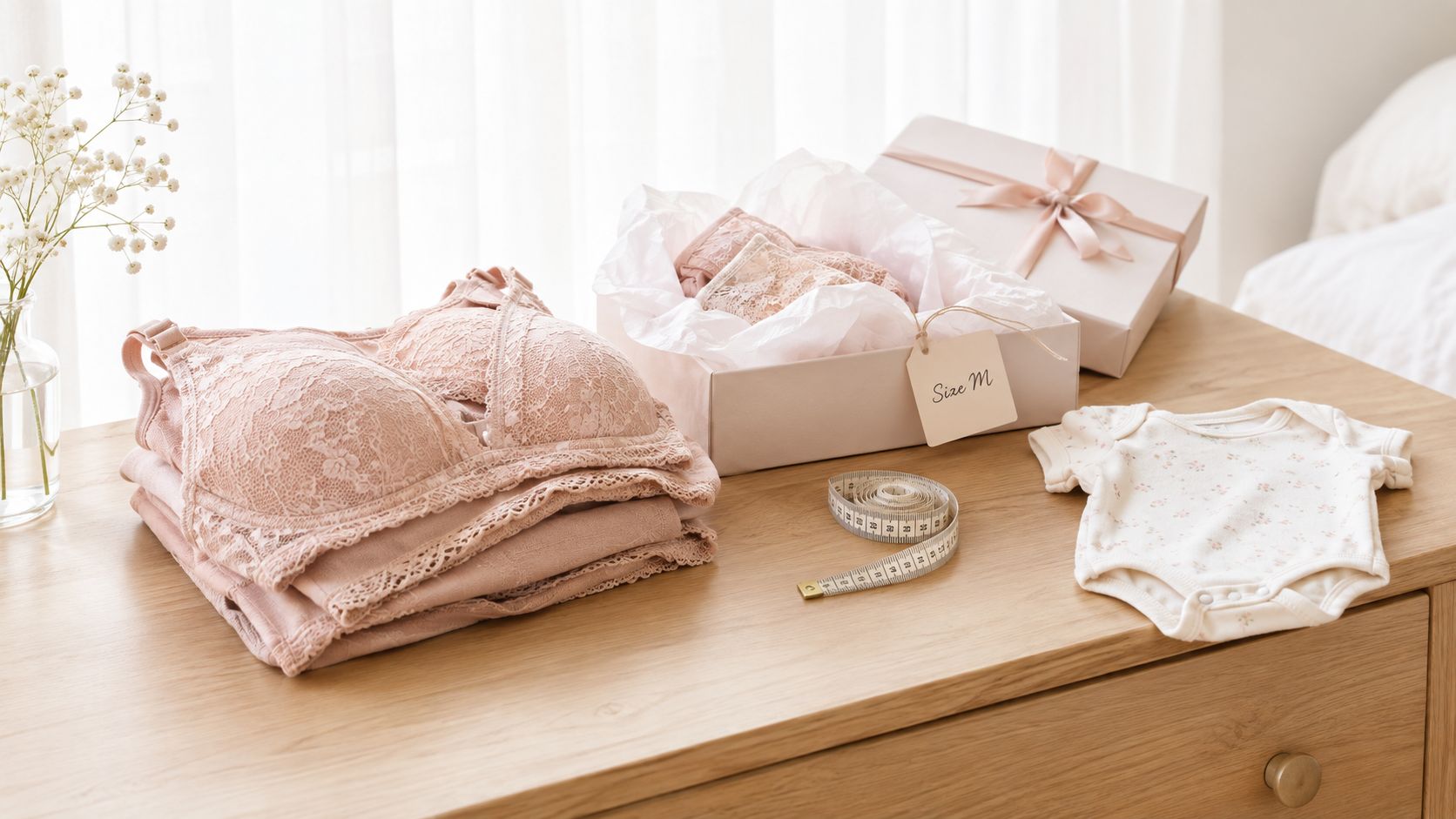
When the wrong size feels personal
An ill-fitting bra can trigger more than annoyance. You may already be adjusting to a body that looks and feels unfamiliar, while recovering physically and learning the rhythms of new motherhood. When a carefully chosen garment doesn't fit, it can feel like another reminder that your old assumptions no longer work.
That reaction is understandable, but the garment is the problem, not your body. A good exchange policy gives you room to respond to reality instead of forcing your body to adapt to a poor fit.
Postpartum styling rule: Buy for the body you need to support now, and choose a brand that gives you a clear path when your first size isn't right.
An exchange as a confidence bridge
A refund ends the transaction. An exchange keeps the original intention alive. You still wanted the softness, support, nursing access, or feminine detail. You just need the same kind of garment in a different size or, where permitted, another option that suits you better.
That distinction matters emotionally. You don't have to decide that beautiful lingerie is impractical because the first fit missed the mark. You can keep looking for the piece that lets you feel supported and recognisably yourself, even while motherhood continues to reshape your routines and preferences.
Defining the Modern Exchange Policy
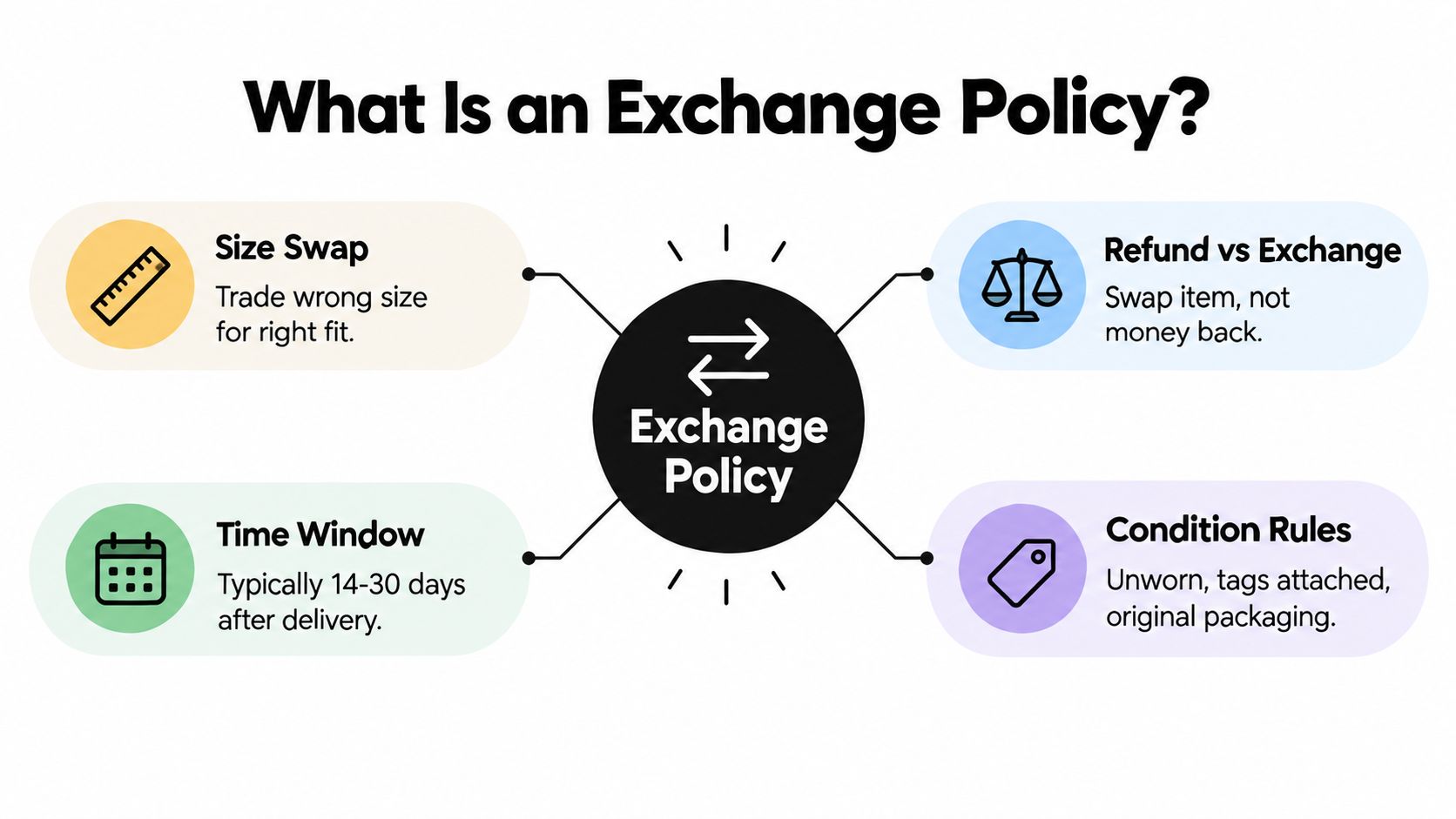
An exchange policy is the set of rules that explains when and how you can swap a purchased item for another eligible item. In online apparel shopping, it usually covers the request period, item condition, packaging, proof of purchase, available inventory, and any shipping or payment exceptions. Retail guidance commonly presents a 30-day exchange period as a baseline, although each brand sets its own terms and may require the original item to be sent back within a shorter period after approval, as explained in Shopify's ecommerce return policy guidance.
Think of the process as changing a train reservation rather than cancelling the journey. A refund sends the value back to you and asks you to start shopping again. An exchange applies the value of the original purchase to an eligible replacement, so you can move toward the right fit without rebuilding the entire decision from the beginning.
How the mechanism works
Most exchanges follow a straightforward sequence:
- You review eligibility. Check whether the item is within the stated window, unworn or resalable, and accompanied by its tags or packaging.
- You submit a request. The brand may ask for an order number, a reason for the exchange, and the replacement size or item.
- The brand checks inventory. A size swap only works if the desired replacement is available under the policy.
- You return the original piece. The instructions should explain the label, shipping responsibility, and deadline.
- The replacement is sent. The brand applies the original purchase value according to its terms, then explains any difference or exception.
The important detail is inventory matching. A policy that promises exchanges but doesn't explain stock availability leaves you exposed to another delay. For postpartum lingerie, look for language that tells you what happens if your preferred size is temporarily unavailable. The policy should also clarify whether a different item, store credit, or refund becomes the alternative.
Why apparel shoppers need this option
A nursing bra can look right in product photography and still feel wrong on your body. You may need more room in the cup, a different band tension, or a silhouette that feels gentler during a sensitive stage. An exchange policy acknowledges that online shoppers can't assess every physical detail before delivery.
For example, GAIA is described as a soft nursing bra with stretch lace, flexible support, and breastfeeding access. If the style appeals to you but the initial size doesn't sit correctly, the exchange rules determine whether you have a realistic route to a better fit.
Common Variations and Hidden Conditions
The phrase “easy exchanges” isn't enough. You need to know what easy means before you buy, especially with intimate apparel. One brand may allow a size swap with a simple request, while another may require unused condition, original packaging, a specific approval process, and payment of return shipping.
The policy should answer the questions that affect your time, money, and comfort. Industry guidance commonly points to a 30-day return or exchange period, new or resalable condition, and proof of purchase as shopper expectations, while also stressing the importance of clear rules for eligible products, inventory, shipping, restocking, and payment exceptions in Ryder's ecommerce exchange guidance.
Exchange Policy Variations at a Glance
| Policy Feature | Shopper-Friendly Approach | Restrictive Approach |
|---|---|---|
| Time window | Gives you a clear window beginning after delivery, with enough time to assess fit calmly | Uses a short or confusing deadline, or starts the clock before the parcel reaches you |
| Item condition | Explains how to check fit without damaging the item and states exactly what must remain attached | Uses vague language that leaves you unsure whether a brief fitting makes the item ineligible |
| Size availability | Lets you request another eligible size and explains what happens when stock changes | Advertises exchanges but provides no clear alternative when the replacement size isn't available |
| Shipping | States who pays for the return label and whether the replacement shipment is covered | Reveals shipping or restocking charges late in the process |
| Refund alternative | Explains whether you can choose a refund when an exchange can't be completed | Automatically converts the transaction to credit without making the consequence clear |
| Proof of purchase | Accepts an order confirmation or another practical record | Requires paperwork that a tired new parent may struggle to locate |
| Intimate apparel rules | Separately explains hygiene requirements for bras and lingerie | Buries a broad hygiene exclusion in dense terms and conditions |
Read the fine print before measuring
Don't try on a nursing bra over moisturised skin, with makeup, or after removing tags if the policy requires the garment to remain in original condition. Check the fit over a clean, lightweight layer if the brand's rules allow it, and make your decision promptly.
Also consider sister sizes before assuming the problem is “one size up.” A different combination of band and cup volume may address the issue more precisely, and this guide to sister sizes for bras can help you understand the relationship. Still, don't use sister sizing to force a bra to work if the underwire, fabric, or nursing mechanism feels wrong.
Before checkout: Find the exchange deadline, condition rule, shipping responsibility, and stock provision. If you can't find those four answers, the policy isn't clear enough for a body in transition.
Why Flexibility Matters for Maternity Purchases
A flexible exchange policy isn't a luxury for maternity and nursing lingerie. It's part of the product experience. Your body may change between ordering and delivery, and it may continue changing after you begin breastfeeding. A bra that feels comfortable during one part of the day may feel restrictive later, especially when fullness, sensitivity, and movement are all in flux.
That uncertainty makes online lingerie shopping unusually personal. You can't test the band against your ribcage, judge the cup depth, or check the nursing clasp before paying. You also may not have the energy to package a return, compare new options, and wait for a refund while caring for a newborn.
The cost of a rigid policy
A restrictive policy transfers all the uncertainty to you. The brand receives the order with limited risk, while you carry the consequences if the fit changes or the size chart doesn't translate to your shape. That arrangement is particularly unreasonable for intimate clothing designed for postpartum bodies.
Consumer behavior supports treating the policy as part of the buying decision. A large 2022 survey found that 84% of online shoppers read a return policy before purchasing, and 44% of those shoppers said they would look for another brand or retailer if the policy disappointed them. The same report found that 85% of consumers who had returned an online item in the previous six months had also made at least one exchange, according to the 2022 ecommerce returns report.
Those findings make the commercial point clear. Shoppers aren't treating exchanges as an unusual rescue route. They use them as part of normal apparel purchasing, and they notice when a brand makes the process difficult.
What supportive flexibility looks like
A thoughtful policy should give you:
- A readable deadline: You can identify the request period without interpreting legal language.
- A practical condition rule: You know how to assess fit while preserving eligibility.
- A size-focused solution: The policy prioritises finding the right size when you still want the original style.
- A visible cost structure: You can see whether return shipping, restocking, or replacement delivery creates an extra charge.
- A human support route: You can ask about fit before a small uncertainty becomes a failed purchase.
The right standard is simple. If a brand designs lingerie for women whose bodies are changing, its exchange process should recognise that reality. You shouldn't have to choose between physical comfort and feeling attractive because the first size was an educated guess.
How Milk&Lace Supports Your Postpartum Journey
A premium lingerie brand should carry its design philosophy into customer care. If the product combines nursing access, lace, structured support, and a close-to-skin fit, the exchange policy needs to help shoppers find the size that allows those features to work as intended.
Milk&Lace positions its nursing collection for women reconnecting with confidence and femininity during the later postpartum journey. Its approach includes a flexible size-exchange policy alongside clear guidance for returns, refunds, and shipping, so the shopping experience doesn't end when the parcel arrives.
Design and policy should work together
Compare two ways a brand can handle postpartum sizing.
The first offers a beautiful nursing bra but treats the exchange as an administrative exception. The shopper has to search for the deadline, guess whether trying it on affects eligibility, pay unexpected shipping costs, and discover that the needed size is unavailable only after sending the original back. The design may be thoughtful, but the ownership experience feels precarious.
The second treats sizing support as part of intentional design. The brand explains the exchange route, sets out condition requirements, makes the fit process understandable, and helps the shopper move toward the correct size. That approach respects the fact that a woman may love the garment while needing a different fit after her body changes.
Support that respects the stage you're in
Milk&Lace's collection includes PETRA, a nursing bra described with ultra-soft stretch lace, gentle underwire, and one-hand nursing access. Those details speak to a shopper who wants practical feeding functionality without abandoning elegance.
The policy still matters because structured support and stretch lace must work with your individual proportions. A flexible exchange gives you the opportunity to assess whether the band stays secure, the cups contain your shape comfortably, and the nursing access works naturally in your routine.
A well-designed exchange policy says, “Your changing body belongs in this product conversation.”
That message has practical value. It helps you purchase a garment for the woman you are becoming, rather than treating postpartum change as an inconvenience the brand expects you to manage alone. Review the Milk&Lace size and returns policy before ordering, and save the relevant instructions with your order confirmation.
Your Checklist for a Seamless Sizing Swap
An exchange becomes much easier when you prepare before the parcel arrives. You don't need to predict your postpartum body perfectly. You need a process that protects your options.
- Check the size guide. Read the brand's measurements and fit notes before selecting a size. If the product has underwire, stretch fabric, or nursing clips, consider how those features relate to your usual preferences.
- Measure yourself first. Take fresh measurements close to ordering, using the method recommended by the brand. Avoid relying only on a pre-pregnancy size that may no longer describe your ribcage or bust.
- Save the policy and order confirmation. Keep the exchange page, confirmation email, and order number together. If the policy changes later, you'll still have a record of the terms associated with your purchase.
- Keep tags attached. Don't remove labels, discard packaging, or wear the bra for a full day before deciding whether it works. Follow the brand's hygiene and condition instructions exactly.
- Contact support early. If the band pinches, the cup cuts in, the underwire sits awkwardly, or the nursing access feels difficult, ask for help promptly. Support may clarify whether you need a different size, a sister size, or another style.
- Confirm stock before sending anything back. Ask whether the replacement size is available and whether the brand can reserve it. This can prevent you from returning the original only to find that your preferred replacement has disappeared.
- Record the shipment. Keep the return receipt or tracking information until the exchange is complete. That small habit protects you if the parcel is delayed or the brand needs delivery confirmation.
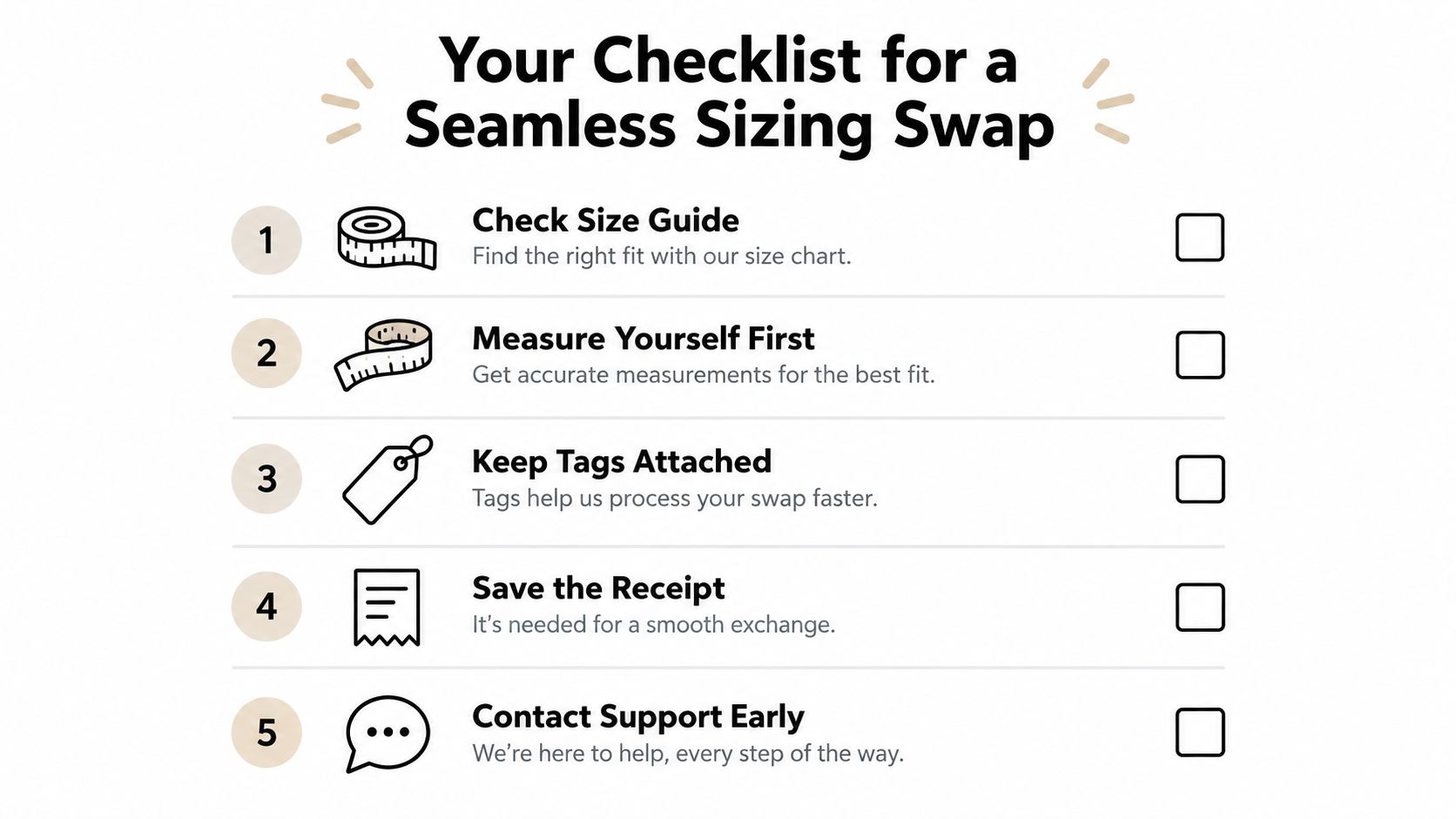
A short visual reminder can help when you're sleep-deprived and managing a newborn. Use the checklist before you open the packaging, not after you've already removed every label.
Reclaiming Confidence Through Risk-Free Shopping
The question behind “what is exchange policy” isn't only whether you can swap a size. It's whether the brand has designed the purchase around the uncertainty you face. For a postpartum shopper, that means recognising that measurements can guide a decision without guaranteeing a perfect result.
A clear exchange policy protects several kinds of investment at once. It protects your money from being tied up in an unworn garment. It protects your time from another confusing search. Most of all, it protects the emotional decision to choose lingerie that makes you feel supported, feminine, and connected to yourself.
Let the policy carry some of the uncertainty
The strongest policies reduce the fear attached to ordering intimate apparel online. You can choose a nursing bra for its lace, support, access, and shape without believing that one imperfect first fit means the entire purchase was a mistake.
Current shopper expectations point toward faster and more flexible exchanges. In a 2026 UK survey, 66.1% of shoppers said they would be likely or very likely to accept an exchange instead of a refund when starting a return, while 47.4% expected the return process to take one to three minutes and 30.1% expected no more than five minutes, as reported by Retail Tech Innovation Hub. The lesson for shoppers is direct: look for a policy that treats convenience as part of the service, not as your responsibility.
Your body isn't a failed fitting
Motherhood expands your life, and your body may change as part of that expansion. You don't need to wait until everything feels familiar before you wear something beautiful. You need garments and brands that allow room for adjustment.
Read the policy before you buy. Measure with care. Keep the packaging intact. Ask for help early. Then choose lingerie that supports the body you have today, with enough flexibility to meet you as it continues to evolve.
Milk&Lace offers elegant nursing lingerie with breastfeeding access, soft lace, and supportive designs for women reconnecting with confidence during the postpartum journey. Visit Milk&Lace to explore the collection and review the exchange guidance before choosing your next size.