

You're a few months postpartum. The soft sleep bras that got you through the early weeks were exactly what you needed then. Now you pull on a T-shirt, glance in the mirror, and something feels off. Your breasts may feel lower, less defined, or harder to fit from one day to the next. If you're around a G cup, that feeling often gets stronger. Comfort alone stops being the whole goal. You want support, shape, and a sense of yourself again.
That shift matters. A nursing bra for a fuller bust isn't just a softer version of a regular bra. Breastfeeding bra design has to handle rapid breast-volume changes while still delivering comfort, support, and versatility, which nursing-bra ergonomics research identifies as core needs for breastfeeding mothers in the first place, especially for fuller sizes where fit becomes more critical (research on nursing bra ergonomics and sizing).
Introduction Why G Cup Nursing Bras Deserve Better Support
A common later-postpartum moment happens in front of the mirror, five minutes before you need to leave. The soft wireless nursing bra that carried you through the newborn stage still fastens, but it no longer does enough. Your bust sits lower than you want, clothes pull in odd places, and the shape you see in a T-shirt does not feel like you.
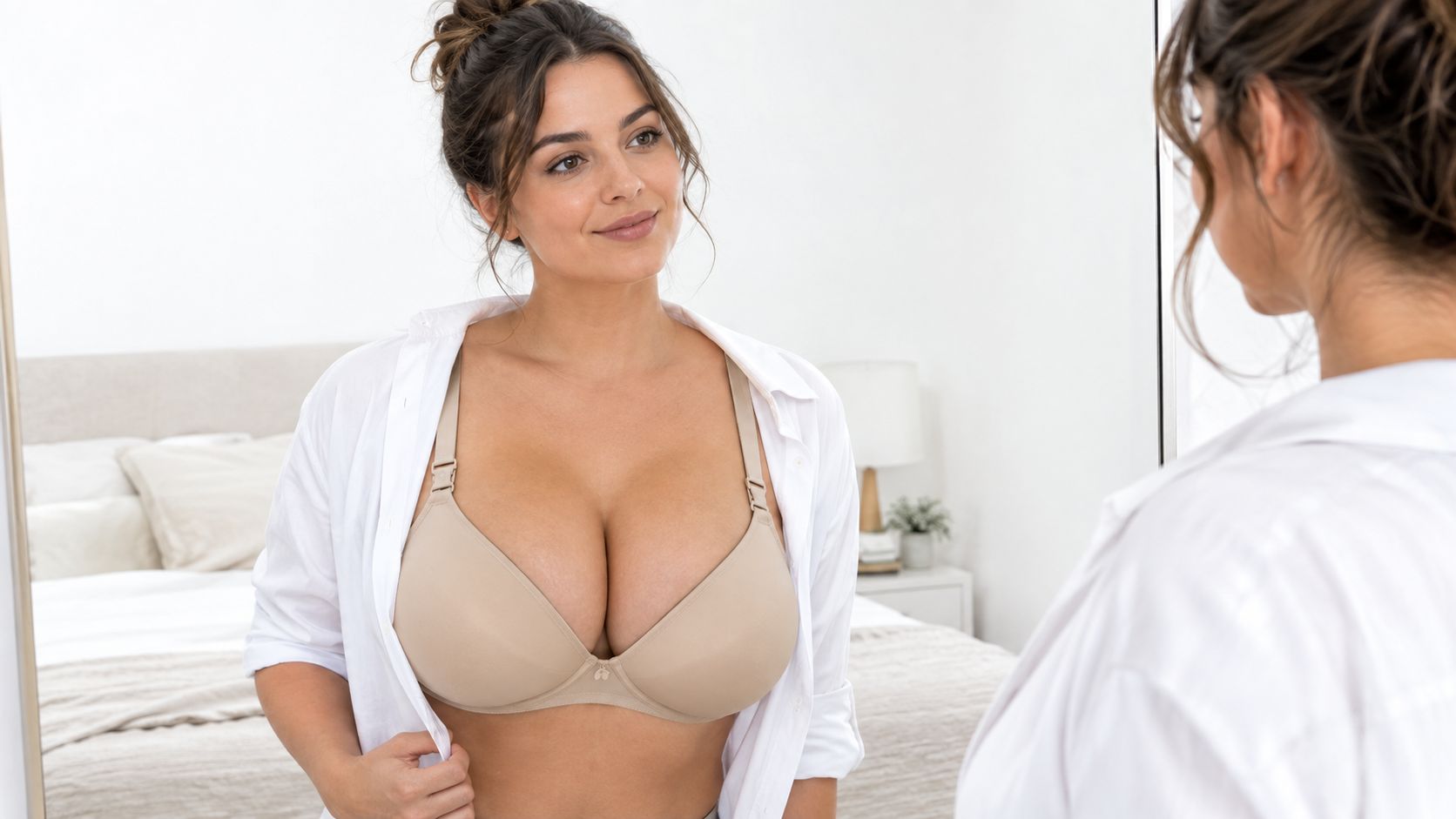
For mothers shopping for nursing bras G cup sizes, this is often less about early feeding comfort and more about support, structure, and identity. You still need nursing access. You also need a bra that steadies fuller breast weight, sits well under everyday clothes, and helps your body feel more held together during a stage that can feel physically and emotionally in-between.
Soft bras usually make sense first. In the early weeks, tenderness, swelling, and frequent feeding often matter more than lift or definition. But a few months later, many G-cup mothers reach a different stage. They may be returning to work, leaving the house more often, or wanting their clothes to fit in a way that feels familiar again.
That is where the conversation needs to mature.
A fuller-bust nursing bra has to handle breast changes and function like real support wear at the same time. Nursing-bra ergonomics research describes core needs such as comfort, support, and versatility, and those needs become harder to meet as cup volume rises (research on nursing bra ergonomics and sizing).
A useful way to picture the shift is this: early postpartum bras work like soft house slippers. They protect and cushion. Later postpartum, many G-cup mothers need something closer to supportive walking shoes. The goal is still comfort, but comfort now depends on stability, shape, and a better frame.
That is why G-cup nursing bras deserve more thoughtful advice than “buy something stretchy.” Stretch can help, but stretch alone often cannot lift fuller tissue, keep the band anchored, or restore a balanced silhouette under clothing. After the early postpartum phase, structured options, including well-designed underwire styles, can start to make sense again for mothers who want more shape and confidence along with nursing function.
Wanting that does not make you fussy. It means your needs changed, and your bra needs changed with them.
Understanding G Cup Sizing and How to Measure With Confidence
A lot of mothers hit a strange point a few months postpartum. The soft nursing bras that felt fine in the early weeks suddenly stop giving enough shape, enough steadiness, or enough confidence under clothes. Before you can choose a better bra, you need a size that reflects your body now, not the body you had in late pregnancy or the first foggy weeks after birth.
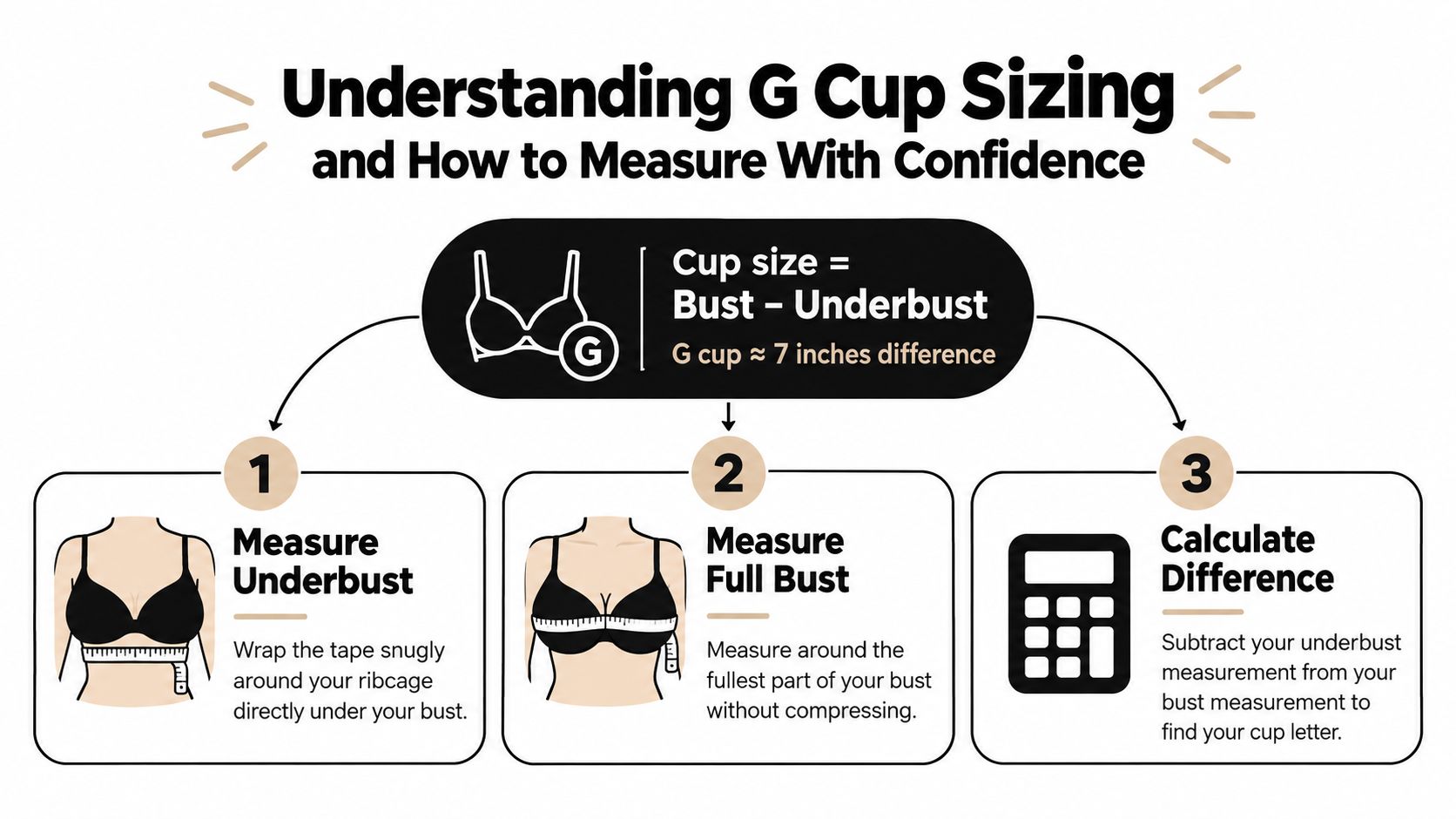
A G cup sounds bigger and more fixed than it really is. In most size systems, the cup letter reflects the difference between your full-bust measurement and your underbust measurement. A G usually points to a fuller difference, but the letter only means something when it is paired with the band size.
That second part is what trips many women up.
A 34G and a 38G do not hold the same cup volume. The band sets the base, and the cup is built from that base. If the band changes, the actual cup volume changes too, even when the letter stays the same. That is why shopping by letter alone often leads G-cup mothers into bras that look right on the tag and feel wrong on the body.
Start with the band, then read the cup
A simple way to picture sizing is to treat it like buying shoes for swollen feet after a long day. The number matters, but so does the shape built around it. Bra sizing works in a similar way. The ribcage measurement gives you the base size, and the bust measurement helps show how much room the cup needs on top of that base.
Sizing rule: Shop by the relationship between your ribcage and your full bust, not by cup letter alone.
If you want a visual walkthrough, this short video can help make the measuring process feel less abstract.
A calm way to measure at home
Use a soft measuring tape. Measure in an unpadded bra, or without one if that gives you a clearer read on your natural shape.
-
Measure your underbust
Wrap the tape snugly around your ribcage, directly under your breasts. Keep it level all the way around. -
Measure your full bust
Measure around the fullest part of your bust. Let the tape rest lightly against your body without pressing tissue down. -
Compare the two numbers
The difference between those measurements helps estimate cup size. In many charts, a difference around seven inches points toward G.
For a fuller step-by-step guide, Milk & Lace shares a practical article on how to measure for a nursing bra.
Why postpartum sizing feels less clear than regular bra fitting
Postpartum breasts rarely stay the same across a full day. Fullness can shift after feeds, between feeds, across your cycle, and again when milk supply starts to regulate. That is one reason mothers often feel “between sizes” for a while.
Later postpartum can be especially confusing for G-cup mothers because your needs change before your size fully settles. You may still want nursing access, but you may also want more shape, more forward support, and a silhouette that feels familiar again. That is often the stage where a size check matters most, because a loosely guessed wireless bra may stop doing enough.
That is also why a bra like GAIA may appeal to someone in this stage. It is described as a soft nursing bra with stretch lace, flexible support, and breastfeeding access, which fits the reality that postpartum bras often need some adaptability rather than rigid precision.
What to do with your measurement
Treat your numbers as a starting point, not a verdict.
- If the band loosens quickly during wear, try a firmer band before assuming you need a smaller cup.
- If breast tissue spills at the top or sides, the cup may be too small or too shallow for your shape.
- If one breast is fuller than the other, fit the larger side first and fine-tune the smaller side with strap adjustment or removable padding if the style allows it.
- If your size seems to change from week to week, measure more than once and look for the range you fall into most often.
The goal is not to chase a letter on a label. The goal is to understand what your body needs now, so you can choose support that feels better and helps you look more like yourself again.
How Fit and Support Work for Larger Busts
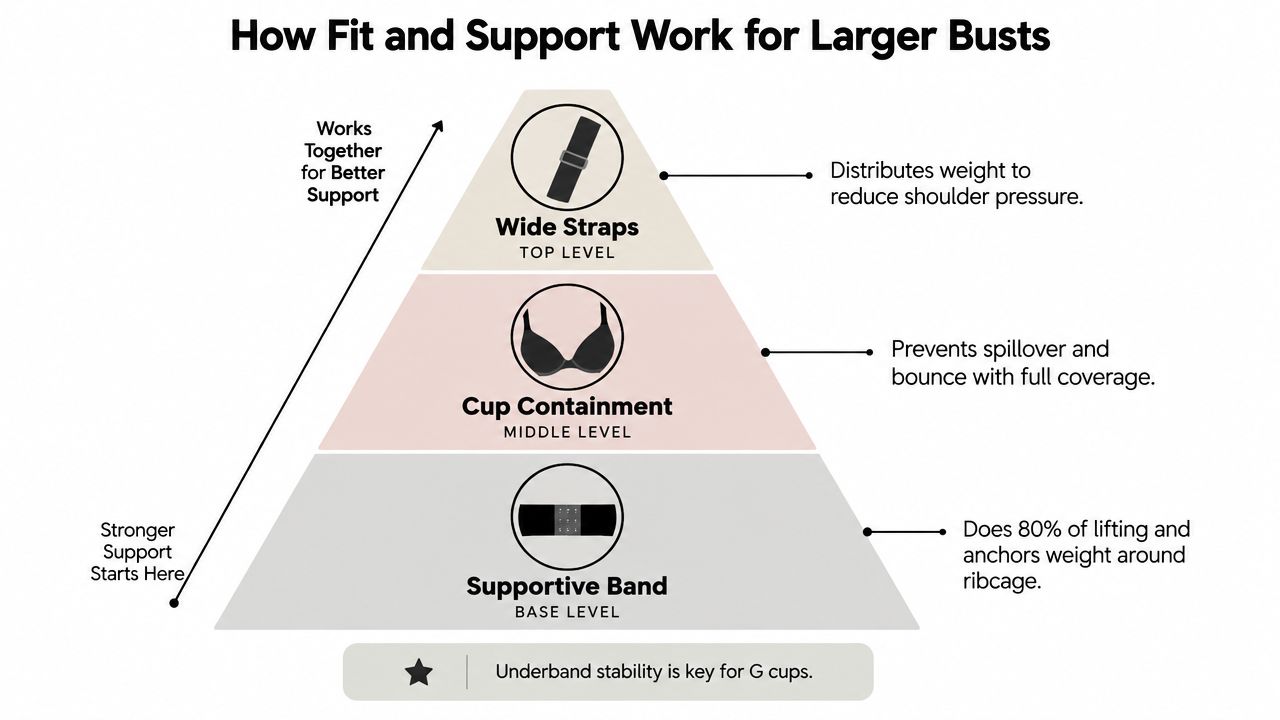
Support starts at the band, which steadies the load around the ribcage. For a G-cup nursing bra, that matters more than many mothers expect, especially later postpartum when you want more than softness. You may still need nursing access, but you may also want your clothes to hang better, your bust to sit more forward, and your body to feel familiar again.
A cross-sectional study of breast-support garments found that poor fit was common in participants' usual bras, and that a better-fitting support garment improved breast support and spinal posture right away (study on fit, support, and posture). For fuller-bust nursing bras, that helps explain why support affects more than comfort. It changes how the weight is carried through the torso.
The band is the anchor
The band does the grounding work. Cups hold and shape the breast tissue, and straps fine-tune the fit, but the band is the part that keeps the whole system steady. If it is too loose, the front drops, the back lifts, and the straps start digging because they are trying to do a job they were never meant to do alone.
That pattern shows up often in G-cup fittings. A bra can feel soft at first and still leave you tired by midday because the support is sitting on the shoulders instead of being shared around the ribcage. If you want a practical fuller-bust guide alongside this section, this overview of a supportive nursing bra for large breasts explains the same support principles in everyday terms.
What support should feel like
Good support usually feels quiet.
You should not spend the day tugging the band down, pulling the cups back into place, or tightening the straps every few hours. A well-fitting G-cup nursing bra feels more like a firm, steady hold around the body, with the cups keeping breast tissue contained and lifted without pinching.
Check for these signs in the mirror and while moving around:
- Level band: The band stays straight across your back instead of climbing upward.
- Contained cups: Breast tissue sits inside the cup without cutting in at the top or spilling near the underarm.
- Helpful straps: The straps sit securely, but they do not feel like they are carrying the full weight.
- Steady movement: When you walk, bend, feed, or lift your baby, your bust feels held in place rather than loose or heavy.
Why details matter at G cup
At this size range, small design details do a big job. Wider straps can spread pressure more comfortably. A firmer underband can hold the bra in place through a full day. Cup construction matters too, because larger busts often need enough depth and side support to keep tissue centered rather than flattened or pushed outward.
This is part of why later postpartum bra needs can change. In the early months, many mothers are grateful for flexible wireless basics. Later on, the question often becomes different. Does the bra only feel soft, or does it also give shape, balance, and the kind of support that helps you feel pulled together again?
That shift is not vanity. It is support meeting a new stage of motherhood.
Underwire Versus Wireless Choices for G Cup Comfort and Shape
Many mothers feel torn. Wireless bras can feel kind and familiar. Structured underwire can feel like a return to shape and polish. Neither is automatically right all the time.
The more useful question is this. What job do you need the bra to do today?
When wireless still makes sense
Wireless nursing bras often work well in the earlier stretch of postpartum life, especially when your breasts feel tender, your size shifts quickly, or you're feeding so often that softness is your top priority. Public content on nursing bras still leans heavily toward these comfort-first ideas, and one recent market-oriented summary notes that wireless styles held 42.5% of segment share in 2025, while also describing continued category growth projections through 2034 (2025 market summary and projections).
That popularity makes sense. Wireless bras are easy to reach for. They often feel forgiving when one side is fuller or your body changes over the course of a day.
When structure starts solving a different problem
Later postpartum, many G-cup mothers hit a different limit. The wireless bra is comfortable, but it no longer gives enough lift, separation, or shape for work clothes, social plans, or feeling more like themselves. Structured underwire can become helpful, not because comfort stops mattering, but because comfort alone stops being enough.
Another underserved gap in public advice is exactly this issue: how to maintain support and shape after milk-volume changes, especially in larger cups. Market coverage points to continued growth in the maternity and nursing bra category, with global estimates ranging from about $3.58B to $4.62B in 2025 and further growth projected through 2034 to 2035, while advice still often stays generic instead of addressing later-postpartum support needs (market growth and content gap discussion).
More stretch isn't always better at G cup. Sometimes more stretch simply means less lift, less separation, and more adjusting.
Choosing Support Structure for G Cup Nursing Bras
| Feature | Wireless Nursing Bra | Structured Underwire Nursing Bra |
|---|---|---|
| Best stage | Early postpartum, tender phases, lounging, sleep | Later postpartum, outings, workwear, days when shape matters |
| Feel on the body | Soft, flexible, forgiving | More defined, anchored, supportive |
| Shape under clothing | Natural, often less separated | More lifted and separated |
| Response to fluctuation | Adapts easily to day-to-day changes | Works best when fit is accurate and the cup has some flexibility |
| Common frustration at G cup | Flattening, bounce, less containment | Pressure if the size or wire position is wrong |
If underwire is the question on your mind, this article on nursing bras with underwire can help you think through the fit side of the decision.
A simple way to decide
Ask yourself three things:
- What stage am I in right now? If your breasts still feel highly variable and sensitive, wireless may still be the easier daily choice.
- What clothes am I dressing for? Softer bras can disappear under lounge layers. Structured bras often work better under blouses, knits, and fitted tops.
- What feeling am I missing most? If the answer is lift, separation, or confidence in your silhouette, structure may be the missing piece.
For many G-cup mothers, wireless and underwire aren't rivals. They're tools for different moments.
Nursing Access Fabrics and Care That Keep You Comfortable
Support matters, but day-to-day comfort often comes down to much smaller details. How the cup opens. How the fabric feels at hour ten, not minute ten. Whether the bra still feels calm against your skin after a feed, a nap, and a rushed school pickup.
Nursing access should feel easy, not awkward
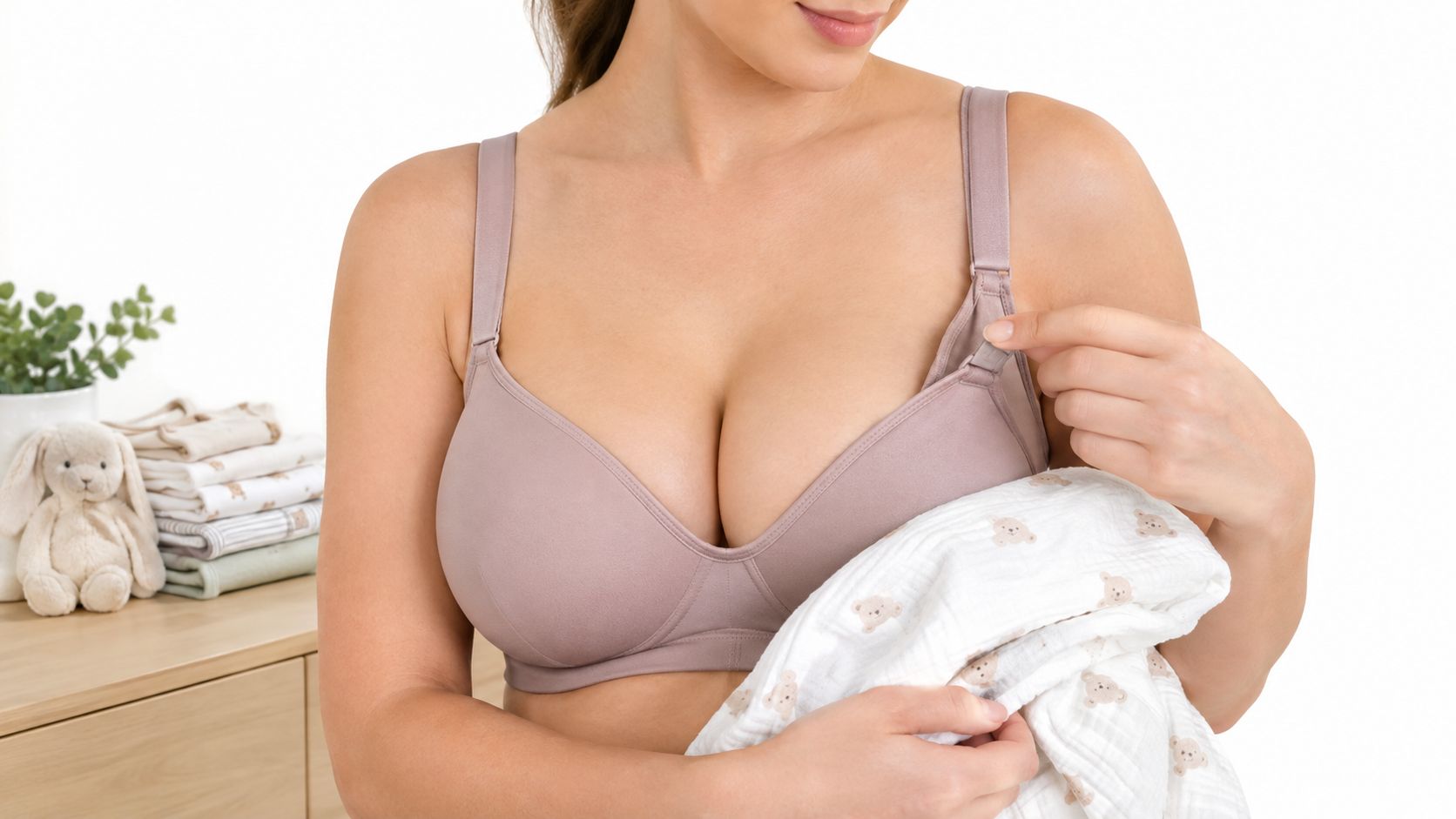
A good nursing bra shouldn't make feeding feel like a small engineering project. If you're holding a baby with one arm, you need access that feels predictable.
Useful details often include:
- One-hand release: You should be able to open the cup without looking down for long.
- Stable cup drop: The cup should move out of the way without twisting or bunching.
- Coverage while feeding: Many mothers prefer a design that still leaves some part of the bra in place for modesty and support.
If you've ever tried to feed in a café bathroom mirror or in the driver's seat before an appointment, you know these details aren't trivial. Ease creates calm.
Fabric can change the whole experience
For fuller busts, “soft” isn't the only fabric goal. Soft fabric that collapses too easily may feel pleasant at first but frustrating by lunchtime. The sweet spot is fabric that feels gentle while still recovering its shape.
Look for qualities like:
- Breathability so the bra doesn't feel heavy or trapped against the skin
- Gentle linings that don't scratch when your skin feels more reactive
- Stretch in the right places so the bra accommodates change without becoming shapeless
- Lace that lies softly rather than rubbing or curling
The best fabric for late postpartum often feels like a second skin, but it still remembers what shape it's supposed to hold.
Care habits that protect fit
A nursing bra can only keep doing its job if the fabric and elastic recover well. Breast size may shift through the day during breastfeeding, so recovery matters more than many women realize.
A few habits help preserve that:
- Rotate your bras so one bra isn't carrying the whole week.
- Wash gently to protect elastic, lace, and nursing hardware.
- Reshape after washing so cups dry closer to their intended form.
- Notice changes early if the band loosens or the cups stop lying smoothly.
Good care doesn't just extend the life of the bra. It helps preserve the support and confidence you bought it for.
Solving Common Postpartum Fit Shifts and Shopping Smarter
Later postpartum sizing can feel slippery because your body doesn't change in one straight line. Some days your breasts feel fuller before a feed. One side may sit differently from the other. Your ribcage may still be settling. A bra that worked two weeks ago can suddenly feel off, even if nothing dramatic happened overnight.
Research reflects that moving-target reality. In a UK longitudinal study, self-reported bra size increased by an average of one underband size and two cup sizes from pre-pregnancy to pregnancy and postpartum, and breastfeeding participants had a median increase of two cup sizes postpartum versus one cup size for non-breastfeeding participants. Another study found 53% of women experienced about one cup-size increase and 26% increased by more than one cup size, while breast size also fluctuated through the day with milk-volume changes before and after feeds (postpartum breast-size change and fluctuation research).
A better way to try on at home
Instead of asking, “Does this bra fit perfectly at this exact minute?” ask, “Does this bra have enough range to support me through a normal day?”
Use this quick home check:
- Band test: Fasten on the loosest comfortable setting. The band should feel firm and level.
- Cup check: Stand naturally, then lift your arms, sit down, and lean forward slightly. Notice whether tissue stays contained.
- Access test: Open and close the nursing clip with one hand. It should feel simple, not fussy.
- After-feed check: If possible, try the bra at a second point in the day when your breast volume is different.
When to size up, wait, or use flexibility
Sometimes the answer isn't “buy a whole new size today.” It may be more practical to pause or adjust.
A few patterns help:
- If the cups are only tight at your fullest point, a more flexible upper cup or a different style may solve the issue better than jumping multiple sizes.
- If the band is nearly right but not quite, an extender can help during a transition period.
- If underwire sits on breast tissue, don't force it. That's a fit problem, not a break-in issue.
- If you're in a week of obvious fluctuation, wait a few days before making a final sizing call.
Shopping with less pressure
This is also the stage when exchange policies matter. If your body is still changing, shopping is easier when you can try on calmly at home and reevaluate after real wear.
For mothers who are ready for more structured later-postpartum support, one option in this category is PETRA. The catalog describes it as featuring ultra-soft stretch lace, gentle underwire, and one-hand nursing access. That combination speaks directly to the late-postpartum need for support plus elegance, rather than early-recovery softness alone.
Finding Confidence Again With the Right G Cup Nursing Bra
A G-cup nursing bra can be practical and beautiful at the same time. That's the shift many women feel later postpartum. They no longer want to choose between feeding access and feeling like themselves.
The strongest starting point is clarity. Measure the band and the bust. Let the band do the anchoring work. Pay attention to containment, not just softness. Choose wireless when your body needs flexibility, and choose structure when you want lift, separation, and a more defined silhouette.
Your bra can match the stage you're in
Motherhood keeps changing your body, but it doesn't erase your preferences. If your current bras feel too flimsy, too flattening, or too far from how you want to look in clothes now, that feeling is worth listening to.
A later-postpartum bra serves a different purpose. It supports feeding, yes. It also supports identity. It helps you leave the house without adjusting all day. It helps your clothes hang in a way that feels familiar. It can make “I'm dressed” feel different from “I just put something on.”
You don't have to stay in the earliest version of postpartum dressing just because it was once the right one.
A gentler standard for fit
You do not need a flawless body or a perfectly stable size to wear a more supportive nursing bra. You need a bra that respects the body you have now. One that accommodates some change, opens easily, and restores support where soft basics no longer can.
That's the heart of the search for nursing bras G cup mothers often undertake. It isn't only about surviving breastfeeding months. It's about stepping into the next part of them with support that feels worthy of it.
If you've been waiting for permission to want more than comfort, you already have it.
Milk&Lace offers nursing bras designed for the later postpartum stage, when support, shape, and personal style start to matter again alongside breastfeeding function. If you're ready to explore structured underwire, soft lace, and discreet nursing access in this fuller-bust conversation, visit Milk&Lace.