

You're standing in a fitting room with three mirrors angled around you. The top you brought in clings across your chest, while the bra underneath pinches near the underarm on one side and spills forward at the center on the other. Your straps leave grooves, the band rides up, and a small crease appears where breast tissue should meet the cup smoothly. You turn sideways, then back again, wondering whether the problem is your body or the garment.
A minimizer underwire bra can help create a smoother, less projected silhouette, but only when its geometry matches your shape. The most useful question isn't, "What size am I?" It's, "Where is this bra asking my breast tissue to go?" Once you learn to read the band, wire, cup, and side panel as a connected system, fitting becomes less about apologizing for fullness and more about choosing the right structure.
The Moment You Realize Your Bra Is Working Against You
The trouble often appears in motion. You raise your arms and the band climbs. You lean forward and the cup edge cuts into the upper breast. You pull the fabric of your shirt away from your chest, only to watch it spring back over a shape that feels larger and less balanced than you intended.
Some discomforts are easy to name. Straps that leave grooves may be compensating for a band that isn't anchoring the bra. A band that rides upward can indicate that the cups are too shallow or that the band lacks enough tension to stay level. Fabric that wrinkles at the lower cup may not mean you need a smaller size. It may mean the cup's curve doesn't match the way your breast projects.
The fitting-room question: Is the bra failing to contain your shape, or is its shape failing to match you?
That distinction matters with minimizer styles. A bra can have a firm band and full coverage yet still create side gaps, a floating center gore, or pressure beneath the breast if its wire is too narrow, too shallow, or placed incorrectly. The wearer may keep changing sizes while the mismatch stays untouched.
This is especially frustrating when your body has changed after pregnancy or breastfeeding. Breast tissue can feel softer, less full at the upper edge, or distributed differently across the breast root. The number on a label may change, but the more important change may be the relationship between your root width, projection, and the cup's internal shape.
You don't need to flatten yourself into a garment's idea of proportion. You need a bra that gives your body a stable path to follow. That path begins with understanding what a minimizer underwire bra is designed to do.
What a Minimizer Underwire Bra Actually Is
A minimizer underwire bra is a structured bra designed to reduce forward projection while keeping the breast contained and supported. Instead of pushing the bust upward and inward, it uses fuller cups, a wider distribution of fabric, side containment, and a stable underwire to create a broader, lower-looking profile beneath clothing.
The effect is better understood as redistribution, not flattening. Think of a mound of flour in a narrow bowl. If you press straight down, the flour compacts. If you spread it across a wider bowl, the mound becomes lower while the total amount stays the same. A minimizer works more like the second option. It guides some volume sideways and downward rather than squeezing everything against the chest.
A technical benchmark for full-support minimizer styles is up to 1 to 1.5 inches of reduced bust projection, while retaining a natural silhouette, as described in the minimizer bra product design information. That result depends on several parts working together:
- Full-coverage cups contain the upper and central breast without relying on heavy foam.
- Angled seams and shaped fabric redirect volume across a wider footprint.
- Side panels help capture tissue that might otherwise move toward the underarm.
- The underwire creates a defined lower and outer boundary for the cup.
The wire shouldn't feel like a rigid cage. It should sit around the breast root, following the crease beneath the breast and the outer curve without pressing into breast tissue. Its job is to hold the cup's new geometry in place, not to force the breast into an unnaturally compressed shape.
For postpartum shoppers, the difference between shaping and nursing function becomes important. PETRA is a nursing bra featuring ultra-soft stretch lace, gentle underwire, and one-hand nursing access. That combination prioritizes breastfeeding functionality alongside support, while a dedicated minimizer gives more attention to reducing projection beneath clothing.
How the Construction Creates the Minimizing Effect
A minimizer is easiest to understand as a small engineering system. The band, cups, wire, and side panels don't perform separate jobs. They share the work of stabilizing the bust and redirecting its shape.
The band creates the anchor
The band runs horizontally around the ribcage, so it provides the foundation for the rest of the bra. It should feel firm enough to remain level when you move, but not so tight that breathing becomes uncomfortable or the back edge digs into your skin.
A band that is too loose can let the entire bra shift upward. Once that happens, the cups and wires no longer sit where they were designed to sit. The wearer may tighten the straps to recover lift, but that transfers too much work to the shoulders and can make strap grooves worse.
Engineering guidance on band tension and underwire geometry connects appropriate band tension with reduced breast displacement, a more comfortable underwire angle, and improved stability. Larger-cup minimizer designs often use reinforced bands, multi-hook closures, and carefully placed wires for this reason.
The cups redirect forward volume
The cups determine where breast tissue travels. Full-coverage, non-padded cups can lower the visual profile without adding foam or creating a pronounced upper curve. Angled seams and structured linings act like channels, guiding projection outward and slightly downward.
The goal isn't to erase the breast's natural roundness. It's to make the transition from chest to clothing more gradual, especially across a button-front shirt, fitted knit, or structured jacket.
The wire sets the boundary
The underwire frames the lower and outer breast border. It gives the cup a fixed reference line, which helps the bra hold its shape as you walk, bend, and reach. A wireless bra can be soft and supportive, but it generally has less capacity to maintain a precise minimizing geometry through movement.
The wire must follow the breast root rather than sit on top of it. If it's too narrow, tissue may spill toward the underarm or beneath the cup. If it's too wide, the cup may feel empty at the sides while the center still looks projected.
Side panels finish the channel
Side and back smoothing panels help contain lateral movement. They don't need to feel tight to be effective. Their purpose is to create a broader transition between the cup and the torso, so tissue doesn't gather at the underarm while the center remains crowded.
The strongest result comes from cooperation. A firm band steadies the base, the cup redirects volume, the wire holds the root, and the side panel completes the outer edge.
Minimizer Underwire Bras Versus Other Bra Types
Different bra styles solve different problems. A minimizer prioritizes projection reduction and containment, but that doesn't make it the universal answer. A nursing bra may be more useful for access, while a wireless style may be kinder on a tender day.
| Bra Type | Primary Design Goal | Minimizing Effect | Support Mechanism | Postpartum Suitability | Best For |
|---|---|---|---|---|---|
| Minimizer underwire bra | Reduce forward projection and smooth the silhouette | Redirects volume wider and lower | Structured cups, stable band, underwire, side panels | Useful when shape and clothing fit are the priority | Fitted tops, tailored clothing, errands requiring firm support |
| Full-coverage bra | Contain the breast and reduce spillover | May smooth edges without specifically reducing projection | Higher cup coverage and supportive band | Often practical when coverage matters | Everyday containment and fuller neckline coverage |
| Push-up bra | Add lift and emphasize cleavage | Usually increases forward or central projection | Padding, angled cups, and underwire | Less suited to engorgement or shape-sensitive days | Lifted, more pronounced silhouettes |
| Wireless bra | Provide softness and flexible comfort | May offer gentle smoothing, but less geometric control | Fabric tension, wide bands, and flexible support | Useful for sleep, sensitivity, and relaxed wear | Recovery days and low-pressure comfort |
| Nursing bra | Make breastfeeding access simple | Shaping varies by design and usually comes second to access | Drop-down cup, clips, flexible fabric, and supportive construction | Well suited to frequent feeding and changing breast volume | Feeding, pumping routines, and easy one-handed access |
A full-coverage bra can contain tissue without changing the silhouette as deliberately as a minimizer. A push-up does almost the opposite of a minimizer by concentrating volume upward or forward. A wireless bra may feel more forgiving, but soft fabric can't always hold a wide, lower profile under a structured top.
Nursing bras add another priority. Their cup must open or fold down quickly, often with one hand, and their fabric may need to accommodate changing fullness. If you're comparing construction details, this guide to padded underwire bras can help clarify how padding changes the purpose of an underwire design.
A minimizer wins when clothing lines, side spill, or forward projection are your main concerns. It may lose when you need rapid pumping access, sleep comfort, or extra flexibility during engorgement. The right choice depends on the problem you need the bra to solve that day.
Fitting a Minimizer Underwire Bra by Shape Not Just Size
A size label gives you a starting point. It doesn't tell you whether the cup is shallow or deep, whether the wire is narrow or wide, or whether the gore will sit correctly against your sternum. Those details are the bra's geometry, and they often explain a fit problem that changing sizes can't solve.
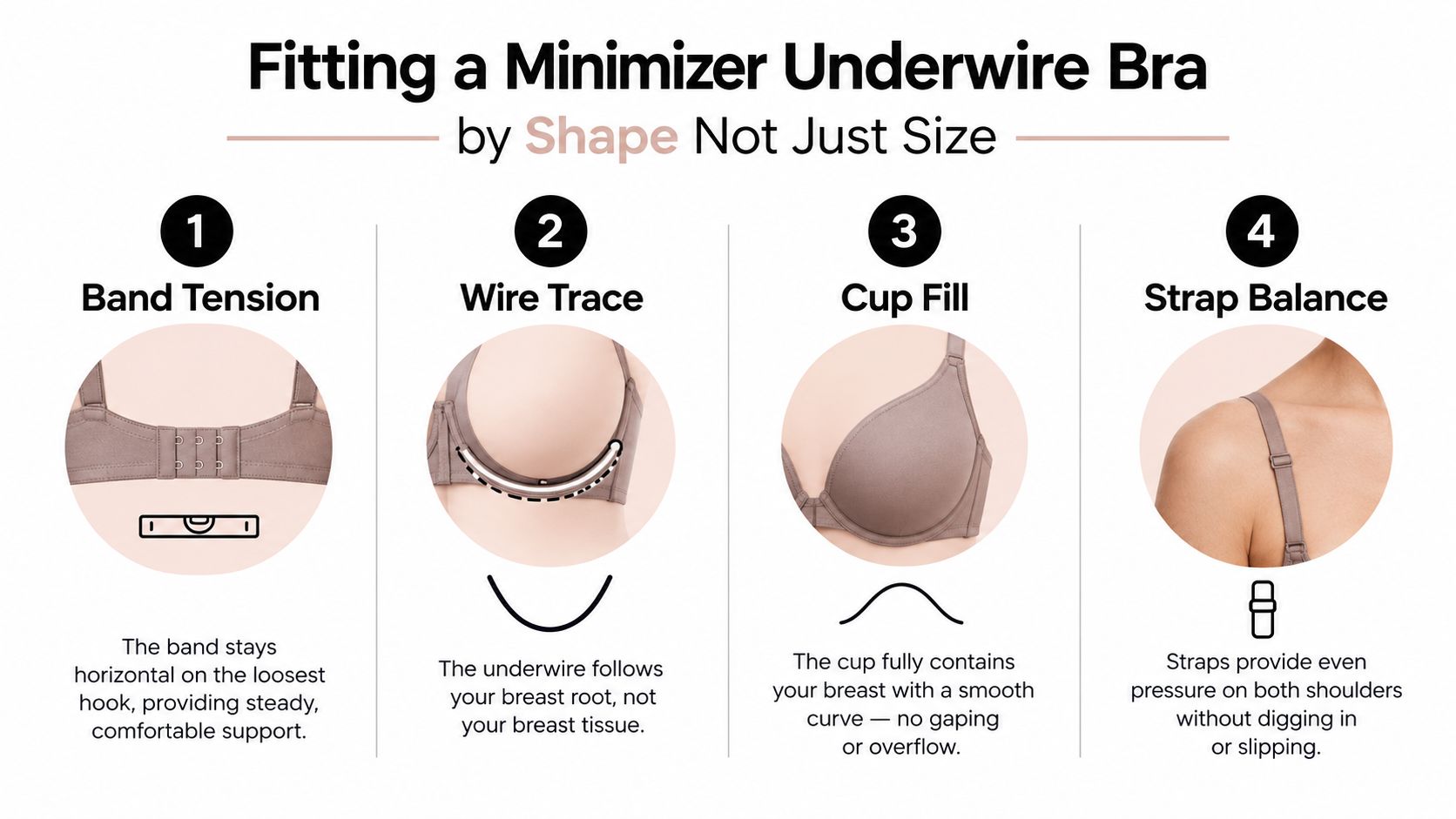
Start with four checkpoints
Band tension comes first. Fasten the bra on the loosest hook and raise your arms. The band should stay broadly level around your body. It should feel secure without making you hold your breath or leaving intense pressure marks.
Trace the wire. The wire should sit in the inframammary fold, the natural crease beneath the breast, and follow the breast root around the side. It shouldn't pierce breast tissue at the center or stop short while tissue escapes beyond it.
Check the gore. The center panel should rest against the sternum rather than hover away from it. A floating gore can signal that the cup is too shallow, the wire shape is wrong, or the breast is being pushed toward a place the cup can't accommodate.
Look at containment. Put on the top you intend to wear. Check the neckline, center, and underarm. A smooth cup line matters, but so does the absence of cutting, bubbling, or tissue escaping at the edges.
Independent bra-fitting guidance describes minimizers as frequently shallow and wide, a combination that can create a floating gore, side gaps, or wires that miss the breast root for someone with more projection. The same discussion of breast shape, wire placement, and pressure links poorly fitted underwires with discomfort such as pressure pain, irritation, and strain.
After breastfeeding, you may notice less upper-pole fullness, a wider root, or softer projection. A size change alone won't necessarily correct that combination. You may need a cup with a different depth, a wire with a different width, or a less rigid shaping strategy.
For more context on how breast shape affects bra choice, use this breast type chart. Then move, reach, and sit in the bra before judging it. Fit has to survive real life, not just a still pose in front of a mirror.
The video below shows practical fitting movements that can reveal shifting, gaping, or pressure that a static check may miss.
Misconceptions That Keep Women in the Wrong Bra
The word “minimizer” can sound severe. It may suggest flattening, discomfort, or a demand to make your body take up less space. The actual design is more specific. It manages projection by redistributing volume across a wider, more stable cup.
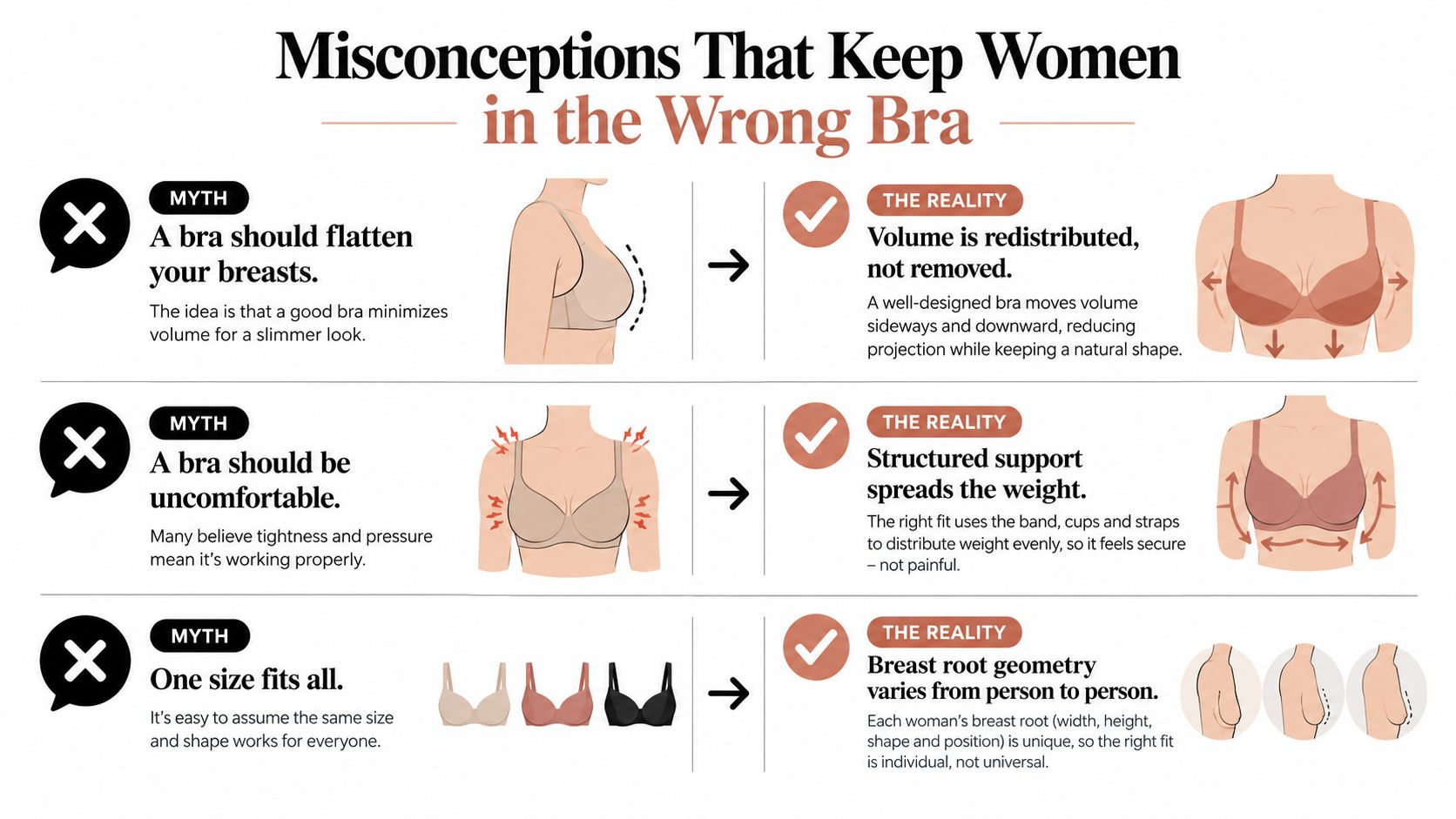
Myth one says minimizers flatten the breast
A well-designed minimizer doesn't need to press tissue into a hard, compressed layer. It uses cup shape, side containment, and wire placement to reduce forward projection. The breast remains contained, but its footprint becomes wider and its profile appears lower under clothing.
If the cup feels crushing, the wire sits on tissue, or the neckline cuts in, the issue may be a poor shape match rather than the concept of minimization.
Myth two says a tighter band fixes overflow
A smaller band can create more pressure without creating more cup space. It may produce back bulge, cause the wire to sit on breast tissue, and encourage the cups to shift out of position.
A tighter foundation isn't a substitute for the right cup geometry.
When tissue spills at the neckline or underarm, assess the cup's volume, depth, and wire width before tightening the band. The band should stabilize the bra, not act as a clamp.
Myth three says underwire is automatically unsafe during breastfeeding
An underwire rests around the breast root against the ribcage. It doesn't sit inside the breast or directly across the milk ducts. The important concern is whether the wire is pressing into breast tissue or whether the bra is too tight for your current state.
Postpartum bodies can change quickly. If you're experiencing pain, a tender area, or concerns about blocked milk flow, remove pressure and seek individualized advice from a qualified healthcare professional. A wire isn't a guarantee of comfort, and wireless isn't a guarantee of correct fit. The bra must match your body and your current needs.
Choosing Between Shaping and Nursing Functionality
Postpartum bra shopping becomes easier when you stop asking one bra to solve every problem at the same time. Shaping solves silhouette. Nursing design solves access. Comfort supports recovery. Those priorities can overlap, but they aren't identical.
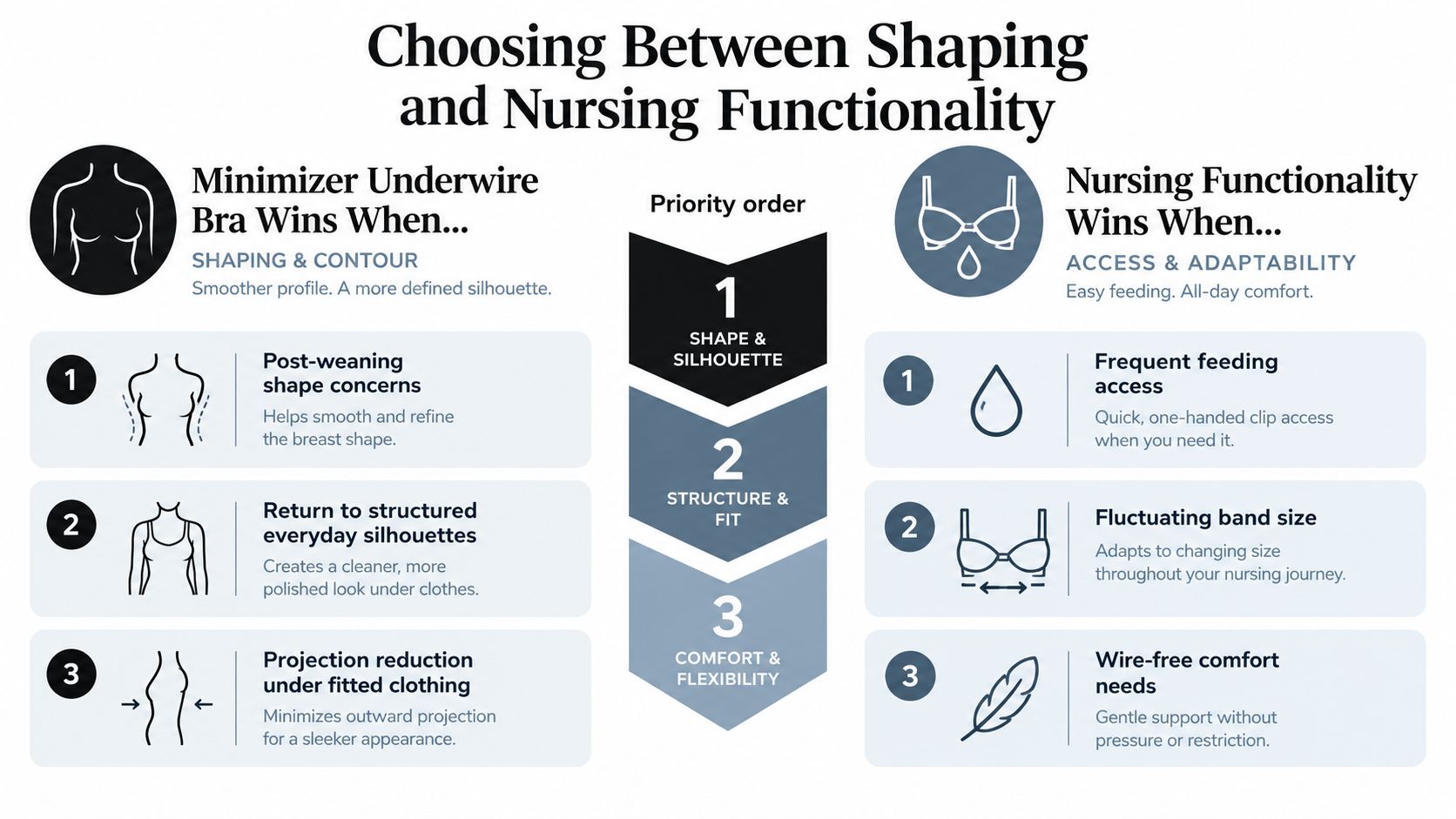
A minimizer underwire bra may be the better match when you're dressing for structured, close-fitting clothes and the main frustration is forward projection. It can also make sense after weaning, when you're paying closer attention to a changed breast shape and want a defined silhouette for work, events, or everyday outfits.
A nursing-first design takes priority when feeding access appears repeatedly throughout the day. One-handed cup release, flexible fabric, and tolerance for fluctuations can matter more than a perfectly reduced profile. If your breasts feel sensitive, full, or unpredictable, aggressive shaping may add frustration even when the bra is technically supportive.
Use a priority hierarchy
Think of your week as a triage list:
- Frequent feeding: Choose access first. You shouldn't have to wrestle with a cup while holding a baby.
- Postpartum sensitivity: Choose gentle contact and stable comfort. A bra that feels beautiful but presses in the wrong place won't serve you.
- Fitted clothing: Choose projection control when smooth lines are the need that keeps returning.
- Sleep or pumping: Choose flexibility and ease over a structured daytime silhouette.
A soft, elegant nursing option such as GAIA combines stretch lace, flexible support, and breastfeeding access. That kind of design may suit a nursing-heavy routine better than a dedicated minimizer.
You also don't have to make one bra carry every role. Some postpartum wardrobes work best as a two-bra system, with a minimizer underwire bra for clothing and a nursing or wireless bra for sleep, pumping, or sensitive days. The useful question is simple: which need shows up most often this week, and which need changes when it does?
Your answer may change as feeding frequency changes, your body settles, or your clothing priorities shift. That isn't inconsistency. It's responsive fitting.
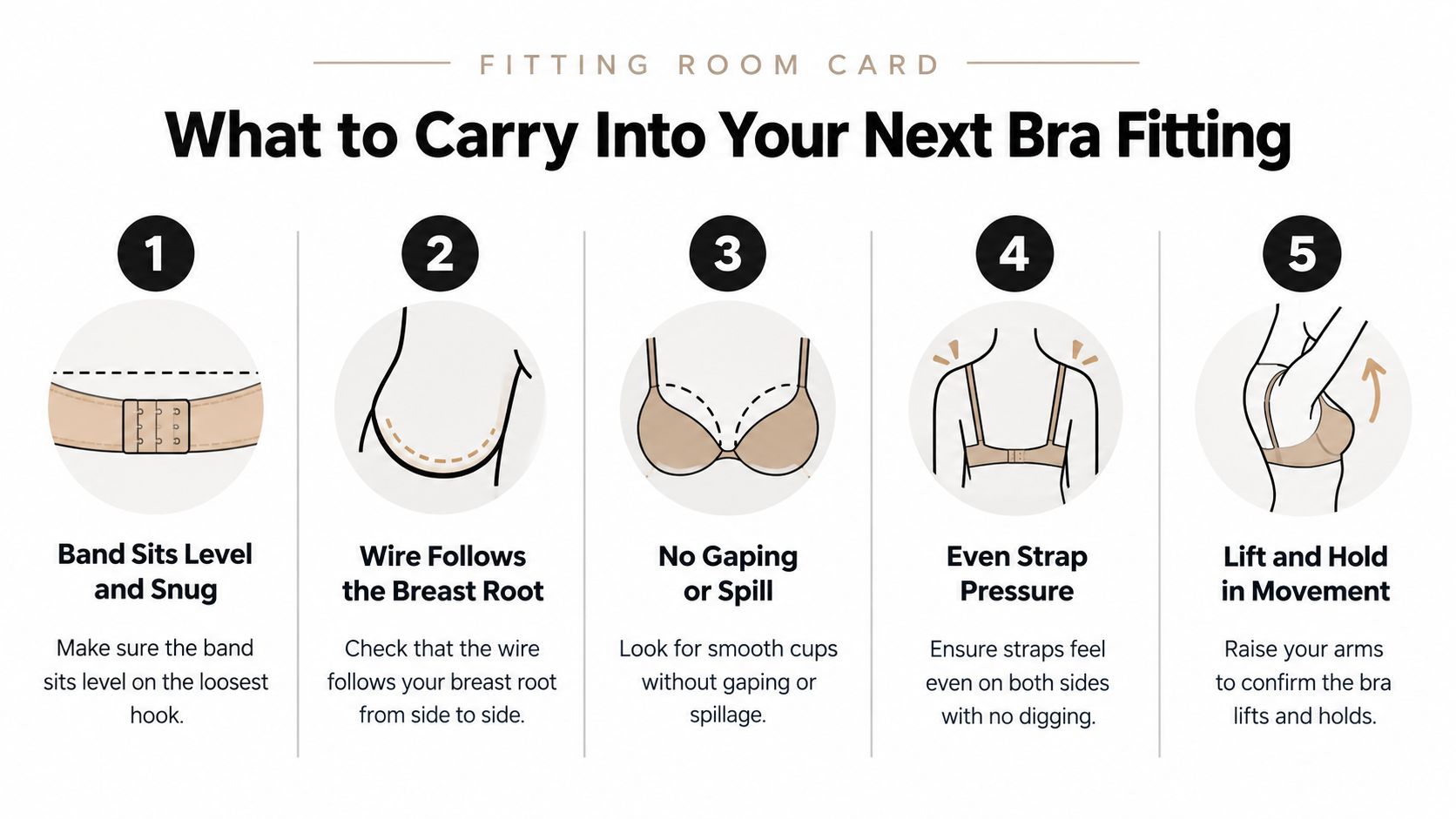
What to Carry Into Your Next Bra Fitting
Take these checks into the fitting room and treat them as observations, not judgments:
- Band: Fasten on the loosest hook. Feel for a firm, level hold that doesn't climb when you lift your arms.
- Wire: Follow the wire with your fingertips. It should trace the breast root without pressing into tissue or stopping too early.
- Gore: Look for contact at the sternum. A gap can signal a shape mismatch, not a need to tighten everything.
- Cup: Put on your actual top. Watch for spill at the neckline and underarm, as well as empty fabric or creasing.
- Straps and movement: Adjust the straps so they balance the bra rather than carry its weight. Reach, bend, and turn before deciding.
A measuring guide such as this bra size measurement resource can help establish a starting point, but the mirror and your body's feedback still matter. Notice where the hook feels secure, where the wire meets the breast root, and whether pressure increases after movement.
Reassess after each major breastfeeding phase. Your shape may change even when the label seems familiar, and a cup designed for one distribution of tissue may not suit another.
Confidence doesn't come from chasing a smaller number. It comes from knowing that the garment is working with your body, giving your shape room, structure, and respect.
Milk&Lace offers nursing lingerie with structured support, soft lace, and discreet breastfeeding access for postpartum stages when comfort and personal style both matter. Explore the collection at Milk&Lace and choose the bra that matches the need your body is expressing now.