

You're standing in front of your wardrobe, holding a white T-shirt against your body. One bra makes the fabric look smooth and polished. Another leaves more texture visible. A third creates shape, but feels too warm or firm before the day has even begun.
That small choice captures why a lightly padded bra can be so useful. It sits between barely-there coverage and dramatic lift, offering a measured blend of softness, structure, and discretion. For bodies that feel sensitive, changeable, or tired of rigid lingerie, that middle ground can feel reassuring.
The right choice isn't determined by padding alone. Band tension, cup volume, lining, fabric, strap placement, and your plans for the day all matter. Postpartum bodies add another layer, because breast fullness and ribcage comfort can shift while feeding, pumping, recovering, and returning to regular routines.
When a Bra Just Feels Right
A bra can change the way a familiar outfit behaves. Under a fine knit, an unpadded lace cup may reveal its seams and texture. A heavily padded cup may create a silhouette that feels unlike you. A lightly padded cup often smooths the transition between your skin and clothing without making the bra the most noticeable part of what you're wearing.
That difference matters over a full day. You may want coverage beneath a pale blouse, but not a thick layer that holds heat. You may want your bust to look gently supported, but not pushed upward or compressed into a shape your body doesn't naturally take. You may also want enough softness for sensitive tissue, especially after pregnancy, breastfeeding, or periods of hormonal change.
A useful starting point: choose the sensation and support you want first. Treat padding as one part of the design, not the entire definition of the bra.
Light padding can influence how your clothing falls, how secure your breasts feel while moving, and how often you adjust your straps or neckline. But it can't correct a loose band, a shallow cup, or a strap that's doing too much of the support work. A well-fitting unpadded bra may feel better than a poorly fitted padded one.
This guide approaches the subject calmly. You'll learn how to recognize a lightly padded bra, what its construction does, how it compares with other styles, and how to assess fit when your body is still changing. You'll also see why the same design may feel comfortable in one climate or activity and less suitable in another.
What a Lightly Padded Bra Actually Is
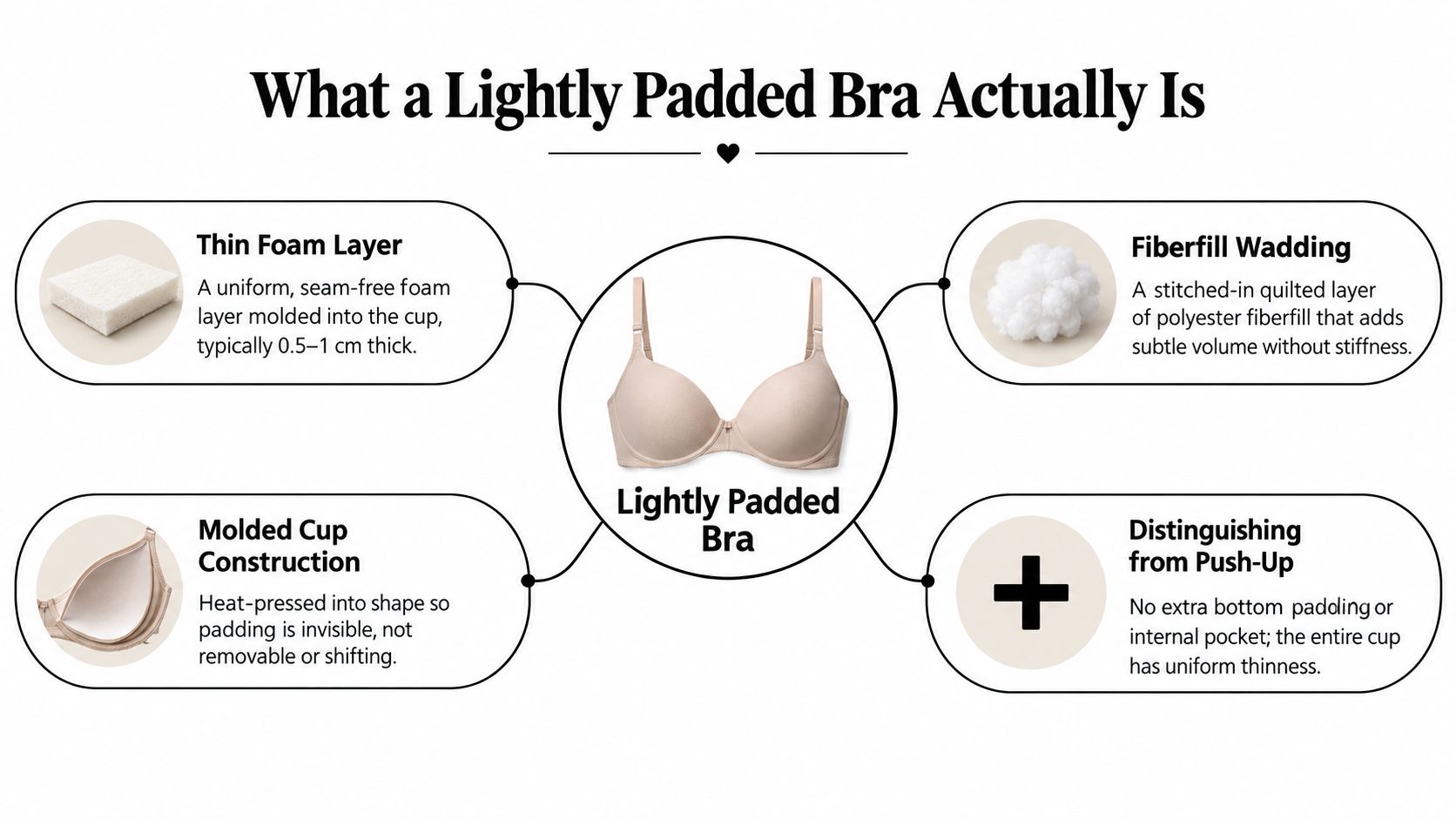
A lightly padded bra contains a thin layer of foam or soft fiber inside the cup. The layer may be sewn between the lining and outer fabric, molded into the cup, or integrated into a flexible spacer construction. Its purpose is usually to give the cup gentle stability and a smoother surface, not to create a pronounced lift.
Look at the cup from the side. Light padding generally appears even from the lower cup through the center and upper cup. Push-up styles usually concentrate additional material beneath or beside the bust to redirect tissue and create more forward projection. An unpadded bra, by contrast, relies on fabric, seams, lace, or mesh without a foam layer.
The padding may be paired with cotton blends, smooth microfiber, stretch mesh, lace, or moisture-managing linings. Those surrounding materials affect the final experience as much as the foam does. A thin insert inside a breathable cup can feel flexible, while a denser, less permeable construction may feel warmer.
Read the cup construction
You can identify the style by checking a few physical clues:
- Even thickness: The cup feels softly structured across its surface rather than noticeably thicker at the base.
- Stable shape: It holds a gentle curve when off the body, but it shouldn't feel like a rigid shell.
- No dramatic pocket: A push-up design often has a separate pad, wedge, or concentrated lower-cup section.
- Flexible lining: The inner surface may feel smooth and lightly cushioned instead of sheer or completely thin.
The practical distinction is simple. Light padding helps the cup keep its form and reduces visible outlines, while the band and underband remain central to support. A lightly lined bra guide can help clarify the difference between lining, padding, and molded construction.
For a nursing option, GAIA is described as a soft, elegant nursing bra with stretch lace, flexible support, and breastfeeding access. Its relevance here is less about assigning it a padding category and more about recognizing how nursing access and flexible support can coexist with a polished lingerie shape.
How Light Padding Shapes Comfort and Silhouette
Light padding works through several small mechanical changes rather than one dramatic effect. It gives the cup a stable surface, helps maintain a smooth outline beneath clothing, and can create a modest amount of roundness without making the bust look heavily enhanced.
The padding itself isn't the main support engine. The band and underband structure should carry most of the breast weight, while straps help distribute tension and keep the cups positioned. A stable side panel and correctly sized cup matter because padding can't compensate for tissue spilling over the edge or a band that shifts upward.
Thin foam also creates a barrier between the nipple area and the outer layer of clothing. That can make a tee or fine knit look more even, particularly when the unpadded alternative has visible lace texture or seams. The effect is usually smoothing rather than transformation.
Comfort depends on the whole system
Breathability involves more than asking whether foam is present. Textile research on breast prosthesis insulation found that approximately 10 millimeters of material thickness was needed to provide meaningful thermal insulation, with diminishing returns beyond that point, and identified cotton as a practical comfort-oriented fabric because it approaches wool's insulation while remaining economical and comfortable in the cited textile research. That finding doesn't establish a universal ideal for bra padding, but it does support a useful principle: thicker construction can retain more warmth.
A lightly padded cup may therefore feel cooler than a heavily padded one when the foam is thin and the lining manages moisture. It still won't feel as airy as sheer mesh or unpadded lace. Warmth also depends on the band width, outer fabric, side panels, skin contact, and the climate you're in.
| Factor | What light padding does | Reader experience |
|---|---|---|
| Surface smoothness | Creates a more even cup outline | Clothing may look calmer over thin knits and tees |
| Nipple coverage | Adds a layer between skin and clothing | Less visible show-through |
| Support | Helps the cup retain shape | More stable containment, provided the band fits |
| Breathability | Uses less material than heavier padding | Often less warm than push-up foam, but not as airy as sheer fabric |
| Silhouette | Adds gentle structure without concentrated lift | A natural-looking, softly rounded profile |
For fluctuating or postpartum tissue, distributed padding may feel less abrupt than a firm, concentrated insert. Still, sensitivity varies. If the cup feels hot, presses against tender areas, or leaves marks, changing the fabric or cup shape may help more than choosing a different padding level.
Lightly Padded Compared to Unpadded, Molded, and Heavily Padded Bras
Think of padding as a spectrum of structure. At one end, unpadded cups allow fabric and seams to follow the body closely. At the other, heavily padded cups deliberately reshape the bust. Lightly padded and molded styles sit between those experiences, but they don't feel identical.
An unpadded bra can offer a very soft, close-to-skin sensation. Lace or mesh may provide airflow and a natural outline, though seams and texture can show beneath close-fitting clothing. A lightly padded bra adds a smooth barrier and modest cup stability, which can be helpful under office clothes or pale tops.
A molded bra generally has a pre-shaped cup. It can create a clean finish beneath fitted clothing, but the cup may feel more structured and can be less forgiving when the breast shape doesn't match its curve. “Molded” describes how the cup is formed, not automatically how heavily it is padded. Some molded cups are lightly lined, while others use denser foam.
Heavily padded or push-up bras use concentrated volume to lift, center, or enlarge the appearance of the bust. That can suit a deliberate occasion look, but the added material may feel warmer or more restrictive during long wear.
| Feature | Unpadded | Lightly padded | Molded | Heavily padded |
|---|---|---|---|---|
| Feel | Close and flexible | Softly structured | More shaped and stable | Firmly enhanced |
| Coverage | Depends on fabric and seams | Consistent surface coverage | Usually smooth and opaque | Strong coverage |
| Silhouette | Most natural and textured | Gently rounded | Defined by the molded curve | Noticeably lifted or enlarged |
| Airflow | Often the most open | Depends on foam and lining | Depends on cup density | Can feel warmer |
| Best match | Minimal structure and natural movement | Balance for daily wear | Seamless clothing and a set cup shape | Deliberate lift or dramatic shaping |
A quick self-check can narrow the field. Choose unpadded when airflow and minimal structure lead your priorities. Consider light padding when you want coverage, a smoother line, and a softer silhouette. Look at molded cups when clothing requires a smooth finish. Reserve heavier padding for moments when visible enhancement is the point, not an accidental side effect.
Finding Your Fit Through Band, Cup, and Postpartum Changes
A padded cup can look smooth even when the fit underneath is wrong, so start with the body rather than the foam. Use a snug underbust measurement as the baseline for the band, measure around the fullest part of the bust for cup estimation, and consider torso length when adjusting straps.
The band should sit level around your back. It shouldn't climb between the shoulder blades or feel so tight that breathing and movement become distracting. The cups should contain the breast tissue without overflow at the neckline or underarm, while empty space can indicate a mismatch in cup shape, volume, or breast fullness.
Check the bra on your body
Put the bra on using the scoop-and-swoop method, then assess it while standing naturally:
- Band: It should feel snug and stay level as you move.
- Cups: Look for spillover, wrinkling, gaping, or pressure at the breast root.
- Gore: The center panel should sit comfortably against the sternum when the style is designed to do so.
- Straps: They should stay in place without digging. If they carry most of the weight, the band may need attention.
- Movement: Reach forward, lift your arms, sit, and walk. A good fit should remain supportive without constant repositioning.
This bra measurement guide can help you establish a starting point, but measurements aren't the final verdict. Different cup shapes and construction methods can fit differently at the same nominal size.
Postpartum changes make a single measurement less dependable. Breast fullness may vary across the day with feeding or pumping, and the ribcage can feel tender or less tolerant of firm elastic. A wireless or stretch-cup style may feel gentler during recovery, while a structured lightly padded nursing bra can suit a later stage when you want more shape and support.
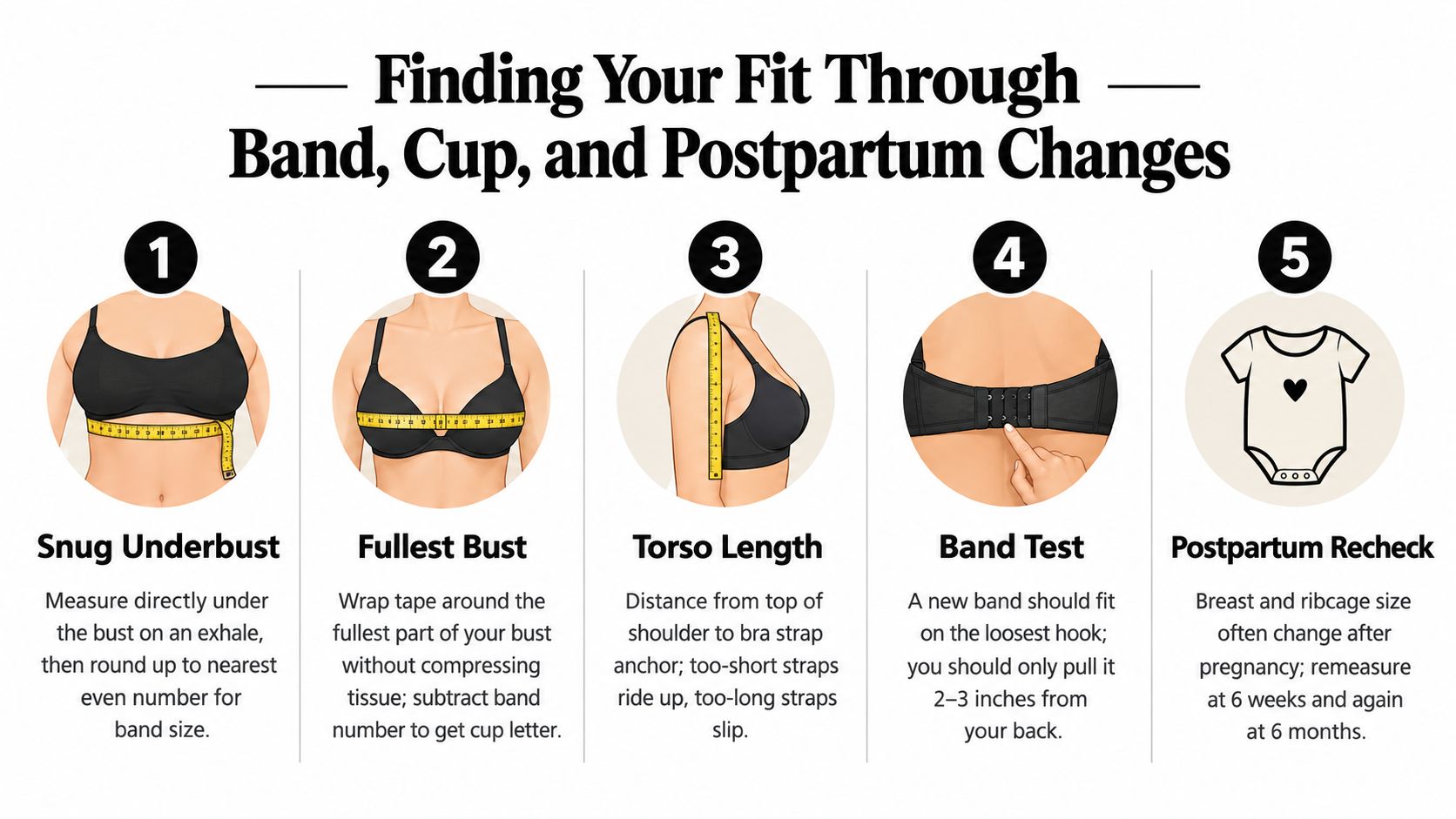
Use a rough estimate for exploration, then reassess whenever the band starts shifting, the cups gape or spill, the straps need repeated tightening, or your body feels newly sensitive. Fit guides disagree about whether measurement should happen in a lightly padded bra or a non-padded bra. For a rough estimate, light padding may be acceptable, but a precise fit check is clearer in a bra that doesn't alter your breast shape. After pregnancy or breastfeeding, compare how the bra fits at the times of day when fullness changes most.
Everyday Moments That Call for Light Padding
Light padding earns its place in ordinary situations because it solves several small problems at once. It can make a button-down look neater, keep a knit dress from revealing every seam, and provide coverage without the visual or physical weight of a push-up cup.
At work, the smooth surface can be useful beneath fitted shirts and fine sweaters. The aim isn't to change your shape dramatically. It's to prevent the bra from competing with the garment, especially when you're sitting, reaching, or moving between rooms.
Weekends call for a different balance. Errands, travel, school runs, and casual outings often involve long periods of walking and waiting. A lightly padded bra may offer enough cup stability and coverage for that routine, while a dense push-up style can feel unnecessarily assertive.
Match the construction to the moment
Nursing and pumping introduce changing fullness. Thin or removable pads can provide a practical layer beneath prints and help the cup adapt when the breast doesn't feel the same throughout the day. They can also make spot cleaning easier after a small leak.
Sensitive skin needs a closer inspection than the word “soft.” Check the lining, seams, elastic edges, and underarm finish. A thin padded barrier may reduce direct friction from clothing, but foam doesn't make an uncomfortable band comfortable. Post-surgical or recovering bodies may need medical guidance and specialized construction rather than a standard everyday bra.
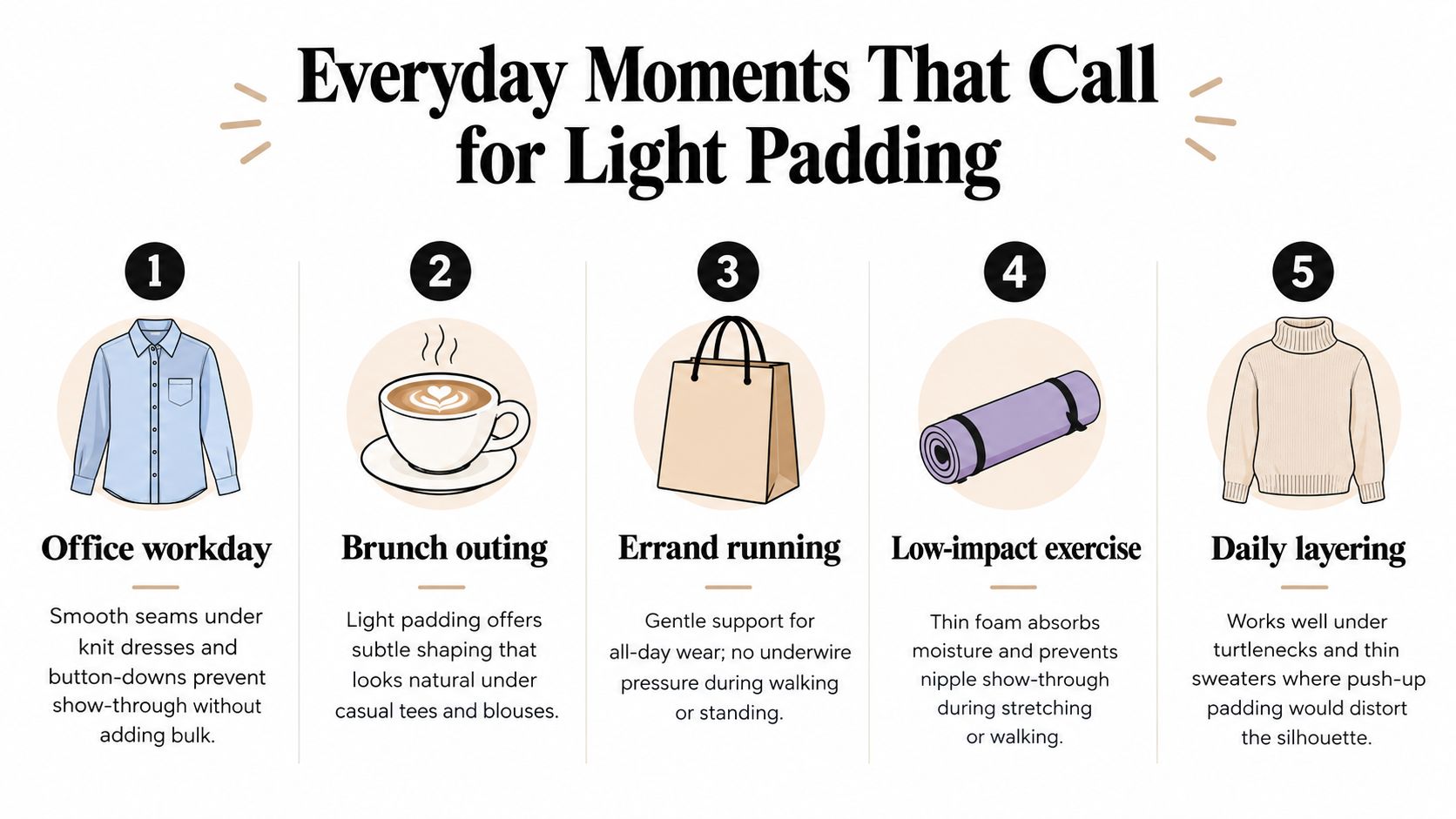
Use the neckline and fabric as clues. Smooth padding tends to work well beneath thin tees, close-knit tops, turtlenecks, and light sweaters. For hot, humid days, prioritize breathable lining and a band that doesn't trap unnecessary moisture. For low-impact activity, choose a design built for movement rather than assuming padding itself provides support. A bra-fit resource from Jockey's bra questions also emphasizes checking how the band, cups, and straps behave during real movement, not only how the bra looks while standing still.
Caring for a Lightly Padded Bra So It Lasts
Foam and elastic respond poorly to rough treatment. Heat can distort the cup, while aggressive detergent and repeated twisting can weaken the materials that keep the bra supportive.
Treat the bra as a shaped garment rather than ordinary laundry. Fasten the hooks before washing, place the bra in a mesh lingerie bag, and use a cool delicate cycle with a mild liquid detergent. Avoid bleach, optical brighteners, and fabric softener, which can be harsh on elastic and technical fibers.
Drying protects the cup
Skip the dryer. Remove the bra promptly, press out excess water without wringing, and reshape the cups with your hands. Lay it flat on a clean towel or hang it from the center gore or a sturdy non-stretch section, away from direct sunlight.
Store molded or lightly structured bras with the cups facing upward. Nesting them gently can save space, but don't fold one cup sharply into the other. If a cup develops a lasting crease, the band stays stretched, or odor remains after careful washing, the garment may no longer be serving your body well.
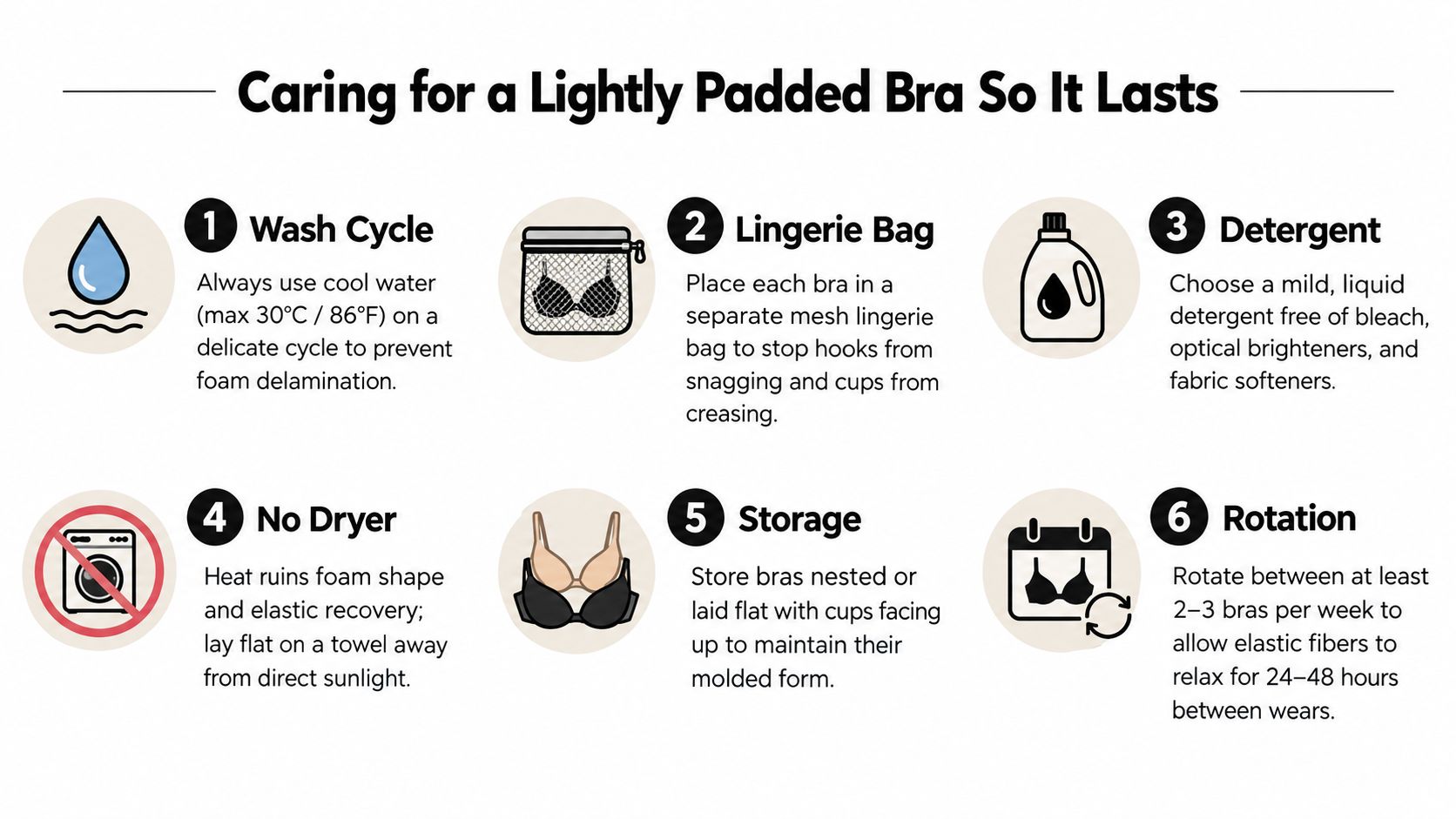
Rotation gives elastic time to recover between wears. Keeping at least a small group of bras in use means one garment isn't carrying every workday, errand, and wash cycle. For fabric-specific guidance, this bra fabric guide can help you think about how fiber choice affects washing, moisture, and skin feel.
For nursing leaks or sweat, blot the area quickly with cool water and a small amount of mild detergent. Rinse thoroughly, press with a towel, and let the cup dry completely before storing it. That gentle response is usually kinder to the padding than frequent hot washes.
Choosing With Confidence
The best padding level isn't universal. It depends on how your body feels today, how your clothes fit over the bra, how much movement your day includes, and whether your breasts are changing through postpartum recovery, feeding, or ordinary fluctuations.
Use this short checklist before choosing:
- Body comfort: Does the band feel supportive without pressure or burning at the ribs?
- Cup behavior: Does the cup contain tissue without gaping, spilling, or shifting?
- Surface needs: Do you want a natural textured outline, a smooth finish, or visible enhancement?
- Climate: Will the lining and foam feel manageable in warmth and humidity?
- Daily movement: Can you bend, reach, walk, and sit without adjusting the bra?
- Change over time: Is your current size stable, or should you treat this as a temporary fit?
Unpadded styles offer the closest, lightest feel. Lightly padded bras provide a balanced compromise between coverage, smoothing, and flexible structure. Molded bras create a more defined cup shape, while heavily padded styles make enhancement more visible. None is automatically more supportive. The band, cup containment, materials, and construction decide that.
Postpartum shoppers deserve especially honest guidance. A lightly padded bra can feel polished and reassuring once the body is ready for more structure, but it shouldn't conceal a poor fit or override tenderness. Measure thoughtfully, try the bra at a realistic point in your day, and pay attention to what your body tells you after movement, not only during the first few minutes.
Trust comfort cues over marketing language. The right bra is the one that supports the body you have now, while leaving room for the body you're still becoming.
Milk&Lace offers nursing lingerie designed around breastfeeding access, flexible support, elegant lace, and the transition toward renewed postpartum confidence. Visit Milk&Lace to explore options that help you choose comfort and structure without losing your sense of personal style.