

You may be standing in front of your wardrobe, holding a bra that worked during the first exhausting weeks after birth, and wondering when you'll feel ready for something different. Your body may still be changing, but the wish to wear beautiful clothes, return to work, meet friends, or recognize yourself in the mirror has returned.
That desire doesn't mean you're leaving motherhood behind. It means you're making room for every part of yourself. A lightly lined bra can become a gentle bridge between early recovery lingerie and the more structured, feminine pieces you're ready to wear later in your postpartum journey.
Reclaiming Your Style After Motherhood
During the early weeks after birth, practicality usually comes first. A soft sleep bra or flexible cotton bralette makes feeding easier, accommodates fluctuations, and feels kinder against tender skin. You may wear it through the night, during feeds, and under clothes without thinking about shape or style.
Then one morning, you reach for a fitted top. You want your clothes to sit smoothly again. You want a bra that offers modesty and definition without feeling rigid, heavily padded, or disconnected from your changing body. That moment often arrives gradually. It may happen when you return to a social routine, begin dressing for work, or decide that comfort and beauty can belong in the same garment.
A lightly lined nursing bra answers that need by offering gentle coverage, natural shaping, and practical breastfeeding access. Its thin lining helps reduce visible nipple show-through, while the cup avoids the dramatic volume change associated with a push-up design. The result feels more polished than a basic bralette but less forceful than a heavily structured bra.

A useful mindset: You don't need to earn the right to feel attractive again. You can choose lingerie that respects your recovery and reflects the woman you're becoming.
Comfort can evolve without disappearing
The best transition isn't a sudden replacement of all your soft bras. Keep the pieces that feel right for sleep, relaxed days, and times when your breasts feel especially full. Add a lightly lined style for moments when you want a smoother outline, more reliable separation, or a silhouette that works beneath a dress or fitted knit.
Fit matters more than the label. A bra that's technically designed for nursing still needs enough flexibility for your body and enough room for normal daily variation. If the band digs, the cups wrinkle, or the wires press into tender areas, the style isn't serving you yet. Try it at a calmer point in your routine, check the fit while standing and sitting, and make sure the nursing clasp can be opened without a struggle.
Motherhood has changed your schedule, your priorities, and often your body. It hasn't erased your personal style. A lightly lined bra can help you return to that style in a way that feels supportive rather than demanding.
Understanding Lightly Lined Bra Construction
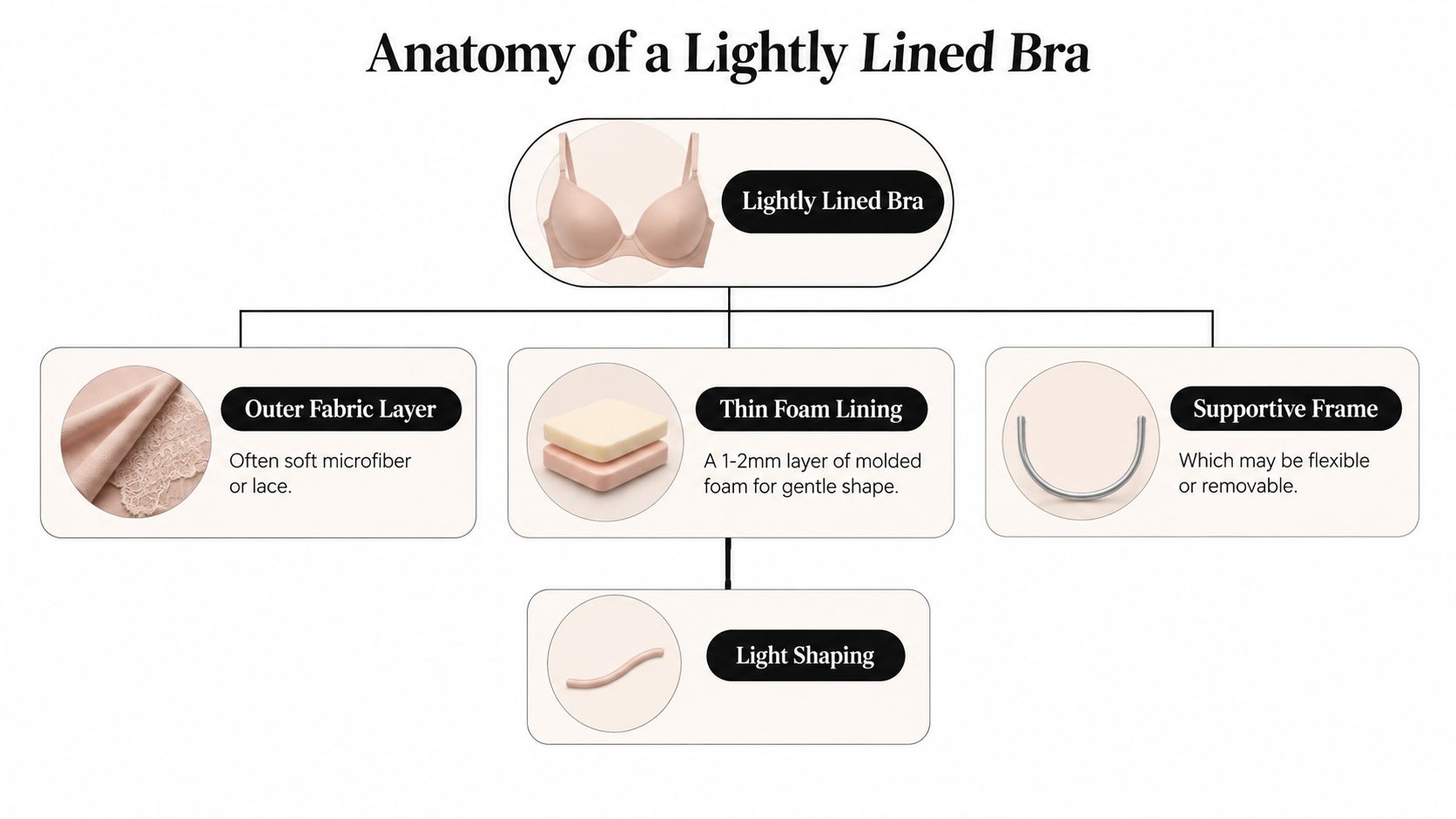
A lightly lined bra sits between two familiar constructions. It isn't completely sheer or unstructured like an unlined bra, and it doesn't create the pronounced volume of a heavily padded or push-up style. The cup usually contains a thin layer of foam or fabric, often around 3 to 6 millimeters, which helps provide nipple coverage and a smoother surface without substantially changing the bust's natural contour. The Wearify's explanation of lightly lined bras describes this middle-ground function in practical terms.
The cup creates modesty, not artificial volume
The lining stabilizes the cup surface. That matters beneath thin jersey, close-fitting shirts, and smooth dresses, where an unlined fabric may reveal more detail than you'd prefer. Because the layer is light, it generally preserves the breast's existing profile instead of imposing a new one.
The outer material affects how the bra feels and behaves. Microfiber can create a sleek finish, while stretch lace can move with the body and add visual softness. Fabric choice also influences breathability, stretch recovery, and how gently the bra rests against sensitive postpartum skin. A helpful overview of bra fabric and material choices can help you assess those differences before buying.
The frame provides most of the support
Padding isn't the main source of lift. The band, underwire, straps, and cup architecture work together to distribute breast weight and keep the cups positioned correctly. Underwire follows the crease where the breast meets the chest wall, helping lift, separate, and shape when it sits in the right place. Wide or well-positioned straps can reduce pressure, while reinforced seams and stable edges help the cups maintain their form.
Postpartum fit deserves special attention. If the cup is too shallow, breast tissue can press against the wire. If the center panel doesn't rest comfortably against the chest, the bra may shift or create pressure. A correct fit should contain the breast without compression, keep the wire on the rib cage rather than breast tissue, and allow you to breathe and move naturally.
GAIA is described in the catalog as a soft nursing bra with stretch lace, flexible support, and breastfeeding access. Those features illustrate how a nursing design can combine a gentler feel with a more intentional silhouette.
A technical history of lighter construction
Lightly lined designs grew from advances in lingerie materials and manufacturing rather than from one isolated fashion moment. Du Pont introduced Lycra in 1959, and by the 1960s many bras combined nylon and Lycra, supporting stretch and thinner cup construction. Molded and pre-formed cups also became more common in the late 1950s and early 1960s, using materials such as foam, quilted polyester wadding, and perforated linings. Transparency Market Research's bra market history and outlook places these developments within the broader evolution of bra construction.
The category remains part of a large global market. The bra market was valued at US$59.8 billion in 2024 and is projected to reach US$99.2 billion by 2035, with a projected 4.8% CAGR from 2025 to 2035, according to the same source. Lightly lined bras matter within that category because they answer a lasting need: coverage and smoothness without losing a natural appearance.
Comparing Lightly Lined to Unlined and Padded Bras
Postpartum breasts can feel different from one day to the next, especially during breastfeeding. A bra that feels comfortable in the morning may feel restrictive later if its cups add too much pressure or leave too little room for variation. Comparing construction types makes the choice clearer.
| Feature | Unlined Bra | Lightly Lined Bra | Padded / Push-Up Bra |
|---|---|---|---|
| Cup surface | Fabric only, often more revealing | Thin lining for coverage and smoothness | Thicker padding for pronounced shaping |
| Visual effect | Most natural and minimal | Natural contour with gentle definition | More lifted, rounded, or enhanced |
| Nipple coverage | May be limited | Usually improved by the thin layer | Usually strong, depending on design |
| Flexibility for changing fullness | Often high, depending on fabric | Moderate, with structured cup support | Often lower because of fixed volume |
| Best use | Relaxed wear and natural texture | Everyday outfits and transitional postpartum dressing | Deliberate volume or dramatic shaping |
When an unlined bra makes sense
An unlined bra can feel wonderfully light and breathable. Stretch fabric may accommodate fullness, and the absence of foam preserves the most natural outline. It's often a good choice for quiet days, loose clothing, or anyone who dislikes molded cups.
The trade-off is visibility. Sensitive nipples, uneven fullness, or cup fabric that shifts under a top can make you feel exposed. Nursing mothers may also prefer more surface stability during a period when the breasts are tender or unpredictable.
Why the lightly lined option often works for daily dressing
The lightly lined bra offers a middle path. It smooths the cup and softens show-through without adding the same visual or physical weight as a push-up construction. For a mother returning to normal routines, that balance can make a fitted shirt feel easier to wear while preserving a familiar body shape.
It's especially useful when you want one bra to move between errands, work, feeding, and social plans. You'll still need to consider your personal sensitivity, breast fullness, and fit preferences. A detailed bra style guide can help you compare other design elements, including coverage and support.
Why heavily padded styles may feel less adaptable
A padded or push-up bra can create a strong silhouette, but its fixed volume may feel out of step with postpartum fluctuations. Thick padding can also make the bra warmer, heavier, or more restrictive, particularly when your breasts feel full.
That doesn't make padded styles wrong. They can be appropriate when you specifically want enhanced cleavage or a more sculpted look. They serve a different purpose from the lightly lined bra, which is designed to refine rather than transform.
Timing Your Transition to Structured Nursing Lingerie
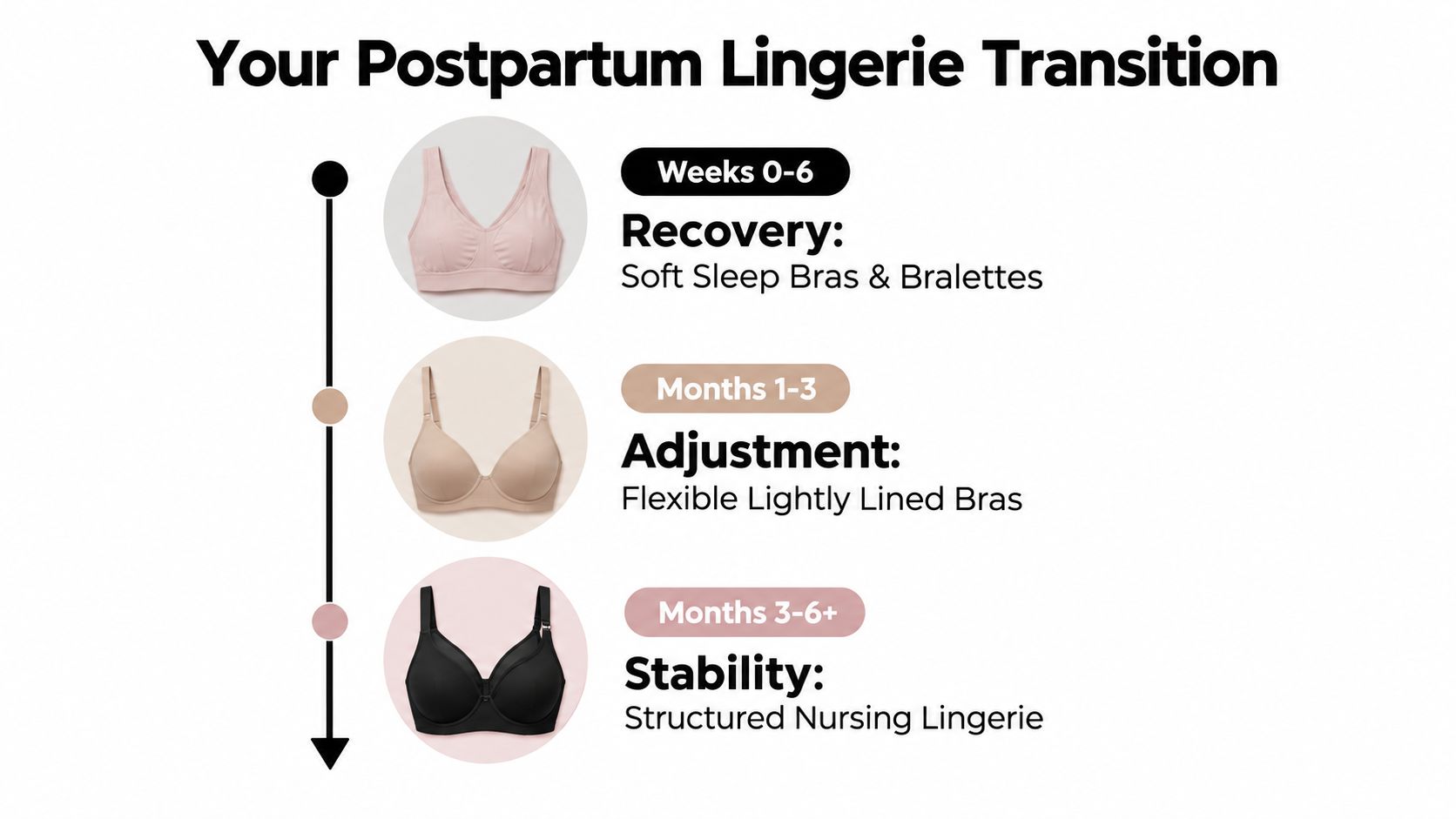
The right time to try a lightly lined nursing bra depends less on a universal date and more on how your body is behaving. Early postpartum changes can happen quickly, and independent postpartum lingerie guidance recommends remeasurement at 6 to 8 weeks postpartum, again at 3 months, at weaning, and around 6 months postpartum. This postpartum medical lingerie guide emphasizes that breast size changes don't follow a predictable pattern.
Start with recovery-first lingerie
In the earliest stage, choose softness, adjustability, and easy access. Sleep bras and flexible bralettes can be more forgiving while your breasts are tender and feeding patterns are still developing. A structured cup may feel premature if your size changes noticeably between feeds or if the band irritates your healing body.
This phase isn't a failure of style. It's a practical response to recovery. You can keep wearing soft bras while beginning to notice what you'll want later, such as smoother cups, more separation, or a shape that works under fitted clothing.
Remeasure before making a serious investment
At the 6 to 8 week point, take a fresh measurement or book a fitting if that's accessible to you. Check both the band and the cup, but don't rely on numbers alone. Breast tissue may be fuller at one point in the day, so assess the bra during your usual wearing conditions and pay attention to pressure, overflow, wrinkling, and wire placement.
Around 3 months postpartum, reassess again. If your breasts feel less reactive and your size is holding more consistently, a flexible lightly lined nursing bra may become a comfortable everyday option. Choose adjustable straps, a forgiving band, and nursing hardware you can operate with one hand.
Fit check: The bra should support you without making you think about it constantly. Persistent pinching, breast tissue under the wire, or a band that rides upward signals that the fit needs attention.
Revisit your fit during weaning and later recovery
Weaning can bring another period of change, so treat it as a new fitting stage rather than assuming your previous size still works. The same applies around 6 months postpartum, when another measurement may help you decide whether you want a more structured everyday bra or a different cup depth.
You can read more about practical purchasing timing in this guide to when to buy nursing bras. The important principle is simple: transition when your body feels ready and the bra fits comfortably, not because a calendar says you should.
Essential Features for Elegant Breastfeeding Support
A beautiful nursing bra has to do several jobs at once. It needs to support breast tissue, allow feeding access, adapt to movement, and feel pleasant against skin that may still be sensitive. The most successful designs don't treat function and femininity as opposites.
Look for support that works with your body
A lightly lined nursing bra should rely on a stable band and thoughtfully placed support, not excessive padding. An underwire can lift and separate when it follows the breast root correctly, but it shouldn't rest on breast tissue or press sharply into the underside. Some postpartum wearers prefer flexible support because it gives structure without the hard sensation of a rigid frame.
Strap geometry also matters. Adjustable straps let you fine-tune lift as your body changes, while wider straps can distribute pressure more comfortably. Look for cups that contain the breast without flattening it and a center panel that sits securely without forcing the breasts together.
Make feeding access simple
Nursing hardware should reduce friction during a real feeding, not just look discreet when the bra is hanging in your wardrobe. A one-handed clasp can let you open the cup while holding your baby with the other arm. The cup should fold down cleanly, and the hardware should feel secure when closed.
Try the clasp before buying if possible. Ask yourself whether you can release it when tired, wearing a coat, or sitting in a small chair. Ease matters because a beautiful bra that takes too much effort to open won't become a reliable part of your daily rotation.
Choose materials that feel forgiving
Soft stretch lace can move with changing fullness while giving the bra a more personal, elegant appearance. Smooth microfiber may suit fitted clothing, especially when you want fewer visible seams. Breathable linings and gentle elastic can make a major difference when your skin feels warm, dry, or easily irritated.
PETRA combines ultra-soft stretch lace, gentle underwire, and one-hand nursing access according to the catalog description. It illustrates a useful design principle: a nursing bra can preserve feeding practicality while still looking like intentional lingerie rather than emergency clothing.
Let the bra support your identity too
The emotional value of this transition is easy to underestimate. When you choose a lightly lined nursing bra with a flattering shape and soft materials, you're not pretending your body hasn't changed. You're acknowledging that your body deserves care, comfort, and beauty in its current form.
A supportive garment should give you more choices, not more rules. Wear the soft bralette when that's what you need, and reach for structured nursing lingerie when it helps you feel present in your own life.
Caring for Your Delicate Postpartum Lingerie
Lace, molded cups, elastic, and nursing hardware all need gentler treatment than ordinary clothing. Careful washing helps preserve the cup shape and keeps the fabric comfortable against sensitive skin.
Use a low-friction washing routine
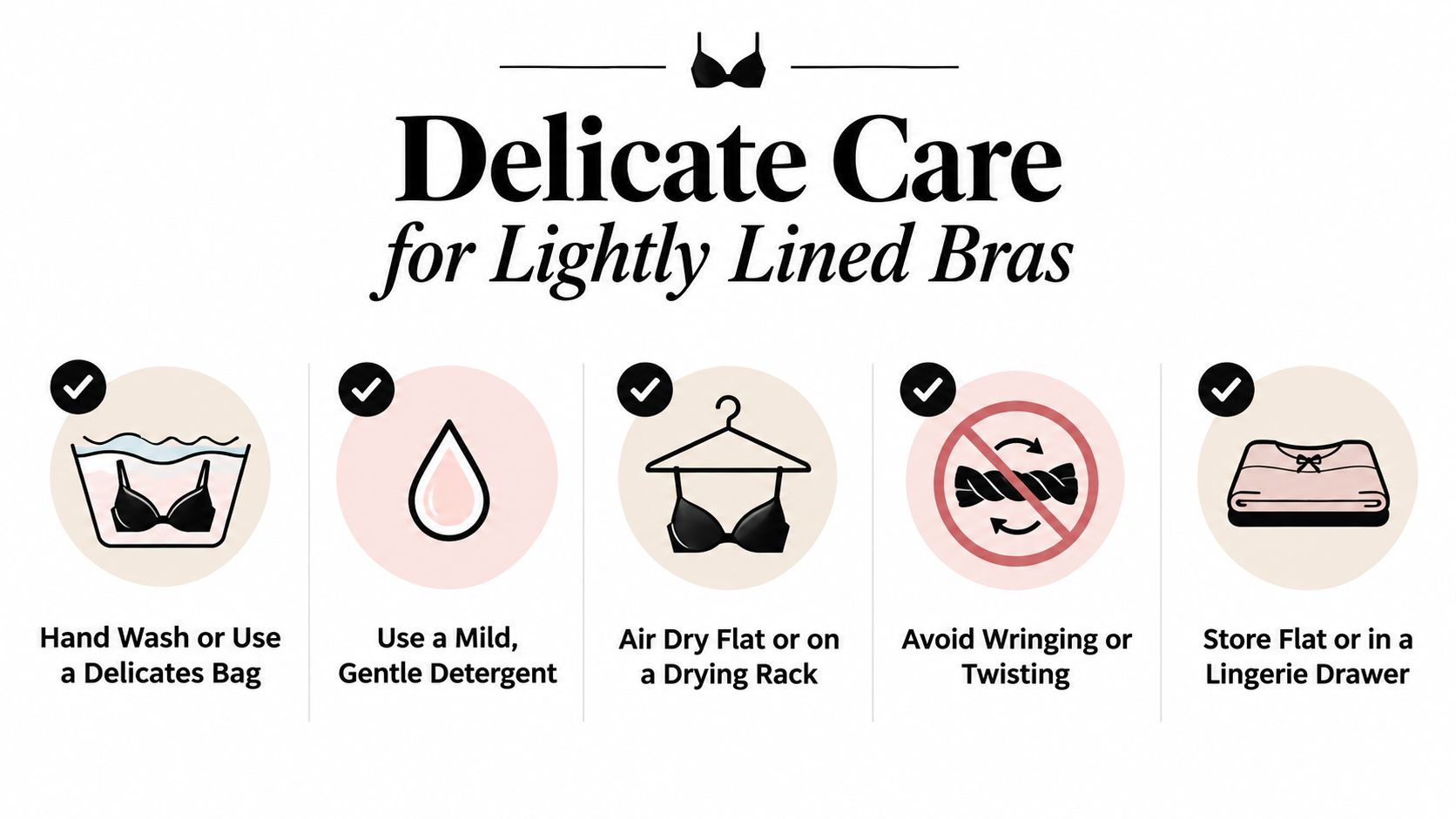
- Hand wash when practical: Use cool or lukewarm water and move the bra gently through it rather than scrubbing the lace.
- Choose a delicates bag: If you use a washing machine, fasten the nursing clasps and place the bra in a mesh bag to reduce snagging and tangling.
- Select mild detergent: A gentle detergent is a safer choice for delicate fibers and sensitive skin. Avoid harsh bleach and strong fabric treatments that can weaken elastic or leave irritating residue.
- Never wring the cups: Press water out carefully with your hands, then roll the bra in a clean towel. Twisting can distort molded cups, lace, and the band.
- Air-dry with support: Lay the bra flat or place it on a drying rack. Keep it away from high heat, radiators, and direct harsh sunlight, which can affect elasticity and fabric color.
Store it without crushing the shape
Once completely dry, fasten the back hooks and place the bra flat in a lingerie drawer. Don't fold molded cups inside one another, stuff them tightly, or place heavy garments on top. Give lace pieces enough room to keep their form.
A small care routine protects more than an item of clothing. It helps your nursing lingerie remain comfortable and dependable while you move through the later postpartum months and beyond.
Milk&Lace offers nursing lingerie designed for the stage when you want practical breastfeeding access, flexible support, and a more refined everyday silhouette. Visit Milk&Lace to explore pieces that can help you reconnect with your personal style while honoring your changing postpartum body.