

You're standing in front of the mirror in a bra that fit last month, and it doesn't quite work anymore. Your breasts feel fuller before a feed, softer after, and your usual top suddenly needs discreet access, real support, and a little more grace. This guide helps you make sense of that shift with clear fit checks, honest trade-offs, and a simple way to choose a full cup nursing bra that still feels like you.
When Full Cup Comfort Meets Everyday Life
It often starts on an ordinary morning. Your baby is asleep nearby, you're reaching for a clean shirt, and you realize your pre-pregnancy bra is riding up at the back while your breast spills slightly at the top. Nothing dramatic has happened, but feeding, leaking, and changing volume have rewritten what comfortable means.

That moment is more common than it can feel in the early weeks. The WHO and UNICEF global scorecard reported 48% of infants younger than six months were exclusively breastfed worldwide in 2023. That figure doesn't measure bra ownership or style preference, but it shows why feeding access and support matter across months, not just the first few days at home.
Why the Search Feels Bigger Than Shopping
A bra sits at the intersection of function and identity. You may want reliable coverage while you lift, carry, and settle your baby, yet you may also miss the smooth line and pretty detail of lingerie you chose because you liked it. Those wishes aren't in conflict, and you don't have to treat elegance as something postponed until breastfeeding ends.
Think of the goal as a confident fit decision, not a hunt for one perfect garment for every stage. Your needs at two weeks postpartum may differ from your needs when you're back at work, walking more, or dressing for an evening out. A good choice supports the life you're living now while leaving room to reassess as your body and routine change.
You're not shopping to return to who you were before. You're choosing support for who you're becoming, in a body that's doing remarkable daily work.
What Defines a Full Cup Nursing Bra
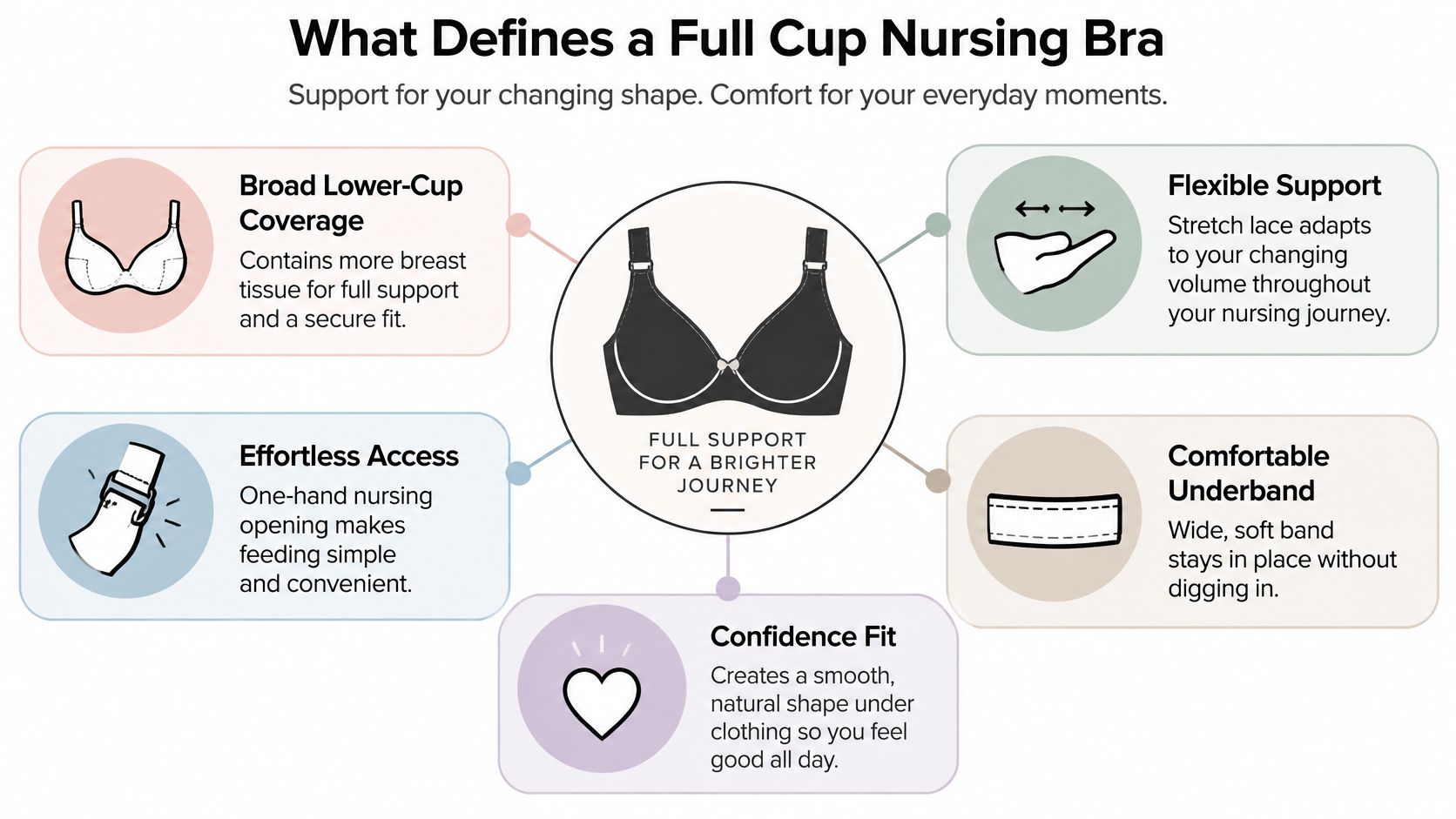
Start with the cup itself, then look at the system around it. Full cup describes broad coverage, especially through the lower and side parts of the cup, so more breast tissue is contained rather than balanced on a narrow edge. Nursing bra adds a practical way to expose the breast for feeding, often through a clip, drop-down panel, or opening that moves fabric aside.
A helpful analogy is a soft hammock rather than a rigid shelf. The cup surrounds and cradles, while the underband anchors the weight around your ribs and the straps steady the shape from above. When one part does all the work, you'll usually feel it as digging straps, a rolling band, or tissue escaping at the neckline.
The Parts That Work Together
- Broad lower-cup coverage: Contains tissue from below and at the sides, reducing spill at the armhole and top edge.
- Stable underband: Sits level around your ribs and carries much of the support, so your shoulders don't have to.
- Adjustable straps: Fine-tune lift and keep the cup close without becoming the main load-bearing structure.
- Nursing access: Releases enough fabric for feeding without pulling the whole bra out of alignment.
- Flexible cup edge: Accommodates fullness changes across the day, especially when lace or fabric has gentle stretch.
Full cup doesn't automatically mean underwired, padded, or absorbent. Those are separate construction choices, and each changes how the bra feels and looks under clothing. A wire can add defined shaping for some wearers, while a wireless frame may feel softer for rest or very sensitive days.
Pay close attention to where the cup ends. If the neckline cuts across breast tissue, the cup may look full on a hanger yet behave like a smaller style on your body. If the opening releases only a small window of fabric, you may end up folding or compressing the breast during a feed, which undermines both comfort and positioning.
Benefits of Complete Coverage and Flexible Support
Most wearers notice containment first. When you bend to pick up your baby or reach into a crib, a well-fitted full cup keeps tissue from shifting upward or sideways with every movement. That steadiness can make ordinary tasks feel less distracting, especially if your breasts are fuller, heavier, or tender before a feed.
Support works best as a load-distribution system, like a gentle suspension bridge. The band provides the foundation, the lower cup lifts from beneath, and wider straps spread remaining pressure over a broader area. If you're exploring options for a fuller bust, this guide to a supportive nursing bra for large breasts expands on how those elements share the work.
Breast biomechanics research gives useful context here. A University of Portsmouth research summary reports a well-designed supportive bra can reduce vertical breast displacement by approximately 60% compared with no external support. Higher-support designs reduce movement more than low-support fashion bras, which is why cup containment, band stability, and strap width should be judged together rather than by cup size alone.
Access Without Losing the Frame
Nursing access has its own engineering challenge. The cup must open widely enough for an unobstructed latch, yet the remaining frame should keep supporting the breast while you feed. A peer-reviewed design study on nursing bras linked full-drop cups with easier latch-on and improved skin-to-skin contact, while broader straps and supportive bands helped transfer weight without excessive shoulder or back strain.
That balance matters in real life when one hand is supporting your baby. A one-handed clip anchored to sturdy strap hardware lets you open the cup quickly, and a lower cup that retains tension keeps the bra from collapsing. You shouldn't need to bunch fabric under the breast or hold the cup away with your chin, your wrist, or sheer determination.
Adaptability is the quieter benefit. Adjustable straps, multiple hook positions, and enough stretch at the cup edge help the bra respond as fullness changes between feeds. Breathable, moisture-managing fabrics also help when warmth and leakage are part of the day, and removable pads can add discretion as long as they lie flat rather than creating ridges under a fitted top.
A useful test: After a feed, close the cup with one hand and take a few steps. If nothing needs tugging, lifting, or rearranging, the access and support are working as one system.
Complete coverage can also restore a sense of polish under clothing. A contained, smooth shape often sits more predictably beneath knit tops and dresses, so you're not adjusting your neckline every time you move. That confidence isn't vanity, it's one less interruption in a day already full of them.
How to Find Your Full Cup Fit
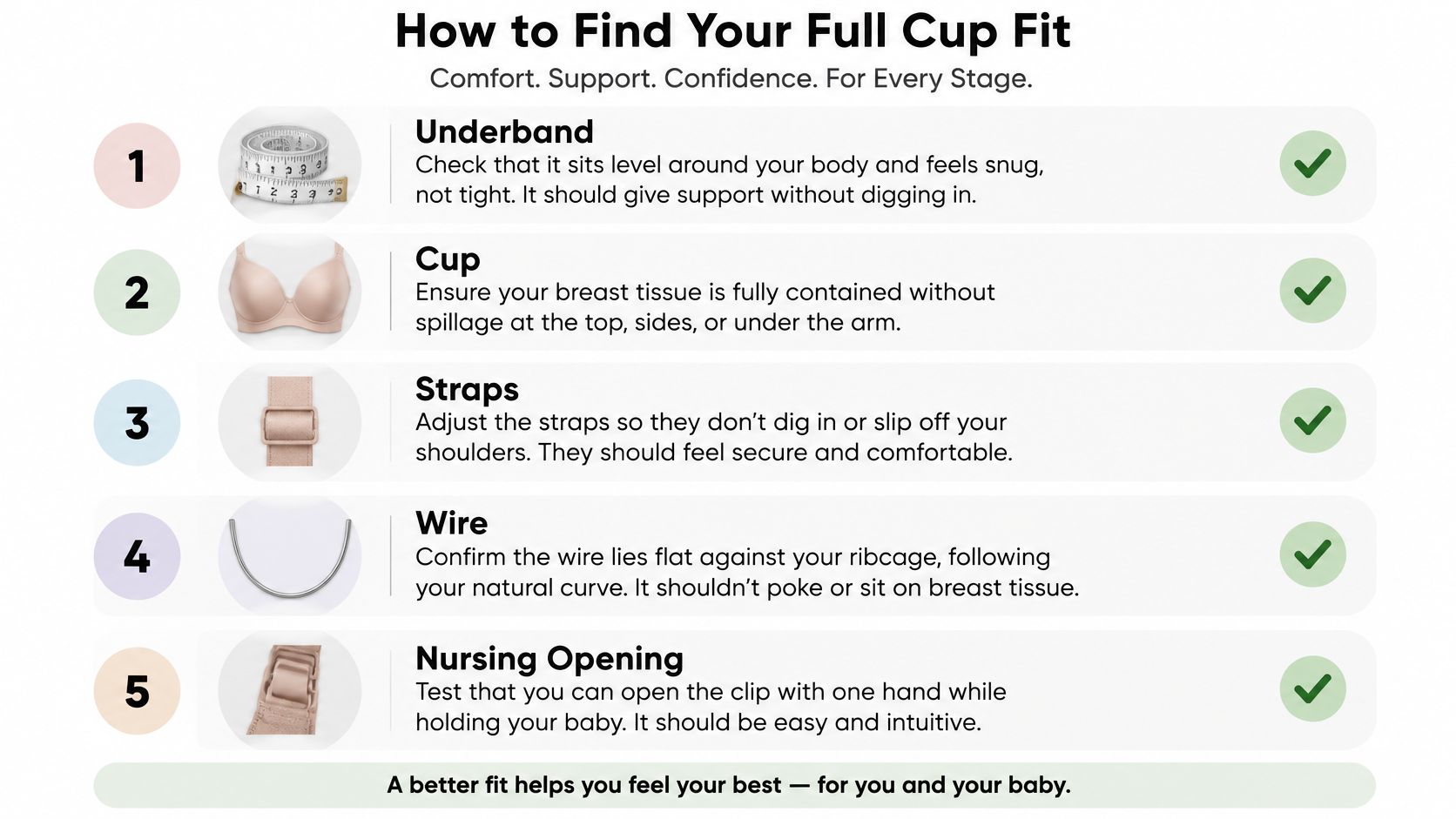
Fit is easier when you check one element at a time, starting with the foundation. Put the bra on, scoop each breast gently into its cup, and give the fabric a moment to settle before you judge it. If you need measurements before you begin, follow this step-by-step guide on how to measure for a nursing bra and treat the result as a starting point, not a verdict.
A Five-Part Fit Check
- Underband first: It should feel snug and level, staying in place when you raise your arms. If it rides up or rolls, the cups and straps will struggle to compensate.
- Cup containment: Breast tissue should sit inside the neckline and armhole without spill, bulging, or empty folds of fabric. Lean forward slightly, then stand tall and check again.
- Center front: The middle of the bra should lie close to your sternum without pressing into breast tissue. A floating center can signal that the cup volume or shape isn't matching you.
- Straps second: Adjust them so they stabilize the cup and lie flat. Deep shoulder grooves usually mean the band isn't doing enough or the straps are overtightened.
- Nursing opening: Open and close the cup one-handed while holding something baby-sized. The exposed area should allow comfortable positioning without folding fabric into the breast.
Your pre-pregnancy size is background information, not a permanent label. A UK study of pregnant and postpartum participants found self-reported bra size increased on average by one underband size and two cup sizes from before pregnancy through the postpartum period. The same study reported 70% had been professionally fitted for their pre-pregnancy size but only 33% for their current pregnancy size, which helps explain why so many people are wearing a near fit rather than a true one.
Treat those averages carefully. They came from a specific UK group using self-reported sizes, so they aren't a universal sizing rule for your body. What they do support is simple and practical, namely that reassessing fit during pregnancy and after birth is normal maintenance, not a sign you've chosen badly before.
Check Fit at Two Points in the Day
Try the bra when your breasts feel fuller and again when they feel softer. A cup that's comfortable only after a feed may compress you before the next one, while a very roomy cup may gap and shift later. Stretch at the upper cup and several band settings give you useful margin between those two states.
Stop and reassess if you notice focal pressure, persistent pain, a wire sitting on breast tissue, tingling, or numbness. Remove the bra, readjust once, and don't keep wearing it just because the size on the label sounded right. Redness, fever, worsening pain, or feeling unwell need professional medical care rather than bra troubleshooting alone.
Comparing Full Cup Nursing Bra Styles
No single construction wins for every body, day, or stage. A structured cup may feel reassuring when you're out and moving, while a softer wireless style may be what you reach for at home. Comparing coverage, support character, and access helps you match the bra to the job instead of expecting one style to do everything equally well.
Choosing a Full Cup Nursing Bra Construction
| Style | Coverage | Support Character | Nursing Access | Best Considered For |
|---|---|---|---|---|
| Full-drop cup | Broad when closed, wide opening when released | Depends on band and remaining frame | Cup drops away for generous access | Frequent feeds and skin-to-skin contact |
| Wireless full cup | Broad and enclosing | Soft, distributed support without a rigid frame | Clip, pull-aside, or drop panel | Early postpartum, rest, sensitivity to pressure |
| Underwired full cup | Broad with defined shaping | Firmer lift and separation when correctly fitted | Usually a drop-down clip at the strap | Later postpartum, workdays, structured outfits |
| Everyday lace-led style | Varies, often fuller with stretch lace at the edge | Flexible support with a smoother fashion profile | Discreet clip or one-handed opening | Feeling polished under regular clothing |
The central trade-off is stability versus release. A wider, more structured cup can steady fuller breasts, but it must still open far enough that you're not compressing tissue to feed. A lighter wireless cup may feel effortless, yet some wearers notice more movement during walking, carrying, or exercise.
Underwire deserves nuance rather than a blanket rule. Neutral guidance from Physician Guide to Breastfeeding states there's zero scientific evidence that a tight-fitting bra causes mastitis or plugged ducts, and underwire isn't automatically unsafe when it fits correctly. The practical question is whether the wire sits flat on your ribcage, clears breast tissue and the underarm, and stays comfortable at both fuller and softer points in your feeding cycle.
Use a clear stopping rule. If a wire digs, leaves a painful focal mark, or creates persistent discomfort, take the bra off and reassess the size or style. Seek professional care for redness, fever, worsening pain, or systemic symptoms, because those signs shouldn't be attributed to a bra without proper evaluation.
Activity also changes the calculation. The verified research summary notes 29% of breastfeeding participants experienced breast pain during physical activity compared with 3% of non-breastfeeding participants in a 2025 study, cited alongside the underwire guidance above. If movement is uncomfortable, prioritize containment and a level band for active hours, even if your softer bra is perfect for the sofa.
Matching Your Bra to Each Postpartum Moment
In the first days, your priorities are usually simple and forgiving. You need fabric that doesn't argue with tender skin, access you can manage half awake, and enough adjustability for rapid changes in fullness. A soft wireless full cup often suits that season because the goal is gentle containment, not a highly sculpted outline.
The image below reflects how one supportive style can move through ordinary motherhood moments, from home feeding to leaving the house with more confidence.
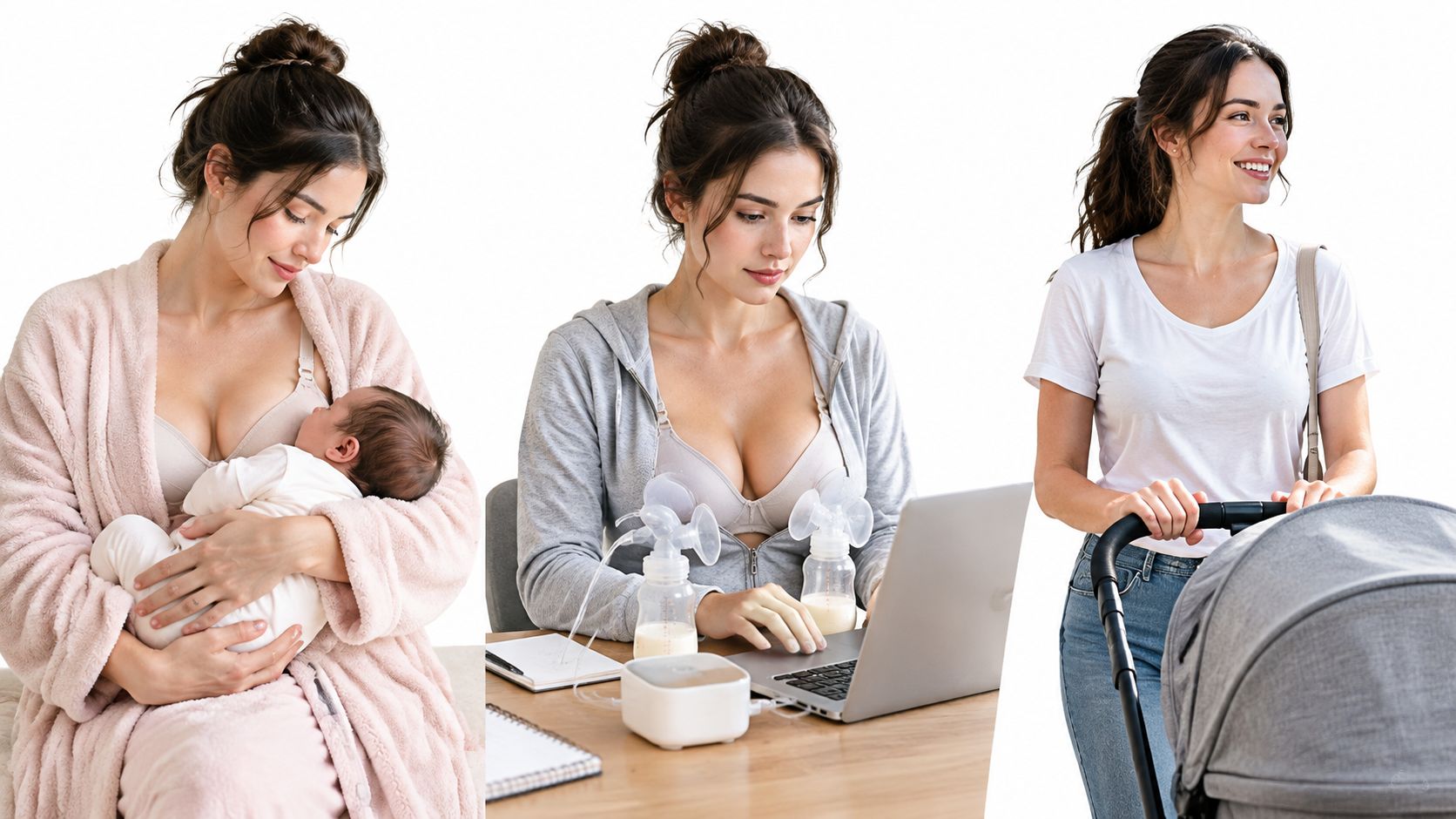
At home during the middle months, the pattern becomes more predictable. You might feed on the sofa, pump at the kitchen table, then head out with the stroller, all in the same bra. That's where a full-drop cup, a stable band, and straps that stay put earn their keep, because you're moving between feeding and everything else without a costume change.
From Sofa Days to Stepping Back Out
Active routines ask for a different emphasis. Walking hills, carrying a growing baby, or returning to exercise can reveal bounce and lateral movement that you never notice while seated. Choose the bra that keeps tissue contained and the band level during movement, and don't assume your nighttime favorite will automatically perform the same job outdoors.
Later postpartum brings another shift, and it's emotional as well as practical. Work meetings, dinners, and clothes with a defined waist or neckline may make you want structured support and a more refined finish. Milk&Lace positions its bras for this later stage, including GAIA, described as a soft, elegant nursing bra with stretch lace, flexible support, and effortless breastfeeding access.
That kind of option doesn't replace an essential early-postpartum bra. It answers a different moment, when feeding is established and you want discreet access without giving up a smooth, intentional silhouette. Structured underwire, stretch lace, and a skin-like feel can suit that transition if the fit checks still pass at your fullest point.
The short video below offers a visual pause to consider how support and access look in motion before you decide which moments matter most in your own week.
Many people end up with a small rotation rather than a single hero bra. One soft option for home and sleep, plus one structured full cup for leaving the house, can cover most routines without overbuying. Let your calendar, comfort, and feeding rhythm decide the mix.
Care Materials and Style Your Nursing Bra Well
Good care starts with the label inside your specific bra. Lace, underwire, molded cups, and stretch fibers don't all tolerate the same heat, agitation, or drying method, so universal laundry rules can shorten a bra's life. When you're comparing textiles, this overview of bra fabric material choices can help you connect fiber and construction with feel.
A Simple Care Routine
- Close hooks and clips: Fasten the bra before washing so hardware doesn't snag lace or twist straps.
- Use a lingerie bag: A mesh bag reduces tangling and helps cups and wires keep their shape in the machine, if machine washing is allowed.
- Wash gently and promptly: Milk leakage, sweat, and skin oils build up in close-fitting garments, so regular gentle washing protects both fabric and comfort.
- Dry as directed: Follow the care label rather than assuming every bra should be tumble dried or hung the same way.
- Rotate your bras: Resting a bra between wears gives elastic time to recover and makes fit feel more consistent.
Material choice shapes the wearing experience, too. Breathable-feeling fabrics and moisture-managing linings can feel kinder during long contact with warm, sensitive skin. Removable pads help with discretion or leakage, but choose thin, smooth ones that sit flat so they don't create ridges beneath the cup.
Styling begins with the neckline you wear. A smooth full cup can disappear under fitted knits, while stretch lace may suit lower necklines or days when a hint of detail feels intentional. Match light colors under pale tops, keep a deeper shade for darker clothing, and check strap placement with sleeveless or wide-neck styles before you leave.
Elegant doesn't have to mean fussy. A clean silhouette, soft lace edge, and fit that stays quiet under your clothes can be enough to make getting dressed feel like yours again.
Make Your Final Nursing Bra Decision
Before you buy, run through a final decision check in front of a mirror. You're looking for broad lower coverage, a level band, straps that stabilize without digging, and a cup edge that contains you at your fuller point. If one element fails, name that specific problem rather than sizing up the whole bra and hoping for the best.
Your Final Checklist
- Coverage: No tissue escapes at the neckline or armhole when you bend, lift, and settle back down.
- Support: The band stays level and the center front sits close without compressing breast tissue.
- Access: The cup opens one-handed and exposes enough of the breast without folding fabric into it.
- Adjustability: Straps, hooks, and cup stretch give you room between fuller and softer moments.
- Daily fit: The style suits your routine, wardrobe, activity level, and care preferences.
- Comfort over time: After wearing it around the house, there's no focal pressure, persistent pain, numbness, or digging wire.
Don't normalize discomfort as proof that a bra is supportive. Real support feels steady, not punishing, and you should be able to breathe, move, feed, and forget about the garment for stretches of time. If pain persists or symptoms such as redness and fever appear, step away from fit adjustments and seek appropriate professional care.
Expect your best option to evolve. Milk supply, breast volume, ribcage comfort, work, exercise, and personal style can all shift across postpartum life. Reassessing your bra isn't indecision, it's responsive care for a body that's still changing and a routine that's finding its rhythm.
Choosing well isn't about reclaiming a pre-motherhood identity as if this chapter needs erasing. It's about making your current identity more comfortable, confident, and recognizable, one ordinary morning at a time. When your bra supports your breasts, your feeding goals, and your sense of self together, you've found the right fit for now.
When you're ready for later-postpartum support that pairs discreet nursing access with elegant stretch lace and a soft, skin-like feel, explore the collection at Milk&Lace. Choose the full cup shape that fits your body and routine today, and let getting dressed feel calm, beautiful, and unmistakably yours again.