

You're standing in front of a closet full of blush, sage, and navy maternity clothes, but none of them feels like you. You want something that works for a dinner, a work event, maternity photos, and the months after delivery. You want to look polished without looking as if you borrowed a costume from someone else's idea of pregnancy.
A burgundy maternity dress solves that problem beautifully when the cut and fabric are right. The color has depth without the severity of black, warmth without the sweetness of pastel, and enough presence to carry simple accessories. It also gives you room to style one garment in several directions, from white sneakers and denim to a structured blazer or elegant event accessories.
The important decisions aren't limited to color. You need to assess how the dress accommodates a changing bump, whether the fabric can handle warmth and repeated wear, how the neckline works with nursing access, and whether the garment still looks intentional after pregnancy. The advice below focuses on those real-world trade-offs, including how to pair a maternity dress with structured nursing lingerie from Milk&Lace and how to preserve a rich burgundy dye.
Why Burgundy Is the Maternity Dress Color You Have Been Waiting For
A woman I've dressed for a family celebration once described her maternity wardrobe as “beautiful, but not mine.” Her closet contained perfectly pleasant pastel dresses, yet she felt disconnected from them. She wanted the same visual confidence she had before pregnancy, not a softer version of someone else's style.
Burgundy gave her that missing authority. A deep wine shade frames the face, photographs with more dimension than a pale neutral, and makes a simple silhouette look considered. It's especially effective when the dress has clean construction, because the color supplies richness without requiring elaborate decoration.

Why the color feels more grown-up
Maternity styling often defaults to blush, sage, cream, and navy because those shades feel easy to merchandise and easy to coordinate. They're useful, but they can also make a wardrobe feel predictable. Burgundy offers warmth, contrast, and restraint, which is why it works for women who want a dress that feels like fashion rather than temporary equipment.
The broader category supports that demand. The global maternity apparel market was estimated at USD 22.09 billion in 2026 and is projected to reach USD 28.79 billion by 2031, with a 5.44% CAGR from 2026 to 2031, according to Mordor Intelligence's maternity apparel market report. That same report identifies dresses as a major product type, with the segment representing USD 6,259.31 million in 2025, or 34.5% of the total market. Burgundy isn't a fringe styling choice inside a tiny niche. It belongs to a substantial dress-led category.
Deep red and wine tones also sit comfortably between formal and relaxed. A matte jersey burgundy dress can look understated with flat shoes, while satin, velvet, or lace can move it toward occasion dressing. That flexibility matters when your body and calendar are changing at the same time.
Stylist's rule: Choose burgundy when you want the dress to make you feel composed before you add a single accessory.
The shade works particularly well for maternity photos because a solid, saturated color keeps attention on the silhouette. It can also transition beyond pregnancy more convincingly than an overtly baby-themed print. The right dress should look like a good burgundy dress first, and maternity clothing second.
How to Choose the Right Cut and Fabric for Your Body
Start with the shape, not the color. Burgundy can make a poorly designed dress look expensive from a distance, but fit problems become obvious as soon as you move, sit, nurse, or wear the garment for several hours.
Match the silhouette to the stage of pregnancy
A wrap dress is the most adjustable choice. The overlap can accommodate a growing bust and belly, while the tie lets you control definition at the waist. Look for an inner fastening or generous wrap coverage so the neckline doesn't gape when you bend forward.
An empire waist works well when you want structure above the bump and space below it. The seam should sit comfortably beneath the bust without pressing into sensitive tissue. This cut is especially useful for earlier pregnancy and for postpartum days when you want movement without cling.
Bodycon dresses need more scrutiny. Ruching can follow the bump attractively and disguise minor fabric tension, but the material must have reliable recovery and enough opacity. A thin dress that stretches across the stomach and bust may reveal every seam underneath it.
An A-line cut gives the most breathing room through the lower body. It's a strong choice for hot weather, swelling, or anyone who dislikes fabric gripping the legs. The trade-off is less visible bump definition, so choose a neckline or sleeve shape that still gives the outfit a clear focal point.
| Silhouette | Best For | Ideal Fabric | Trimester Range | Postpartum Friendly |
|---|---|---|---|---|
| Wrap | Changing bust and waist | Stretch jersey or modal blend | All stages | High, especially with secure nursing access |
| Empire waist | Definition above the bump | Breathable knit or soft woven | Early pregnancy through postpartum | High |
| Ruched bodycon | A defined bump silhouette | Substantial stretch jersey | Mid to late pregnancy | Moderate, depending on recovery |
| A-line | Airflow and relaxed movement | Cotton jersey, bamboo blend, or light woven | All stages | Moderate to high |
Treat fabric as a comfort decision
A wear trial of maternity support garments found that fibre content and breathability strongly influenced thermophysiological comfort, while movement comfort depended on garment type and style features. The study also reported a strong relationship between appearance and hand feel, with r=0.86 and p<0.001, and between non-itchiness and the absence of red marks, with r=0.78 and p<0.001, as documented in the PubMed study on maternity support garment comfort. The practical lesson is simple: a dress must feel good against the skin if you want it to look premium after a full day.
Modal and bamboo blends are excellent starting points for all-day wear because they tend to feel soft, flexible, and breathable. Cotton jersey works for casual dresses, but inspect the surface carefully. Lower-quality jersey can pill where your arms rub against your sides or where a seatbelt crosses the fabric.
Polyester blends aren't automatically wrong, especially for a structured event dress, but dense or non-breathable versions can trap heat and make perspiration more visible. For summer, I prefer a lighter knit with airflow. For winter, a heavier blend can work under a coat, provided the lining doesn't create static or cling.
Use this shopping checklist
- Test stretch recovery: Pull the fabric gently across the bust or hip, then release it. It should return to shape rather than staying visibly slack.
- Inspect bright-light opacity: Hold the dress near a window or strong store light. Thin, unlined burgundy fabric can become unexpectedly sheer.
- Check the shoulder line: The seam should sit on your shoulder instead of sliding toward your neck or upper arm.
- Assess the bust opening: If you plan to nurse, avoid a neckline that depends on tension alone to stay closed.
- Plan for postpartum wear: Size for the garment's actual construction, not only the current bump. A wrap or gathered style usually adapts better than a rigid fitted bodice.
For a deeper look at how silk and maternity dressing can work together, see this guide to a silk maternity dress. The same principle applies here: a beautiful surface can't compensate for poor breathability, weak recovery, or an unforgiving fit.
Styling a Burgundy Maternity Dress for Every Occasion
One burgundy maternity dress can cover errands, office days, and special events, but the styling must change its message. The color reads casual only with relaxed texture. Clean structure makes it work-appropriate, while glossy finishes and stronger accessories push it toward formalwear.
Casual daytime
For errands, coffee, or a relaxed brunch, add a light denim jacket, white sneakers, and a small crossbody bag. Keep jewelry restrained, especially in warm weather. A thin gold chain or small hoops add polish without making the outfit look planned for evening.
Watch the fabric weight and hemline. A long-sleeved burgundy maxi in dense material can feel hot and overly autumnal at a bright summer brunch. Choose a shorter hem, breathable knit, or sleeveless cut, then use pale accessories to create space around the deep color.
Professional workwear
A simple burgundy midi under a structured blazer is the clearest office combination. Choose camel, charcoal, navy, or soft cream according to the contrast you want. Pointed-toe flats and a leather tote sharpen the outfit without the discomfort of high heels.
Keep the formal details controlled. A blazer, polished shoe, and substantial bag are enough. If the dress includes lace, satin, or a dramatic sleeve, choose a quieter jacket so the outfit does not resemble eveningwear at work.
Formal events
For a shower, dinner, ceremony, or maternity session, let burgundy carry richer accessories. Statement earrings, heeled booties, and a compact clutch give a maxi or fitted midi a deliberate occasion feel. Metallic details work well without matching perfectly.
Keep the supporting colors selective. Burgundy shoes, a burgundy bag, and burgundy jewelry together can look theatrical. Choose one supporting shade, such as gold, black, ivory, or cognac, and leave the dress as the visual anchor.
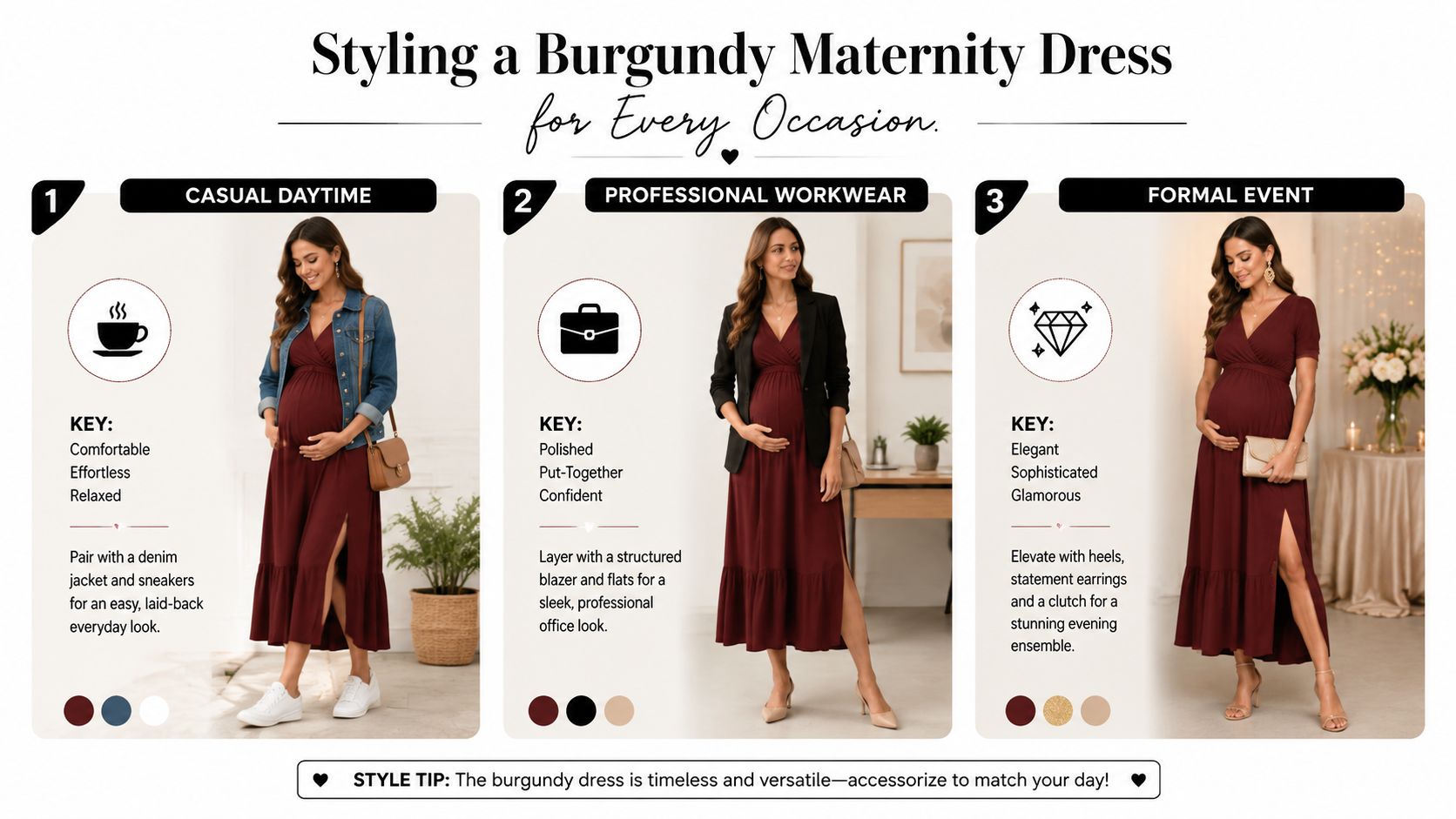
For more ideas on balancing elegance with nursing-friendly practicality, browse this guide to classy outfits. Use the same rule in every setting: one focal point, one supporting texture, and enough visual space around the face.
A soft nursing bra with stretch lace, flexible support, and straightforward breastfeeding access can sit comfortably beneath the dress. Its job is to provide a stable foundation, not become the outfit's feature. This matters particularly after delivery, when the same burgundy dress should still feel wearable with the changing bust and an easier nursing setup.
Burgundy can photograph too dark in dim indoor venues, especially under warm amber lighting. Before an event, take a phone photograph in lighting similar to what you expect. If the fabric loses its texture, add a lighter jacket, metallic earrings, or a brighter lip color near the face.
Pairing Your Dress with Nursing Bras for Postpartum Confidence
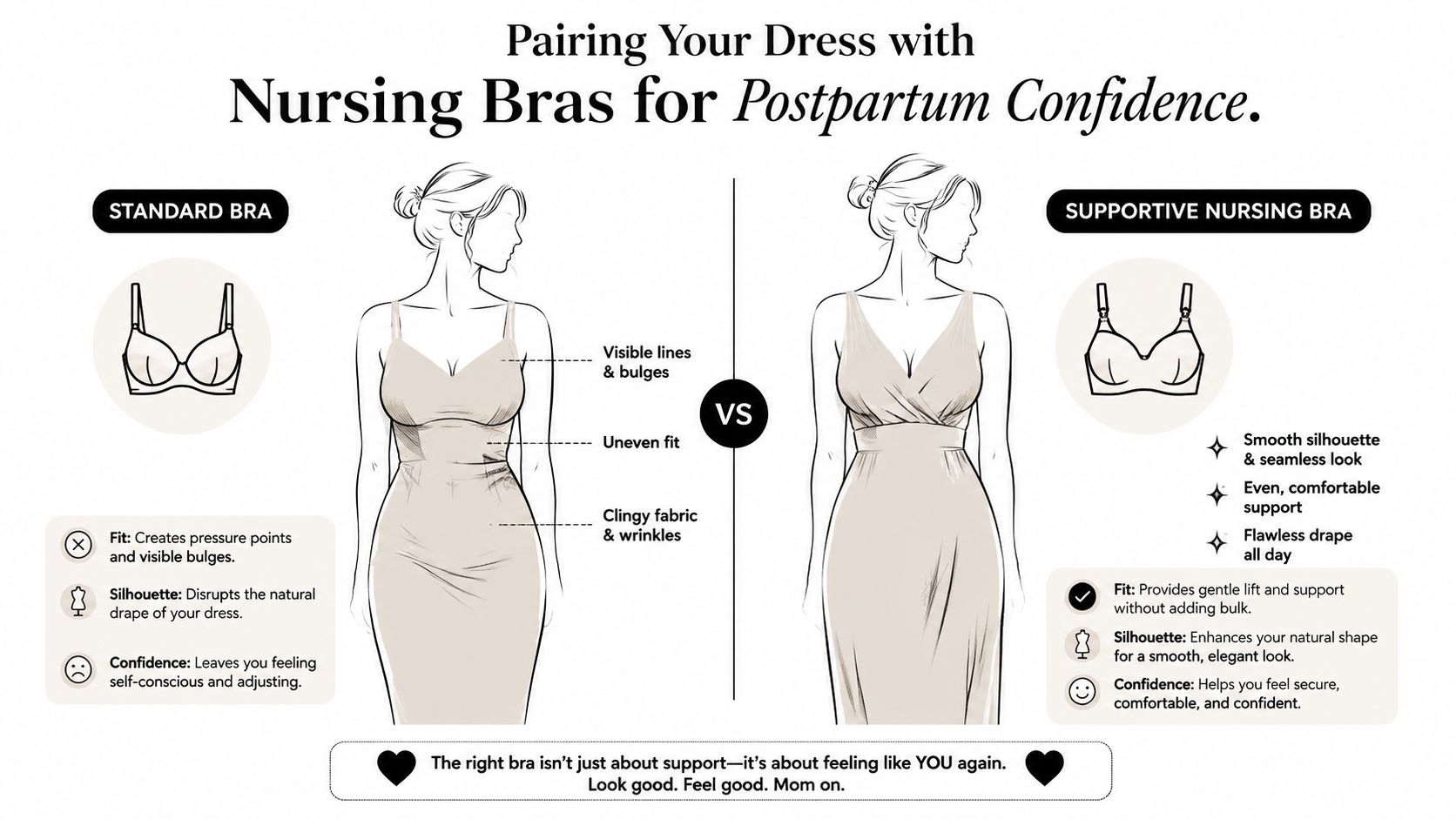
The right nursing bra determines whether a burgundy dress looks polished or lumpy. A fitted jersey midi reveals ridges, straps, and cup edges, while a flowing maxi hides more but still needs dependable support through the bust.
Postpartum fit changes quickly. Engorgement can make a familiar cup restrictive, the ribcage may sit differently than it did before pregnancy, and the bust line can shift as feeding patterns settle. Choose a dress and bra combination that can handle those changes instead of treating pregnancy wear and postpartum wear as separate wardrobes.
Build the foundation around the dress
A wrap front works well with a nursing bra that offers easy cup access. The overlap lets you move the dress aside without wrestling with a high neckline. An empire waist can cover the lower edge of a wider band, giving you support without a visible horizontal line.
A fitted burgundy midi needs a smooth, structured foundation. Stretch lace works when it lies flat, but thick decorative edges can show beneath clingy jersey. Set the straps inside the dress neckline, and keep clip hardware away from areas where the fabric pulls across the bust.
Flowing maxis allow more flexibility. Choose soft support and relaxed shaping, provided the band stays secure while you walk, lift your baby, or carry a bag. Hidden nursing panels also help preserve the outer silhouette during feeding.
Practical rule: If the dress is fitted, solve the bra lines first. If the dress is loose, solve support and access first.
Choose support for the way you'll wear it
For a close-fitting jersey burgundy dress, the structured stretch-lace construction of GAIA can create a smoother base while retaining flexible support and breastfeeding access. Check that the band sits level and the cups contain the bust without forming a ridge along the top edge.
For a casual maxi or soft everyday dress, PETRA combines ultra-soft stretch lace, gentle underwire, and one-hand nursing access. It suits days when you want lighter-feeling support and feeding access without removing the dress.
Color visibility deserves a practical check. Beneath opaque burgundy, a matching dark bra often disappears more effectively than a stark pale one, but the lining and lighting decide the result. With a wide neckline, keep the straps within the dress's shoulder shape. With thin fabric, inspect the bra edge in daylight before calling it invisible.
Measure before ordering rather than relying on an old size. Follow this nursing bra measuring guide, then reassess as your body settles into a new routine. A burgundy dress can credibly move from pregnancy into later postpartum when it has enough ease and the bra supports without compressing.
Caring for Your Burgundy Dress to Keep the Color Rich
Burgundy rewards careful laundering. Dark, saturated shades can show wash and wet-rub changes more readily, so color fastness matters if you expect repeated pregnancy and postpartum wear. ISO 105-C06 addresses resistance to domestic and commercial laundering, while ISO 105-E01 addresses resistance to water exposure, as outlined in this textile color-fastness standard reference.
Use a low-friction washing routine
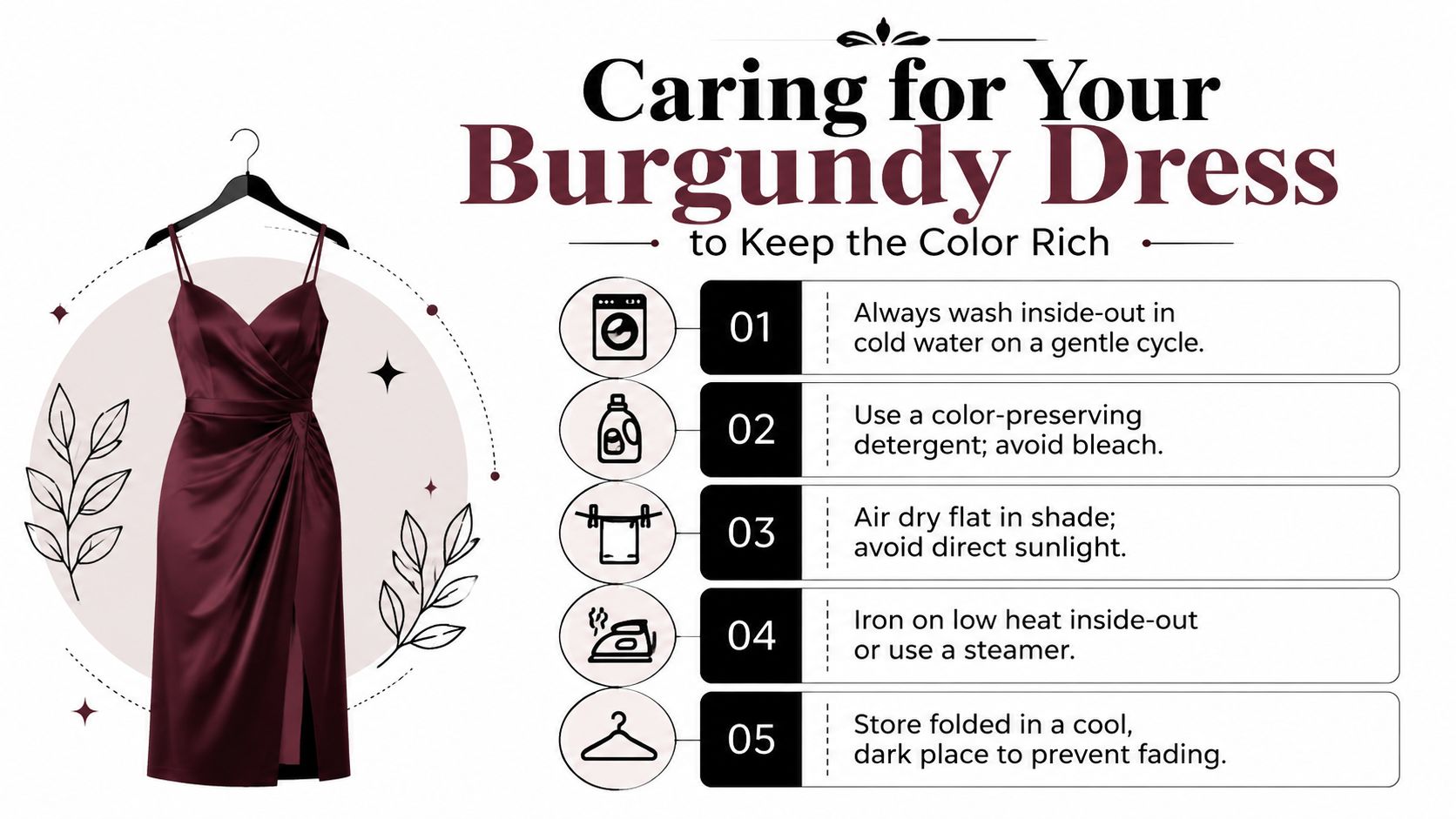
- Read the fibre label first. Cotton blends and sturdy jerseys usually tolerate a gentle cold wash. Rayon may need more cautious handling because agitation and heat can distort it. Polyester blends often wash well, but the care label determines whether the garment can handle machine cycles.
- Turn the dress inside out. This limits surface abrasion and protects the visible burgundy face from rubbing against the drum or other garments.
- Choose a color-preserving detergent. Avoid bleach and harsh whitening products. Use a small amount of detergent rather than assuming more will clean better.
- Separate dark colors. Fresh dye can transfer, particularly when the garment is wet. Don't wash it with pale underwear, towels, or baby clothing.
- Skip unnecessary heat. Hot water and high dryer temperatures can weaken stretch fibres, shrink some knits, and dull the surface.
The care label symbols are practical instructions, not decoration. A crossed-out triangle means no bleach, a washtub with a low temperature indicates the maximum wash temperature, and a crossed-out tumble-dryer symbol means you should air-dry instead.
Dry and store it with shape in mind
Lay stretchy maternity dresses flat in the shade. Direct sunlight can fade dark dye, while hanging a wet knit can create shoulder bumps and lengthen the garment. If you need to steam, use low heat and keep the steamer moving rather than pressing it against the fabric.
Treat milk leaks, spit-up, and food drops quickly with cool water and a small amount of suitable detergent. Blot instead of scrubbing, because aggressive rubbing can create a lighter patch on saturated fabric. Once the stain has lifted, wash the entire dress according to its fibre type so the treated area doesn't dry with a visible halo.
For storage, clean and fully dry the dress before folding it in a cool, dark place. Place tissue between folds if the fabric creases easily, and don't store burgundy directly against pale garments that could pick up residual dye.
Common Questions About Wearing Burgundy During and After Pregnancy
Does burgundy photograph well for maternity and newborn sessions?
Yes, especially when the background is lighter or textured. Burgundy gives the silhouette clear definition and tends to look richer than a flat black garment in photographs. Warm indoor lighting can pull it toward red or brown, while cool lighting can make it appear deeper and more violet, so test the dress with your phone in the actual location when possible.
Keep the rest of the styling quiet. Gold earrings, neutral shoes, and a partner's outfit in cream, olive, camel, or charcoal will coordinate without creating a matching family uniform. If the setting already contains dark wood, shadows, or deep greenery, choose a dress with visible texture or a slightly lighter accessory near your face.
Can you wear burgundy in spring and summer?
Yes, but fabric weight determines whether it feels seasonal. Choose sleeveless or short-sleeved cuts, breathable blends, and matte finishes for warm weather. White sneakers, ivory sandals, pale denim, and woven accessories lighten the color immediately.
In cold weather, burgundy becomes easier to style because boots, wool coats, tights, and textured layers support its depth. A dense polyester dress may still feel hot indoors, so don't confuse a winter color with a fabric requirement.
Is a burgundy maternity dress too formal for everyday use?
It can be if the dress has satin sheen, floor length, dramatic sleeves, or heavy embellishment. A matte jersey midi, simple A-line, or relaxed wrap becomes casual with sneakers, denim, and a practical bag.
The quickest way to reduce formality is to remove formal accessories first. Keep the jewelry small, use a casual layer, and choose a shoe with a sturdy rather than delicate shape.
Will it work after pregnancy?
It will if the dress has adjustable or forgiving construction. Wrap fronts, ruching, empire seams, and nursing openings are more useful than a rigid fitted waist. Look for opacity, comfortable bust coverage, and enough recovery to maintain shape as your body changes.
That's also why burgundy can be a smarter purchase than a highly themed maternity print. The color belongs in a regular wardrobe after pregnancy, while the dress's fit features can support the transition through nursing and later postpartum wear.
Does burgundy clash with baby carriers or diaper bags?
Usually not. Burgundy works with black, tan, cognac, charcoal, olive, and natural canvas. If your carrier is already dark, add contrast through a cream cardigan, lighter sneakers, or a neutral bag instead of trying to match the burgundy exactly.
The only combination I avoid is burgundy with too many competing dark red accessories. Let the carrier or diaper bag function as equipment, not as another statement piece.
Milk&Lace offers structured nursing lingerie designed around breastfeeding access, flexible support, and a more refined postpartum silhouette. Visit Milk&Lace to find a nursing bra foundation that lets your burgundy maternity dress work confidently from pregnancy into the season after delivery.