

You've got a closet full of clothes, but nothing feels right. The jeans press in a new place, your favorite blouse pulls across your chest, and the nursing bra underneath makes every fitted top sit differently. You get dressed for school drop-off, change twice, then leave in the same soft outfit you've worn all week.
That doesn't mean your polished style disappeared. It means your old wardrobe was built for a body, routine, and identity that have changed. Learning how to wear classy outfits after having a baby isn't about forcing yourself back into your pre-pregnancy clothes. It's about creating a new style foundation that fits your current life.
Why Classy Style Feels Out of Reach After Baby
A mother can stand in front of a packed closet and still feel as though she has nothing to wear. The problem often isn't a lack of clothing. It's that the clothes no longer cooperate with her body, her feeding needs, or the pace of her day.
A blazer that once made you feel capable may now pull across your bust. A dress that used to skim your waist may cling to an area that's still changing. A beautiful bra may be difficult to access while nursing, while a practical nursing bra may feel too utilitarian for the person you want to see in the mirror.
That frustration is valid. A thoughtful guide to feeling like yourself again starts with recognizing that postpartum style is an identity adjustment, not merely a shopping problem.
Generic style advice misses the real challenge
Most advice about classy outfits assumes stable sizing, uninterrupted mornings, and a body that responds predictably to tailoring. Postpartum dressing needs a different strategy. You need garments that allow movement, make feeding manageable, and still create a deliberate silhouette when your measurements are fluctuating.
Stitch Fix research reported by AOL found a 30-percentage-point drop in style confidence after childbirth, with confidence moving from just over 70% before having a baby to just over 40% afterward. Those figures describe a meaningful gap between how women felt before motherhood and how they often feel once their bodies and daily demands have changed.
The goal isn't to recover your old wardrobe. It's to build a wardrobe that supports the woman you are now.
Classy dressing becomes much more attainable when you stop treating comfort and elegance as opposites. A soft knit dress can look refined when the proportions are clean. Jeans can look polished with a structured layer, intentional shoes, and the right foundation underneath. Nursing access can be discreet rather than visually dominant.
Start by releasing anything that makes you negotiate with your body. You don't need clothes that punish, disguise, or demand constant adjustment. You need pieces that let you stand, sit, reach, feed, and move through the day while still looking like yourself.
The Foundation Principles of Classy Dressing
Classy style isn't synonymous with expensive clothing or formal dressing. It comes from coordinated choices, clean lines, balanced proportions, and restraint. A simple outfit can look more polished than a costly one if the simple outfit fits properly and the elements relate to one another.
Research on outfit coordination supports this balance. A 2014 study of color coordination and fashionableness found that perfectly matching clothes didn't receive the highest ratings. Moderately coordinated outfits performed best, with a significant quadratic effect of color coordination on fashionableness, reported as R² = .44, F(2,57) = 22.23, p < .001. The study also found that people generally rated increasingly coordinated outfits more favorably up to a point.
That gives you a useful rule: coordinate, don't duplicate.
Use four style tests
- Check the line. Look for uninterrupted vertical or softly curved lines rather than bunching, pulling, or excessive layering.
- Balance the proportion. If your top is loose and fluid, pair it with a cleaner lower half. If your trousers are wide, choose a top with visible shape or a tucked edge.
- Restrict the palette. Two or three related colors usually look more intentional than several competing shades.
- Edit the finish. Choose one noticeable accessory or texture instead of stacking every polished detail at once.
Classy outfits also depend on fabric behavior. A nursing-friendly dress in a fluid knit can be more useful than a rigid dress that looks beautiful only while standing still. A soft, structured jacket can enhance jeans without making the outfit feel corporate. A tonal combination of cream, camel, and brown can appear rich without relying on prints.
A Pantone color-attractiveness study involving 146 participants and 14 colors found preferences for distinctive colors including black, pink, and yellow, while age and gender influenced ratings. The practical lesson isn't that you must wear those colors. It's that a concise palette with a few visually confident choices can create stronger impact than constant novelty.
For postpartum dressing, this matters because a small number of dependable combinations reduce decision fatigue. You don't need a closet full of dramatic pieces. You need clothes that work together and make your body feel supported.
Getting the Fit Right for Your Current Body
Fit is the first thing to inspect, before color, jewelry, or shoes. Clothing appearance and fit research treats the relationship between garment and body as a technical issue, while fit-related self-evaluation research connects perceived fit with confidence and psychological response. In practical terms, an outfit won't look polished if the garment keeps fighting your shape.
Inspect the garment from every angle
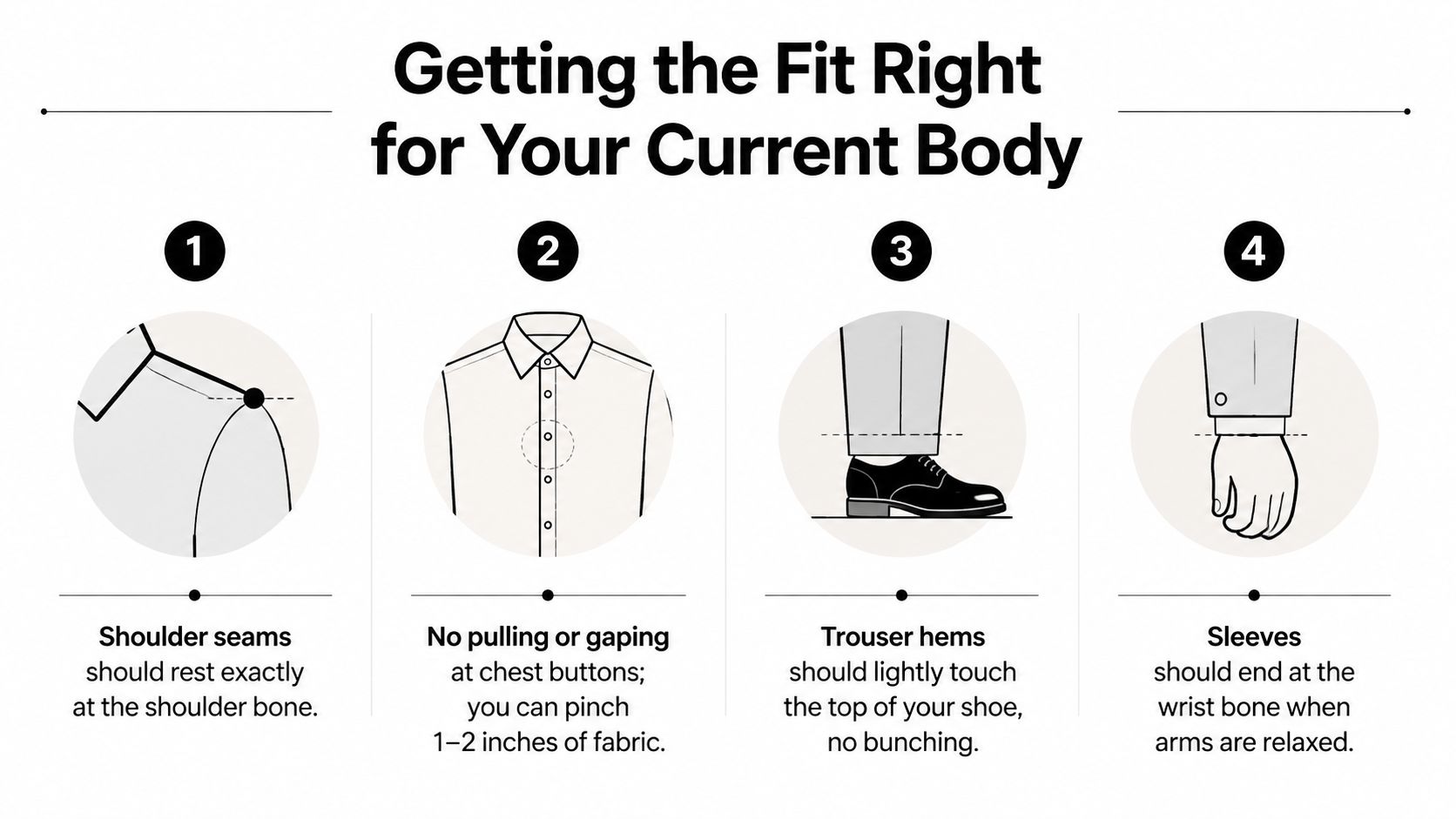
Start with the shoulders. Seams should sit close to the shoulder bone, not fall down the arm or dig inward. If the shoulders are wrong, the entire garment can look borrowed, even when the size label appears correct.
Next, check the chest and waist. Buttons shouldn't gape, fabric shouldn't strain across the bust, and the waist seam should sit where the garment was designed to sit. Postpartum bodies often need more room through the bust and midsection, so size up when necessary and tailor the less changeable areas later.
Then test the hem. Trousers shouldn't pool heavily around the shoe, and dresses shouldn't create an awkward break that visually shortens your legs. A hem that looks fine while standing may twist or climb when you sit, so test the outfit in real positions.
Tailor strategically, replace decisively
Tailoring makes sense when the garment fits well through the shoulders and needs a small adjustment at the waist, sleeve, or hem. It's usually a poor investment when the chest pulls, the rise feels wrong, or the garment distorts whenever you move.
Use this movement test:
- Sit down without rearranging the garment.
- Walk several steps and observe whether fabric drags or twists.
- Reach forward as though lifting your baby.
- Raise your arms and check the underarm and sleeve.
- Look for pooling, tight stress points, and shifting seams.
If the silhouette collapses during these movements, the garment isn't serving you. A polished look must work while seated, walking, and reaching, not only in a mirror pose.
Your foundation layer needs the same scrutiny. Review this nursing bra fitting guidance before judging the fit of your tops, because an unsupportive or poorly adjusted bra can change how blouses, knitwear, and dresses drape. The GAIA nursing bra is described as a soft, elegant nursing bra with stretch lace, flexible support, and breastfeeding access, so it can be considered as part of that fit assessment.
Postpartum sizing is not a moral judgment or a permanent forecast. Buy for the body you have today. A garment that fits now will make you look more composed than a smaller garment you hope to wear later.
Building a Cohesive Color Palette
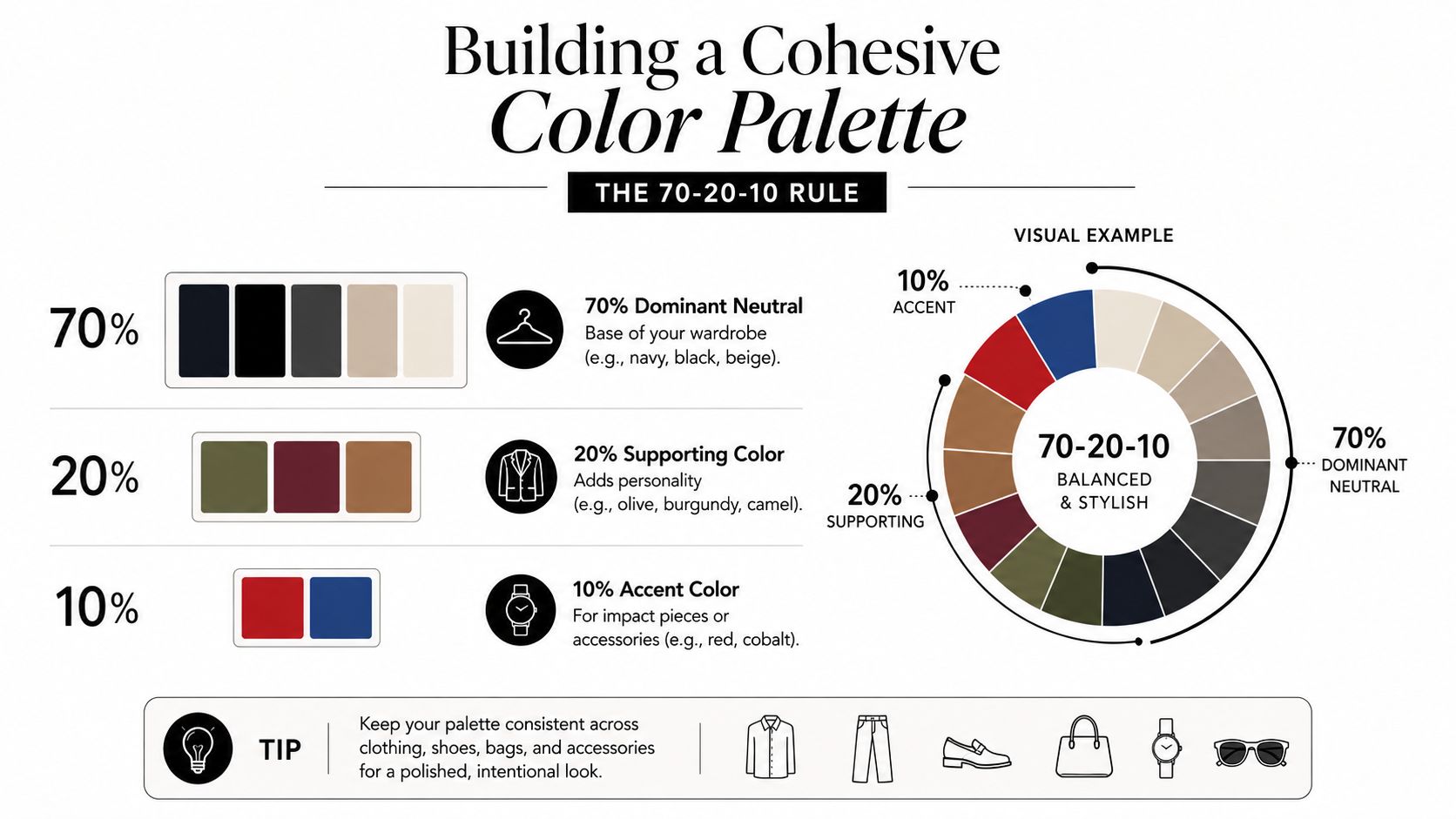
A classy wardrobe should make getting dressed easier, not turn every morning into a styling exam. Choose two or three core neutrals, add one supporting color family, then repeat combinations until they become automatic.
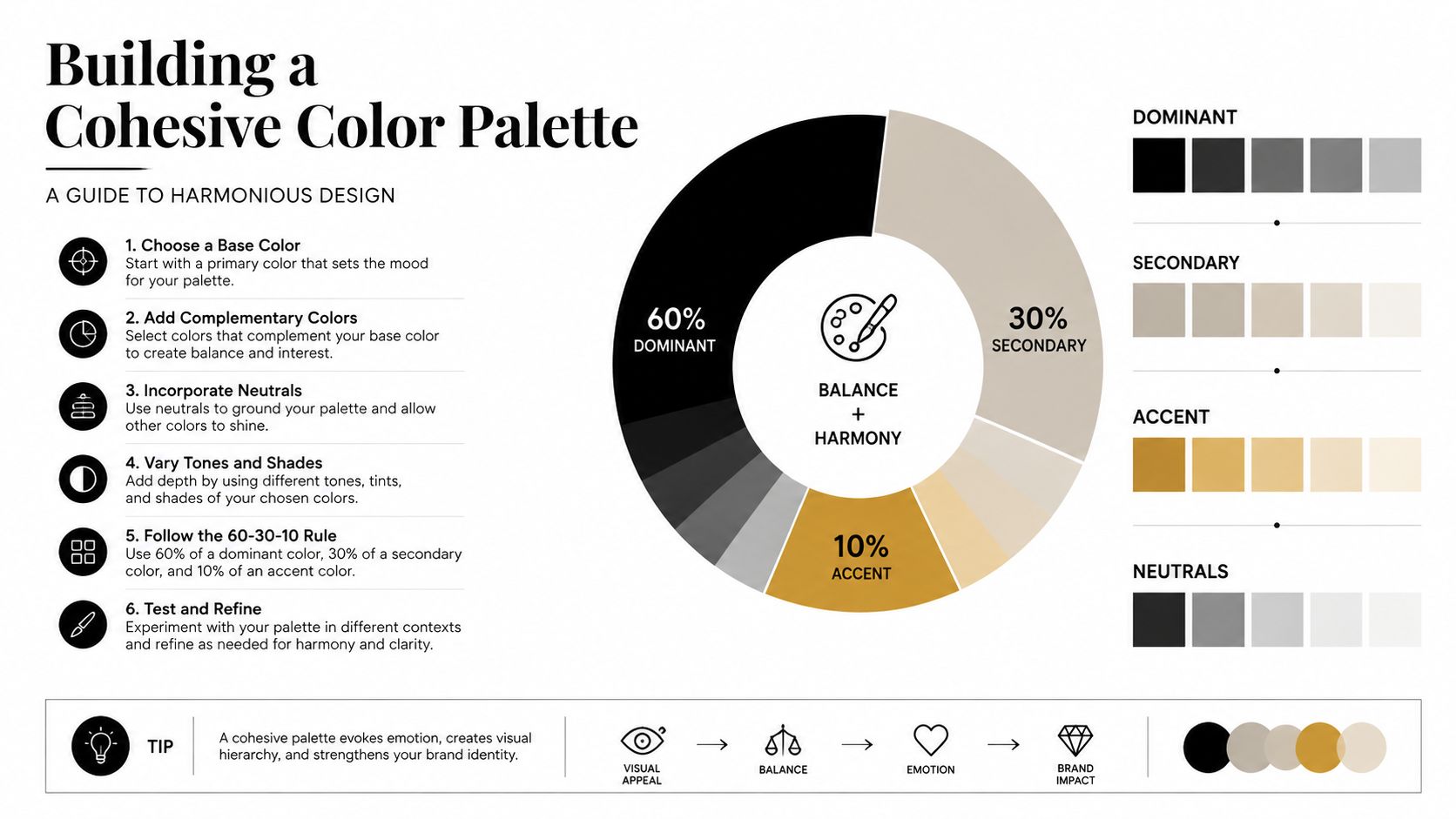
The practical color structure often called the 70-20-10 rule uses about 70% dominant neutral, 20% supporting color, and 10% accent. Color coordination guidance from Elsa Styling presents this approach as a way to reduce visual noise and create cohesion.
Build your base first
Pick neutrals that suit your lifestyle and existing wardrobe. Black, navy, cream, grey, camel, olive, and brown can all function as foundations, but you don't need every one.
Try combinations such as:
- Navy, cream, and camel
- Black, ivory, and soft grey
- Brown, beige, and denim
- Olive, black, and cream
- Charcoal, white, and burgundy
The dominant neutral should appear in the largest visual area, such as trousers, a dress, a coat, or a skirt. The supporting color can appear in a cardigan, blouse, or second layer. The accent belongs in a bag, shoe, scarf, lip color, or small piece of jewelry.
Coordinate undertones instead of chasing exact matches
Two beige pieces can look discordant if one is yellow-based and the other is pink-based. Test garments together in natural light, especially before removing tags or committing to a full outfit. You're looking for harmony, not identical color.
Create five to seven repeatable combinations from your base. For example, navy trousers can work with a cream nursing-friendly blouse, a camel cardigan, or a burgundy scarf. Black jeans can pair with an ivory tee and olive jacket, then shift into evening with pointed boots and a structured bag.
Avoid putting several bright colors into one look unless you're deliberately creating contrast. One accent is usually enough to make a neutral outfit feel alive. If you want more color, change one piece at a time and observe how the outfit behaves.
This palette method works especially well while your body is changing because it lets you buy selectively. A flexible neutral cardigan or wrap layer can work across sizes and outfits, while a highly specific statement piece may become difficult to style when proportions shift.
Starting with the Right Foundation Layer
The layer underneath your clothes determines how the layers above them sit. That matters even more while nursing, because breast size, support needs, and sensitivity can change throughout the day.
A bra that cuts in, shifts, or leaves the bust unsupported can make a simple blouse look rumpled. You may blame the shirt, but the problem began underneath it. The wrong foundation can also make you tug at necklines, pull down hems, and avoid otherwise wearable clothes.
Choose support that matches your current needs
Look for a nursing bra that combines:
- Reliable support. Structured construction can help clothing fall cleanly across the bust.
- Gentle materials. Soft fabrics matter when skin feels sensitive or your body is still recovering.
- Accessible nursing design. Discreet access lets you feed without treating the bra as a purely temporary garment.
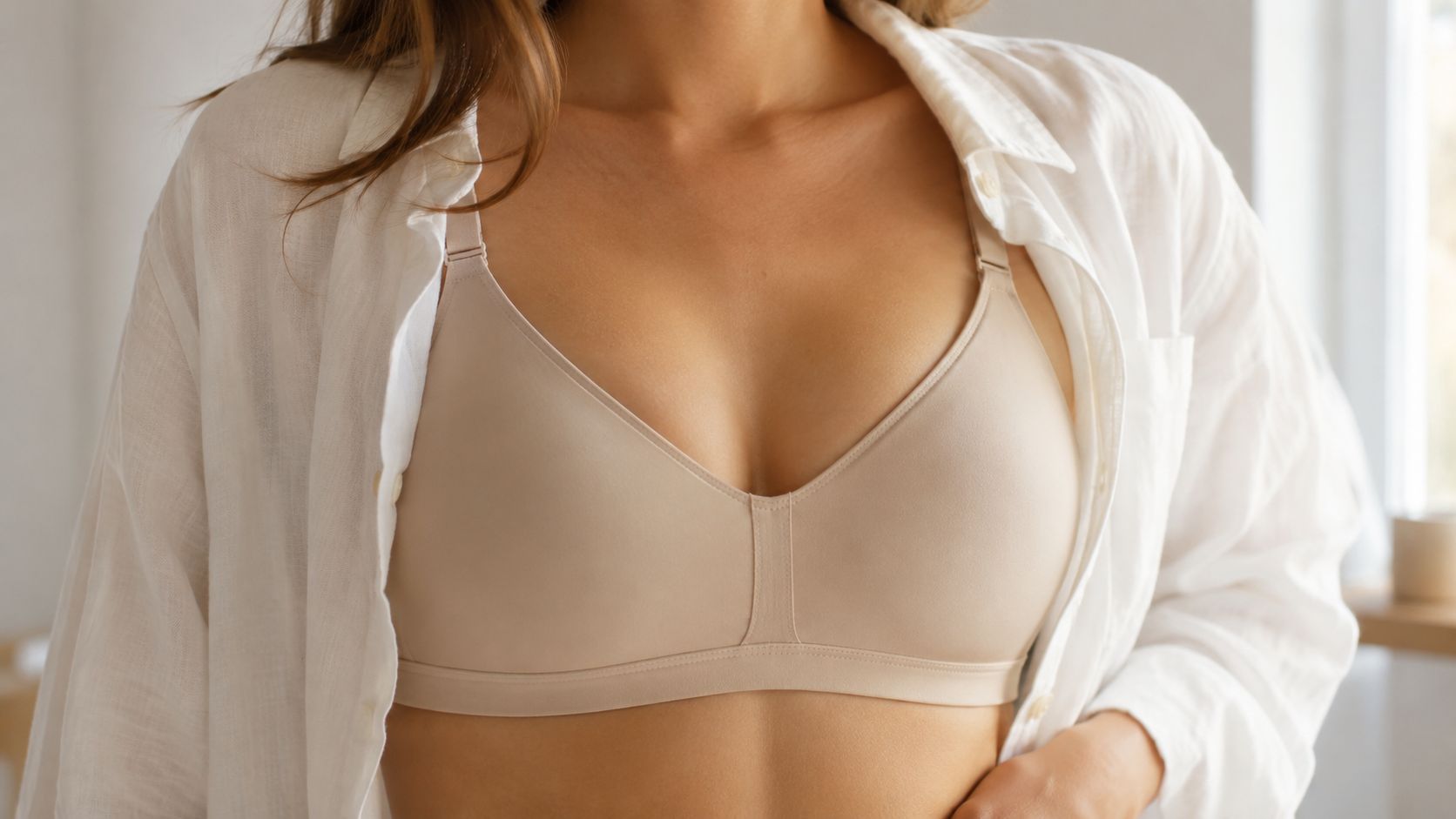
- A considered silhouette. Elegant lace or smooth finishes can help you feel dressed, even when only a small part is visible.
Milk&Lace describes its postpartum undergarment guidance as part of the transition toward lingerie that supports comfort, feeding, and confidence. That's the right mindset. You don't need to choose between a functional nursing bra and one that makes you feel feminine.
A soft, elegant option such as Gaia by Milk&Lace uses stretch lace, flexible support, and breastfeeding access. The point isn't to make lingerie the centerpiece of your outfit. It's to give your outer layers a stable, comfortable foundation.
Match the foundation to the outfit
Wear a smooth, supportive style beneath lightweight knits and fitted tops. Choose a shade close to your skin beneath pale fabrics, and use a clean, supportive shape beneath dresses that rely on a continuous line. For relaxed shirts, a beautiful bra can become part of the look when worn beneath an open linen shirt or a softly draped cardigan.
Check the band, straps, and cups while standing and moving. If you're constantly adjusting them, the garment above will never look effortless. Classy style begins before anyone sees the outfit.
Real Outfit Formulas for Everyday Moments
A practical wardrobe needs formulas you can repeat without looking repetitive. The following combinations use the same principles, fit, restrained color, and a supportive foundation, but adapt them to different moments of motherhood.
School drop-off
Start with straight-leg jeans, a soft cream tee, and a camel cardigan or relaxed jacket. Add clean leather sneakers, small hoops, and a crossbody bag that leaves your hands free. If you're nursing, choose a tee with enough stretch for access or layer an open shirt over a nursing-friendly base.
The outfit feels polished because the colors are quiet and the layers have shape. Avoid adding a busy print just because the base feels simple. A neat shoe and intentional bag will do more work.
A work meeting
Try wide-leg trousers with a fluid blouse and a longer well-fitted jacket. Keep the blouse easy to access if you're pumping or nursing, and choose a jacket that skims instead of clings. Pointed flats or low boots sharpen the proportions without demanding a heel.
For a more relaxed workplace, replace the blouse with a fine-gauge knit and add a narrow belt only if it feels comfortable. The belt is optional. The clean vertical line is not.
A date night
Use a nursing-friendly midi dress in a dark neutral or rich supporting color. Add a cropped jacket, low sculptural flats, or pointed boots, then choose one piece of visible jewelry. A dress with a wrap, concealed opening, or flexible neckline can look elegant without making feeding logistics obvious.
If a dress feels too exposed, add a slim camisole or a draped layer. Don't force yourself into a neckline you'll spend the evening monitoring.
Weekend errands
Pair dark denim with a tucked or half-tucked knit, a long coat, and refined flats. The tuck creates proportion, while the coat adds a strong outer line. A soft scarf can provide the accent color without requiring a complete wardrobe change.
A family gathering
Choose a fluid blouse with fitted trousers, or a knit dress with a long cardigan. Keep the palette tonal, then add texture through suede shoes, lace, leather, or a woven bag. Texture makes a simple outfit feel considered without making it formal.
Build these looks in advance and photograph them when they work. Your phone becomes a personal outfit library, which is much more useful than buying another item during a rushed morning.
Modern Classy Style Without Looking Stiff
Classy style has moved away from rigid formality. Current fashion coverage for 2026 points toward softer elegance through tonal dressing, sculptural flat sandals, long structured outerwear, pointed-toe boots, scarf styling, and draped silhouettes, as described by Sew Mama Sew's 2026 trend coverage.
That direction suits postpartum life because it replaces stiffness with control. A long coat over relaxed trousers can look more modern than a sharply fitted suit. Draped fabric can feel graceful while allowing room for movement. A sculptural flat can provide visual interest without asking you to balance a baby, a bag, and a schedule in heels.
Use one structured element
The easiest way to avoid looking either sloppy or overdone is to combine one structured piece with softer pieces. Try a well-fitted coat over a knit dress, a crisp shirt with flowing trousers, or a structured bag with relaxed denim.
Don't make every element formal. A blazer, polished shoe, sharp shoulder, and elaborate jewelry together can make a simple outing feel like a costume. Choose one anchor, then let the rest of the outfit breathe.
Modern elegance looks intentional, not imprisoned.
The strongest version of classy dressing after baby is practical enough for real movement and refined enough to remind you that you're still a whole person. Start with one outfit that fits today, supports nursing access, and makes you stand a little taller. Then visit Milk&Lace to explore nursing lingerie designed to combine soft lace, supportive construction, and discreet breastfeeding access as you rebuild your wardrobe.