

A new nursing bra arrives just when you need it most. You try it on carefully, but the cup pinches, the band digs into tender tissue, or the neckline leaves an uncomfortable gap. Your body has changed since pregnancy, the size chart offered no perfect answer, and now you're wondering whether the bra can go back without creating another problem.
A bra return policy should answer that question before you buy. It tells you how long you have, what “unworn” really means, which hygiene features must remain intact, and whether you can exchange the size instead of waiting for a refund. For maternity and nursing shoppers, those details aren't administrative fine print. They're part of the fit experience.
Why a Bra Return Policy Feels Different From Any Other Return
A postpartum body can change while a parcel is still moving through the delivery network. The band that felt reasonable during pregnancy may feel restrictive after milk comes in. A cup that seemed roomy may suddenly press against sensitive tissue, while another style may gap because the shape no longer matches your breast.
That experience explains why bras need more careful rules than a T-shirt or a pair of jeans. A bra sits directly against the skin, often under pressure and in close contact with body oils, deodorant, makeup, or perspiration. Retailers must protect the next customer from receiving an item that can't reasonably be sold as new.
Fit is personal, and sizing isn't universal
Bra sizing varies between brands, collections, and even different shapes within one label. A soft nursing bra with flexible support may feel entirely different from a structured style in the same marked size. A maternity shopper also has to account for a changing ribcage, breast fullness, and feeding access, not just a familiar number and letter.
That uncertainty makes a clear policy valuable. It gives you a controlled way to test whether the bra works without encouraging careless wear. A well-written policy separates trying on for fit from wearing as part of daily life.
Practical rule: Treat the first fitting like a fitting-room visit. Keep the bra clean, leave every tag and liner in place, and decide before wearing it under normal clothing.
What the policy is really doing
A bra return policy balances three interests:
- Buyer protection: You need a fair opportunity to identify a poor fit.
- Hygiene control: The retailer needs to prevent worn intimate apparel from returning to sellable stock.
- Operational clarity: Both sides need to know who pays postage, how an exchange starts, and when money moves.
The policy also signals how seriously a retailer takes fit guidance. A brand that explains measurements, condition requirements, and exchange choices clearly is reducing uncertainty before checkout. Research published in a 2026 apparel-industry analysis found that 73% of shoppers check a brand's return policy before purchasing, while 41% are more likely to buy from a brand offering a generous return window such as 60 days. The same apparel return-policy research cites clothing return rates around 26% in online fashion, showing why return terms have become part of conversion strategy.
Read the policy as a practical fitting tool. It tells you how much fit risk you're carrying, what the retailer will absorb, and what you must protect while deciding.
The Core Elements Every Bra Return Policy Shares
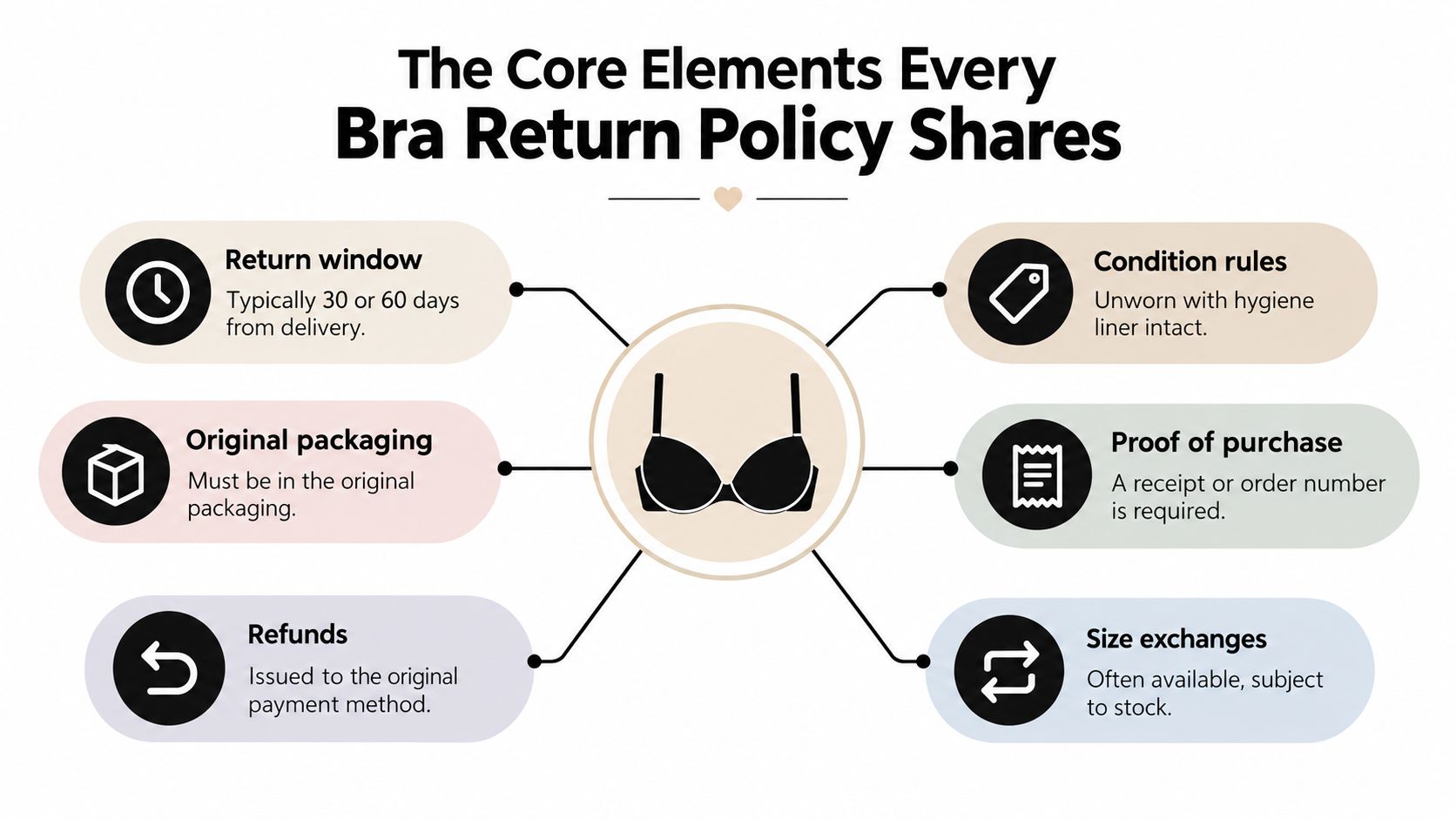
Most lingerie return pages use different wording, but the same building blocks appear again and again. Scan for these six elements before you remove anything from the package.
1. The time window
The clock often begins when your order is delivered, not when you place it. A practical benchmark in major apparel markets is a 30-day post-delivery window, while some retailers offer 60 days for eligible full-price items, as described in Soma's returns information. Confirm whether the window applies to the return request, the shipping date, or the warehouse receipt.
Example: If the policy says “within 30 days of delivery,” submit the request before that period closes, even if the parcel will arrive later.
2. The condition requirement
“Unworn” generally means more than “I didn't wear it outside.” The bra may need to be unwashed, free from makeup and deodorant, and without stains, odors, stretching, or signs of use.
3. Tags and liners
Original swing tags, care labels, and protective liners may be mandatory. If you remove them before confirming the fit, the retailer may classify the item as ineligible.
4. Hygiene protection
Some bras include an adhesive seal or gusset liner. The policy may require it to remain attached, clean, and undamaged because it protects the garment during fitting.
5. The return channel
The brand may require its online portal, a specific email process, or a return authorization before you ship. A parcel shop can accept the package, but it usually can't approve the return.
6. The resolution method
Look for whether the retailer sends money to the original payment method, issues store credit, or offers an exchange. If you're comparing nursing styles, GAIA is described as a soft nursing bra with stretch lace, flexible support, and breastfeeding access. Whatever style you choose, identify the resolution path before trying it on.
Once you recognise these six elements, a policy page becomes easier to interpret. You can predict the likely outcome before packing the parcel, rather than discovering a restriction after the bra has shipped.
Refund vs Store Credit vs Exchange
The three resolution paths solve different problems. A refund gives you the cleanest exit, store credit preserves your purchasing power with the same retailer, and an exchange addresses the original fit problem directly.
| Path | Typical Speed | Cost to Shopper | Best For |
|---|---|---|---|
| Refund | Depends on inspection and payment processing | May include return postage or deductions | A style that doesn't suit you or a purchase you no longer need |
| Store credit | Often simpler for the retailer to issue | Keeps funds with the brand | Shoppers who expect to buy another size or style |
| Exchange | Can be quicker when the correct size is available | May involve shipping or a price difference | A bra that is otherwise right but fits incorrectly |
A refund to the original payment method is useful when you want a clean financial close. It can take longer because the retailer must receive and inspect the bra before authorising the payment reversal. Check whether return postage is deducted or whether an eligible label is provided.
Store credit may reduce waiting, but it also limits your choice. It makes sense when you trust the brand's fit range and expect to place another order. It isn't ideal if the first bra revealed a design problem or if you don't want to keep shopping with that retailer.
An exchange is often the most practical route for maternity and nursing lingerie. The problem is frequently size, band tension, cup volume, or the timing of a body change, not the entire product. An exchange-first flow lets you stay in the fitting process instead of waiting for money back and starting again.
For a nursing bra, choose the exchange path first when the style works and only the fit is wrong. Request a refund when no available size or alternative solves the problem.
Read the fine print for price differences, stock reservations, and whether the return item must be scanned before the replacement ships. Those details determine whether the exchange feels immediate or becomes another waiting period.
The Standard Bra Return Flow Step by Step
A smooth return starts before the bra goes into a parcel. Follow the retailer's own sequence, because a warehouse may not match an unregistered package to your order.
- Find the order confirmation. Keep the order number, delivery details, and product name available. A gift purchase may require a gift receipt or an email lookup.
- Open the return portal or contact the stated support address. Select the bra and choose refund, credit, or exchange. A portal often creates the record the warehouse needs.
- Save the RMA or case number. Don't ship until the retailer tells you to, especially if the policy requires prior authorisation.
- Download the label if one is offered. A prepaid label isn't universal, and international customers may be responsible for postage.
- Pack the bra carefully. Keep the tags, hygiene liner, packaging, and any accessories together. Use protective packaging so the item doesn't arrive damaged.
- Keep the postage receipt and tracking details. They provide evidence if the carrier or warehouse cannot locate the parcel.
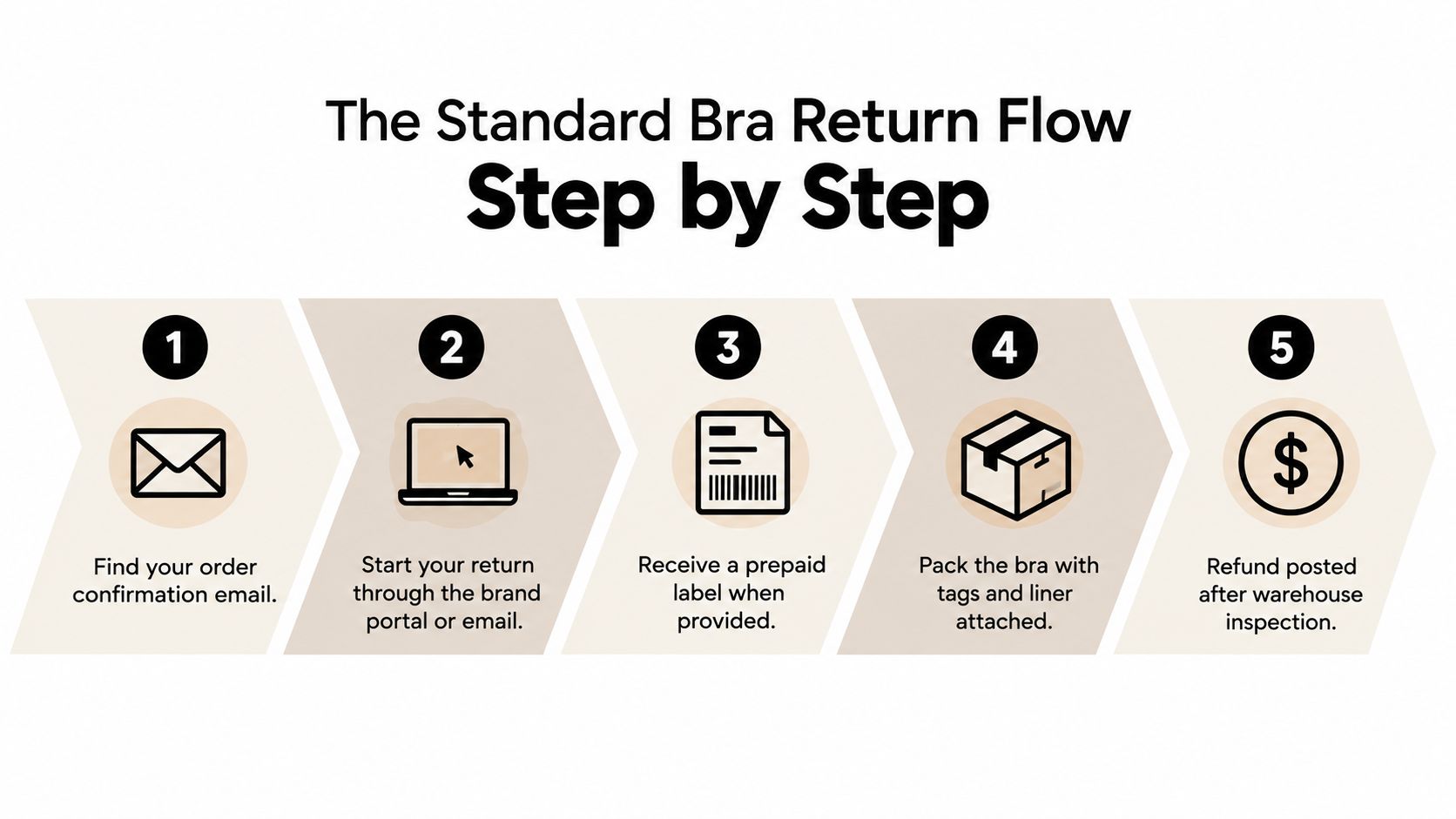
Two checkpoints usually decide the result. The retailer needs a digital return record before shipment, and the warehouse needs to confirm the condition before releasing a refund or exchange.
Nursing and maternity bras generally follow the same operational flow unless the retailer offers a dedicated exchange portal. International customs forms, channel restrictions, and carrier handoffs can add friction, so read those clauses before sending the parcel.
Exchange-First Policies for Nursing and Maternity Bras
An exchange-first policy fits the reality of postpartum sizing. Your cup volume, band comfort, and ribcage measurement can change as pregnancy ends and feeding routines settle. A shopper may not be rejecting the bra. She may just need the next size or a different proportion.
The process usually works like this:
- Start the exchange request through the retailer's portal.
- Select the new size or eligible style from the available options.
- Confirm any price difference before submission.
- Return the original bra in the required hygienic condition.
- Receive the replacement according to the retailer's dispatch rules.
Some retailers wait until the original item reaches the warehouse or receives its carrier scan before sending the replacement. Others may reserve stock, but don't assume that happens. The policy should also explain what happens if the requested size sells out.
An exchange-first system can reduce the emotional and practical gap between “this doesn't fit” and “I have the right bra.” That matters to a new parent who still needs daily support while waiting for a financial reversal. It also helps a retailer retain a customer whose only issue was sizing.
Read the second-exchange clause closely
Some policies limit how many exchanges can be made or reserve a refund decision until an exchange has been attempted. Look for language about a second exchange, unavailable replacement stock, price changes, and whether the final resolution becomes store credit.
This isn't automatically unfair, but it must be visible before checkout. A fit safety net only works when the shopper knows its boundaries.
The useful question isn't “Can I return this?” It's “What happens if the first size is wrong, the second size is unavailable, and my body keeps changing?”
For a plain-language explanation of the distinction, review Milk&Lace's exchange policy. A flexible exchange route is especially meaningful when the garment still meets the hygiene conditions and the shopper wants to keep the style.
Maternity and Nursing Bra Return Scenarios
Consider a shopper who orders a full-price nursing bra during the later weeks of pregnancy. After delivery, her breasts are fuller and the cups feel too small. She hasn't worn the bra, the tags remain attached, and the hygiene liner is intact.
The unworn-with-tags clause is the deciding point. If the product is otherwise clean and the request falls inside the stated window, the shopper may be able to choose a larger size or request a refund, subject to the retailer's shipping and deduction rules. She hasn't misused the product. She has preserved its condition while checking whether it suits her changed body.
Now consider a second shopper who buys a heavily discounted maternity bra marked final sale. The band digs in, but the product page and checkout notice say that intimate apparel in this category is non-returnable.
The final-sale clause overrides the standard return window. The shopper may not have access to a refund or exchange even though the bra is unworn. That outcome feels harsh when the fit is wrong, which is why the product page deserves as much attention as the general policy.
A maternity bra is designed around a specific stage of body change, but no size chart can remove every uncertainty. This guide to maternity bras can help clarify the garment's purpose before you decide whether a product is suitable for your current stage.
The lesson is simple: check the full-price eligibility, final-sale label, and non-returnable intimate-apparel clause before removing the liner.
Where Hidden Costs of a Bra Return Appear
A bra can qualify for a “free return” while still creating costs elsewhere. Before ordering, trace the full route from checkout to the moment the refund reaches your account.
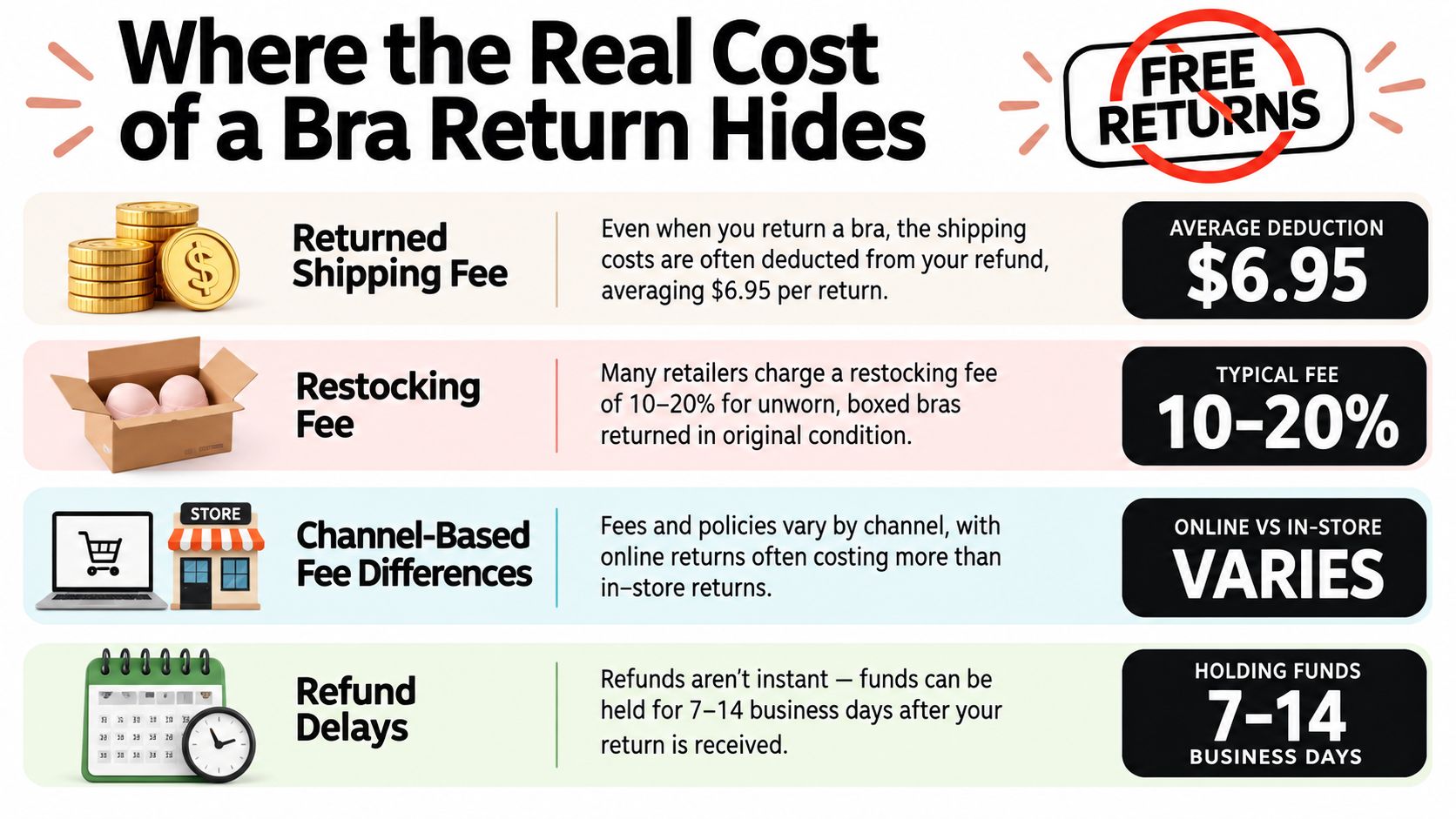
Four policy details deserve careful reading:
- Return postage deductions: A retailer may supply a label, then subtract its cost from your refund.
- Restocking charges: The policy may retain part of the purchase amount for inspection, repackaging, or handling.
- Channel restrictions: An online order may need to use the website's return system, while a store purchase may require a physical receipt and in-store processing.
- Cross-border postage: International shoppers may pay to send the parcel back, complete customs paperwork, or absorb currency-conversion effects.
Fit-sensitive purchases can carry another cost: delay. Your money may remain tied up while the bra travels back, the warehouse checks its condition, and the payment provider processes the reversal. That delay matters after a postpartum size change, when the replacement size or nursing fit may be needed quickly.
Store credit can seem faster, yet it moves the cost rather than removing it. Your money stays with the same brand, and you may need to choose another bra before knowing whether its band, cups, or nursing access will work.
The USPS Delivers' returns analysis reports fashion return rates of about 3% in brick-and-mortar stores and about 25% online. It also reports that 81% of eCommerce apparel retailers used restrictive policies or return fees in 2023. These figures help explain why online lingerie policies may shift reverse-logistics costs to shoppers.
Before checkout, ask: What is the total cost of getting my money back? Include postage, deductions, exchange effects, and the time you can manage without the funds.
How Bra Return Policy Shapes the Shopping Decision
You order a nursing bra during a postpartum size change, then discover that the band rides up and the cups press in. The return policy now matters as much as the product page, because it determines whether correcting the fit is simple or costly.
A return policy shows how a retailer handles fit risk. A longer window does not guarantee a better bra, but clear wording reveals whether the brand has planned for common sizing mistakes. Online shoppers cannot test support, cup shape, pressure, or nursing access before paying. For bras, a small fit error can make an otherwise well-made garment unusable.
Three signals to read before checkout
| Policy Signal | What It Tells You | Shopper Implication |
|---|---|---|
| Length of the return window | How much time you have to assess fit | You can plan a careful fitting instead of rushing |
| Exchange terms | Whether a size correction is practical | You may avoid losing time while waiting for a refund |
| Explicit fit language | Whether the retailer anticipates sizing concerns | The brand has addressed the problem you're most likely to face |
For a postpartum shopper, the exchange clause may matter more than the headline refund promise. Refund-only policies make you wait for the money, search for another size, and repeat the same uncertainty. An exchange-first route keeps the style available while correcting the band or cup fit. That works like adjusting a shoe size at the same counter instead of returning the shoes, waiting for payment, and starting over.
Clear fit instructions also signal that the retailer understands this category. The USPS analysis of returns helps explain why online clothing sellers may set careful conditions around returns, but the practical question for lingerie shoppers is how those conditions affect a sensitive fit decision.
Before ordering, check measurement support, hygiene restrictions, final-sale treatment, and the exact exchange route. A clear policy cannot promise a perfect first fit. It can make an imperfect fit manageable.
Pre-Shipment Checklist for a Faster Bra Return
Before you seal the parcel, pause for a quick inspection. A few minutes spent checking the garment can prevent avoidable correspondence with customer support.
- Tags still attached: Confirm that swing tags, care labels, and any required identifiers remain in place.
- Hygiene liner intact: Check that the protective strip or liner hasn't been removed, lifted, or torn.
- No cosmetic marks: Look for foundation, deodorant, body oil, lotion, or makeup around the band and cups.
- No signs of wear: The bra should be unwashed, free from odor, and not stretched from extended use.
- Original packaging included: Add the box, pouch, or packaging the policy identifies as necessary.
- Request inside the window: Submit the return through the required channel before the deadline, even if packing happens later.
Try-on technique matters too. If you're still deciding about a bra, wear a clean, thin shirt underneath and avoid applying products that could transfer to the fabric. Photograph the bra, tags, liner, and packed parcel before shipping. Those images don't override the retailer's rules, but they create a useful record if the condition is later disputed.
A measurement check can prevent a second shipment. Use Milk&Lace's guide to measuring for your bra size before choosing an exchange, then compare your measurements with the specific brand's chart rather than relying only on a size you bought elsewhere.
Bra Return Policy Terms Worth Knowing
RMA, or Return Merchandise Authorization, is the retailer's reference number for your return. It connects the parcel to your order and tells the warehouse which refund, credit, or exchange to process. Request it before shipping when the policy requires authorisation.
A restocking fee is an amount the retailer keeps to cover handling tasks such as inspection, repackaging, or placing eligible stock back into inventory. The policy should say when it applies and whether it is taken from the refund.
Final sale means the purchase falls outside the normal return, exchange, refund, or credit route. This label may appear on the product page, in the cart, or at checkout, and it overrides the standard return window.
A hygiene seal is a protective adhesive strip, liner, or similar barrier over a garment area. Leave it untouched while assessing fit. Once removed or damaged, the item may no longer qualify because the retailer can't verify that it remained hygienic.
The practical response is straightforward. Save the RMA, read the fee language, check every sale notice, and don't remove protective elements until you're ready to make a final decision.
Bra Return Policy Questions Shoppers Ask Most
What happens if my return is late?
A late parcel may be rejected under the stated window, even when postal delays or newborn routines contributed to the timing. Contact the retailer before sending it and ask whether an exception, exchange, or store-credit option exists. Any discretion must be confirmed by the brand, not assumed.
Can I return a worn bra that has a defect?
A manufacturing problem is different from an unwanted fit return. A nursing clip that breaks or a strap that frays on first wear should be reported as a defect, with photographs and order details. Follow the faulty-item process rather than describing it only as a standard return.
Can I exchange a gifted bra?
A gift receipt or order lookup may allow an exchange even when someone else paid. A refund normally returns to the original payment method, so the recipient should ask for an exchange if privacy or gifting etiquette matters.
What if the nursing bra I gave someone doesn't fit?
Let the recipient check her current measurements and contact the retailer through the gift order. Keep the tags and liner intact, then use the approved exchange route for a better size or eligible alternative. This protects the recipient from having to keep an unsuitable bra and gives the giver a clearer path than placing an entirely new order.
A good policy should make these situations easy to answer without guesswork. Before checkout, save the return page, note the deadline, and confirm whether the retailer treats fit, defects, gifts, and final-sale items differently.
Milk&Lace offers maternity and nursing lingerie with clear return and size-exchange guidance for shoppers whose fit may evolve through postpartum changes. Visit Milk&Lace to explore nursing bras designed around breastfeeding access, support, and a more considered fit journey.