

The most popular advice about postpartum gifts is usually wrong. Another plush robe, baby-themed basket, or bottle of scented lotion may look thoughtful, but it doesn't necessarily make a tired mother's day easier. The best gifts for mom after birth should support her healing, feeding journey, rest, identity, and return to ordinary life, not add another item to a room already filled with baby supplies.
Postpartum recovery also doesn't end neatly at the traditional six-week milestone. A 2025 cross-sectional study of 1,117 respondents found that only 42.5% reported full recovery across four domains, with a median time to full recovery of 15.0 weeks and a mean of 14.5 weeks (PubMed summary of the study). That makes timing just as important as the gift itself.
Rethinking What Makes a Great Postpartum Gift
A great postpartum gift answers one practical question: What would make her life lighter right now? Sometimes the answer is food. Sometimes it's a clean kitchen, an uninterrupted nap, or someone who holds the baby while she showers. Sometimes, later in recovery, it's a beautiful piece of nursing lingerie that helps her recognize herself again.
That last category matters more than many gift guides admit. New mothers can spend weeks being treated as an extension of the baby. Conversations revolve around feeding, sleeping, diapers, and appointments. Gifts often follow the same pattern, with more blankets, toys, and baby accessories arriving while the mother's changing body and emotional needs remain an afterthought.
The global breastfeeding picture reinforces why feeding support deserves thoughtful attention. In 2024, 48% of infants under six months were exclusively breastfed worldwide, up from 37% in 2013, according to global breastfeeding data published through the World Health Organization. Feeding support isn't a niche concern. A gift that reduces discomfort or makes nursing access easier can serve a demanding daily routine.
The mother comes before the packaging
The most useful gift isn't always the prettiest one. A meal delivery arrangement may have less visual impact than a curated basket, but it can remove shopping, cooking, and decision-making from an exhausting evening. A laundry pickup can matter more than a decorative keepsake because it gives her back time and physical energy.
That doesn't mean beautiful gifts have no place. Beauty becomes meaningful when it restores a sense of personhood rather than asking her to perform gratitude for something impractical. A soft nursing bra, a skincare set chosen for her preferences, or an experience she can enjoy without organizing everything herself can say, “You're still here, and you deserve care too.”
The best standard: Choose the gift that supports the mother's current reality, not the gift that photographs best in a product roundup.
Ask what stage she's actually in
A present that feels perfect during the first days may feel irrelevant later. Early recovery tends to center on healing, feeding, hydration, and sleep. As the weeks pass, many mothers begin wanting more ease outside the home, a more reliable wardrobe, and small ways to reconnect with their pre-baby identity.
Before buying, consider three things:
- Her recovery stage: Is she still focused on physical healing, or is she beginning to rebuild a routine?
- Her daily friction: What task, discomfort, or decision keeps draining her?
- Her identity: Would this gift help her feel cared for as a woman, not only as a parent?
That framework turns gifting from guesswork into genuine support.
Matching Gifts to the Postpartum Recovery Timeline
Postpartum gifts should follow the mother's changing needs, not arrive as one oversized bundle. A present that solves a problem in the first days may feel unnecessary later, while a personal item may be better suited to the point when she starts leaving home and rebuilding confidence.
Early feeding and the months that follow require different support. Timing should guide the gift, especially while her body, routines, and priorities continue to change.
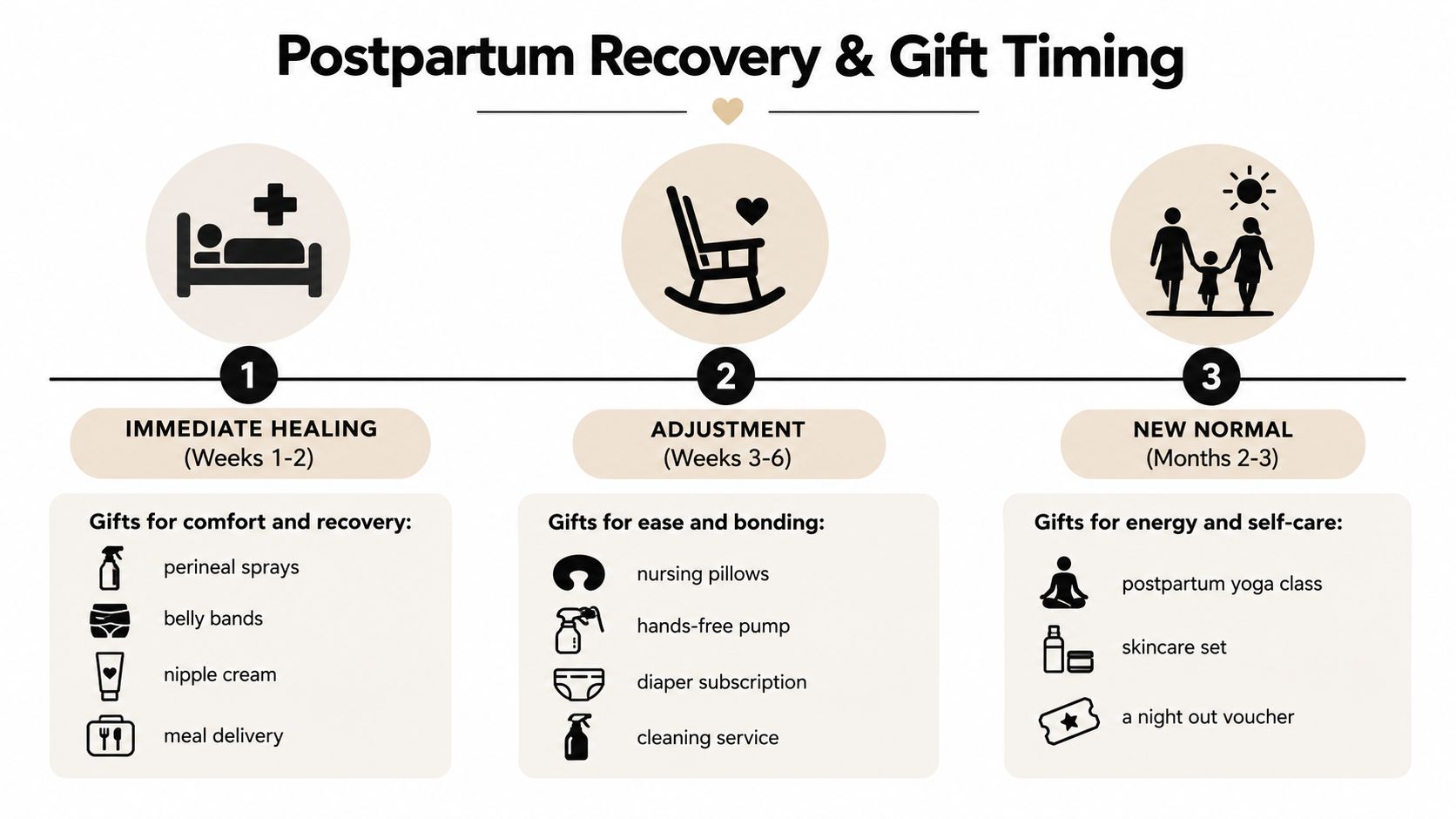
Immediate healing
During the first couple of weeks, choose gifts that reduce physical effort and prevent extra errands. Prepared meals, grocery delivery, a large spill-resistant water bottle, gentle postpartum care supplies, and help with older children all address immediate demands.
Skip precise, structured wardrobe pieces at this stage. Breast size can change substantially while milk supply settles, so soft, forgiving nursing styles are more practical early on. The gift should accommodate her changing body instead of pressuring her toward a pre-pregnancy fit.
Adjustment and feeding routines
Over the following weeks, feeding, pumping, washing, eating, and trying to sleep can create a repetitive cycle. Gifts that remove repeated tasks earn their place: a hands-free feeding accessory, nursing pillow, cleaning support, or recurring grocery arrangement can make daily care easier.
Ask what stage she's in before choosing something personal. Is she still focused on physical healing, or is she rebuilding a routine? Which task, discomfort, or decision drains her most? Would the gift help her feel cared for as a woman, not only as a parent?
For guidance on comfortable choices during this transition, see underwear to wear after birth. If lingerie suits her needs later in this phase, GAIA offers a soft nursing bra with stretch lace, flexible support, and breastfeeding access.
The later postpartum months
Later, the gift brief changes. She may appreciate clothing that feels intentional, an appointment she can enjoy, a skincare ritual, or an experience that reconnects her with her own routine. At this point, a personal gift can carry more meaning than another recovery product.
The strongest plan is staged support: practical help during early healing, followed by something that reflects her taste, confidence, and life beyond the nursery.
Gift Categories That Support New Mothers
A useful postpartum gift should either lower her daily workload or help her feel like herself again. Baby-adjacent items can be thoughtful, but the strongest choices respond to her current recovery, feeding routine, energy, and identity.
| Gift Category | Best For Stage | Primary Benefit | Budget Range |
|---|---|---|---|
| Recovery and comfort items | Immediate healing | Eases everyday physical discomfort | Flexible |
| Nursing-friendly lingerie | Later adjustment and routine-building | Combines feeding access with personal confidence | Flexible |
| Food and hydration support | Early weeks and ongoing recovery | Removes preparation and decision-making | Flexible |
| Household services | Any demanding phase | Reduces chores and mental load | Flexible |
| Keepsakes | When she wants sentimental recognition | Honors the family milestone | Flexible |
| Experiences and self-care | Later recovery | Creates space for identity and enjoyment | Flexible |
Comfort items
Choose gifts that work without setup or extra decisions. Breathable sleepwear, washable robes, easy-drink hydration tools, and snacks she can eat one-handed all fit that brief. Match the gift to her recovery rather than buying a universal postpartum kit. Vaginal recovery, cesarean recovery, breastfeeding, pumping, and interrupted rest create different needs.
Nursing-friendly lingerie
Nursing lingerie fits best when she wants comfort plus a sense of personal style. A well-designed nursing bra provides feeding access and can make ordinary clothes feel more manageable. Choose flexible sizing and construction, since early postpartum measurements can change. If you are unsure about fit, give her a choice or offer to shop together instead of guessing.
Practical help
Services often matter more than objects because they remove work rather than add another item to manage. Cleaning, grocery delivery, meal coordination, laundry, and childcare can all reduce household pressure. Take responsibility for scheduling, payment, and follow-through. A service that still requires her to organize it is only a partial gift.
Keepsakes and experiences
A keepsake honors the emotional significance of birth, but it should match her mood and priorities. If she feels overwhelmed, practical help comes first. An experience works well when it is flexible and simple to use, such as a massage appointment with rescheduling options, a meal out arranged around childcare, or a personal service she already enjoys.
Use this decision rule:
- If she's healing: Give comfort, food, hydration, or hands-on help.
- If she's feeding around the clock: Give access, convenience, and support.
- If she's resuming a routine: Give nursing-friendly style or a confidence-building experience.
- If you're unsure: Ask what would reduce her load this week, then handle that specific need.
The best gift restores function first, then creates room for pleasure, confidence, and life beyond the nursery.
Choosing Nursing Lingerie as a Thoughtful Gift
Nursing lingerie can restore comfort and confidence, but only when the timing and fit are right. Treat it as a stage-specific gift, not an automatic immediate postpartum purchase. A beautiful bra that pinches, gaps, or stops fitting quickly adds another problem to her day.
Breast size can fluctuate substantially during the first 6–8 weeks postpartum. Expert guidance recommends waiting to invest in a structured nursing bra until around 6–8 weeks, or even 3–4 months for a more stable fit. Softer styles tend to work better earlier. Give her a choice rather than guessing (expert guidance on choosing a bra after birth).

Start with timing, not size
If the baby has only just arrived, skip a rigid, highly structured bra based on an old measurement. Ask whether she wants a soft nursing style now and a more fitted piece later. That keeps the gesture generous without making her exchange an item that no longer fits.
As milk supply begins to regulate, a structured bra can support her return to everyday clothes. Its job is practical: make feeding access easier and ordinary dressing less frustrating. It should support her body, not pressure her to reshape it.
Check the construction
Look for nursing lingerie that adapts to changing comfort and fit:
- Adjustable bands: Multiple hook positions let the fit change as the torso settles.
- Flexible cups: Cups should contain breast tissue without gaping, pressing, or compressing.
- Reliable access: Nursing clips or panels should open easily, ideally with one hand.
- Breathable materials: Gentle, non-restrictive fabric matters for sensitive skin and repeated wear.
- A level band: The band should carry about 90% of the support, sit level from front to back, and avoid red marks or riding up.
The New York Times Wirecutter's nursing bra review also highlights nursing-specific access and support as breast weight, leakage, and fit change. Tightness is not the same as support. A compressive bra can increase discomfort.
Make the gift easy to receive
Give her control over sizing whenever possible. Include an exchange option, share the size chart, or let her choose the size and color after opening the gift. Lingerie feels considerate when she can set the terms.
For a piece focused on postpartum confidence and feeding function, postpartum lingerie guidance from Milk&Lace provides useful context for this transition. Choose the option that helps her feel like herself again while making daily feeding simpler.
Why Service-Based Gifts Often Matter Most
The most useful postpartum gift may never sit on a shelf. A service removes a task from her day, giving back time, food, rest, or a quieter home while she recovers and learns a new routine.
A 2026 poll of new parents found that meal trains, grocery delivery, laundry help, babysitting an older child, and holding a crying baby so the mother could sleep ranked among the most appreciated gifts (Babylist's parent poll results). That points to a better standard for choosing: ask which gift reduces her workload instead of which object looks most impressive.
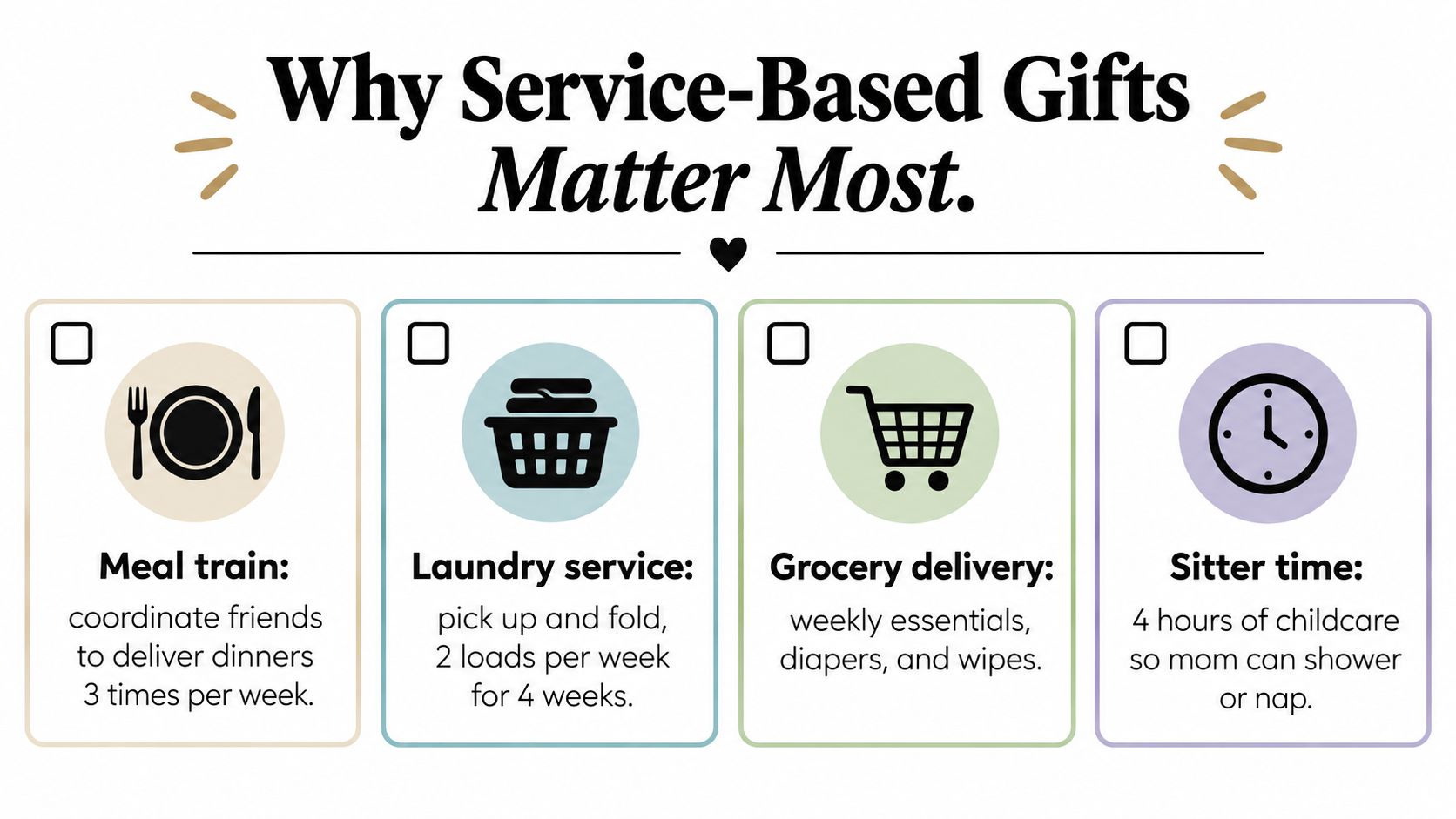
Give help that doesn't create more work
Skip vague offers such as “Let me know if you need anything.” She may not have the energy to identify the task, explain it, and coordinate your visit. Name the help, set a time, and make accepting it simple.
- Meal support: Coordinate meals with friends and check dietary preferences first.
- Grocery support: Arrange delivery of ordinary essentials, snacks, and household basics.
- Laundry support: Offer pickup, washing, folding, and return, so you do not hand back another chore.
- Older-child care: Take the older child to a park or activity while she rests.
- Rest coverage: Hold the baby while she showers, naps, eats, or spends time alone.
A generous offer sounds like this: “I'm bringing dinner on Thursday and can stay with the baby while you eat. You don't need to host me.”
If several helpers are involved, create a simple schedule and assign concrete tasks. She should not become the project manager of her own recovery. A breastfeeding support system guide can help family members focus on dependable practical care rather than buying more equipment.
Respect her boundaries
Support works when it follows her preferences. Ask about drop-off instructions, allergies, visiting limits, and whether she wants conversation or quiet. Some mothers welcome company during feeding. Others need food left at the door with no visit.
The attached video offers another way to think about support in everyday postpartum life.
A service-based gift can stay simple. One reliable dinner, a clean load of laundry, or protected sleep time may communicate more care than an expensive object chosen without asking what she needs.
Personalization and Presentation That Elevate Any Gift
Personalization isn't about adding a monogram to everything. It means showing that you noticed her preferences, her recovery stage, and the kind of support she accepts.
A practical gift becomes more memorable when it arrives with context. Pair a meal delivery card with a note that says she doesn't need to cook on a particular night. Give a nursing bra with a message that recognizes her style, not just her feeding role. Choose a color she already wears instead of defaulting to pastel shades associated with babies.

Build around one clear feeling
The best bundles tell one story rather than combining unrelated products. Choose a central purpose, then add only what supports it.
- For rest: Meal delivery, a comfortable sleep item, and a note offering protected quiet time.
- For feeding: A practical hydration item, nourishing snacks, and a flexible nursing piece.
- For returning to routine: Nursing-friendly lingerie, a small personal-care item, and childcare arranged for an outing.
- For recognition: A handwritten letter, a meaningful keepsake, and a promise of ongoing help.
Don't make the recipient sort through a huge basket to find the useful items. A smaller, carefully chosen package often feels more intentional and takes up less space.
Let her choose where choice matters
Sizing, fragrance, food, and clothing style are personal. Give options when guessing could create disappointment. You can wrap a card explaining that she can select her preferred size, color, meal, or appointment time, then take responsibility for handling the logistics.
Timing also changes the emotional impact. A practical delivery in the early healing period can solve an immediate problem. A personal gift later can acknowledge that she's still navigating recovery after visitors and early excitement have faded.
Personalization is attention made visible. The wrapping matters, but the thought behind the timing matters more.
Common Gifting Mistakes and How to Avoid Them
The first mistake is giving only to the baby. A new outfit or toy may be lovely, but it doesn't acknowledge what the mother has endured or what she needs next. Pair baby items with something specifically for her, or skip the baby purchase and provide food, rest, or personal care instead.
The second mistake is buying structured lingerie immediately after birth. A bra that fits during pregnancy may not fit once milk supply changes, and an overly tight style can create discomfort. Wait until her body has had time to settle, choose adjustable construction, and make exchanges simple.
Good intentions can still miss the moment
Consider a friend who sends a beautifully packaged self-care basket during the first week, but the mother is too sore and exhausted to use most of it. The gift isn't bad. It solves the wrong problem. A prepared dinner, grocery delivery, or a scheduled laundry pickup would have reduced more pressure.
Another common miss is offering help without a plan. “Call me anytime” sounds kind, but it leaves the mother to initiate contact while she's already managing constant demands. A specific offer, such as bringing lunch and folding laundry on a chosen afternoon, is easier to accept.
Don't confuse practical with impersonal
Practical gifts can feel cold when they arrive without recognition. Add a note that names her, celebrates her, and gives her permission to receive care. A cleaning service becomes more personal when you explain that she deserves a home that supports recovery. A nursing bra becomes more meaningful when you frame it as something chosen for her comfort and style, not as another feeding accessory.
The clearest principles are simple:
- Match the stage: Early healing calls for relief. Later months may call for confidence and routine.
- Center the mother: Baby gifts are extras, not substitutes for caring for her.
- Reduce the load: Services often outperform objects when daily tasks are piling up.
- Protect her choice: Let her control fit, timing, food, and personal preferences.
- Restore identity: Choose something that helps her feel like herself again.
The right postpartum gift isn't the most expensive or elaborate. It's the one that reaches her where she is and makes that particular season a little easier to live.
Milk&Lace offers elegant nursing lingerie designed for mothers who want breastfeeding functionality alongside comfort and personal style during later postpartum months. Explore the Milk&Lace collection, then choose a piece that helps the mother in your life feel supported, confident, and recognized beyond her role as a new parent.