

You're dressed, the diaper bag is packed, and your baby starts rooting just as you arrive at the café. You want to feed quickly without turning your outfit into a pile of fabric, but you also want to feel polished enough to enjoy being out. That's the test of wrap dress breastfeeding: not whether a label says “easy access,” but whether you can open the dress with one hand, keep your baby covered, and feel like yourself while nursing.
A well-designed wrap dress can meet that test. Its overlapping front adjusts around a changing postpartum body, creates access at the bust, and keeps the rest of the outfit intact. The right one gives you more than convenience. It gives you a practical way to dress with elegance while your body, schedule, and feeding routine continue to change.
Why Wrap Dresses Are a Postpartum Wardrobe Essential
The first time you leave home after having a baby, getting dressed can feel surprisingly emotional. You may want softness around your abdomen, room through the bust, and a neckline you can open quickly. At the same time, you may be tired of clothes that make you feel hidden or reduced to a nursing function.
A wrap dress sits in the middle of those needs. You can adjust the waist rather than force your body into a fixed shape, and you can create nursing access without removing the garment. The silhouette can accommodate a fuller or less-full bust, changing milk supply, and the ordinary fluctuations that make postpartum dressing unpredictable.
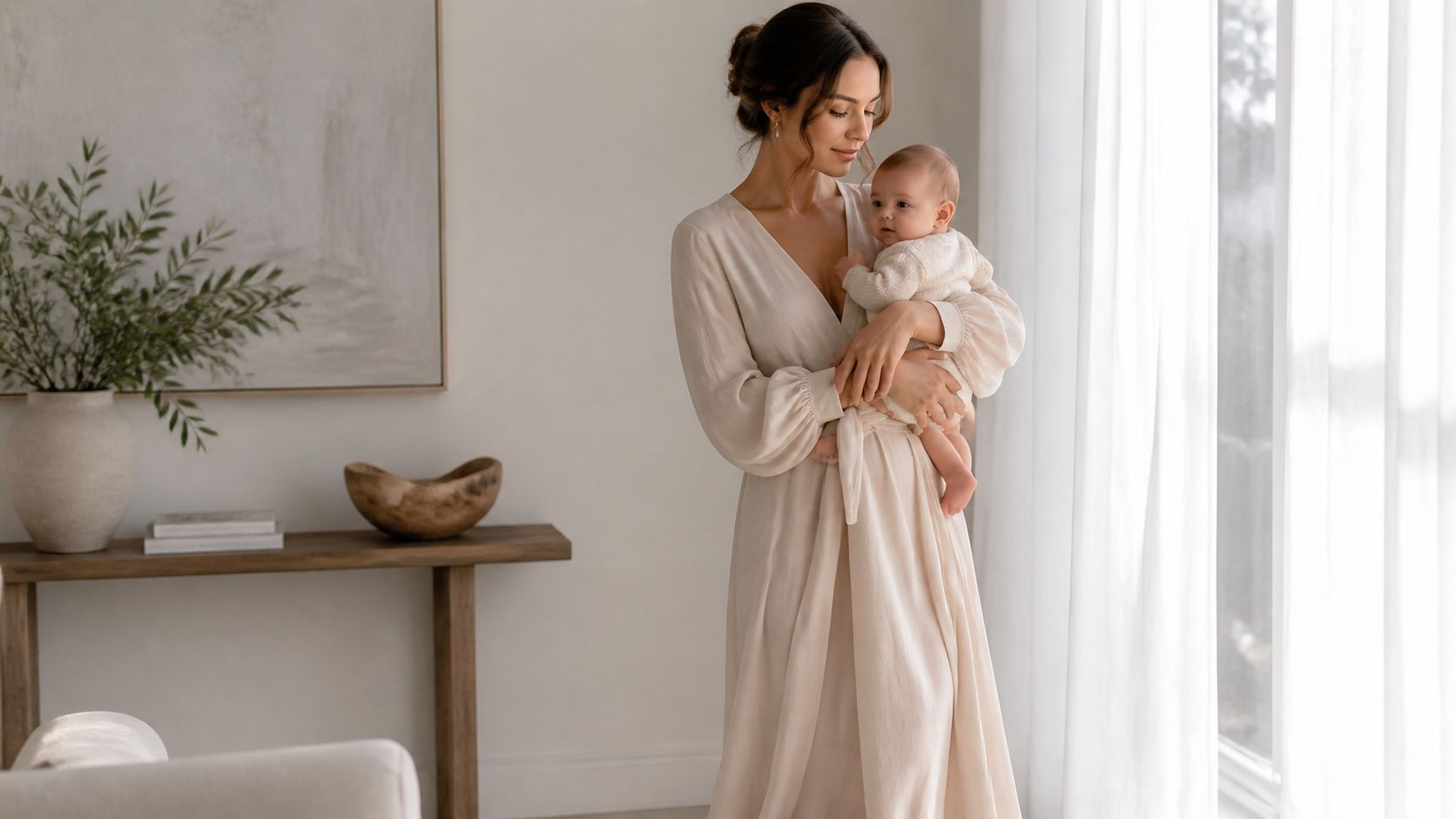
The dress should serve your actual day
Choose a wrap dress because it solves a specific problem, not because it looks vaguely “maternity.” A café visit, pediatric appointment, family gathering, or return to the office may all require different levels of coverage and speed. The best dress lets you open the bust area while the skirt, shoulders, and most of your torso stay dressed.
Look for:
- A stable waist tie: It should loosen enough for access but remain easy to secure afterward.
- A generous overlap: The inner panel needs to stay in place when you pull the outer panel aside.
- A workable neckline: A deep V can help, but it shouldn't fall open more than you can control.
- Fabric with movement: Some give makes it easier to position your baby without fighting the dress.
You can also build a small wardrobe around the principles outlined in this guide to clothes for breastfeeding, then choose wrap styles for occasions when you want a more defined, feminine silhouette.
Style advice: Nursing clothing should make feeding easier without asking you to abandon the version of yourself you recognize.
The wrap dress earns its place because it's useful before, during, and after breastfeeding. It can move through postpartum life as an adaptable dress rather than a disposable nursing garment.
The History and Function Behind the Wrap Silhouette
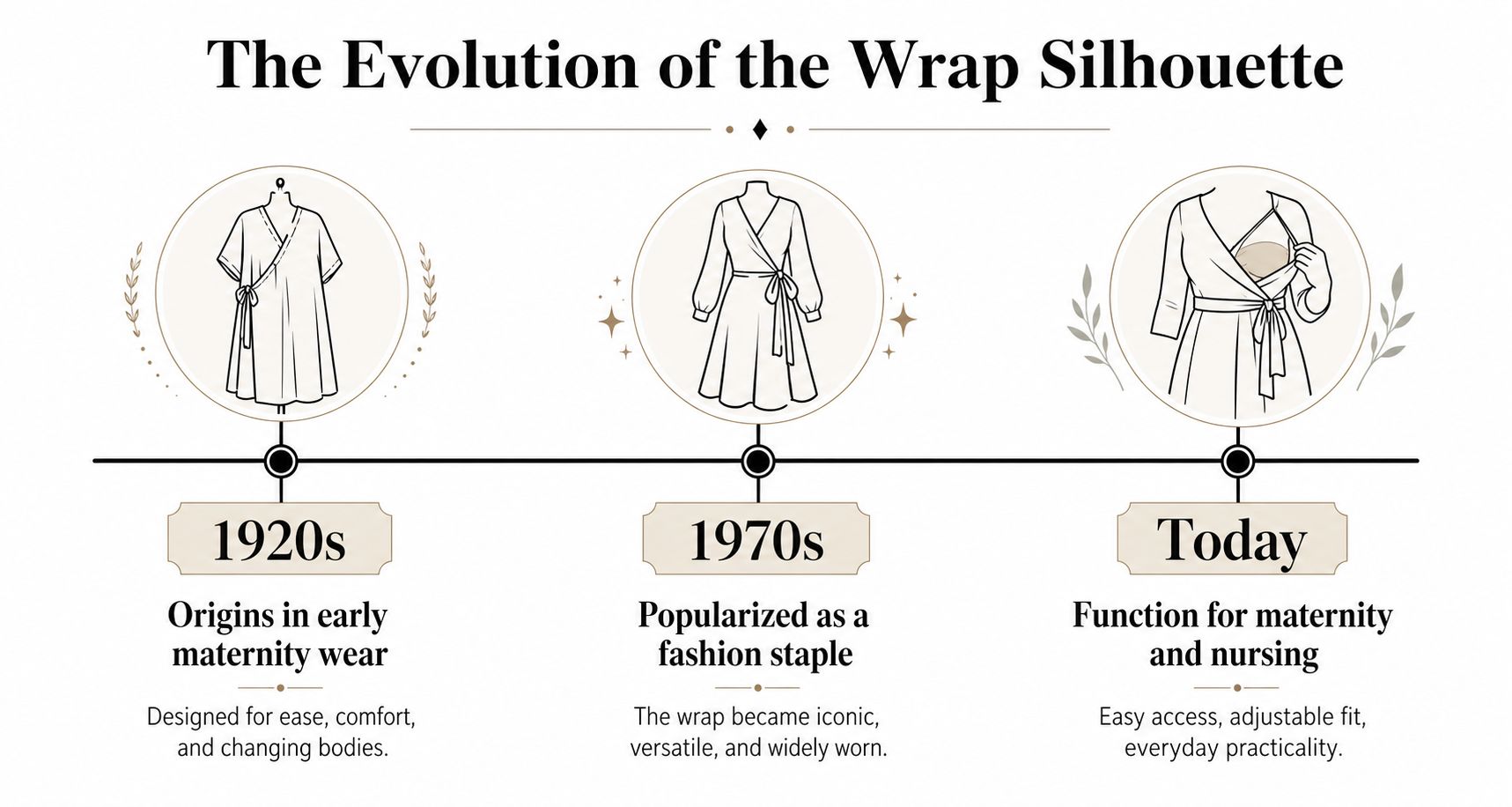
The wrap dress has a longer maternity and nursing connection than many shoppers realize. A historical review of maternity clothing records a wrap dress appearing in the late 1920s, followed by decades in which adjustable wrap construction became a staple design. Lane Bryant's ready-to-wear maternity line from the 1900s era also included dresses with an adjustable wrap-around front, showing that adaptable dressing was already part of commercial maternity clothing. These details are documented in this history of vintage maternity clothes.
That history matters because the wrap silhouette belongs to a broader shift in maternity design. Earlier garments often relied on heavy structure and concealment. Later designs increasingly addressed body changes, movement, and feeding access. Clothing from the 1920s and 1940s included features such as inside buttons, blouse-and-skirt combinations, and shirtwaist closures intended to make public feeding easier.
Why the opening works
The wrap construction uses an overlapping front panel rather than a complicated mechanism. Loosen the tie, move the outer layer, and expose the bust area while the remaining fabric continues to provide coverage. That's a lower-complexity opening path than removing an entire dress or pulling a rigid neckline over the breast.
Research cataloging nursing garment styles identifies wrap access as a recognized opening type alongside deep V-necks, drop fronts, and side-access designs in breastfeeding apparel. Qualitative research on lactating mothers also found that difficult breast access can frustrate babies, while the garment silhouette can affect whether breastfeeding is practical in a particular setting. A separate comfort study found that clothing designed for lactation offered greater physiological comfort than comparison clothing. These findings support the idea that nursing clothing needs functional access, not just decorative detail. See the research on nursing garment access and comfort for the design evidence.
A wrap dress also needs an appropriate foundation underneath. A nursing bra with stretch lace, flexible support, and breastfeeding access, such as GAIA, can work beneath a wrap neckline when the bra's shape suits the dress.
The 1970s transformed the wrap dress into a mainstream fashion icon, with fashion history linking its popularity to women's liberation. That cultural association still helps explain its appeal. The silhouette communicates adjustability and femininity at the same time, which is precisely what many women want from later postpartum clothing.
How to Nurse in a Wrap Dress Without Fully Untying It
You shouldn't have to completely dismantle a wrap dress every time your baby needs to feed. The goal is to create a controlled opening at one breast while the tie, inner panel, and opposite side remain secure.
Practice the sequence at home first, preferably while holding your baby. You'll quickly learn whether the tie slides, whether the inner layer stays put, and how much movement your particular fabric allows.
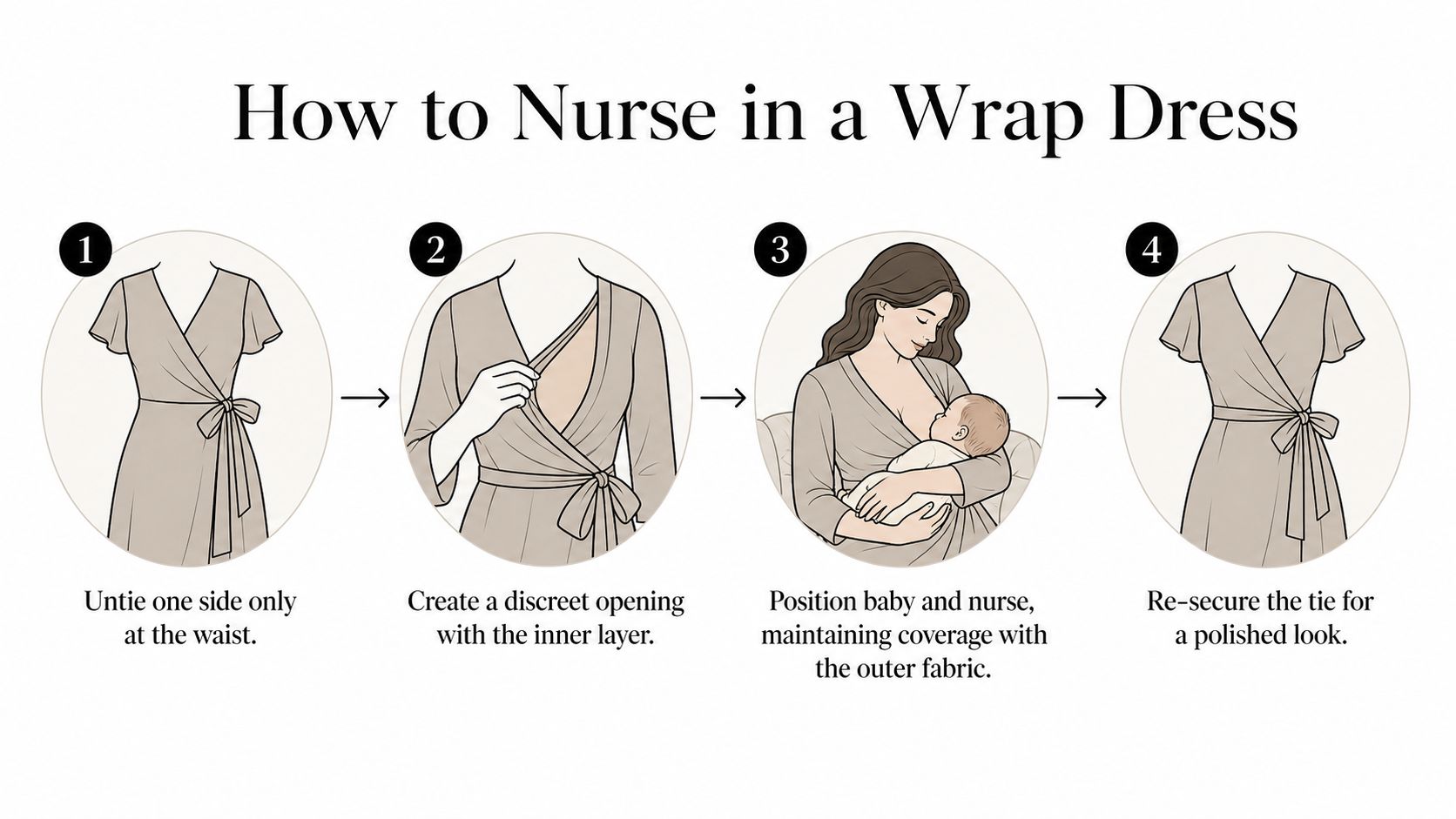
Use this one-handed sequence
- Settle before opening. Sit with your back supported if possible, place your bag or a folded muslin within reach, and bring your baby across your body. Your preparation matters because a hungry baby won't wait while you search for a tie.
- Loosen one side only. Find the tie on the feeding side and pull it gently until the waist releases enough for movement. Don't undo the opposite side unless the dress has become twisted or the overlap is unusually narrow.
- Hold the inner layer at the bust. Use your forearm, elbow, or free hand to keep the inner panel against your body. Then pull the outer panel aside. The opening should form at the bust, not run down the entire front of the dress.
- Bring the baby to the breast. Move your baby toward you rather than leaning your torso forward. This protects your posture and keeps the skirt and lower overlap settled.
- Use the outer fabric as coverage. Drape the outer panel over the upper breast and your baby's back if you want more privacy. A lightweight muslin can add coverage, but it shouldn't replace a dress that already stays secure.
- Re-tie before standing. Once feeding ends, slide the outer panel back across your body, check that the inner panel hasn't bunched, and tighten the tie. Stand only after the waist feels stable.
The mechanics vary by design. A steep wrap angle may expose more of the chest when loosened, while a shallow overlap may resist opening. Stretch fabric can make positioning easier, but excessive stretch may allow the neckline to collapse or the tie to drift.
Privacy check: Before wearing a wrap dress to a public event, test the full feeding motion with a nursing bra, your baby, and the exact layer you plan to wear.
A supportive bra helps keep the breast positioned while the dress opens. If your baby needs more skin-to-skin contact or you prefer a wider opening, you may need to loosen the tie farther. That doesn't mean the style has failed. It means the dress's cut and your feeding preference need to match.
The design literature groups wrap access as an outer-garment opening method and emphasizes the need to coordinate a supportive undergarment with an accessible outer garment. In practical terms, the wrap dress should preserve modesty while the bra handles support and breast access. This apparel typology for breastfeeding clothing explains why that combination works.
Watch the mechanics in motion before relying on the style outside home:
Choosing Fabrics and Fits for Evolving Postpartum Bodies
Fabric determines whether a wrap dress feels like a helpful tool or a constant adjustment. Postpartum skin may be sensitive, your body may change through the day, and feeding can create heat around the bust. Prioritize softness, breathability, and enough movement to open the dress without stretching the neckline out of shape.
Cotton blends and modal usually feel gentle and breathable. Jersey offers easy movement and tends to cooperate with one-handed access, but inspect its recovery. A dress that relaxes permanently at the bust or waist won't look polished after repeated wear. Lace blends can add elegance, especially when the lace is soft and supported rather than scratchy or rigid.
Fabric Comparison for Nursing Wrap Dresses
| Fabric Type | Breathability | Stretch Recovery | Best For |
|---|---|---|---|
| Cotton blend | High when lightweight | Moderate | Warm days and sensitive skin |
| Modal | High | Moderate to good | Soft everyday wear |
| Stretch jersey | Moderate to high | Varies by knit | Quick access and flexible movement |
| Lace blend | Depends on lining | Varies | Polished looks with a supportive underlayer |
Opacity deserves equal attention. Hold the fabric toward light if you can, and check whether the overlap still looks secure when pulled aside. Prints and deeper tones can make small spills less noticeable, but they don't solve a dress that becomes transparent when stretched.
Fit should follow your current body, not an imagined future version. Measure the bust first, then check the waist and garment length. If the bust is between sizes, prioritize comfortable opening and coverage over a tightly defined waist. The tie can shape the middle, but it can't create extra room across a strained bust.
A nursing bra underneath can improve the entire outfit. Look for a band that stays level, cups that release without a struggle, and support that doesn't compress sensitive tissue. The dress and bra should work as a pair, because a loose bra can make the neckline feel less controlled while an overly structured bra can fight the wrap opening.
For a softer occasion look, compare the fabric behavior with the considerations in this guide to maternity silk dresses. Silk can look beautiful, but the wrap construction still needs practical opacity, secure fastening, and enough ease for feeding.
Styling Wrap Dresses for Every Occasion While Nursing
A breastfeeding-friendly dress shouldn't look like a compromise. Style it according to the setting, then preserve access by keeping your layers and accessories easy to move.

For a park outing, wear the dress with flat sandals, a washable crossbody bag, and a lightweight cardigan that opens at the front. The cardigan gives you another coverage layer without forcing you to lift fabric over your head. Keep a muslin in the bag, but don't rely on it to hold the dress together.
For work, choose a calmer print or solid color and add a blazer that hangs open. Avoid a blazer with a low button placement across the bust, since you'll want to move the dress without removing the jacket. Small earrings and a structured tote make the outfit feel intentional while leaving your hands available for your baby and bag.
Evening dressing calls for stronger accessories, not more complicated nursing mechanics. Add pointed flats or low heels, a compact shoulder bag, and a necklace that sits above the neckline or can be moved with one hand. A wrap maxi dress can look formal, but test the skirt length before carrying a baby or navigating stairs.
Keep the access zone clear
- Choose a front-opening layer: Cardigans, robes, and open blazers preserve the wrap's function.
- Skip fixed belts over the tie: They can trap the waist and make a quick opening difficult.
- Use a nursing tank strategically: It can add coverage beneath a lower neckline, though it may slow access if you need to move two layers.
- Match the bra to the neckline: A visible bra edge can be a deliberate part of the outfit, but it shouldn't bunch beneath the wrap.
The strongest styling choice is confidence in the mechanics. If you've practiced opening the dress, positioning your baby, and re-securing the tie, you won't spend the outing wondering whether your clothing will cooperate. Elegance comes from preparation as much as from the dress itself.
Sizing and Care for Long-Lasting Nursing Wear
Buy for the body you have now, with adjustability as a benefit rather than an excuse to ignore fit. Check the bust measurement first, then review the waist, shoulder, and skirt measurements. A wrap dress should close securely across the bust without pulling, and the tie should have enough length to create a stable knot without sitting directly on a tender area.
If you're between sizes, compare the garment's fabric and cut. A forgiving jersey may accommodate more fluctuation than a woven fabric, while a structured bodice may require a closer measurement match. Read the brand's exchange and return terms before ordering, especially during the early postpartum months when fit can shift quickly.
Use this fitting checklist:
- Test the opening: Can you loosen one side without fully undoing the dress?
- Check the overlap: Does the inner panel stay across your body when you move?
- Sit down: The neckline and skirt should remain secure in a seated position.
- Raise one arm: If the bust opens dramatically, the dress may need a different size or bra.
- Tie it twice: Make sure the knot stays comfortable and doesn't slide during movement.
Care protects both appearance and function. Follow the garment label, wash delicate fabrics gently, and avoid storing the dress tightly compressed. Lay lace or fine knits flat when appropriate, and inspect the tie area regularly for stretching or loose stitching.
Your broader postpartum lingerie guide can help you think about the dress and undergarments as one wardrobe system. A reliable wrap dress should remain easy to open, easy to secure, and pleasant to wear after repeated laundering.
Reclaiming Confidence Through Intentional Postpartum Style
A wrap dress won't erase the difficult parts of postpartum life. It can, however, remove one small daily obstacle. You can feed your baby without fully undressing, dress for a public setting without sacrificing comfort, and choose a silhouette that reflects your taste rather than hiding it.
That matters because motherhood expands your identity. It doesn't replace the woman who enjoyed beautiful clothes, moved through the world confidently, or wanted to feel elegant at a family gathering, a workday, or a simple coffee.
Choose your wrap dress by mechanics first, then by mood. Test the opening, pair it with a supportive nursing bra, and practice the one-handed sequence before you need it. Once the clothing works with your body and your baby, style stops feeling like an extra task and starts feeling like a form of support.
Milk&Lace offers elegant nursing lingerie designed to combine lace, support, and discreet breastfeeding access for later postpartum dressing. Visit Milk&Lace to explore nursing bras that can sit securely beneath a wrap dress and help you feel comfortable, supported, and recognizably yourself.