

The most popular advice about work pants for pregnant women is also the least useful: buy your normal size, wait until you need maternity clothes, then replace everything at once. That approach ignores how quickly fit can change, how differently women carry, and how often a pair of office trousers must be worn to justify its place in your wardrobe.
You don't need a full maternity closet. You need a small rotation of trousers with the right waistband, fabric recovery, and professional shape. A major Japanese survey found that 94.6% of working expectant mothers bought new maternity commuting clothes, yet 40.8% bought only one to three commuting garments. The practical lesson is clear. Most working women aren't building a huge collection. They're choosing a few dependable pieces that can handle repeated wear. (Pigeon's survey of maternity commuting clothes)
Why Most Maternity Workwear Advice Gets It Wrong
The assumption that pregnancy requires an entirely new office wardrobe creates unnecessary spending and poor timing. Your body doesn't change on a predictable retail schedule, and a trouser that fits beautifully early in pregnancy may become uncomfortable well before the final trimester. Buying a complete set of maternity clothes at the beginning often means paying for pieces that serve only a narrow stage.
The better strategy is a maternity workwear capsule. Start with one polished pair that solves your immediate problem, then add a second silhouette when your first pair no longer feels reliable. A third pair can make sense if you commute often, work in a formal environment, or need laundry flexibility. More than that usually deserves scrutiny.
Stylist's rule: Buy for the next meaningful change in fit, not for an imagined wardrobe emergency.
The Japanese survey supports this restrained approach. Although nearly all respondents bought new commuting clothes, many purchased only a small number of garments, and maternity pants were the most popular item, purchased by 70.2% of respondents. That combination points to utility, not novelty. Pants earn their keep because they can be worn repeatedly with different blouses, knitwear, jackets, and shoes. (Survey findings on maternity pants and commuting wardrobes)
Build around repeat outfits
Choose a neutral foundation first. Black, navy, charcoal, and a restrained taupe work with the widest range of office tops. Then decide whether your workplace needs fitted trousers, ponte pants, polished stretch denim, or a combination of these.
A smart capsule might include:
- One formal pair: A clean, dark trouser with a smooth front and a waistband that won't roll.
- One flexible pair: Ponte, knit, or refined stretch fabric for long commutes and seated workdays.
- One alternate silhouette: Wide-leg or relaxed trousers if your first pair is slim, or vice versa.
Don't buy a pair because it looks impressive on a product page. Buy it because you can already name several outfits it will complete. Cost per wear improves when the trouser works across meetings, commuting days, and ordinary office hours rather than only one carefully styled occasion.
Fit deserves more attention than quantity. Academic research on maternity garment problems found that 55% of pregnant women reported fit problems with pants, compared with 21% for pullovers, 17% for dresses, and 7% for skirts. Pants are doing more technical work than most maternity garments, so a small, well-chosen rotation beats a crowded wardrobe of mediocre fits. (Research on clothing problems in maternity garments)
Understanding Maternity Pant Constructions
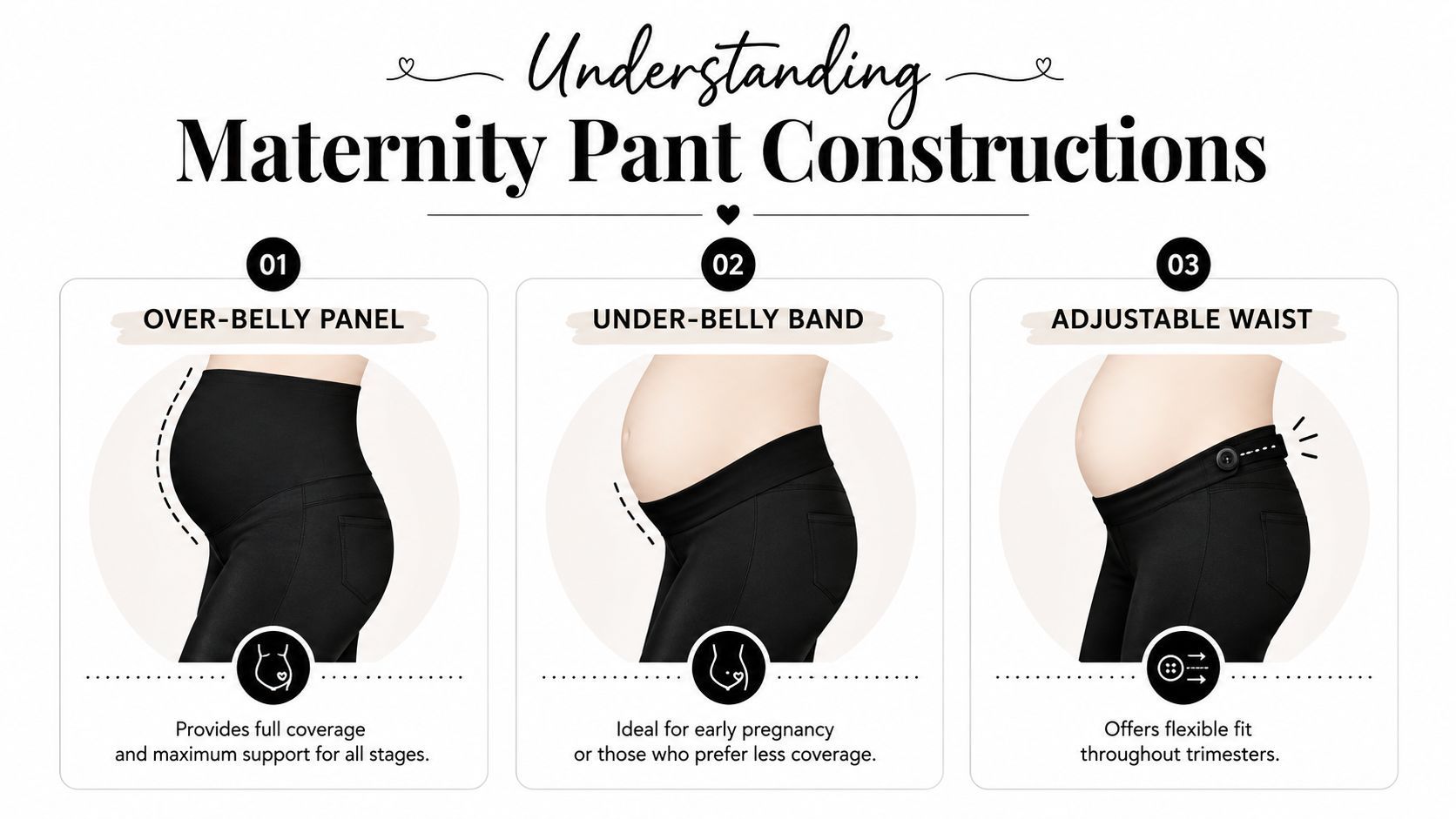
Waistband construction determines whether maternity trousers feel supportive or merely stretched. The three main options are over-belly panels, under-belly bands, and adjustable or side-panel waists. None is universally superior. The right choice depends on your stage of pregnancy, where you carry, how much coverage you like, and whether you need the trousers to remain comfortable while sitting for long periods.
Over-belly panels
An over-belly panel rises across the bump, usually replacing the conventional waistband with a broad stretch section. It provides the most coverage and can help keep a shirt tucked or a blouse from riding up. For many women, it becomes the most dependable option as the abdomen grows because there isn't a narrow band pressing into one point.
The drawback is heat and visibility. A tall panel can feel warm under a fitted top, and a loose panel may show through a thin blouse. Look for a smooth finish, enough height to stay in place, and a seam that doesn't cut across the fullest part of your bump. Over-belly trousers work particularly well with longer blazers, untucked shirts, and dresses layered over the trousers when you want a continuous line.
Under-belly bands
An under-belly band sits below the bump and supports the trousers around the hips or lower abdomen. It often feels less enclosing, which makes it appealing early in pregnancy or for women who dislike fabric over the stomach. It can also be a good match for a lower carry, provided the band stays comfortably below the bump rather than pressing into it.
The weakness is stability. As the bump becomes heavier, an under-belly style may slide downward or feel as though it's pulling against the hips. Try sitting, standing, and walking before deciding. If the band digs in when seated, it won't become more comfortable during a full workday.
Adjustable waist construction
Side panels, elastic inserts, internal buttons, and flexible tabs allow the waist to expand without adding a full layer over the bump. This construction often offers the best visual balance for early and mid-pregnancy, especially under fitted shirts or shorter jackets.
Its success depends on the placement of the adjustment. Side panels should expand evenly, not create a tight point at the hip. Internal buttons can also become uncomfortable if they sit under a waistband or chair belt. Choose this style when you want a conventional trouser appearance and don't need maximum abdominal coverage yet.
A practical fitting test is simple. Bend at the hip, sit for several minutes, walk briskly, and check whether the waistband rolls, slides, pinches, or leaves a gap at the back. A construction that looks polished while standing but fails while seated isn't a work trouser. It's a wardrobe mistake.
Fabric and Fit Essentials for All-Day Comfort
Comfortable maternity trousers need more than stretch. They need controlled stretch, recovery, breathable construction, and enough structure to retain a professional shape. A pair that expands easily but stays loose at the knees or seat will look tired before the day is over.
Start by reading the fabric label. Four-way stretch is valuable because it allows movement across the hips, thighs, knees, and abdomen rather than stretching only around the waist. Workwear examples use four-way stretch to support mobility, while other service trousers combine two-way stretch with four-way panels at the rear, crotch, and knees. That placement shows why panel direction matters as much as the fabric percentage. (Workwear examples of four-way stretch and targeted stretch panels)
Read stretch recovery, not just stretch content
Elastane provides flexibility, but recovery determines whether the garment returns to shape. A textile thesis on maternity support garments reports that polyamide and elastane fabrics can exceed 200 N breaking load, reach more than 200% breaking extension, and recover above 95% after one minute in the tested material context. Those benchmarks explain the difference between a fabric that stretches once and one that remains supportive through repeated movement. (Textile research on polyamide and elastane maternity support fabrics)
You don't need to perform a laboratory test in a fitting room. Pull the fabric gently at the knee, seat, and waistband, then release it. If it stays visibly bagged, feels thin, or takes too long to recover, leave it behind. A little firmness is useful in office trousers. Excessive softness can become sagging.
Match weight to your workplace
Fabric weight changes how trousers handle temperature, friction, and drape. A workwear maternity trouser made with 94% polyester and 6% elastane at 320 g/m² demonstrates how a heavier shell can combine durability with mobility in demanding settings. For a climate-controlled office, you may prefer a lighter ponte or technical knit. For winter commuting or a workplace with more abrasion, a denser fabric can hold its line better. (Technical specifications for maternity work trousers)
Look for a gusseted crotch when mobility matters. It reduces stress at the central seam and makes sitting, climbing stairs, and reaching less restrictive. Strategic stretch panels, reinforced seams, and a smooth interior also justify paying more, because they address the places where maternity trousers work hardest.
Choosing the Right Style for Each Trimester
Pregnancy doesn't follow a standard fit calendar. Some women carry high, others low. Weight can change around the abdomen, hips, seat, bust, or arms, and a trouser that feels generous in one area may still pinch in another. Choose the style that solves your current fit problem, then avoid buying several future-stage pieces before you know how your body will develop.
First trimester
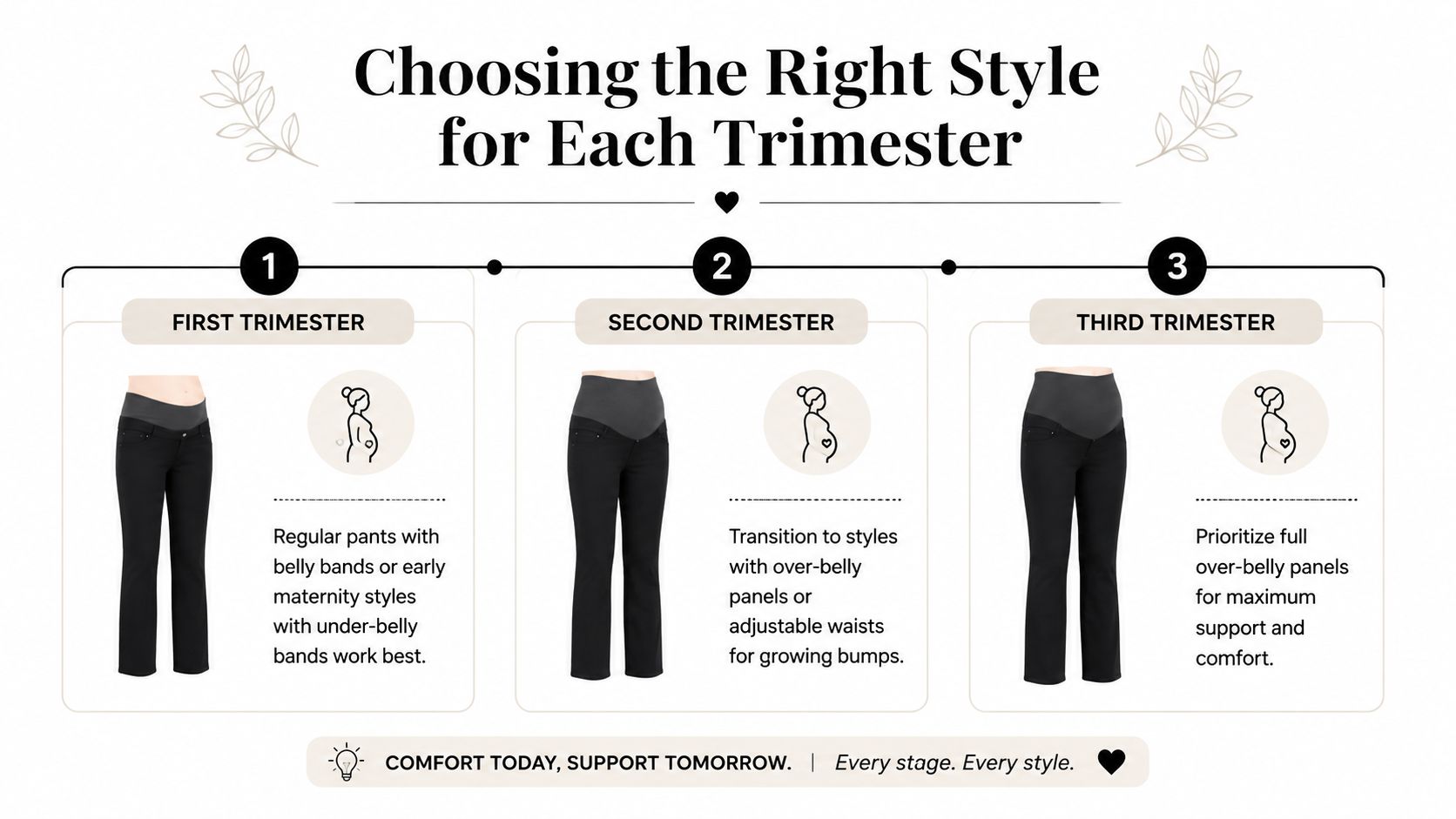
You may still fit regular trousers, but a closed button can become uncomfortable before the rest of the garment looks too small. A belly band worn over an unfastened waistband can extend the life of a favorite pair, though it may add bulk under a fitted blouse.
An under-belly maternity trouser or side-panel style is usually the first dedicated purchase worth making. Choose a slim or straight leg if your existing office wardrobe is fitted. The goal is discreet flexibility, not maximum bump coverage.
Second trimester
This is when many women benefit from a proper maternity trouser with an over-belly panel or a generously adjustable waist. The panel should lie flat beneath clothing, while the trouser seat and thighs should remain shaped rather than ballooning.
Ponte pants are especially useful here because they combine a structured appearance with forgiving movement. A wide-leg trouser can also work, but it needs enough drape to look intentional. Stiff, oversized fabric can overwhelm a growing frame and create extra bulk at the waist.
Third trimester
Prioritize comfort without abandoning polish. Full over-belly panels, wide-leg trousers, relaxed tailoring, and resilient stretch fabrics tend to perform better than rigid slim pants. A straight leg can still work if the fabric moves easily and the waistband remains stable while seated.
Low-rise maternity jeans can be useful for casual offices, especially if you prefer an under-belly fit. For styling ideas that focus specifically on that construction, see this guide to low-rise maternity jeans.
Best investment: A dark ponte or tailored stretch trouser with a smooth panel can serve multiple stages, while highly fitted, rigid, or trend-driven styles usually have a shorter useful life.
Professional Outfit Ideas That Actually Work
A polished pregnancy outfit starts with the trouser silhouette, not with elaborate accessories. Once the base fits correctly, ordinary office pieces can do most of the styling work.
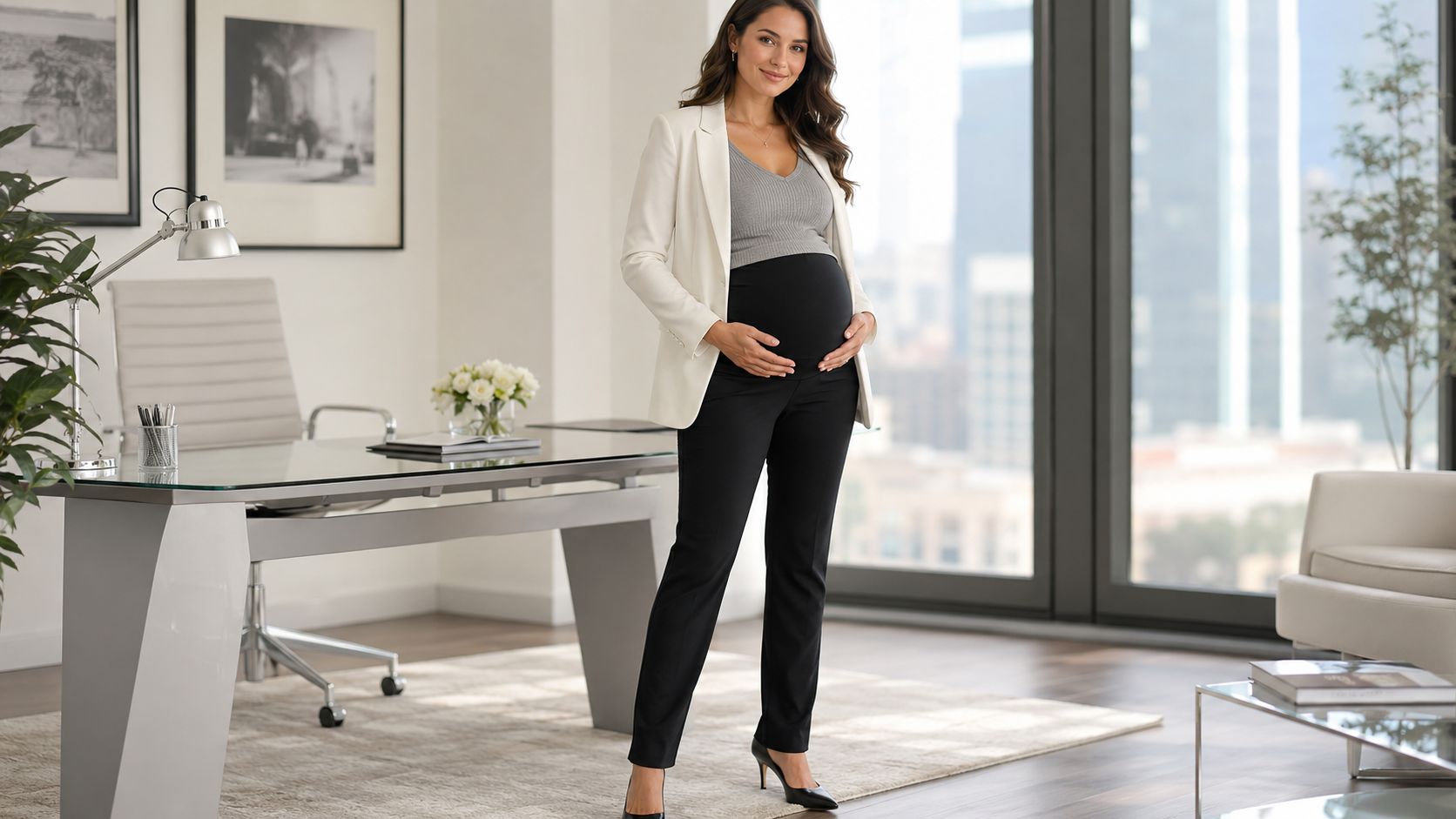
For a formal office, pair dark straight-leg maternity trousers with a fluid button-front shirt and a single-button blazer worn open. Keep the shirt long enough to cover the panel, and choose a jacket with room through the front rather than forcing the lapels apart. Pointed flats or low block heels preserve the line without making the outfit feel precious.
Business casual gives you more freedom. Wear wide-leg maternity trousers with a fine-gauge knit tucked only at the front, then add a cropped cardigan or an open jacket that ends above the widest part of the bump. The contrast between a clean trouser crease and a softer top looks deliberate, not like a compromise.
For a long seated day, choose ponte pants with a structured knit blazer. The combination moves when you move, resists wrinkling better than a delicate woven, and works with loafers or minimal sneakers where the dress code allows them. Keep the top close to the body without making it tight. Excess fabric over a wide-leg trouser can obscure the shape of the outfit.
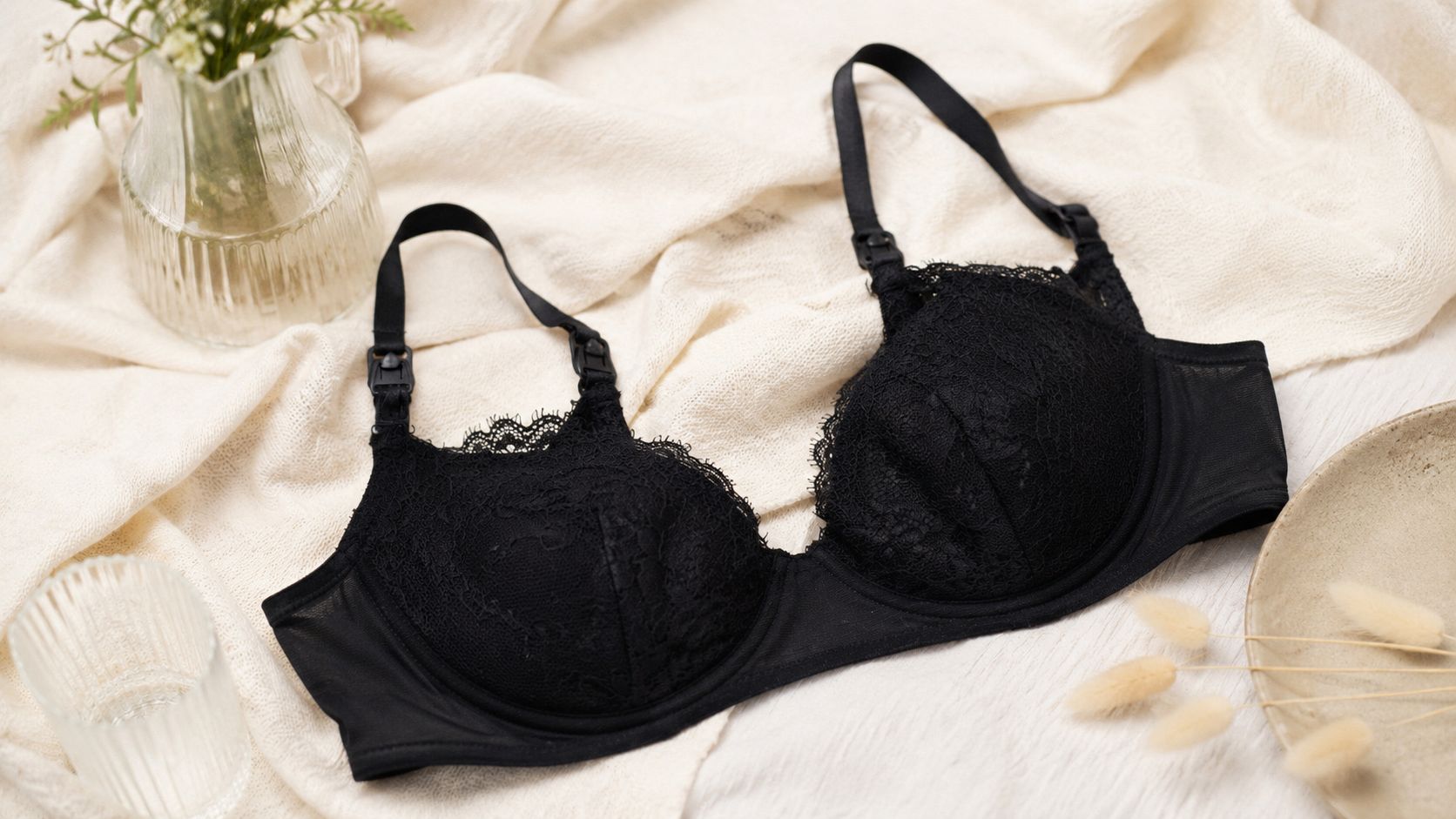
A comfortable foundation matters under fitted clothes. GAIA is described as a soft nursing bra with stretch lace, flexible support, and breastfeeding access, so it can suit a polished layered look while also serving a later nursing wardrobe.
Use color strategically. A tonal outfit in charcoal, navy, or black creates a longer visual line, while a patterned blouse draws attention toward the face. If your trousers are wide or relaxed, keep the upper layer clean. If the trousers are slim, a softly draped blouse can balance the silhouette.
This maternity dress suit guide offers another useful reference for coordinating formal maternity dressing.
Don't overlook practical details. A blazer that can remain open, a top with discreet pumping access, and shoes you can walk in will make an outfit more useful than a highly structured suit that looks good only for a short meeting. The strongest combinations are repeatable, washable, and comfortable enough to wear on an ordinary Tuesday.
Smart Shopping Strategies and Sizing Secrets
Sizing maternity trousers isn't a guessing game, but it does require a different priority than ordinary shopping. Start with the brand's maternity size chart and your current measurements. Many maternity lines are designed around your pre-pregnancy size, but the construction should provide the expansion. Don't automatically size up if the waist is adjustable, because extra room through the hips and thighs can make the trousers look sloppy.
Shop in stages
Buy your first pair when your current trousers begin causing discomfort, not when a calendar tells you to. An early side-panel style or under-belly band may be enough at first. Add an over-belly pair when the existing construction no longer stays put or when sitting becomes uncomfortable.
The supplied shopping guide recommends buying your pre-pregnancy size early and sizing up as needed around month 5 to 6. Treat that as a planning prompt, not a universal rule. Your body may require a different timing, and the garment's panel design matters more than the month alone.
Make returns part of the fitting process
Online shopping is convenient, but trousers are difficult to judge from photographs. The Japanese survey found that 46.4% of respondents bought commuting clothing online, while 76% purchased at physical maternity-specialty or maternity-selling stores, suggesting that many women still value in-person fit checking for garments where waistband placement, leg room, and length are hard to assess digitally. (Japanese survey on online and physical maternity clothing purchases)
Before ordering, check the return window, return shipping terms, exchange process, and whether sale items are final sale. Order only from retailers that make it practical to test the trousers while wearing the shoes and tops you plan to use at work.
Calculate usefulness, not sticker price
A higher-priced pair can make financial sense if you wear it repeatedly across pregnancy and beyond. A cheaper pair isn't a bargain if the waistband rolls, the knees bag, or the fabric becomes unsuitable after a few outings.
Use a simple test:
- Outfit count: Can you wear the trousers with at least several tops already in your wardrobe?
- Stage coverage: Will the construction work beyond your current shape?
- Care burden: Can you wash and maintain it without complicated handling?
- Postpartum potential: Will the silhouette still look intentional after the bump is gone?
Secondhand maternity clothing can be a sensible route for premium fabrics and lightly worn styles. Inspect the panel elastic, crotch seam, inner thigh, and hem before buying. Sales are useful when the return policy remains clear, but don't let a reduced price persuade you to keep a poor fit.
Extending Your Workwear Beyond Pregnancy
The best maternity work pants don't look like temporary clothing once the bump is gone. They have a clean outer silhouette, fabric with reliable recovery, and a waistband that can settle without creating a loose, collapsed front. Those features give the garment a chance to support postpartum dressing instead of becoming an item you immediately retire.
A broad over-belly panel may not be the most useful option after birth, particularly if it remains visibly loose. Side-panel trousers, smooth ponte styles, and wide-leg trousers with a flexible waist have better transitional potential because their design can read as contemporary tailoring rather than pregnancy-specific engineering.
Choose silhouettes with a second life
A dark wide-leg trouser can work postpartum with a tucked shirt, a short cardigan, or a structured jacket. Ponte can remain useful during the transition because it accommodates changing comfort needs while maintaining a neater appearance than lounge clothing. Slim trousers can also transition if the fabric recovers well and the panel doesn't sag.
Avoid buying several pieces that depend on one exact bump shape. A dramatic panel, heavily ruched side seam, or extremely narrow leg may solve a temporary problem but offer little value afterward. The more visible the maternity feature, the more carefully you should assess whether you'll accept it in postpartum outfits.
Postpartum fit can change in a different direction from pregnancy fit. The abdomen may feel less supported, the hips may remain fuller, and sitting comfort can matter even more if you're feeding, pumping, commuting, or carrying a baby before work. Guidance on post-birth pants is useful when you're deciding which shapes deserve space in a longer wardrobe.
Build for the return you actually expect
Don't plan around an abstract return-to-office date. Consider whether you'll work remotely, commute, pump, attend meetings, or need outfits that can move between home and office. A trouser that works with nursing-friendly tops and an open blazer will serve more situations than a rigid suit piece.
The most durable capsule usually contains one formal trouser, one comfort-led but polished trouser, and tops that can be worn during both pregnancy and postpartum. That approach reduces replacement pressure and gives you room to respond to your actual body rather than buying for a hypothetical one.
Your maternity workwear should earn its place through repeated use. Choose construction before trend, recovery before softness, and versatility before volume. Then buy only the pair that passes the seated fit test, works with your existing wardrobe, and has a credible life after pregnancy.
Milk&Lace offers nursing lingerie designed around flexible support, stretch lace, and discreet breastfeeding access, including options that can complement polished pregnancy and postpartum outfits. Visit Milk&Lace to explore nursing bras that keep comfort, function, and personal style in the same wardrobe.