

You're feeding your baby at two in the morning, half asleep, with one hand searching for a nursing clip and the other supporting a hungry newborn. By morning, your shoulders ache, your breasts feel unfamiliar, and the bra you wore yesterday has stretched in the wrong places. Then you need to leave the house, put on a blouse, and feel like a woman with a style of her own again, not someone permanently dressed for survival.
That tension is exactly where a nursing racerback bra can earn its place. The right design gives you accessible breastfeeding support, keeps straps from sliding, and can look intentional under modern clothing. The wrong one is just a soft sleep bra with a sporty back, inadequate lift, and nowhere reliable for nursing pads. Your postpartum body deserves better than either extreme.
Reclaiming Comfort and Confidence Postpartum
The early weeks after birth can make your wardrobe feel like a collection of compromises. Your favorite bra may press into tender tissue, your pre-pregnancy tops may no longer sit correctly, and a conventional maternity bra can feel practical but strangely disconnected from the person you were before pregnancy. Add night feeds, milk changes, leaking, and a ribcage that may still feel different, and getting dressed becomes an exercise in problem-solving.
You might reach for the softest pullover bra at home because it doesn't dig in during a side-lying feed. Later, you catch yourself avoiding a fitted dress because that same bra offers no shape under it. Both choices are reasonable, but you shouldn't have to accept comfort at night and shapelessness during the day as the permanent terms of motherhood.
A racerback design creates a useful middle ground. By bringing the straps toward the center of the back, it can reduce slipping and create a cleaner line beneath sleeveless tops. With breastfeeding access, flexible fabric, and an appropriately firm band, it can support your routine without making your body disappear beneath utilitarian layers.
You haven't lost your sense of style. Your lingerie simply needs to catch up with the body and life you have now.
The goal isn't to force yourself back into old clothes or pretend postpartum changes haven't happened. It's to choose support that respects those changes while helping you feel composed again. A nursing racerback bra can be part of that transition, especially when you select it for the right use: soft and adaptable for sleep, more structured for daytime, and specifically engineered for movement when exercise returns.
Your breasts may feel heavier, your shoulders more sensitive, and your fit less predictable. None of that means you need to settle for a bra that looks temporary. It means the garment needs thoughtful construction.
The Anatomy of a Nursing Racerback Bra
A nursing racerback bra is defined by two features working together: a back design that draws the straps inward and a nursing mechanism that lets you expose one breast without removing the bra. The back may form a Y or T shape, or it may use a central hook that converts a conventional strap arrangement into a racerback. This placement helps keep straps from sliding off the shoulders, particularly beneath sleeveless tops or while you move.
The nursing front usually relies on clips, fold-down cups, pull-aside panels, or a combination of these. Clips are convenient for one-handed access, but they need to release cleanly without forcing you to twist your shoulder. Pull-aside designs can feel beautifully simple, although they require enough fabric recovery to return the cup to its intended position.
The components that matter
Look at the bra as a system rather than admiring the back alone.
- Centralized straps: These help stabilize the garment and reduce strap migration.
- A broad underband: This anchors the bra around the ribcage and should feel secure without cutting into sensitive skin.
- Full cup coverage: The breast should remain contained during ordinary movement and daily swelling.
- Stretch with recovery: The fabric must adapt, then return rather than staying loose after wear.
- Accessible nursing hardware: A clip or opening should work with one hand and leave the cup supported while open.
- Adjustable closure: Multiple hook rows give you room to respond to changing ribcage comfort.
The category has evolved beyond basic cotton pullovers. You'll find soft stretch lace, flexible cup structures, discreet nursing clips, and racerback converters that can shift a bra from a conventional back to a more secure one. A design such as GAIA combines stretch lace, flexible support, and breastfeeding access in a softer, more elegant format.
The concept itself has a long history. The first U.S. bra patent was granted in 1913, and the first patent specifically called a “nursing brassiere” was obtained in 1943, evidence that breastfeeding-specific support had become a recognized product category by the mid-1940s. The documented history of nursing bras also connects the category's expansion after World War II with the baby boom and the broader establishment of maternity apparel.
A racerback is therefore more than a visual detail. It changes where the straps sit and can improve security, but it doesn't replace the engineering beneath the cups and around your ribs.
For a visual explanation of how the parts work together, watch this guide:
Mastering Fit and Support Mechanics
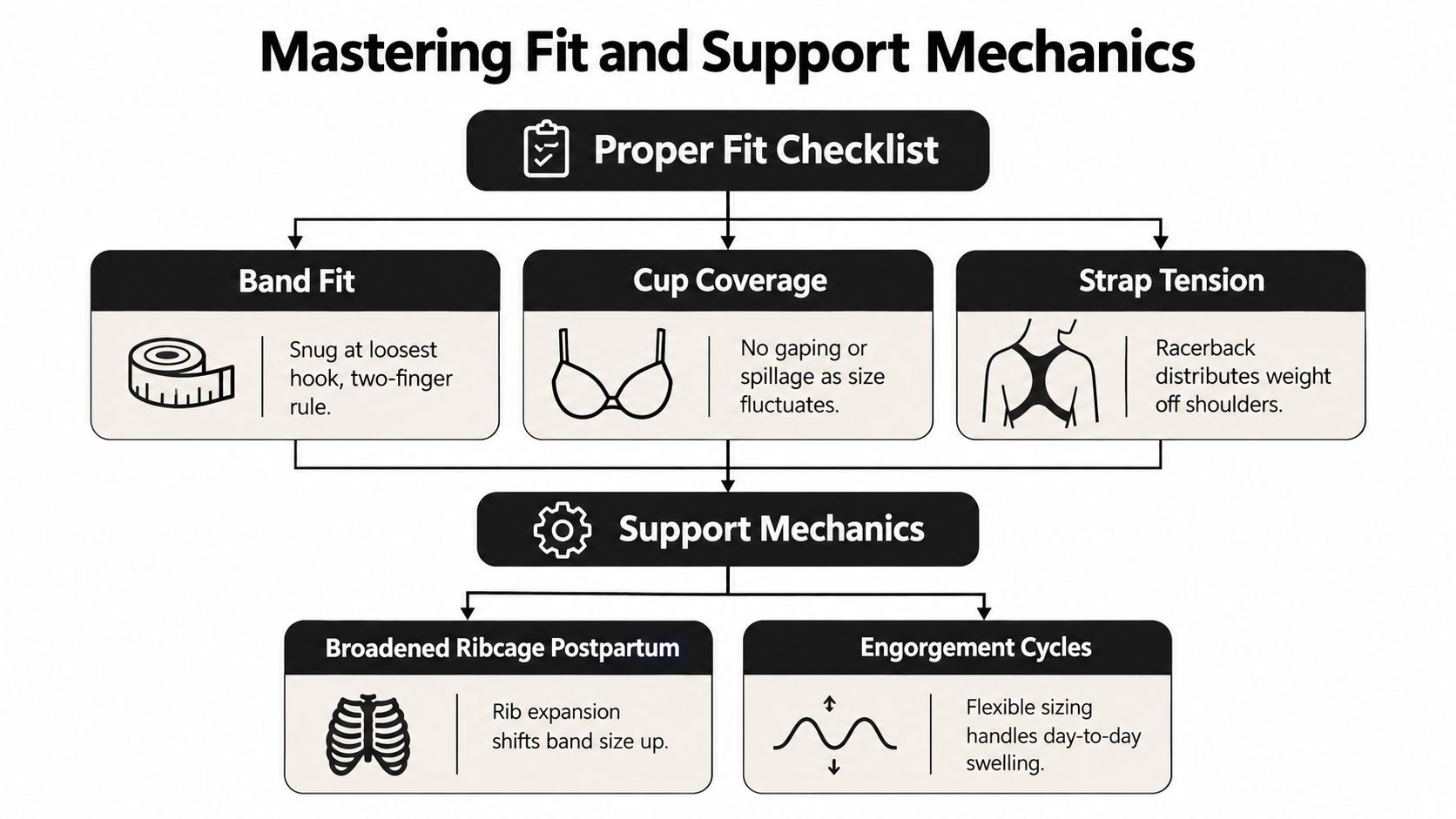
The band is the foundation of your bra. Breastfeeding guidance emphasizes that it should remain horizontal across your back, rather than arching upward when you move, and that it should provide the main support for your breasts. Wide straps can reduce pressure on your shoulders, but they shouldn't be carrying the primary load. NCT's maternity-bra guidance supports this distinction between anchoring and strap comfort.
Stand sideways in a mirror and move your arms. If the band rides up, the bra is losing its anchor. If the cups gape at the top, spill at the sides, or compress breast tissue, the cup structure or size isn't right. A racerback can keep the straps from slipping, but it can't rescue a loose band or a cup that lacks enough depth.
Test the band before the straps
Fasten a new bra on its loosest hook. The band should feel firm without making breathing uncomfortable, and you should be able to slide two fingers beneath it without excessive slack. Raise your arms, bend forward, and rotate your torso. The band should stay level instead of climbing toward your shoulder blades.
If the bra has several hook rows, use them as your body changes. A postpartum bra should give you adjustment rather than demand that you tolerate a poor fit. Stretch-recovery fabric matters for the same reason. It needs to accommodate changes in breast volume and ribcage circumference while retaining enough tension to support you later in the day.
Read the cups honestly
Full coverage is usually the safer choice when breast volume fluctuates. Seamed or structured cups can give more lift and shape than a single layer of high-stretch fabric, especially if you want to wear the bra beneath fitted clothing. A flexible underwire may also provide useful definition for some women, provided it sits around the breast rather than pressing into it and feels comfortable for your stage of recovery.
Use this guide to measuring for a nursing bra before ordering, then compare the result with the individual brand's chart. Measurements are a starting point, not a verdict. Your fuller side should sit inside the cup, the center or front should lie smoothly, and opening the nursing clip shouldn't cause the entire cup to collapse.
Fitting rule: If tightening the straps seems to fix the fit, check the band first. Shoulder tension often hides a foundation problem.
The racerback's advantage is stability. Its limitation is that centralized straps can feel restrictive if the neckline is too tight or the back lacks enough width. You want the straps to sit securely, not pull the garment upward or create pressure at the base of your neck.
Navigating Daytime, Sleep, and Exercise Use Cases
One nursing racerback bra rarely serves every part of your day equally well. The most useful approach is to match its structure to the activity, rather than asking a lounge bra to perform like a sports bra or expecting a highly structured daytime bra to feel effortless in bed.
At night
For sleep, softness and access usually matter most. A high-stretch pullover racerback can move comfortably with you during side-lying feeds, and its centralized straps are less likely to slip beneath a sleep top. Minimal hardware also reduces the chance of a clasp or rigid seam pressing into your ribs while you rest.
That comfort comes with a clear boundary. Soft fabric can provide gentle containment, but it may not control heavier breasts or keep removable pads perfectly positioned. For overnight wear, check that the neckline holds nursing pads against the breast and that the fabric doesn't roll beneath the bust when you turn.
During exercise
A racerback is naturally appealing when you return to movement because its straps stay closer to your body. A recent consumer roundup reviewed 17 bras worn by 6 moms for at least 6 months and identified a racerback nursing style as the best option for easing back into exercise, as reported in the nursing-bra selection from Babylist.
That finding doesn't make every racerback suitable for running. Choose a dedicated nursing sports design with compression, moisture management, stable cups, and nursing access that won't loosen during movement. For walking, stretching, and lower-impact activity, a supportive racerback may be sufficient. For higher-impact exercise, demand more than a secure strap layout.
The guide to supportive nursing sports bras can help you distinguish everyday support from exercise-specific construction.
For polished daytime dressing
The category deserves a wider conversation. A racerback with structured cups, a broad band, refined lace, and reliable nursing clips can work beneath a sleeveless dress or fitted blouse. Look for a smooth cup edge, enough lift to separate the breasts from the torso, and a back that won't show through the neckline you plan to wear.
A soft pullover remains excellent for lounging. A structured racerback can become a daytime bra. Treat them as different tools, and you'll stop judging one garment for failing at another garment's job.
Weighing the Pros and Cons for Postpartum Bodies
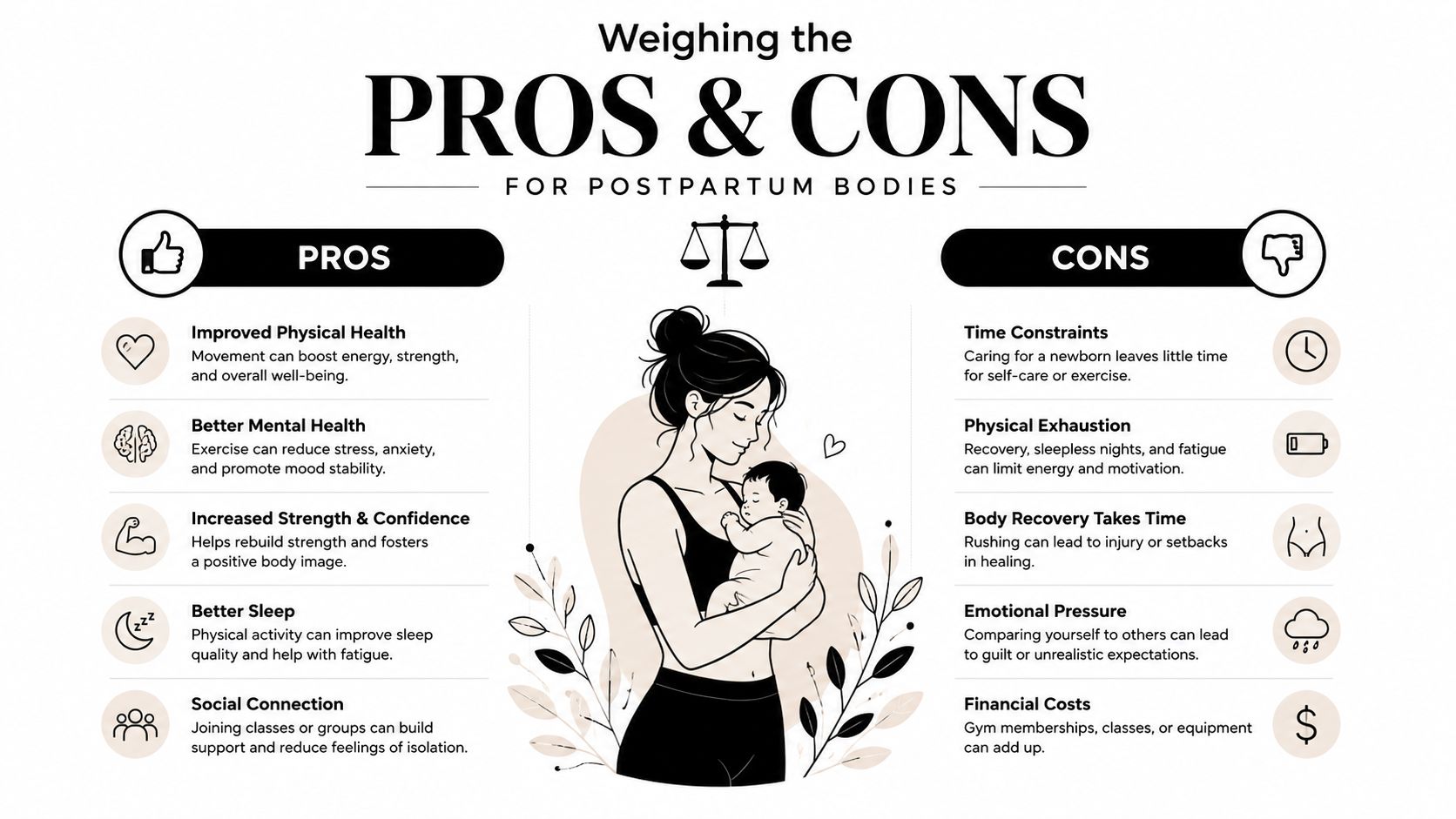
The appeal of a nursing racerback is immediate: the straps stay closer to the body, the back looks clean under sleeveless clothing, and you spend less time pulling straps back onto your shoulders. For women whose shoulders feel tender or overworked from feeding and carrying, that reduction in strap movement can make a long day feel less irritating.
The style can also look less like emergency maternity wear. A refined racerback with lace or a smooth finish can sit neatly beneath a T-shirt, knit top, or dress while retaining the quick access you need. That visual simplicity matters. Feeling put together isn't frivolous when your body and schedule have changed so dramatically.
The benefits are practical
- Secure straps: The back shape reduces slipping during ordinary movement.
- Cleaner styling: The straps work naturally with sleeveless and racerback tops.
- Gentle flexibility: Stretch can accommodate changing breast fullness.
- Easy routines: Nursing access avoids removing the whole bra.
- Emotional lift: Elegant details can help you feel intentional rather than hidden.
The limitations need attention
Unpadded pullover styles can make nursing-pad management difficult. Pads may shift overnight, crease beneath clothing, or leave the nipple visible after the fabric moves. If you rely on pads, look for a dedicated pocket or a double-layered cup that holds the pad in place. Test the bra after sitting, leaning forward, and lifting your arms, because leakage control isn't proven by standing still.
Support is the bigger question for larger busts. Existing reviews often describe racerback nursing bras as offering light to moderate support, and one review notes that a racerback sleep style provides softness and easy access but less support than a daytime bra, as discussed in Babylist's guidance for nursing bras for larger breasts.
A racerback isn't automatically supportive. It becomes a daytime option only when the band, cup, and closure provide enough structure.
For fuller breasts, choose seamed cups, a firm underband, broad side coverage, and straps that don't stretch excessively. A flexible underwire may be appropriate once your fit and comfort are stable. If the bra rolls, spills, or leaves you lifting your breasts with the straps, reserve it for sleep and choose a more structured option for daytime.
Choosing the Right Fabric and Structure
Start with the fabric because postpartum skin can be unusually reactive. Breastfeeding experts recommend soft, breathable materials such as cotton, bamboo, and modal blends, which help reduce sweating and irritation. The breastfeeding guidance on choosing maternity bras also warns that synthetic or plastic-lined constructions can contribute to soreness and bacterial growth.
That doesn't mean every synthetic fiber is unacceptable. Stretch fibers can make a bra adaptable and durable, but the garment needs a breathable inner surface and enough structure elsewhere to prevent the stretch from becoming collapse. More stretch generally means less support, so a very soft racerback is best for lounging, sleep, and light daily use.
Choose the construction for your body
Use the following framework when comparing styles:
- For sensitive early postpartum days, prioritize softness, breathability, gentle stretch, and room for fluctuation. Avoid compression that feels restrictive when your breasts are full.
- For all-day wear, look for a broad underband, full-coverage cups, dependable nursing clips, and fabric with strong recovery.
- For a more polished silhouette, choose seamed or molded cups instead of a single soft layer. These create clearer shaping beneath clothing.
- For a fuller bust, insist on firm underbust support and enough cup depth. A racerback back cannot compensate for a shallow cup.
- For changing fit, select multiple hook rows and use the loosest setting first, leaving room to tighten as the garment relaxes.
You can explore how bra fabric affects comfort before choosing between a cotton-rich everyday style, a modal blend, or an elegant stretch-lace construction.
Don't overlook recovery and care
Stretch should return after washing. If the band remains loose or the cups lose their shape, the bra has stopped doing its job even if it still feels soft. Follow the care instructions, avoid harsh heat when possible, and inspect the nursing clips, seams, and band after repeated laundering.
Fit flexibility also matters at checkout. A clear size-exchange policy gives you practical room to assess the bra on your actual body rather than guessing from a pre-pregnancy size. Order according to the current chart, try it on with a nursing pad if you use one, and check the fit at the time of day when your breasts usually feel fullest.
Elegance belongs in this decision too. Stretch lace, a smooth second-skin feel, and a flattering neckline aren't decorative extras if they help you wear the bra confidently under the clothes you want to wear. The strongest design combines breathable stretch fabric, a broad band, structured cups, and useful adjustability.
Embracing Your Evolving Identity
Motherhood changes your body, but it doesn't erase your preferences. You can want easy breastfeeding access and still care about lace, silhouette, color, and the way a bra feels beneath a favorite dress. Those desires don't compete with good mothering. They remind you that your identity contains more than one role.
A nursing racerback bra can support that wider identity when you choose it with intention. A soft version may carry you through sleep and quiet mornings. A structured style may give you the lift and clean lines you want for work, social plans, or an afternoon when you feel like dressing beautifully.
The best lingerie drawer isn't built around one universal bra. It responds to your changing day.
- For rest, choose softness and easy access.
- For movement, choose stability and activity-appropriate support.
- For daytime confidence, choose structure, coverage, and a silhouette that feels like you.
- For fluctuating fit, choose recovery, adjustability, and a brand with a practical exchange process.
You don't need to apologize for wanting more than function. Your breasts have fed and comforted your baby, your ribcage has carried you through pregnancy, and your body continues to adapt. Supporting it well is care. Choosing a beautiful garment is also a way to reconnect with yourself after months of putting every other need first.
A nursing racerback bra shouldn't ask you to choose between comfort and femininity. Choose the version that meets your actual support needs, then let the design reflect the woman you are becoming.
Milk&Lace offers nursing lingerie that combines elegant lace, breastfeeding access, and supportive construction for later postpartum wear. Visit Milk&Lace to explore options designed to help you feel comfortable, supported, and recognizably yourself as your body evolves.