

Nursing bras typically cost about $17 for budget basics to more than $85 for premium structured pieces, and a mother may spend roughly $180 to $540 across a lactation cycle. The right amount depends less on finding the cheapest bra and more on buying the right level of flexibility, support, and durability for each postpartum stage.
You're standing in front of the laundry basket with a hungry baby, one bra covered in milk, another digging into your ribs, and the “nice” one still sitting in its packaging because your size has changed again. That's the problem with shopping for nursing bras as if there's one correct price. Early postpartum and later nursing are different purchasing decisions, and treating them the same is how you either overspend too soon or stay uncomfortable for too long.
What Nursing Bras Actually Cost Over Time
Most mothers don't plan a nursing-bra budget as carefully as they plan diapers or bottles. They buy one bra, discover they need another for the wash, then add a pumping style, a sleep bra, or something more supportive when their routine changes. The total grows steadily.
A 2025 breastfeeding-clothing market estimate placed typical nursing-bra prices at approximately $45 to $90 per bra, with mothers commonly buying four to six bras during a lactation cycle. That creates a potential total of roughly $180 to $540, before taxes, shipping, discounts, replacements, or unexpected fit changes. These figures come from Dataintelo's breastfeeding-clothes market analysis.
That range is wide because the drawer usually contains different jobs, not identical bras. A soft, flexible bra may carry you through the first weeks, while a structured style earns its place later under work clothes or a fitted dress. A pumping bra might solve a specific daily problem but offer less value if you rarely pump.
Practical rule: Don't ask, “What should one nursing bra cost?” Ask, “What job must this bra perform, and how long will I realistically wear it?”
A realistic drawer, not a fantasy wardrobe
Supermarket and mass-market nursing bras typically average about $18 to $32 per unit, while specialty-channel products average approximately $35 to $65, according to Dataintelo's nursing-bras market analysis. Specialty pricing also varies by construction. Underwire styles are commonly priced at $35 to $68, wireless bras at $28 to $52, sleep bras at $22 to $38, and pumping bras at $32 to $55, based on the same analysis.
That means a drawer built entirely around the lowest sticker price may still fail if the bras stretch out, lack access, or don't suit your changing body. A smaller rotation with clearly assigned roles can be more sensible than buying several versions of the same basic.
Start with flexibility when your body is in flux. Spend more only when you know the fit you want, the support you need, and the occasions that justify a more engineered garment.
The Four Price Tiers and What Each One Buys You
Nursing-bra prices make more sense when you match the tier to your postpartum stage and the job you need the bra to do. The tag matters, but construction, wear window, and daily function matter more.
| Tier | Typical Price Range | Common Features |
|---|---|---|
| Mass-market basics | About $18–$32 | Wireless construction, stretch fabric, simple clips, replaceable everyday use |
| Mid-range everyday | About $28–$52 | Softer materials, better adjustability, smoother shaping, more durable bands |
| Specialty support | About $35–$68 | Stronger support zones, improved hardware, larger-bust options, pumping or underwire features |
| Premium structured | About $45–$85 | Refined materials, engineered support, discreet access, polished silhouettes, higher expected longevity |
Spend less while your size is changing
Mass-market basics are the practical choice for the early weeks, when your fit may shift and frequent washing can be hard on bras. Choose this tier if you need a replaceable everyday option or have not yet learned whether you prefer pull-down access, clip-down access, wireless support, or a shaped cup.
Mid-range bras earn their higher price through improvements you notice over long wear. Better straps, a steadier band, softer fabric, and one-handed hardware can reduce daily irritation. These bras are a sensible upgrade once your routine and preferred fit become clearer. Inspect the actual construction, because a mid-range price does not guarantee durability.
Match the tier to the task
Specialty support makes sense when you need less movement, pump regularly, or find basic wireless styles too unstable. Underwire can provide lift and shaping, but it should sit around the breast tissue rather than press into it. Guidance from the National Childbirth Trust on maternity and nursing bras emphasizes checking fit as your body changes and making sure the wire does not dig in.
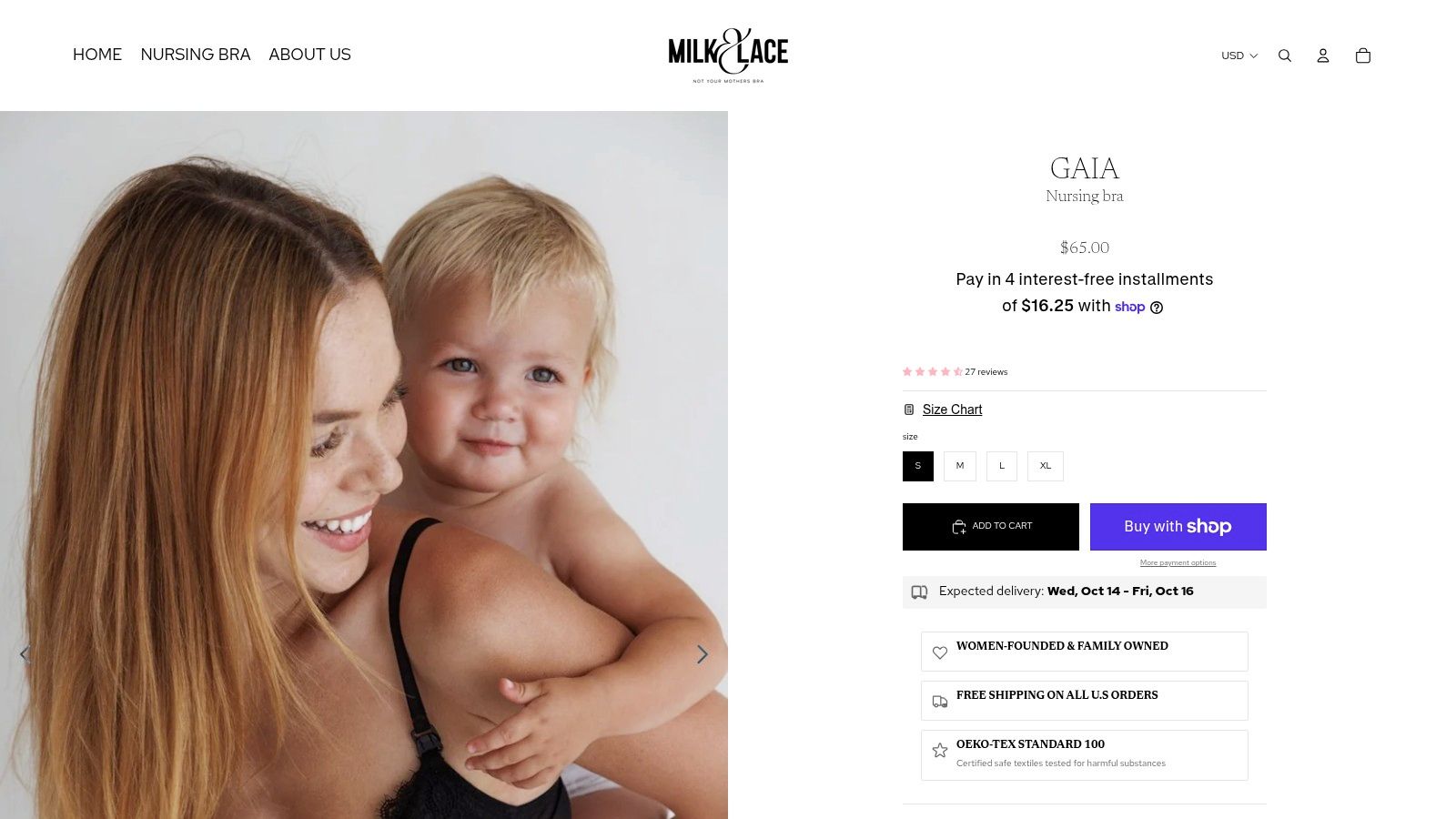
Premium structured pieces usually belong later, when you know your size, support needs, and wardrobe demands. They are rarely the smartest first purchase for a hospital bag. GAIA is described as a soft nursing bra with stretch lace, flexible support, and easy breastfeeding access. Those features suit someone who wants a more polished later-stage option, provided the bra earns regular wear.
Pay for a higher tier only when it gives you a clear benefit: steadier support, more comfortable fabric, easier access, a smoother shape, or a longer useful life. Otherwise, choose the less expensive bra and keep the difference.
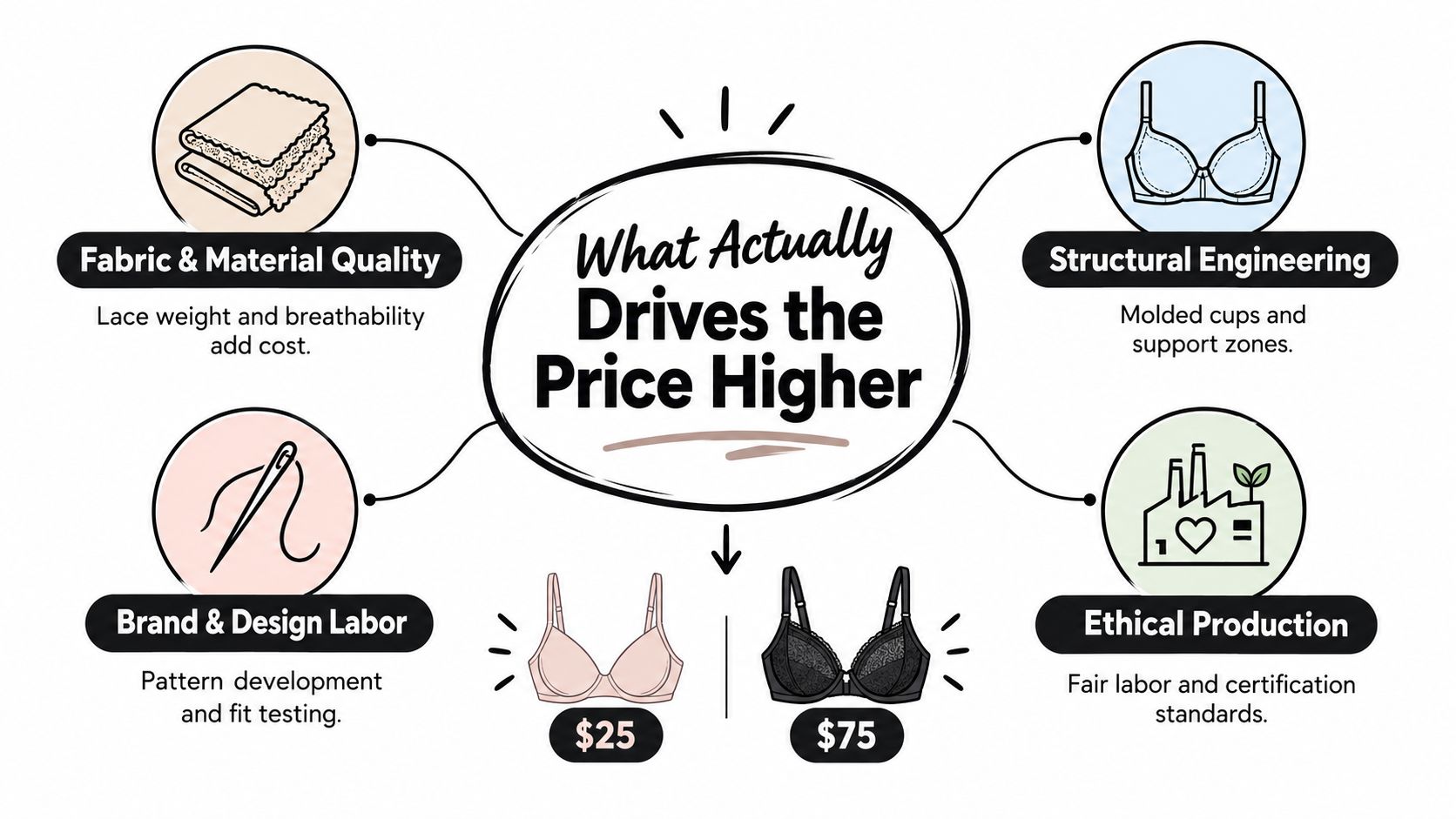
What Actually Drives the Price Higher
A higher price should be traceable. If you can't identify what you're paying for, you're probably paying for positioning rather than performance.
Fabric and skin contact
Material quality affects whether a bra feels tolerable after hours of wear. Breathable, soft fabric can matter when skin is sensitive, while stretch needs to accommodate changes without immediately losing shape. Lace isn't automatically premium. A decorative layer that scratches, traps heat, or adds no support doesn't earn a higher price in my book.
Look for a fabric that feels gentle against the breast and stays stable around the ribs. If the material feels thin in a way that compromises coverage or support, a low price may mean a shorter useful life.
Structural engineering
Seam placement, cup shaping, band width, and support zones determine how the bra carries weight. A molded cup or carefully built support panel can create a smoother silhouette and reduce shifting under clothing. That work takes more than adding a nursing clip to a basic bralette.
The band deserves special attention. A soft cup can't compensate for a band that rolls, stretches quickly, or rides upward. Try to assess whether the bra distributes pressure across the torso instead of concentrating it under the bust.
Underwire, hardware, and access
Underwire and flexible boning can change the support profile, but they aren't universal upgrades. A rigid wire that's badly fitted is worse than a well-designed wireless bra. Choose structure only when it feels stable without pressing into breast tissue.
Nursing access is another genuine cost driver. Smooth one-handed clips, secure straps, hidden seams, and a design that keeps the cup from collapsing during a feed all save effort when your hands are occupied. Durable hardware matters because repeated opening and closing exposes weak closures quickly.
Design and production work
Pattern development, fit testing, and ethical production can also sit behind a higher retail price. Those costs are meaningful when they create a garment that fits across a useful range and survives regular wear. They don't excuse poor functionality.
A premium nursing bra should make a daily task easier, not merely make the product page look more luxurious.
Why Timing Changes What You Should Spend
A premium nursing bra bought before your postpartum fit settles can become an expensive drawer resident. Early spending should protect comfort and flexibility. Later spending can target support, shape, and style with much less guesswork.
In the first weeks, breast fullness and rib-cage fit may shift quickly. Choose a bra with stretch, adjustability, and easy replacement rather than committing to a precise molded fit. A wireless or highly stretchable style usually handles those changes better and remains practical when feeding, washing, and sleep deprivation dictate your routine.
Comfort still deserves money early. Direct that money toward soft contact points, adaptable bands, and nursing access you can operate while tired. Save the polished silhouette and specialized structure for a stage when you know what fits and what you wear.
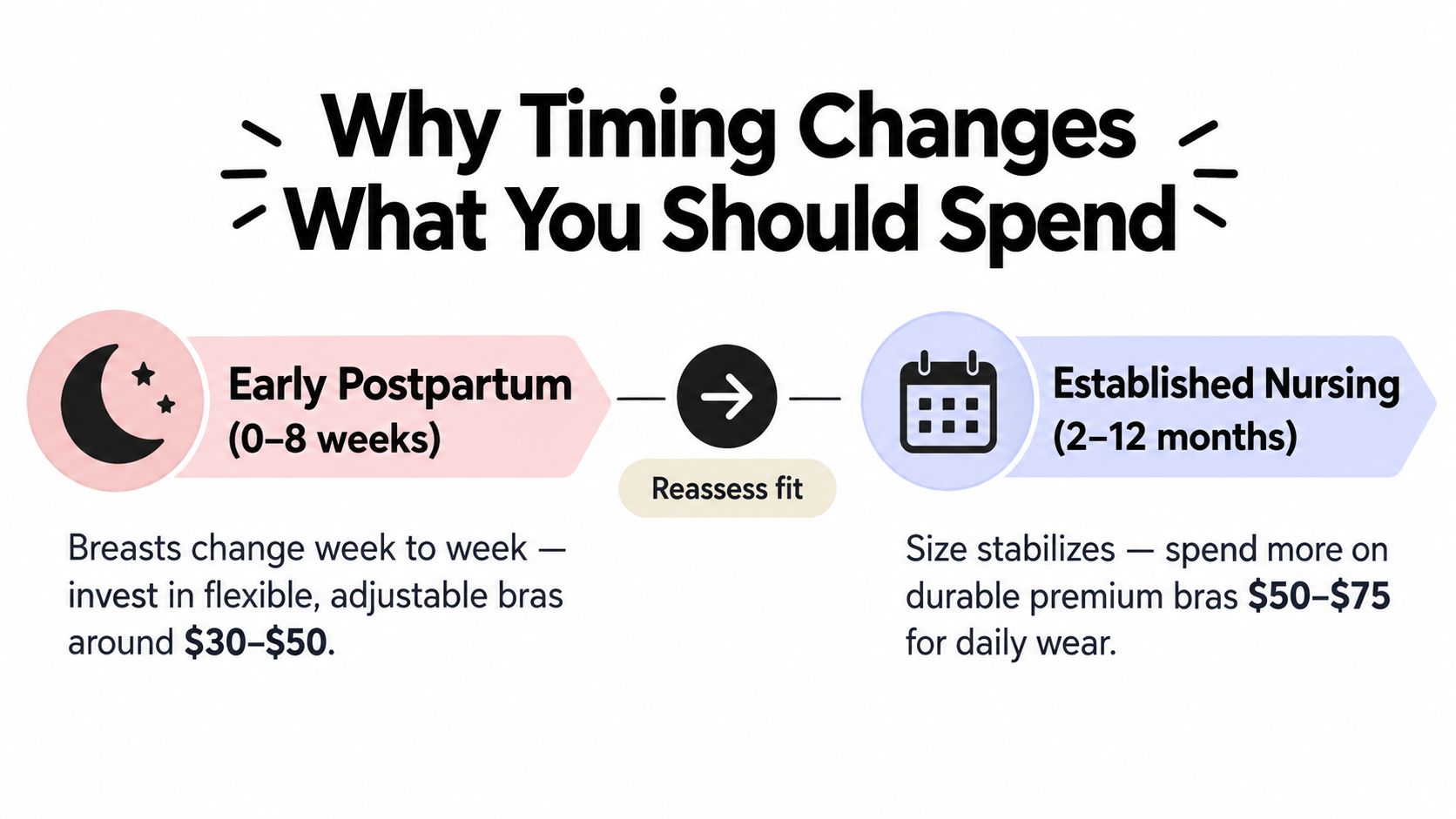
Early postpartum calls for flexibility
Keep enough basic bras in rotation for feeding, washing, and ordinary mess, without filling the drawer with costly pieces too soon. Prioritize stretch, adjustable bands, comfortable skin-contact areas, and clips that open and close easily with one hand.
Your preferred size, shape, and nursing routine may become clearer after you have worn simple styles for a while. Check the fit regularly as your body changes, and replace a bra when the band rides up, the cups compress tissue, or the access system becomes awkward. For more detail on choosing the right buying point, see this guide on when to buy nursing bras.
Later nursing can justify structure
Once your size feels more predictable, spending priorities change. Returning to work, leaving the house more often, or dressing for a broader wardrobe can make support, shape, breathable materials, and discreet access worth paying for.
A premium structured piece can solve that later-stage problem. It does not need to replace the soft early bra. Buy it when you can identify the support and style you will use repeatedly.
Spend lightly while your fit is unsettled. Invest when you know the support and style you'll actually reach for.
The Case for Cost Per Wear Instead of Sticker Price
A $75 bra looks expensive beside a $25 bra. That comparison is incomplete because it ignores how often each garment gets worn and how long it remains comfortable.
Use a simple calculation:
Cost per wear = purchase price ÷ estimated wears
If a lower-priced bra becomes uncomfortable quickly, loses shape, or gets pushed to the back of the drawer, its low sticker price may not translate into low cost per wear. A more expensive bra can be financially sensible when you wear it repeatedly, wash it carefully, and keep reaching for it because it supports your body and works with your clothes.
Don't invent a heroic lifespan to make a purchase feel justified. Estimate conservatively. Ask yourself how often you'll wear the bra, whether it can handle your routine, and whether its fit will remain useful through the stage you're buying for.
What makes the calculation honest
A daily nursing bra needs more than attractive lace. Check the parts that receive constant stress:
- The band: It should stay secure without feeling punishing.
- The access system: Clips should open and close smoothly with one hand.
- The fabric: Skin-contact areas should feel breathable and soft enough for extended wear.
- The support: Cups and seams should keep their shape during ordinary movement.
- The fit window: Stretch and adjustability should match your current postpartum stage.
A price increase can also affect demand. A U.S. apparel study estimated price elasticities of approximately −0.48 for domestically produced apparel and −0.30 for imported apparel, but those are broad apparel benchmarks rather than nursing-bra-specific forecasts, as explained in this University of North Carolina at Greensboro apparel pricing study. The useful lesson is practical: premium pricing needs clear differentiation, and discounting shouldn't be your only growth strategy.
Judge the purchase after returns, exchanges, fulfillment, and the actual number of wears. A bra that looks inexpensive at checkout can be costly if it creates discomfort and gets replaced. A structured bra that becomes your reliable daily option may earn its place through use, not theatre.
What a Premium Bra Like GAIA or PETRA Delivers
Premium nursing bras should be evaluated against a clear standard, not against the assumption that all expensive lingerie is automatically better. The question is whether the garment turns a higher price into measurable daily usefulness.
An entry-level nursing bra may focus on stretch, basic wireless support, and simple access. That can be exactly right early on. A later-stage structured design has a different brief. It should offer steadier shaping, gentle support, comfortable materials, reliable hardware, and a silhouette that works beyond the most exhausting weeks.
Milk&Lace describes GAIA and PETRA as later-postpartum nursing lingerie options built around structured support, soft lace, and discreet nursing access. PETRA specifically features ultra-soft stretch lace, gentle underwire, and one-hand nursing access. Those are functional details, not merely visual ones, but they still need to suit your body and your current tolerance for underwire.
Compare the job, not just the label
| Feature | Entry-level option | Premium structured option |
|---|---|---|
| Main priority | Flexibility and affordability | Support, finish, and longevity |
| Best timing | Early or unsettled postpartum | Later postpartum with a clearer fit |
| Support profile | Soft wireless structure | More deliberate shaping or underwire |
| Nursing access | Basic clip or pull-down design | Discreet, smoother one-handed access |
| Wardrobe role | Home, sleep, everyday rotation | Work, outings, and polished daily wear |
The premium case is strongest when you need a bra to do more than survive laundry day. If it gives you stable support without discomfort, breathable contact with the skin, access you can manage one-handed, and a shape that works under your clothes, it has a defensible role.
The premium case is weak when you're buying mainly because the fabric looks delicate. Beauty matters, especially when postpartum life can make you feel disconnected from yourself, but beauty should arrive alongside construction that earns repeated wear.
Smart Ways to Budget, Shop Sales, and Avoid Buyer's Remorse
Budget by stage, not by fantasy. Decide what you need immediately, what can wait, and which purchases depend on discovering your later fit.
A sale is useful only if the bra suits your current body and routine. A discounted structured bra bought too early is still an expensive mistake if you can't wear it comfortably. Likewise, a cheap bra with vague sizing and no return path isn't a bargain.
Use a simple shopping filter
- Buy for the current stage: Choose flexibility early and structure later.
- Check the exchange policy: Fit changes make exchanges a form of risk reduction, not a luxury service.
- Read construction details: Look for information about fabric, closures, support, and access.
- Treat discounts as secondary: Never let a sale decide which style your body needs.
- Watch for red flags: Flimsy hardware, unclear sizing, no returns, and unsupported claims should stop the purchase.
Before checkout, confirm whether the size guide uses rib-cage and bust measurements, whether exchanges are allowed, and who pays return shipping. A clear policy can make a higher-priced purchase more rational because it lowers the cost of getting the fit wrong.
For broader shopping guidance, use where to buy nursing bras as a starting point, then compare the product details and policies yourself. Sales should help you buy the right bra for less, not persuade you to buy the wrong bra at all.
Your Nursing Bra Buying Plan
Keep the plan simple. Start with a small rotation of flexible, budget-conscious basics for the early weeks, when your body and feeding routine are still revealing what they need. Once your size feels more stable, add one or two structured pieces if you want stronger support, a smoother silhouette, or lingerie that feels appropriate for work and life outside the house.
Before you judge any nursing bras price, estimate the number of wears you'll get from the garment. Then check whether the construction supports that estimate. A bra that feels good, washes well, opens easily, and stays useful through the stage you bought it for is worth more than a cheaper bra that never leaves the drawer.
Before you click buy
- Confirm the fit window: Decide whether your current size is still changing.
- Match the stage: Ask whether the bra is for early flexibility or established nursing.
- Check the return terms: Read the exchange and refund rules before payment.
- Inspect the access: Make sure you can operate the closure with one hand.
- Name the job: Know whether it's for sleep, daily wear, pumping, work, or going out.
- Use wear math: Estimate realistic use instead of reacting to the sticker price.
You don't need a perfect nursing-bra collection before your baby arrives. You need a practical first layer, permission to reassess, and a willingness to invest when your body and wardrobe tell you what would meaningfully improve daily life.
Milk&Lace offers structured nursing lingerie with soft lace, flexible or gentle support, and discreet nursing access for the later postpartum stage. Visit Milk&Lace to explore options that treat comfort, function, and feeling like yourself as part of the same purchase.