

The clock says 2:14 a.m. Your baby is hungry, your body still feels unfamiliar, and the last thing you want is to wrestle with a stiff waistband, a clingy top, or buttons that suddenly feel impossible with one free hand.
That’s usually the moment maternity pjs nursing stops sounding like a nice extra and starts feeling like part of your survival kit.
The right pair does more than help you sleep. It makes feeding easier, helps your body rest, gives you a little privacy when visitors arrive, and softens those strange early weeks when comfort and identity can both feel fragile. Good nursing pajamas don’t fix exhaustion, but they can remove friction from the hours when you need the most gentleness.
Women are clearly prioritizing that kind of practical comfort. The global maternity wear market was valued at USD 23,422.6 million in 2024 and is projected to reach USD 30,867.5 million by 2030, with tops, including nursing tops used in pajama sets, holding over 30% of the market share, according to Grand View Research’s maternity wear market analysis.
Embracing a New Kind of Comfort
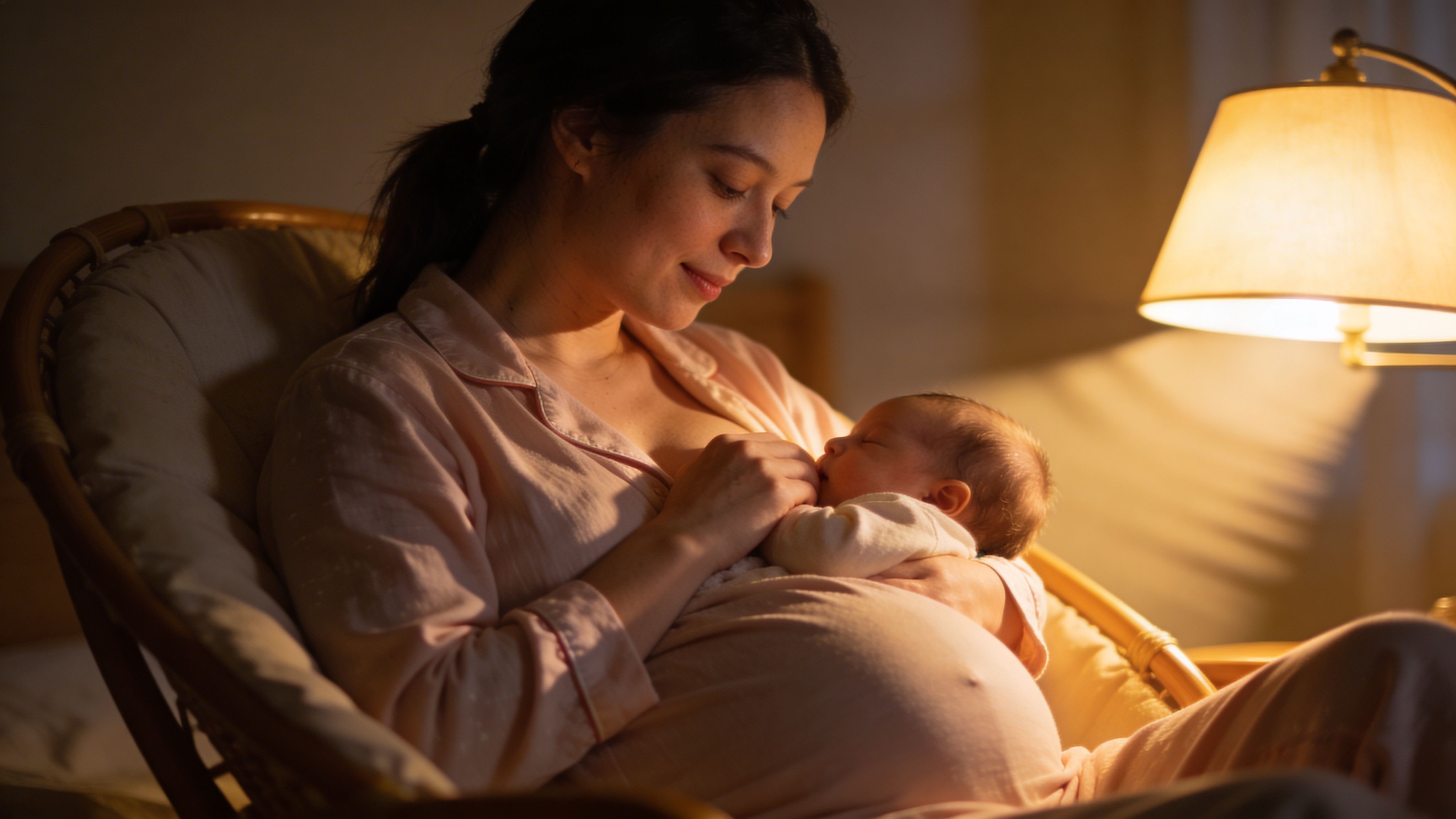
Postpartum comfort looks different from pregnancy comfort. During pregnancy, you may have wanted stretch and room for your belly. After birth, you often need easy feeding access, softness against tender skin, and clothes that don’t make you feel sloppy or hidden inside someone else’s body.
That’s why maternity pjs nursing deserves a little more thought than “anything oversized will do.” Oversized can be nice. But it can also bunch, twist, slide off one shoulder, and make nighttime feeds harder than they need to be.
Why pajamas matter emotionally too
Sleepwear becomes part of your daily uniform in the early postpartum stretch. You might wear it through cluster feeds, naps, skin-to-skin time, pumping sessions, unexpected tears, and those first tiny moments when you start feeling steadier.
When a set feels soft, works easily, and looks like something you’d choose rather than settle for, it can shift your mood in a quiet way. That matters.
You’re not being vain if you want your pajamas to feel pretty. You’re reminding yourself that care can include you too.
Many mothers start their search wanting function and end up realizing they also want dignity. They want to open the door to a delivery driver, sit on the couch with family, or catch their reflection without feeling completely disconnected from themselves.
Self-care that actually gets used
The most useful postpartum self-care items are the ones that show up in ordinary moments. Nursing pajamas are one of them because they support you when you’re tired, sore, leaking, warm one minute and chilly the next.
A thoughtful set can help with:
- Night feeds: Faster access and less fumbling.
- Recovery days: Softer pressure around a healing belly.
- Long mornings at home: Enough polish to feel dressed without giving up comfort.
- Body changes: More flexibility as your shape shifts week by week.
If you’re also rebuilding your wardrobe beyond sleepwear, this guide to stylish nursing wear can help you think about comfort and confidence together.
The Anatomy of Great Nursing Pajamas
The best nursing pajamas are built, not just sewn. Their value comes from the small design choices you notice most when you’re exhausted.
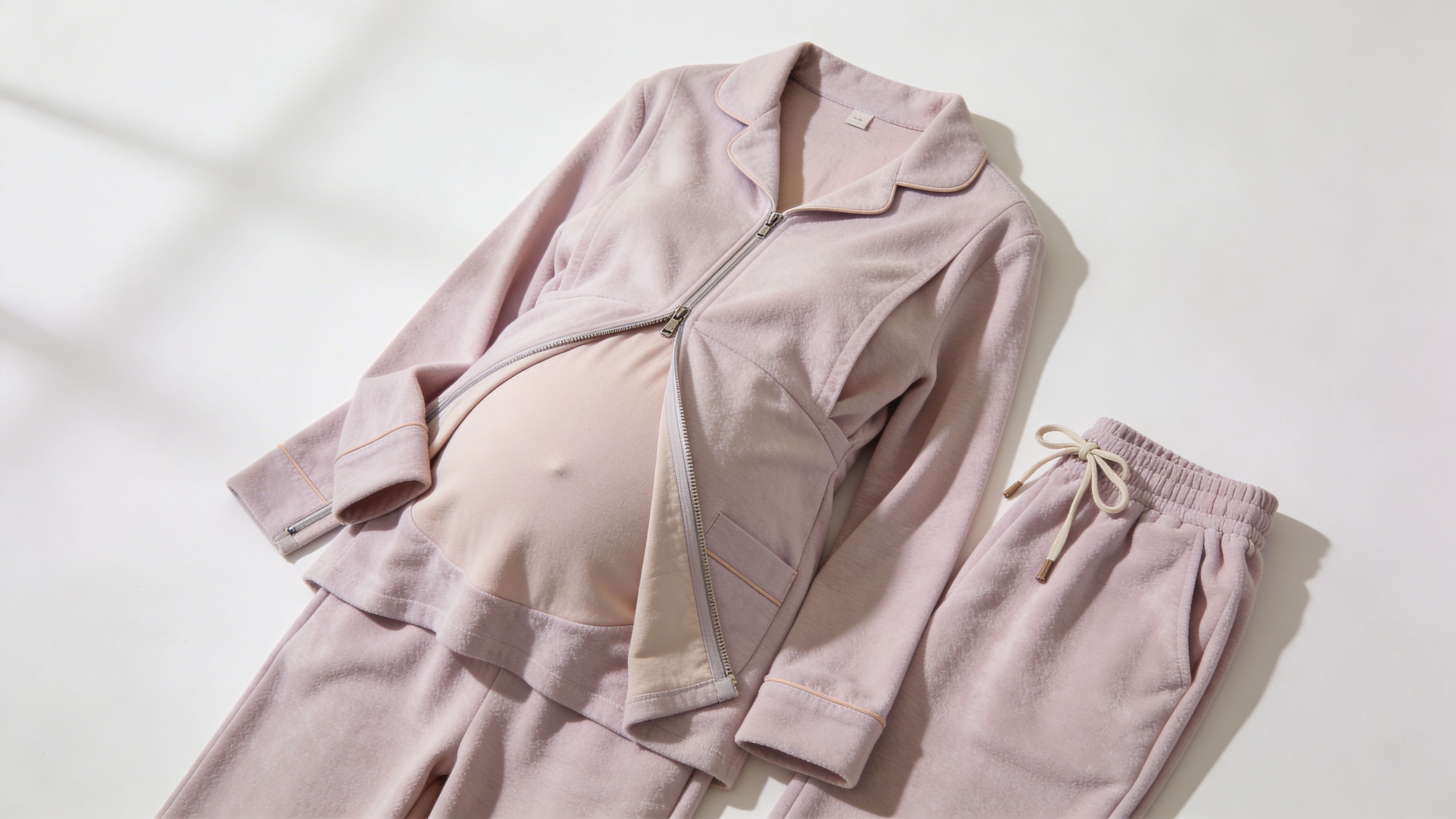
A cute print won’t help much if the neckline fights you at 3 a.m. What you want is a structure that works with one hand, a changing bust, and a body that may still be healing.
Start with feeding access
This is the first thing to test when you shop. If access isn’t simple, the rest of the set won’t matter much.
According to The Bump’s guide to the best nursing pajamas, nursing-specific access mechanisms like hidden snap plackets can reduce breastfeeding initiation time by 65%, from 45 seconds to 16 seconds on average. The same source notes this matters for 70% of global breastfeeding dyads who practice co-sleeping or frequent night feeds.
That sounds technical until you live it. Then it becomes very human. Faster access can mean less crying, less fumbling, and less wakefulness for everyone.
Here’s how the common styles usually feel in real life:
- Hidden snaps: Great if you want a neat look and clear access points. They’re especially useful when you want to open only part of the top.
- Crossover or pull-down tops: Usually the quickest to understand. They feel intuitive, though some mothers prefer more chest coverage.
- Button-front sets: Familiar and classic, but they can feel fiddly when you’re sleepy.
- Lift-up panels or layered tops: Helpful if you want nursing function without the pajama looking obviously nursing-specific.
Waistbands should support recovery, not argue with it
A postpartum waistband should feel forgiving. Not saggy. Not tight. Not “I can’t wait to peel this off.”
If you had a C-section, any pressure across the lower abdomen can feel distracting or upsetting. Even without surgery, your midsection may stay tender, swollen, or sensitive for a while.
Look for design details like:
- Wide soft waistbands that sit smoothly without digging in
- Adjustable drawstrings that let you loosen or secure the fit day by day
- High-rise cuts if you want more coverage and a held feeling
- Flowy nightgown silhouettes if pants feel irritating
Practical rule: If a waistband feels merely “fine” in the fitting room, it may feel terrible during a long night at home. Aim for relief, not tolerance.
Shape matters more than many labels admit
A lot of postpartum advice says “buy relaxed fit” and stops there. That’s not enough. Two relaxed pajama sets can fit completely differently depending on shoulder cut, bust room, rise, and how the fabric falls.
A strong maternity pjs nursing design often includes a little structure in the right places and softness everywhere else.
| Design feature | Why it helps |
|---|---|
| Room through the bust | Accommodates breast fullness and nursing pads |
| Slight drape through the waist | Skims instead of clinging to a changing midsection |
| Tapered or straight leg | Keeps pants from feeling messy or dragging |
| Longer top length | Gives coverage when lifting, bending, or feeding |
| Stable neckline | Prevents constant adjusting during nursing |
After you’ve looked at the photos, this quick visual walkthrough can help you spot useful features in motion.
The small details that change daily life
Sometimes the deciding factor isn’t the headline feature. It’s the little thing a tired mother notices after wearing the set for ten hours.
Notice whether the top stays in place when you lie down. Check if seams feel bulky. See whether the pants twist after washing. Think about whether the set is presentable enough for a quick front-door moment or surprise guest.
Some women love a matching set because it makes them feel pulled together. Others prefer a nursing nightgown plus robe because it simplifies everything. Neither is better. The best choice is the one that removes the most friction from your real routine.
Choosing Your Second Skin The Best Fabrics
Fabric is where comfort becomes physical. You don’t just see it. You live in it against skin that may feel warmer, drier, more reactive, or more sensitive than usual.
That’s why it helps to think of your pajamas as a second skin. The right material can make a long day feel less clingy and a rough night feel a little less harsh.
What cotton feels like
Cotton is the familiar favorite for a reason. It’s breathable, easy to wash, and often feels reassuringly simple.
If you want everyday reliability, cotton usually delivers. Many mothers like it for hospital packing and home use because it feels recognizable and low-maintenance.
Its tradeoff is that some cotton styles can hold moisture more than you’d like, especially if you’re dealing with leaks, sweat, or temperature swings.
Where bamboo stands out
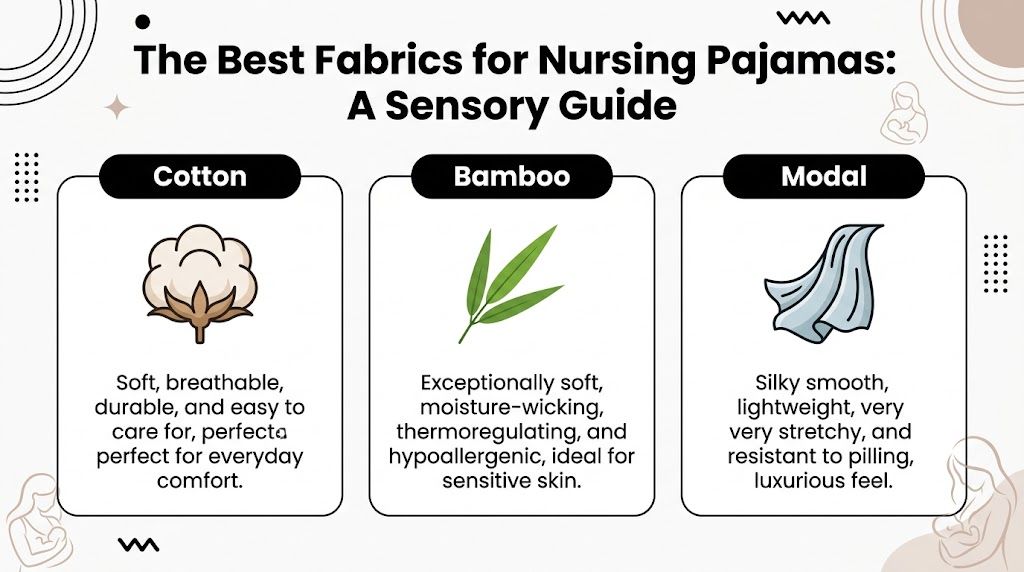
Bamboo viscose is the fabric many mothers describe first in sensory terms. Soft. Cool. Fluid. Gentle.
Those impressions line up with the available data. According to Business Insider’s guide to the best pregnancy pajamas, bamboo viscose can reduce skin temperature by 2 to 3°C during postpartum hot flashes. The same source says it wicks moisture at rates 3x faster than cotton, and that these fabric properties have been linked to a 40% lower incidence of nipple chafing and skin irritation in breastfeeding mothers.
If your skin feels overstimulated, or you’re dealing with milk leakage and night sweats, that can make bamboo especially appealing.
Softness is lovely. Softness that also stays cooler and handles moisture well is what makes a fabric useful at 4 a.m.
Modal has a different kind of luxury
Modal tends to feel silky and drapey. It often has that “I still feel like myself” quality because it hangs beautifully and can look more refined than basic jersey.
It’s a strong choice if you care about feel and appearance equally. Many women like modal for later postpartum months, when they still want comfort but don’t want to feel like they’re dressed in pure utility.
Its best role is often in sets meant for lounging, sleeping, and casual daytime wear around the house.
A simple comparison
| Fabric | Best for | Possible drawback |
|---|---|---|
| Cotton | Familiar everyday comfort, easy care | May feel less efficient with moisture |
| Bamboo viscose | Cooling, softness, sensitive skin, leaks | Often needs a gentler wash routine |
| Modal | Drapey feel, polished look, softness | Can feel less cooling than bamboo for some mothers |
How to choose based on your real life
Ask yourself what annoys you most right now. Start there.
- If you run hot: Bamboo viscose often makes the most sense.
- If you want simplicity: Cotton is usually the easiest starting point.
- If you want softness with a prettier drape: Modal may be your favorite.
- If your skin feels reactive: Prioritize smooth fabrics with minimal scratchy trim or stiff seams.
Some mothers build a small rotation instead of hunting for one perfect set. One cooler set for night. One easy-wash cotton set for constant wear. One softer, prettier option for daytime at home when feeling a bit more like yourself matters.
That approach can be kinder than expecting one pair to solve every need.
A Fit for Every Chapter Your Sizing Guide
The biggest sizing mistake is assuming one pair of pajamas should fit exactly the same from late pregnancy through many months postpartum. Your body won’t stay still, and your sleepwear shouldn’t expect it to.
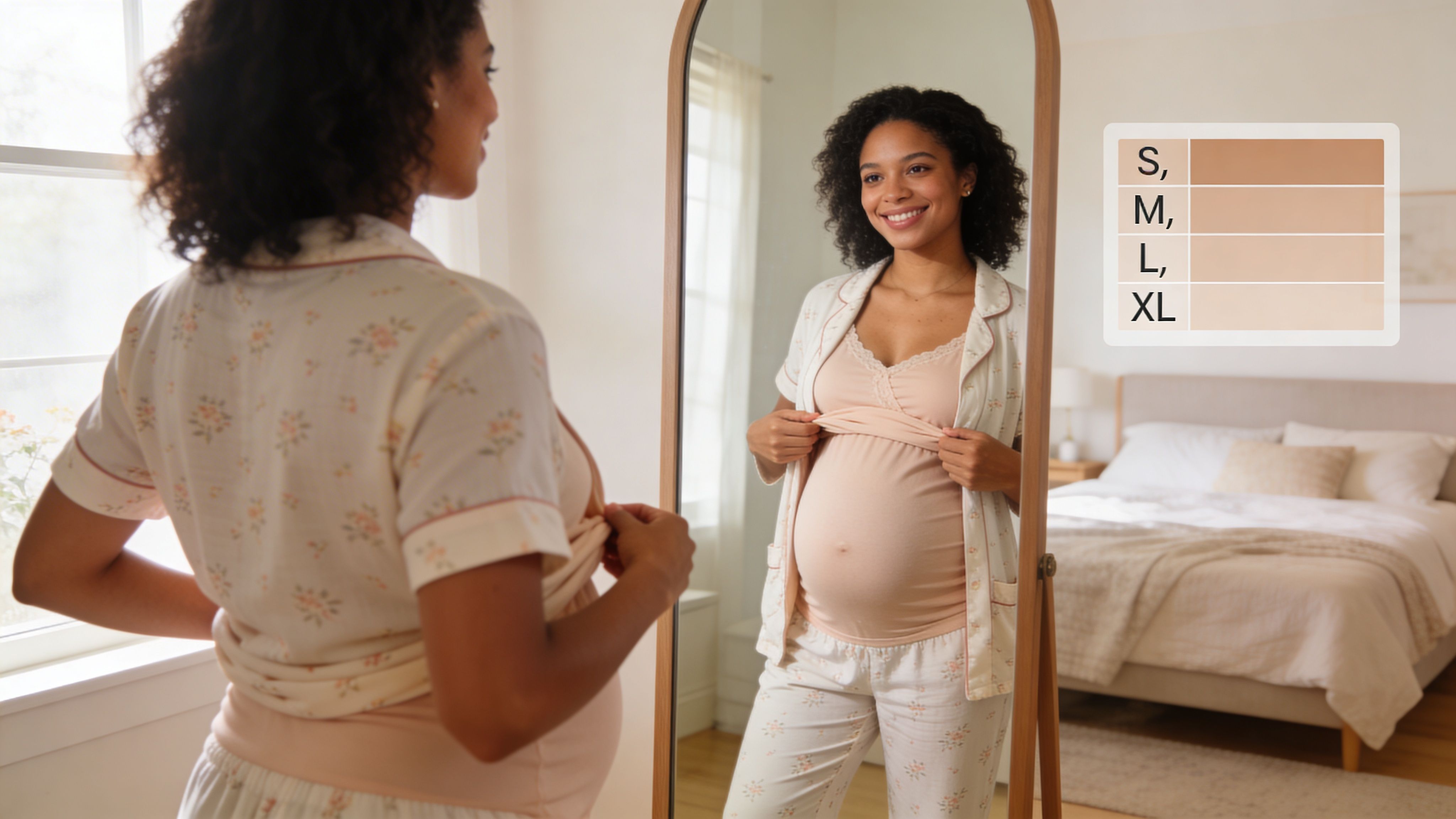
That uncertainty is common. According to Angel Maternity’s sleepwear collection page, citing a 2023 Motherly survey, 68% of new moms struggled with sleepwear fit changes postpartum. That tracks with what many women experience: a ribcage that still feels expanded, breasts that change size throughout the day, and a waistline that doesn’t follow a neat timeline.
Late pregnancy fit isn’t postpartum fit
In late pregnancy, the belly is usually the main fit consideration. Soon after delivery, that changes. You may want less belly accommodation and more ease through the bust, ribcage, and waist.
That’s why “just buy your maternity size” can be incomplete advice.
Try thinking in stages instead.
Late pregnancy
You need room for the bump, yes. But don’t ignore the neckline and bust.
A set that only expands at the belly may stop working quickly after birth if feeding access is awkward or the chest area feels tight. For this stage, look for softness, drape, and openings that won’t become useless the moment the baby arrives.
The first weeks postpartum
This stage often surprises people most. Your body may still look pregnant. Your breasts may feel fuller. Your abdomen may feel delicate. You may want more coverage one day and less the next.
At this point, the best fit usually feels:
- Forgiving at the waist
- Easy through the bust
- Stable at the shoulders
- Simple to open in a half-awake state
The later postpartum months
Months later, many mothers still need nursing access, but they want less “maternity” in the feel of the garment. In this scenario, adaptable sleepwear matters most.
Look for pieces with:
- Stretch that recovers well
- Drawstrings or gentle elastic
- A shape that skims instead of tents
- Enough polish to double as loungewear
How to decide what size to buy
For sizing decisions, clarity helps more than generic “room to grow” language.
| If this sounds like you | What usually helps |
|---|---|
| You’re buying in late pregnancy for hospital and home | Choose your current maternity size in a flexible cut |
| Your ribcage feels expanded | Prioritize bust and underarm ease over a smaller waist fit |
| You’re between sizes | Lean toward the size that gives easier feeding access and softer drape |
| You expect body changes over many months | Choose adjustable styles over ultra-fitted sets |
Buy for the body you’ll live in during recovery, not the body you hope to return to on a deadline.
That mindset saves frustration. It also makes your purchase more useful for longer.
If bra fit is part of the confusion, this guide on how to measure for a nursing bra can help you sort out changing ribcage and bust measurements alongside your sleepwear choices.
Words that usually signal a better fit
Product pages can be vague, so it helps to scan for certain terms. “Adjustable waistband,” “nursing access,” “soft stretch,” “relaxed through bust,” and “designed for postpartum” usually tell you more than “cozy” or “roomy.”
Be careful with very oversized cuts if you’re petite or if fabric volume tends to bother you in bed. More fabric doesn’t always equal more comfort. Sometimes it just means more bunching, more twisting, and more adjusting when you’d rather be resting.
From Hospital Bag to Home Styling Your PJs
The same pajama set can play very different roles depending on where you are in your postpartum journey.
In the hospital, it’s about access, modesty, and feeling a little more like a person than a patient. At home, it becomes something else. It’s the outfit you wear for breakfast on the couch, baby snuggles, pumping, quick photos, and maybe your first day when you brush your hair and think, “There I am.”
What earns a place in the hospital bag
Hospital packing advice can get cluttered fast. Pajamas are one of the few items worth choosing on purpose.
A good hospital set usually has three jobs. It needs to feel soft against tired skin, open easily for feeding, and look presentable enough that you don’t mind wearing it when people walk in.
A practical hospital sleepwear plan often looks like this:
- One nursing-friendly set or gown: Choose the one with the easiest access.
- A lightweight robe: Helpful for hallway walks and coverage.
- Dark or forgiving colors: Useful if you want less visual stress around spills or leaks.
- A second option for going home or the next day: Because having a fresh set can feel surprisingly restorative.
Some women love button-front pajamas at the hospital because they feel classic and familiar. Others prefer a nightgown because it’s simpler after birth. The best option is the one you can imagine reaching for without thinking.
At home, style starts to matter again
Once you’re back home, your needs widen. You still need comfort, but you may also want shape, softness, and a little beauty.
That doesn’t mean dressing up. It means choosing combinations that let you feel supported and recognizably yourself.
A straightforward approach:
- For early recovery days: Pair a loose nursing pajama top with soft pants or a gown and robe.
- For daytime lounging: Choose a matching set with cleaner lines, even if you’re staying home.
- For later postpartum months: Wear your favorite pajama button-down or wrap top over a supportive nursing bra so you feel a bit more held together.
A small example from real life
A mother in the first weeks postpartum may want the easiest setup possible. She wears a soft nursing nightgown in bed because it reduces pressure and simplifies feeds.
A few months later, that same mother may reach for a matching pajama set on a Saturday morning because she wants to feel less like she’s in recovery mode and more like she’s back inside her own style. The practical need hasn’t disappeared. It has just matured.
That’s also why support layers matter. If you’re pumping between feeds or building a more workable home routine, guides on hands-free pumping can help you think beyond pajamas and create a setup that feels easier hour by hour.
Comfort and style don’t compete in postpartum life. The best pieces let them cooperate.
You don’t need a huge collection. You need a few pieces that match the version of you showing up that week.
Preserving Softness A Guide to Care
The pajamas you love will go through a lot. Milk leaks, spit-up, sweat, frequent washing, and the occasional desperate dryer cycle all come with the territory.
Care matters because soft fabrics can lose their feel fast if they’re handled roughly.
The easiest wash routine
Most nursing sleepwear lasts better when you keep the process simple:
- Use a gentle detergent: Fragrance-free or baby-friendly options are often kinder on sensitive skin.
- Wash in cool or cold water: This helps preserve softness and shape.
- Choose a delicate cycle if the fabric is bamboo or modal: These materials usually prefer less agitation.
- Skip harsh fabric softeners: They can leave residue and affect how fabric feels over time.
Drying without damage
Air drying is often the safest choice for softer fabrics. If that’s not realistic, use low heat.
High heat can make elastic tire out sooner and can leave drapey fabrics feeling less smooth. If your set has nursing clips, snaps, or delicate trim, that gentler approach matters even more.
One small habit that helps
Keep one laundry bag just for delicate sleepwear and bras. It makes wash days easier, protects details from snagging, and helps the pieces you rely on stay comfortable longer.
When a pajama set still feels soft after many wears, you notice. It’s one less thing fighting you during a demanding season.
Your Questions on Comfort Answered
Choosing maternity pjs nursing isn’t just about buying something soft. It’s about choosing clothes that respect a changing body, support feeding, and make daily life smoother from the hospital to the later months when you want comfort without feeling stuck in survival mode.
The best pair usually does three things well. It opens easily, feels good on sensitive skin, and keeps fitting kindly as your shape changes.
Below are the questions women often ask once they get past the first search and start trying to make a real decision.
Do I really need nursing pajamas, or can I just size up in regular pajamas
You can absolutely wear regular pajamas if they already work for your body and feeding routine. The issue isn’t whether they’re labeled “nursing.” It’s whether they give you quick access, enough bust room, and a waistband or silhouette that feels good during recovery.
Sizing up in standard pajamas can solve space, but it often doesn’t solve access. That’s where purpose-designed sleepwear usually earns its place.
Are nightgowns better than two-piece sets after birth
For some mothers, yes. A nightgown can feel easier in the early days because there’s no waistband to manage.
That can be especially appealing if your abdomen feels tender or you don’t want anything pressing on your middle. Two-piece sets become more appealing when you want more coverage, a more dressed look, or flexibility to change just the top or bottom.
What if my breasts change size constantly
That’s normal, especially early on. Look for pajama tops with flexible bust room, stretch, and access that doesn’t rely on a very precise fit.
Wrap styles, layered nursing panels, and button or snap tops usually handle fluctuation better than rigid, fitted chest shapes.
Should pajamas match the bra I wear underneath
Not perfectly, but they should cooperate. If your bra adds support and shape, the pajama top should fit comfortably over it without pulling or looking strained across the chest.
This matters more later postpartum, when many women want sleepwear or loungewear that feels more polished and works with a supportive underlayer.
How many nursing pajama sets do I actually need
You don’t need a large collection to feel prepared. A small rotation is usually enough if each piece serves a clear purpose.
For example:
- One easiest-access option: Best for middle-of-the-night feeds.
- One wash-friendly everyday set: For heavy rotation.
- One set that feels a little prettier or more pulled together: For daytime at home, visitors, or your own morale.
That kind of mix often works better than several pairs that all do the same thing.
Is it worth buying nice pajamas if I’m mostly at home
Yes, if “nice” means they make your life easier and help you feel more like yourself. Postpartum life happens largely at home, so home clothes have an outsized effect on comfort and mood.
A useful question is not “Will people see this?” It’s “Will I live in this?” If the answer is yes, quality matters.
What should I avoid when shopping
A few things tend to disappoint quickly:
- Stiff waistbands
- Fussy closures
- Scratchy lace or trim near sensitive areas
- Very thin fabric if you want coverage
- Tops that ride up or twist in bed
- Sets that only fit one moment of your body
If you’re deciding between a prettier set and a more functional one, choose the one you’ll reach for when tired. That’s the test.
Can maternity nursing pajamas still work months later
Yes, if they’re chosen well. The pieces most likely to last are the ones with adaptable shape rather than a very pregnancy-specific cut.
A set with soft drape, easy access, and moderate stretch can continue to feel relevant long after the earliest postpartum weeks. That’s especially true if it looks more like refined loungewear than temporary utility clothing.
What’s the best fabric if I’m dealing with leaks and hot flashes
If cooling and moisture management are your biggest concerns, the fabric discussion earlier in this guide becomes especially useful. In general, a softer, breathable fabric that handles moisture well tends to feel more comfortable than a basic fabric that stays damp against the skin.
The “best” choice depends on what bothers you most. Heat, dampness, friction, and visual polish can point to different favorites.
I want comfort, but I also want to feel attractive again. Is that unrealistic
Not at all. It’s one of the most common feelings of the later postpartum period.
At first, comfort may be enough. Then one day it isn’t. You still want softness and function, but you also want clothes that reflect your taste, your adulthood, and your sense of self. That shift isn’t superficial. It’s often part of emotional recovery.
Wanting beauty in a practical piece isn’t extra. For many mothers, it’s part of feeling visible again.
The right maternity pjs nursing choice supports both realities. You need ease. You also deserve clothes that feel like they belong to you.
If you’re ready for support that goes beyond sleepwear, Milk&Lace offers premium nursing lingerie designed for the stage when comfort still matters, but confidence matters too. Their elegant, supportive styles are made for postpartum women who want practical nursing access without giving up femininity, shape, or a sense of self.