

You're standing sideways in the bathroom, weeks after giving birth, gently pinching the soft fold below your belly button. The scale may be moving, your swelling may be settling, and you may even feel stronger, yet the skin still looks gathered and unfamiliar. That moment can feel personal, but loose belly skin after pregnancy isn't proof that you've done anything wrong. It's a physical response to months of stretching, changing tissue support, and recovery that continues long after the birth itself.
A useful way to understand your postpartum belly is to separate it into three layers. The outer layer is the skin envelope, which may have lost some recoil. The middle layer is the abdominal wall, including the connective tissue between the muscles and the possibility of diastasis recti. Beneath those layers is residual fat, which changes with energy balance, movement, hormones, and time.
Those layers can overlap, but they don't respond to the same solution. Exercise may improve abdominal support without removing excess skin. Weight loss may reduce fat while leaving a loose fold. Skin care may improve comfort and texture without repairing the abdominal wall. Once you identify which layer is contributing most to the shape you see, your next step becomes much clearer.
The Postpartum Belly Nobody Warned You About
A new mother may leave the hospital expecting her body to feel different, but not necessarily expecting her abdomen to remain soft, folded, or gently protruding. She might pull on her pre-pregnancy jeans, notice a lower-belly pouch above the waistband, and wonder why regular meals, breastfeeding, or early walks haven't changed it yet. The answer usually isn't a lack of discipline. Pregnancy has altered several structures at once.
The abdominal skin spent months accommodating a growing uterus. At the same time, the abdominal wall adapted to increasing pressure, and the body stored energy to support pregnancy and recovery. After delivery, the uterus and fluid levels change more quickly than the skin and connective tissues can remodel. That mismatch creates the familiar experience of a smaller bump underneath a skin envelope that still feels too large.
A kinder interpretation: your body may be recovering on several different clocks, not failing to return on one schedule.
The three layers of a postpartum belly
Think of the abdomen as a layered garment. The first layer is the skin, which may appear crepey, wrinkled, or loose when you pinch it. The second is the muscle and fascia, including the linea alba, the connective-tissue strip between the rectus muscles. If that tissue has stretched and the abdominal wall has reduced tension, the belly may project forward even when there isn't much extra fat.
The third layer is residual fat, the soft fullness that sits under the skin and around the trunk. It can remain even when your weight is healthy, and it may coexist with both loose skin and diastasis recti.
These distinctions matter because each layer needs a different response. Skin laxity calls for time, skin support, and, in selected cases, a dermatological or surgical consultation. Diastasis is better assessed through pelvic-health or core rehabilitation. Residual fat responds to gradual nutrition and activity changes, not creams or abdominal exercises alone.
Why the mirror can mislead you
A side profile compresses all three layers into one outline. A lower fold may look like fat, while a central dome may reflect abdominal-wall pressure. A soft, thin pinch may be mostly skin, while denser tissue suggests a combination.
The most useful question isn't “How do I get rid of my postpartum belly?” It's “Which layer is changing, and which layer needs support?” That shift replaces a single, frustrating target with a realistic plan.
Why Pregnancy Stretches the Skin in the First Place
Skin behaves a little like an elastic waistband. If you stretch it briefly, it can recoil close to its original shape. If you keep it stretched for months, the fibers that give it structure become fatigued, and the waistband may stay looser even after the pressure disappears.
What happens beneath the surface
The dermis contains collagen, which provides strength, and elastin, which helps skin stretch and recoil. During pregnancy, the abdomen expands through mechanical overdistension. Hormonal changes also influence connective tissue, making room for the growing uterus and altering how the skin and abdominal wall handle tension.
After birth, the pressure drops, but the collagen and elastin network doesn't automatically return to its earlier arrangement. The skin may retract partly, while remaining folds, fine wrinkling, or a lower abdominal flap persist. Clinical literature describes this as a measurable form of laxity rather than a vague cosmetic complaint. One peer-reviewed treatment study recorded average laxity scores improving from 1.79 at baseline to 1.1 three months later, while independent photo assessment found improvement in 86% of treated patients. These figures come from a treatment study, so they shouldn't be treated as a promise for every person or every method. The clinical study on postpartum abdominal laxity shows why improvement can be assessed, but also why treatment outcomes need context.
Stretch marks aren't the same as loose skin
Stretch marks, or striae, develop when changes extend into the deeper dermal structure. They may begin as pink, red, purple, or brown lines and often fade over time without disappearing completely. Generalized laxity can occur with or without visible stretch marks. You can have a loose lower-belly fold and few marks, or many marks without a significant hanging fold.
Genetics, age, skin exposure, the amount of stretching, and whether you've had more than one pregnancy all influence recovery. The important point is that these factors affect the starting conditions. They don't make your efforts meaningless, and they don't make a predictable result possible.
Moisturizers can reduce dryness and make the surface feel more comfortable. Sunscreen helps protect the skin you have. Topical products may improve texture, but they can't rebuild a broken elastin network or remove excess skin. Retinoids and other potent ingredients also need specific medical guidance during breastfeeding.
The Real Recovery Timeline You Should Expect
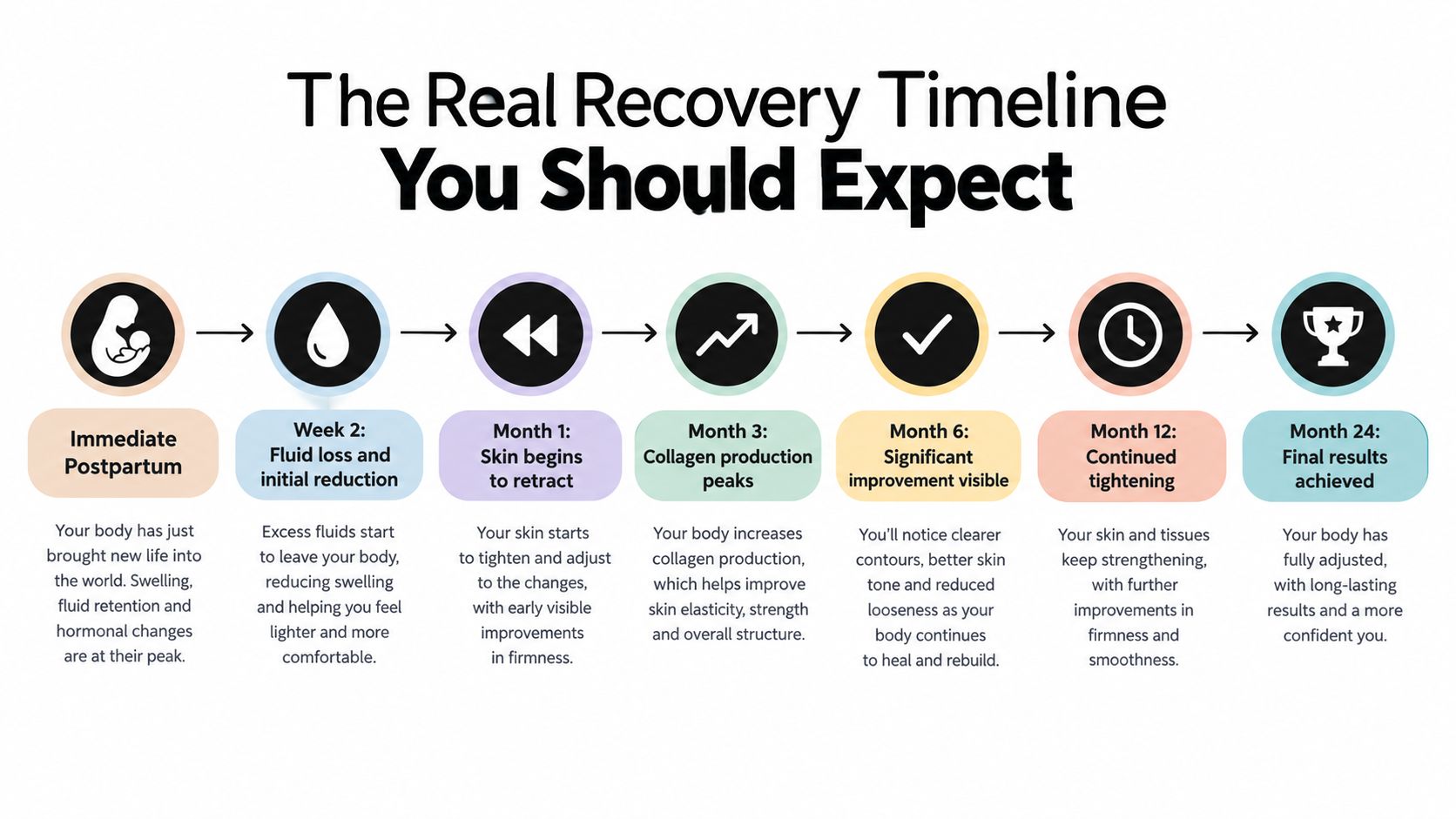
The six-week postpartum check is an important medical milestone, but it isn't a deadline for your abdomen to look or feel fully restored. Fluid shifts, uterine recovery, skin remodeling, abdominal-wall tension, sleep, feeding, and activity all progress at different speeds.
What the evidence shows
A 2022 peer-reviewed review reported that nearly 70% of primiparous women said they experienced abdominal skin laxity during pregnancy or the postpartum period, and 33% reported abdominal stretch marks. The review also cited a longitudinal study of 300 first-time mothers in Norway. In that group, diastasis recti prevalence was 60% at six weeks postpartum, 45.4% at six months, and 32.6% at twelve months. The figures describe abdominal-wall separation, not loose skin itself, but they illustrate an important principle. Abdominal changes often improve while remaining common well beyond the early postpartum period. The review and cited Norwegian longitudinal data provide useful context for setting expectations.
A practical timeline looks like this:
- The first weeks: fluid loss and changes in abdominal pressure can alter your outline quickly. Loose skin may appear more noticeable as the bump reduces.
- The first few months: the skin begins gradual remodeling, while core coordination and movement patterns are returning. Progress may be uneven.
- Around six months: many women still notice some abdominal laxity or reduced abdominal-wall support. Improvement can be visible without looking complete.
- Around twelve months: skin and connective tissue may continue to change, and abdominal-wall function may keep improving with appropriate rehabilitation.
- Beyond the first year: some people continue to see gradual changes, while others reach a stable result with persistent laxity. A normal recovery doesn't always mean a complete return to pre-pregnancy skin.
When waiting is sensible, and when to ask for help
Patience is reasonable when the skin is comfortable, the shape is slowly changing, and you don't have pain or functional symptoms. Daily mirror checks can exaggerate small fluctuations caused by meals, posture, hydration, and fatigue, so monthly photos taken in similar conditions may give you a fairer comparison.
Arrange an assessment if you notice a persistent or painful bulge, pronounced doming, suspected hernia, pelvic or abdominal pain, or skin breakdown beneath a fold. A pelvic-health physiotherapist, primary-care clinician, dermatologist, or appropriately qualified surgeon can help determine whether the main issue is skin, abdominal-wall support, fat, scar tissue, or a combination.
Loose Skin vs Diastasis Recti vs Stubborn Fat
The same lower-belly shape can come from different tissues. A simple self-check can suggest what you're seeing, but it can't diagnose a hernia or determine the severity of diastasis. Stop if a test causes pain, and ask a clinician for an examination when the result is unclear.
Three clues from the mirror and your hands
Loose skin tends to feel thin, soft, and foldable. When you gently pinch the lower abdomen, the tissue may gather into a crease and release slowly. It can look wrinkled or crepey, especially when bending forward, and exercise won't remove the excess surface tissue.
Diastasis recti involves widening and reduced tension along the midline connective tissue between the rectus muscles. Some people notice a central ridge, dome, or trough when lifting the head from a lying position. A cautious supine head-lift check can involve lying on your back with knees bent, relaxing the abdomen, and gently lifting your head and shoulders while feeling along the midline. A gap, soft depression, or pronounced doming deserves professional assessment rather than repeated self-testing.
Residual fat usually feels fuller and denser beneath the skin. It may be distributed above and below the navel and can change with overall body composition. Fat and loose skin frequently coexist, so a pinch may include both.
| What you see | Most likely cause | Quick self-check | Best first-line response |
|---|---|---|---|
| Thin folds, crepey texture, or a lower flap | Skin laxity | Gently pinch and release the skin | Time, moisturizing for comfort, sun protection, and qualified skin consultation if persistent |
| Central doming, a midline trough, or reduced core control | Possible diastasis recti or abdominal-wall weakness | Gentle supine head-lift observation, without force | Pelvic-floor or postpartum core assessment |
| Soft, fuller tissue across the abdomen | Residual fat, often with other layers | Notice density and changes across overall weight or activity changes | Gradual nutrition and movement plan |
| A shelf near a surgical scar, tenderness, or a hard bulge | Scar tissue, swelling, hernia, or mixed causes | Don't press repeatedly or self-treat aggressively | Clinical examination |
A stronger core can improve posture and contour without tightening skin. Likewise, reducing fat won't necessarily correct a midline pressure problem. If back discomfort is part of the picture, guidance on postpartum back pain relief can complement an assessment, but it shouldn't replace evaluation of a visible abdominal bulge.
Non-Surgical Ways to Tighten Postpartum Belly Skin
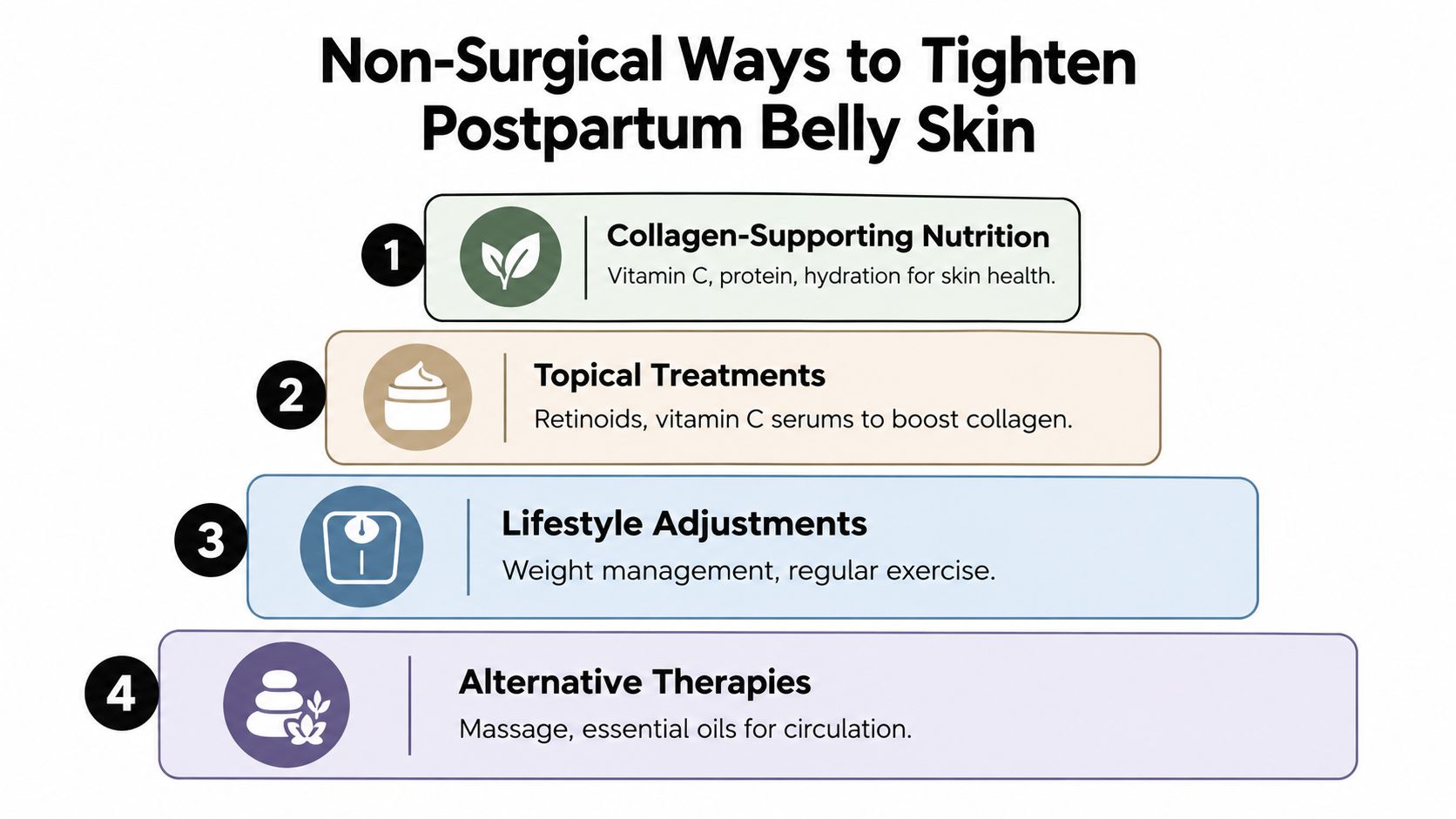
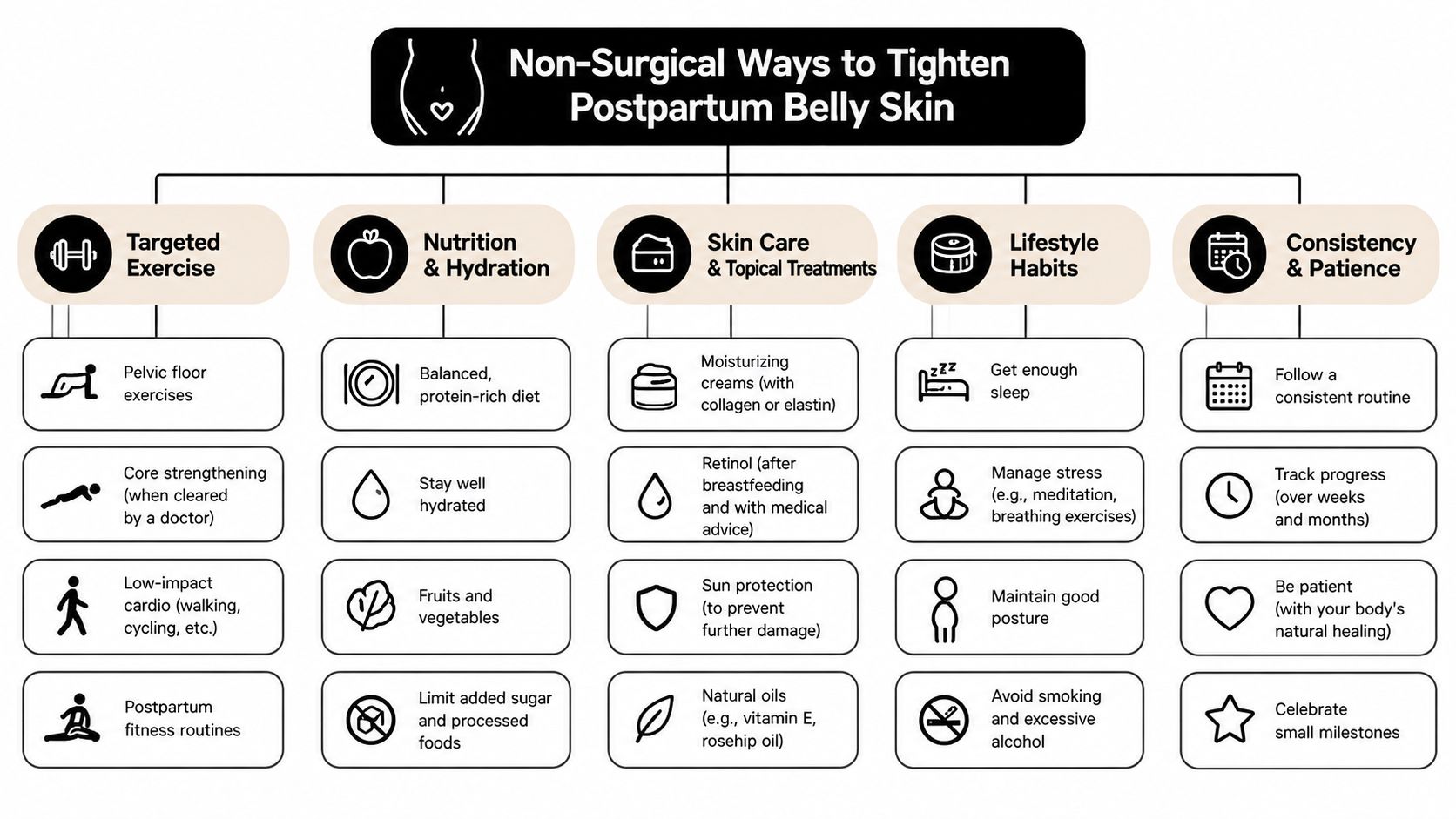
Non-surgical care works best when you rank it by purpose. Some habits support tissue health, some improve the muscular foundation, and some may stimulate modest collagen remodeling. None should be sold as a guaranteed way to erase a skin fold.
Start with the foundations
Eat enough to recover, especially if you're breastfeeding or caring for a newborn on broken sleep. Protein supports tissue repair and muscle maintenance, while vitamin C and zinc contribute to normal connective-tissue processes. Fluids and regular meals can make recovery more sustainable, but no supplement can substitute for adequate food or promise dramatic tightening.
A plain moisturizer can ease dryness, itching, or friction. Sunscreen protects exposed skin from additional ultraviolet damage. Retinoids may be used for selected skin concerns, but they aren't appropriate during breastfeeding without medical advice. Peptides and vitamin C products may support a consistent skin-care routine, yet their effect on a substantial loose fold is limited.
Rebuild the support underneath
Once you've received postpartum exercise clearance, begin with breathing, pelvic-floor coordination, walking, and controlled strength work. Progress gradually toward exercises that train the deep abdominal muscles, glutes, hips, and upper back. If you have doming, pelvic heaviness, leaking, or pain, a pelvic-health physiotherapist can adjust the programme.
Exercise can improve strength, posture, movement, and the contour beneath the skin. It can't remove excess skin, and endless crunches may aggravate pressure or doming in someone with poor abdominal-wall control.
Consider devices with realistic expectations
Radiofrequency, ultrasound, laser treatments, microneedling with radiofrequency, and red-light approaches are designed to influence tissue remodeling. Results vary by device, skin quality, treatment settings, and the amount of laxity. A recent open single-arm study of 17 postpartum women using bipolar microneedle radiofrequency reported significant elasticity improvements, 80% satisfaction, and no serious adverse events. Because the study was small and uncontrolled, it supports interest in the approach, not a universal guarantee. The clinical discussion of postpartum device-based treatment offers further context.
You may also use supportive garments for comfort during feeding, walking, or daily tasks, but compression temporarily changes how the abdomen feels and looks. It doesn't repair skin or close diastasis. If you want to compare support styles, shapewear and waist cincher options should be considered for fit and comfort, not as a treatment.
For breastfeeding support higher on the body, GAIA is described as a soft nursing bra with stretch lace, flexible support, and breastfeeding access. Choose any garment only if it feels comfortable, doesn't irritate sensitive skin, and doesn't restrict breathing or feeding.
Surgical Options Worth Knowing About
Surgery becomes relevant when a stable, persistent skin fold or abdominal-wall problem doesn't match what conservative care can reasonably change. It isn't a requirement for recovery, and a consultation doesn't commit you to a procedure. The purpose of an assessment is to identify which tissues need treatment and whether the timing is appropriate.
What the common procedures address
A full abdominoplasty, or tummy tuck, removes excess lower-abdominal skin and may include repair of separated abdominal muscles. It generally addresses a broader area than skin-only treatment. A mini tummy tuck focuses on excess tissue below the navel and may suit a smaller, lower-belly concern when the abdominal wall and skin above it are relatively stable.
A fleur-de-lis abdominoplasty adds a vertical component to the incision and can remove tissue across both the width and height of the abdomen. Skin-only excision is less common when pregnancy has also changed abdominal-wall tension, because removing surface tissue won't correct a structural problem underneath. Liposuction may address fat, but it doesn't remove a lax skin envelope and may be unsuitable when recoil is poor.
Timing and recovery
Surgeons commonly want you to have finished breastfeeding, completed childbearing plans, and reached a stable weight. Any uncontrolled medical condition, nicotine use, or difficulty arranging recovery support needs discussion before elective surgery. Waiting until at least twelve months postpartum often gives the tissues more time to settle and produces a more predictable assessment of what remains.
Plan around childcare and lifting restrictions. You may need two to three weeks away from lifting, around six weeks before driving for many patients, and several months before the final contour settles. Scars can continue maturing for twelve to eighteen months, and numbness, tightness, fluid collections, wound problems, infection, and blood clots are among the risks your surgeon should explain.
Consultation question: ask which layer is creating your contour, what the procedure won't change, where the scar will sit, how lifting restrictions affect infant care, and what happens if you plan another pregnancy.
Choose a properly board-certified plastic surgeon who performs the procedure in an accredited setting. Ask to see results from patients with similar skin quality and abdominal-wall changes, and request a written plan covering fees, aftercare, complications, and emergency contact arrangements.
Building Your Personal Postpartum Skin Plan
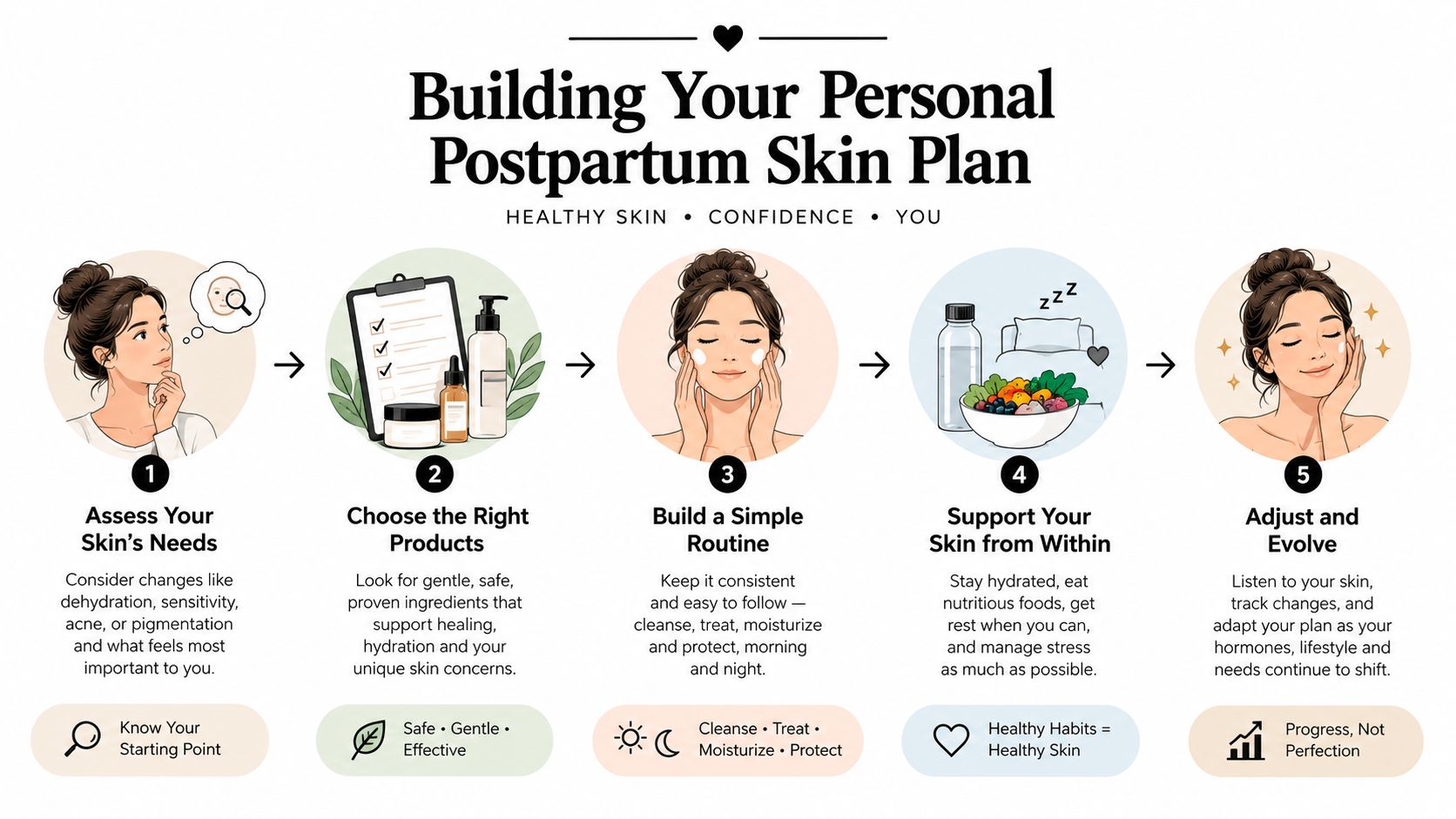
You don't need to solve every layer at once. A simple plan separates what you can act on now from what needs assessment or more time.
Your first phase
Start with comfort and observation. Keep the skin clean and dry, moisturize areas that feel tight or itchy, and protect exposed skin from the sun. Take one relaxed front and side photograph in consistent lighting rather than judging your body several times a day.
If your clinician has cleared movement, use walking and gentle breathing-based core work as a starting point. If your abdomen domes, your pelvic floor feels heavy, or you feel pain, pause harder exercises and arrange a pelvic-health assessment. A targeted programme can improve control and function even when the skin layer remains unchanged.
For residual fat, avoid crash dieting. Build meals around protein and use gradual activity changes that fit feeding, sleep, and medical needs. If you're breastfeeding, discuss calorie restriction and supplements with a qualified clinician instead of following an aggressive plan from social media.
A decision path for the next few months
- Name the dominant layer. Thin folds suggest skin, central doming suggests abdominal-wall involvement, and fuller dense tissue suggests fat. Mixed findings are common.
- Choose one appropriate action. Use skin care for comfort, rehabilitation for core control, and sustainable nutrition and movement for body composition.
- Track function as well as appearance. Notice lifting tolerance, back comfort, pressure symptoms, and skin irritation.
- Reassess at meaningful intervals. Compare progress around six and twelve months postpartum rather than reacting to daily changes.
- Escalate thoughtfully. Consider a device consultation only after consistent conservative care has had time to show its effect. Delay elective surgery until recovery and family plans are stable.
Contact a clinician sooner if you have persistent abdominal doming, a gap that feels wider than two finger-widths, a bulge that worsens with coughing, possible hernia symptoms, pelvic pain, or skin breakdown. These signs don't prove a serious problem, but they deserve more than a mirror-based diagnosis.
For comfortable daily support as your body changes, explore postpartum undergarment options with attention to breathable materials, fit, and whether the garment helps rather than restricts you.
Milk&Lace offers nursing lingerie designed around comfortable support, stretch lace, and discreet breastfeeding access, including options for the later postpartum stage when confidence matters alongside practicality. Visit Milk&Lace to explore pieces that support your changing body without treating recovery as something you need to hide.