

You're standing in front of a closet that no longer seems to understand your life. Sleep has been interrupted, your body may still be changing, and the outfit needs to work for feeding, visitors, errands, and a baby who may need to be carried at any moment. You want softness and ease, but you also want to look like yourself again.
A light grey zip up hoodie can become the quiet answer. It adds warmth without trapping you, opens quickly when you're nursing, and layers over clothes without demanding attention. Chosen with care, it's not a surrender to loungewear. It's a dependable wardrobe anchor that can move with you through postpartum recovery and the everyday seasons beyond it.
The Everyday Moment a Light Grey Zip Up Hoodie Solves
After a broken night, getting dressed can feel like solving several small problems at once. You need to bend, carry your baby, respond to visitors, and perhaps nurse without changing completely. The outfit should feel gentle on sensitive skin while still helping you recognise yourself in the mirror.
A light grey zip up hoodie handles these changing demands through its front opening. Wear it open over a nursing top, close it partway as the room cools, or take it off quickly before feeding. Like an adjustable dimmer rather than a fixed switch, it lets you change warmth without rebuilding the outfit. That flexibility is useful when your temperature shifts or one hand is occupied.
Its colour keeps the outfit visually calm. Light grey falls between bright white and deep charcoal, softening the overall look without competing with it. Try it over a cream top in the morning, with denim for an errand, or under a darker coat when you need another layer. Near the face, it can also feel gentler than black or very dark grey.
Practical rule: Choose the hoodie for the tasks it makes easier, not simply because it feels comfortable.
The hoodie also carries a practical history. In the 1930s, Champion Products, then known as the Knickerbocker Knitting Company, is widely credited with making an early hooded sweatshirt for workers and athletes seeking warmth and protection. The garment later moved through streetwear and cultural symbolism. The term “hoodie” entered the Oxford English Dictionary in 2006, as described in The Conversation's history of the hoodie.
That background helps explain its lasting familiarity. In light grey, the hoodie can accommodate a changing body, a demanding routine, and the gradual return to personal style. It offers support without making postpartum dressing feel like a permanent retreat into loungewear.
What Makes a Light Grey Zip Up Hoodie Different
Start with the basic definition. A light grey zip up hoodie is a hooded sweatshirt in a pale neutral grey with a front zipper that usually runs from the hem to the neckline. The fabric may be French terry, brushed fleece, cotton, polyester, or a blend, but the defining features are the hood, the lighter grey finish, and the front opening.
That opening separates it from a pullover hoodie. A pullover has to pass over your head, which can make layering slower and create more pressure around the neckline. A zip-up can be worn open like a casual cardigan, partly closed for warmth, or fully closed when you want a more structured layer.
It also differs from nearby garments that can look similar online:
- Quarter-zip: Usually has a shorter zipper and a higher athletic collar. It often reads sportier and may use a lighter performance fabric.
- Cardigan: Usually uses knit fabric rather than sweatshirt fleece or terry, with a softer, more sweater-like structure.
- Sweatshirt jacket: May have a zipper, but often lacks a hood or uses a more jacket-shaped cut.
- Cropped hoodie: Ends higher on the torso and may ride up over a postpartum belly or while carrying a baby.
Light grey deserves separate attention because it's revealing. Lint, makeup transfer, milk residue, and sweat lines can show more clearly than they would on navy or charcoal. That doesn't make the color impractical, but it does mean the fabric, seams, and finishing need to hold up to regular washing.
The reward is versatility. Light grey works with denim, cream, navy, olive, black, blush, and muted prints. It can soften tailoring, brighten dark basics, and give patterned clothes a calm layer without competing with them.
Understanding Fabrics, GSM, and Fiber Blends
The label tells you more than the product name does. GSM, or grams per square meter, describes fabric weight. A higher GSM generally indicates a denser, heavier material, although construction and fiber content still affect warmth, softness, and drape.
For a light grey zip-up style, the 180 to 280 GSM range is typically associated with layering and mild-weather wear. 220 GSM is often treated as a practical quality floor because very light fleece can feel flimsy and lose structure around seams. 240 GSM is commonly cited as a useful standard for fleece hoodies because it balances drape, warmth, and suitability for embroidery or branding, according to Dhalay International's fleece fabric guidance.
The important point is that GSM isn't a complete quality score. A well-made lighter fabric can be useful indoors or under a coat, while a heavier fabric may feel bulky in a baby carrier. Look at the fabric weight alongside the fiber blend, interior finish, zipper, cuffs, and seam construction.
| GSM Range | Typical Fiber Blend | Feel and Warmth | Best For |
|---|---|---|---|
| 180 to 220 GSM | Cotton-rich or light blend | Light, flexible, and easy to layer | Indoor wear, mild weather, and transitional days |
| 220 to 280 GSM | Cotton-polyester fleece or French terry | Balanced structure and moderate warmth | Everyday layering and changing temperatures |
| 300 to 350 GSM | Dense cotton blend or heavier fleece | Noticeably warmer and more substantial | Cold layering and outdoor routines |
| 400+ GSM | Heavy fleece, often cotton-rich or blended | Very warm, weighty, and less flexible | Deep winter use or very cold conditions |
Fiber content creates its own trade-offs. Pure cotton feels breathable and gentle, which can appeal during postpartum sensitivity, but it may shrink and develop pilling more readily if washed or dried roughly. Cotton-polyester blends, often made with combinations such as 80/20 or 70/30, usually recover their shape more effectively after washing. Tri-blends that add rayon or modal may feel smooth and drape closer to the body, though they may be less structured.
French terry has loops on the inside, so it tends to feel breathable and layer-friendly. Brushed fleece has a raised, plush interior that traps more warmth and feels cozier against the skin. If you're comparing a hoodie with other relaxed wardrobe pieces, this guide to women's lounge sets can also help clarify how fabric weight and ease affect everyday comfort.
Finding the Right Fit When Your Body Is Changing
A forgiving hoodie still needs proportion. Oversized isn't the same as well-fitted, and a larger size can solve one problem while creating another if the sleeves become too long or the shoulders collapse.
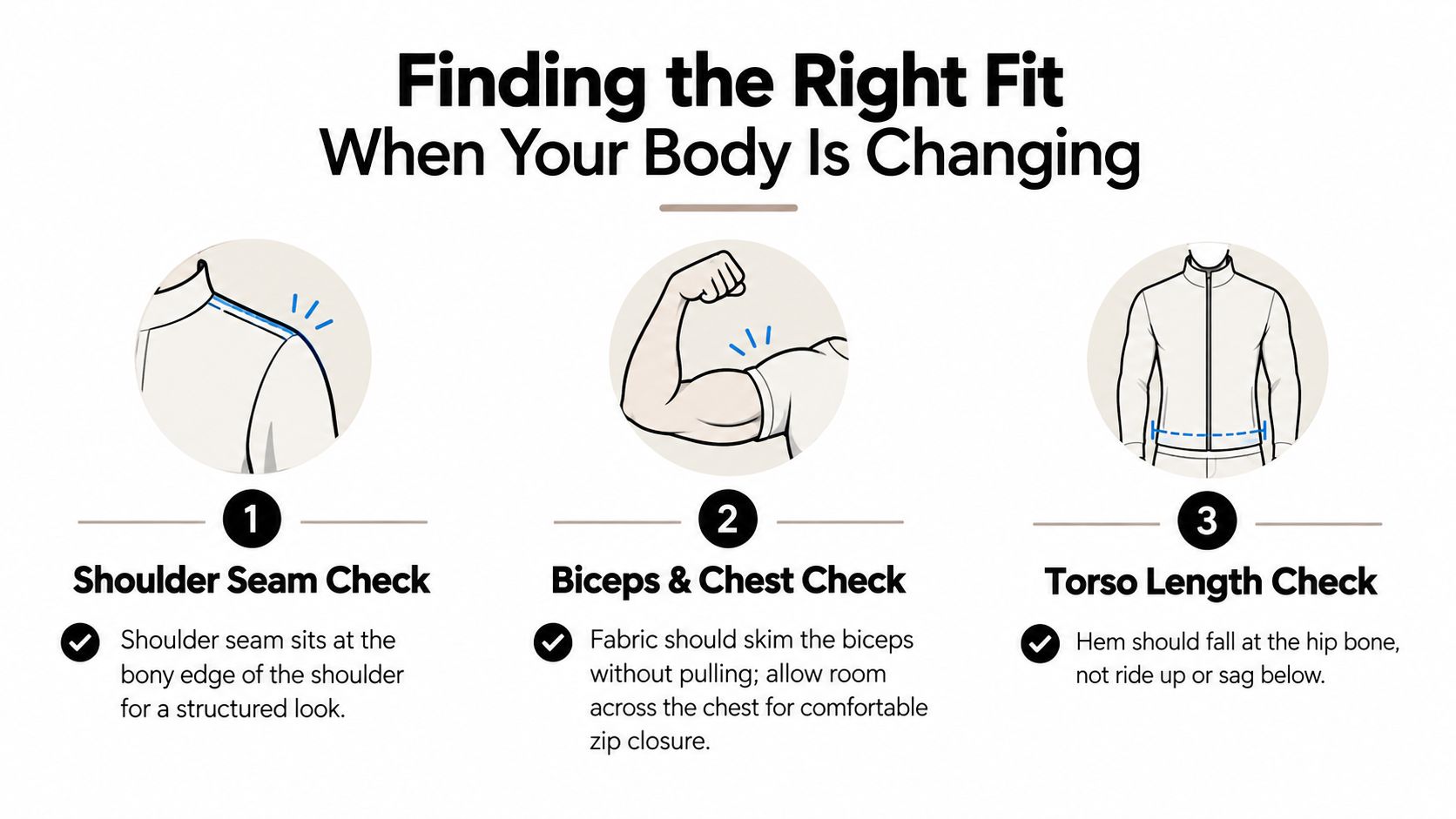
Begin with three checks:
- Shoulder seam: It should sit close to the bony edge of your shoulder. A seam that lands far down the arm makes the garment look unintentionally oversized.
- Biceps and chest: The fabric should skim rather than pull. Zip it fully and move your arms forward, as you would when lifting or holding a baby.
- Torso length: The hem should reach the hip or sit just below it. That length usually gives more coverage without creating a shapeless column.
If your measurements sit between sizes, study the garment's actual measurements rather than relying only on the letter on the label. You may need more room through the body while keeping a shorter sleeve length. That's often more useful than sizing up everywhere, particularly if you're petite or if the hoodie has already been designed with a relaxed cut.
Postpartum and nursing wearers should allow space across the bust, especially when the hoodie will sit over a nursing bra and top. A two-way zipper can make sitting, feeding, and adjusting layers easier. Extra room through the lower torso also helps if your body is still settling or if you're wearing the hoodie over a baby carrier.
For accurate measurements, this guide to measuring for a nursing bra offers a useful approach to checking the bust and underbust as your fit changes. A soft, elegant nursing bra such as GAIA uses stretch lace, flexible support, and breastfeeding access, so consider the layers underneath when judging the hoodie's chest room.
A cropped hem may ride up, sleeves may become shorter after washing, and a deep hood can crowd the neck when you're wearing a carrier. Try the hoodie seated as well as standing. The best fit should support the positions your day requires.
Zip Up vs Pullover and When Each One Wins
A zip-up and a pullover can both feel soft, but they behave differently during a full day. The choice depends less on which looks better on a product page and more on how often you need to adjust your clothing.
| Factor | Zip-Up | Pullover |
|---|---|---|
| Temperature control | Opens quickly to release heat | Keeps the front more consistently covered |
| Layering | Slides over tops and dresses easily | Must pass over the head and shoulders |
| Nursing access | Allows quick access to the layers beneath | May require lifting or removing the garment |
| Silhouette | Can resemble a casual jacket or cardigan | Reads more relaxed and sweatshirt-like |
| Neck comfort | Adjustable, depending on how far it's zipped | Usually warmer around the neck |
| On and off | Easier when seated, carrying, or moving quickly | Simpler construction with fewer hardware details |
The zip-up usually wins for transitional weather and indoor-outdoor routines. You can wear it open in a warm car, close it during a cool walk, and remove it before feeding without disturbing every layer underneath. It also works well over a dress, where a pullover could feel awkward or compress the neckline.
A pullover often wins when you want uninterrupted warmth and a more cocooning feel. Its front has no zipper teeth, tape, or hardware, and its neckline can keep cold air out more effectively. It may also feel more relaxed for slow mornings when you don't expect to change temperature or remove a layer.
For postpartum use, the full zip provides a practical advantage because it gives you adjustable coverage without forcing the garment over your head. Still, a pullover may be preferable if you value a warmer neck and don't need frequent access.
The right construction is the one that reduces friction in your actual routine.
Building Outfits Around Your Hoodie
A light grey zip-up hoodie earns its place when it supports several outfits, not when it serves only as a fallback for leggings. Treat it as the calm middle layer between a fitted base and a more deliberate outer piece.
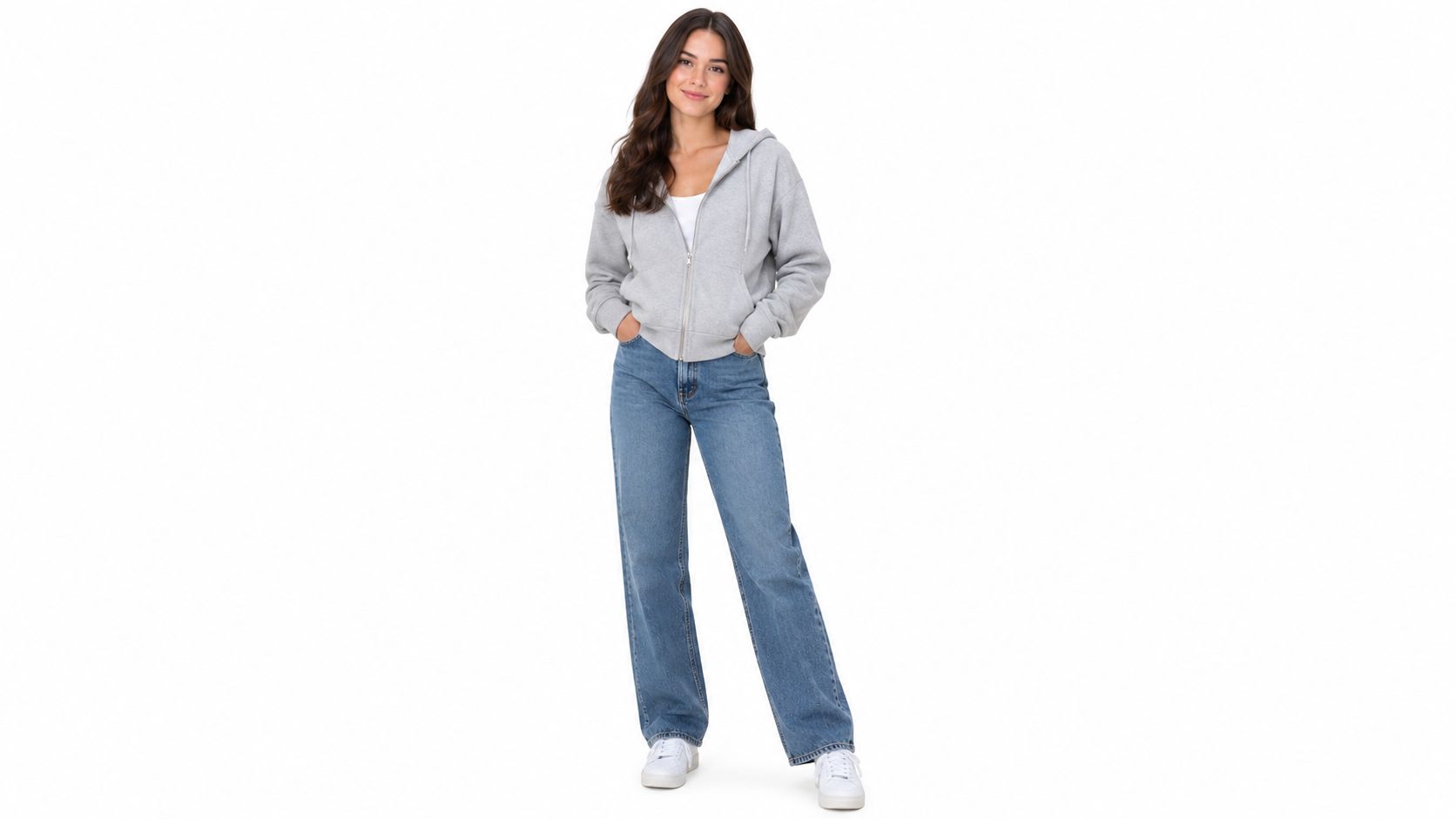
For a casual weekend, start with a fitted white or cream tee, high-rise straight-leg jeans, and white sneakers. Wear the hoodie open so the base layer creates a clean vertical line, or zip it partway and push the sleeves slightly up. The straight leg keeps the outfit balanced if the hoodie has a relaxed body.
A work-from-home outfit can stay comfortable without looking unfinished. Layer the hoodie over a soft long-sleeve top with leggings or neat joggers, then add slip-on shoes before a video call or school run. Keep the top close to the body so the hoodie doesn't compete with excess fabric underneath.
For dressed-up errands, use contrast. Place the hoodie over a midi dress and add ankle boots. The fleece-like texture makes the dress feel less formal, while the dress gives the hoodie a purposeful silhouette. You can also wear a slimmer hoodie partially tucked into fitted trousers with loafers, provided the hem isn't too thick.
Color pairing is straightforward:
- Cream: Creates a soft, low-contrast outfit.
- Navy: Gives light grey a polished, grounded partner.
- Olive: Adds an earthy casual note.
- Black: Creates clear definition without the severity of an all-black layer.
- Muted pastels: Bring color near the face while the hoodie stays neutral.
A fitted base layer helps the outfit look intentional, especially when your body is still changing. Then choose one statement element, such as a patterned dress, distinctive shoes, or a bright bag. The hoodie should support that choice rather than compete with it.
For nursing-friendly outfit ideas that work with layers, this guide to the best clothes for breastfeeding can help you think beyond dedicated nursing garments. The aim isn't to hide your body. It's to make access, movement, and personal style coexist.
Caring for a Light Grey Hoodie So It Lasts
Light grey rewards careful maintenance because marks and surface wear are easier to notice. A simple routine can protect the color, reduce shrinkage, and preserve the softness that made you choose the hoodie.
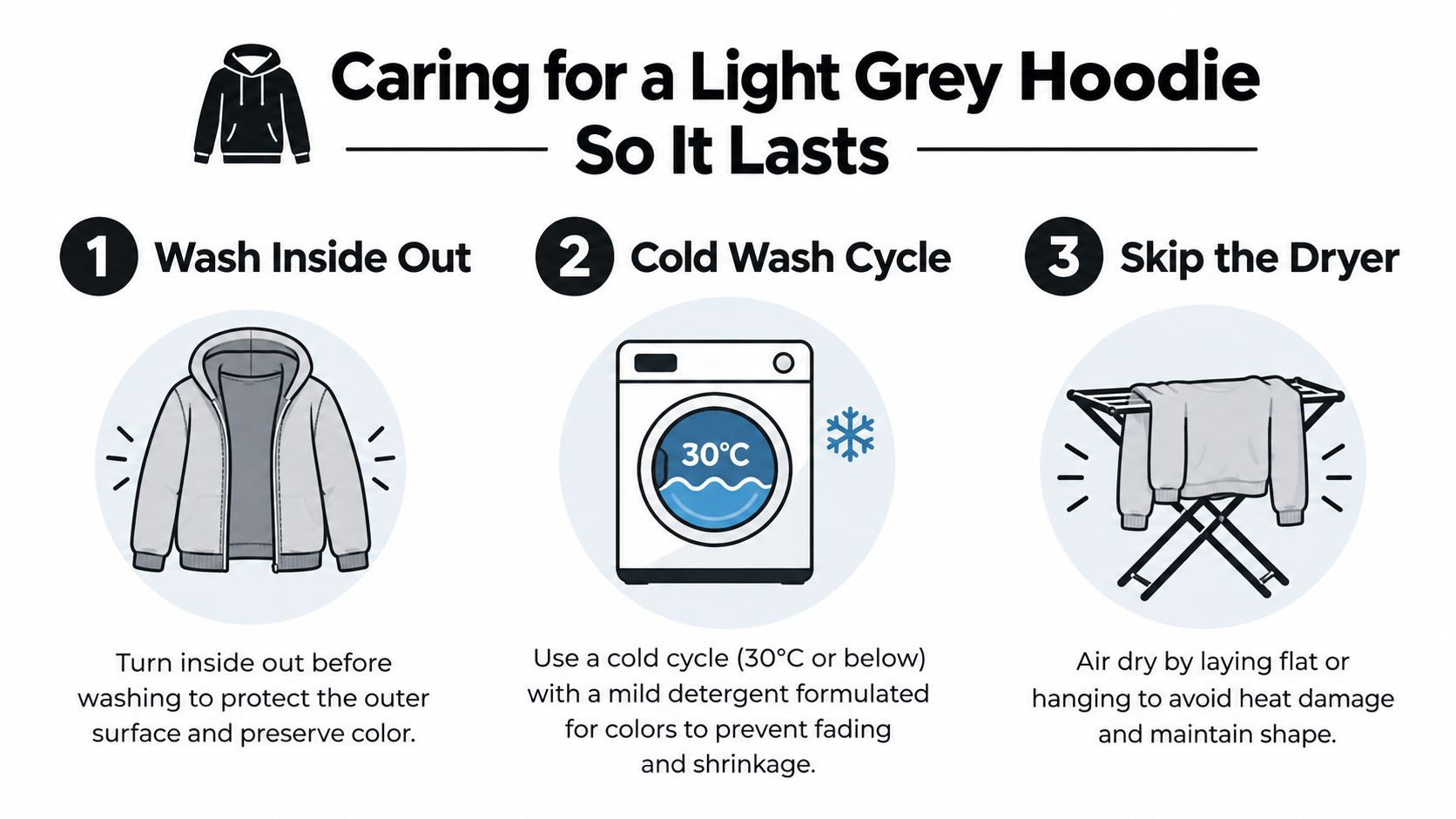
Turn the hoodie inside out before washing. Zip it fully so the teeth keep their shape, and turn the pull inward where possible to reduce contact with other garments. Use a cold cycle at 30°C or below with a mild detergent formulated for colors. Fabric softener can coat fibers and gradually dull the heathered surface, so skip it.
Air drying is gentler than high-heat tumble drying. Hang the hoodie or lay it flat, depending on the garment's shape and the weight of the fabric. If you need to use a dryer, choose the lowest heat and remove the hoodie while it's still slightly damp, then let it finish drying naturally.
Pilling doesn't mean you need to discard the garment. Use a fabric comb or gentle sweater shaver on small affected areas, and don't pull loose fibers by hand because that can weaken the knit. Check the cuffs and side seams first, since those areas receive frequent friction from bags, carriers, and repeated movement.
Fold the hoodie for storage instead of leaving it on a hanger. Folding protects the shoulders and prevents the zipper's weight from pulling the shape out of alignment. Store it clean and completely dry, particularly if you won't wear it for a while.
Bringing It All Together With Confidence
A light grey zip up hoodie earns its place when it supports your current life, including the body changes that can continue after pregnancy. Choose one that fits your present shape, works with your existing layers, and makes ordinary dressing easier rather than adding another decision.
Match the fabric to your climate and tolerance for bulk. Lightweight French terry works well indoors or beneath a coat, while denser fleece offers more warmth outdoors. Fiber content also involves a trade-off. Cotton can feel soft and breathable, while a blend may keep its shape more reliably through frequent washing.
Fit affects confidence as much as comfort. Correct shoulder placement, useful hem coverage, and a chest that closes without pulling mean fewer adjustments throughout the day. For a postpartum wardrobe, leave enough room for changing proportions without choosing a silhouette so oversized that it loses its shape.
A full-length zipper gives you control. Open it over a nursing top for easier access, adjust it as your temperature changes, or wear it beneath a wool coat for a jacket-like line without excessive bulk. That flexibility can remain useful long after the nursing stage, from quiet mornings and errands to travel and casual plans.
The hoodie's history also helps explain its staying power. As noted earlier, it developed from practical workwear in the 1930s into streetwear and everyday casualwear. Its ability to serve different purposes has kept it relevant, while light grey makes coordination simple across colors, textures, and settings.
Choose the hoodie as a wardrobe anchor, not a placeholder. Wear it over a maternity or nursing top at home, with jeans for a school run, or under a coat when you want warmth with a lighter visual effect. A few dependable clothes can restore confidence by letting you focus less on the mirror and more on the day.
Milk&Lace offers nursing lingerie designed for breastfeeding access and flexible support during postpartum life. Visit Milk&Lace to explore pieces that can sit beneath everyday layers, including a light grey zip-up hoodie.