

You're standing in front of the mirror before the day has properly begun. One hand is holding a baby, the other is pulling a soft sweater into place, and you're wondering whether there's a bra that can handle feeding, changing breasts, and a full day of movement without making you feel as though you've disappeared beneath practical beige layers.
A lace balconette bra can offer that balance, but only when its beauty sits on top of sound engineering. The lace matters, especially when you're ready to reconnect with your style after pregnancy, yet the band, cup seams, underwire, lining, and nursing access determine whether the bra feels good beyond the first few minutes.
What a Lace Balconette Bra Really Is
A balconette bra has a wide, mostly horizontal neckline that sits across the upper bust. Instead of covering the breast from high above, the cups lift from underneath, creating an open décolletage and a rounded shape. Add lace as the visible layer, and you have the lace balconette.
The style can be traced to a mid-century design history. The balconette's structural predecessor was first designed in the United States around 1938 and became mainstream in the 1950s, according to the history of bra designs. Its name is commonly associated with a balcony, a useful image because the cups support the bust from below while leaving more of the upper chest visible.

How to recognize the shape
Look for three features on a rack:
- A horizontal cup edge: The neckline runs broadly across the bust rather than forming a deep V.
- Lift from the lower cup: Seams, underwire, and the band create the shape from beneath.
- Lace over structure: The lace may be the most noticeable part, but it shouldn't be the only material shaping the cup.
A full-cup bra rises higher over the breasts and usually offers more upper coverage. A plunge bra has a deep centre front and a V-shaped neckline, making it more suitable for low V-neck clothing. A triangle bralette tends to rely more heavily on fabric panels and elastic, with a softer, less architectural shape.
The lace balconette occupies a different middle ground. It's more open than a full cup, less sharply angled than a plunge, and usually more structured than a triangle bralette. That combination makes it visually elegant, but the question is whether the hidden construction can support your changing body.
The Structure Behind the Lace
A lace balconette may look delicate on a hanger, yet its comfort depends on a hidden framework. The band is the floor, the underwire forms the supporting arch, the cups shape the volume, and lace provides the visible finish. For postpartum wear, each layer matters during feeding, carrying, and changing clothes.
The band carries most of the bra's physical work. A conventional construction places approximately 80% of support in the band and 20% in the straps, as described in the engineering of lingerie support. The band should feel firm without feeling restrictive and remain level around your torso. If the back rises, the straps may start pulling harder, which can leave your shoulders sore.
The load-bearing parts
The underwire should follow the breast root and rest on the ribcage rather than breast tissue. At the centre gore, its casing should lie flat enough to avoid concentrated pressure. A correctly shaped wire may feel present, especially as your body changes, but it should not pinch, poke, or shift when you lift your arms or reach for your baby.
Vertical or angled cup seams help create lift and shape without depending on thick padding. The balconette's relatively open upper edge then preserves its characteristic neckline. That openness can look appealing, but the cup still needs enough stability to keep its shape through movement and outfit changes.
Lace usually performs best as an overlay or as one layer in a constructed cup. Guidance on bra fabric and material choices distinguishes stretchy materials from those that stabilize areas responsible for shape. Lace alone can soften, stretch, or distort under load. A stable lining helps the cup stay aligned while keeping the surface comfortable against sensitive skin.

A firm powernet back panel and reinforced underband give the lace a dependable base. Check whether the materials recover after stretching and whether the cups remain in position when you move.
The PETRA nursing bra pairs ultra-soft stretch lace with gentle underwire and one-hand nursing access. It shows how softness and structure can work together.
Why Lace Balconette Bras Work for Postpartum and Nursing
A bra can look beautiful in a photo and still feel wrong during a long feeding session. Postpartum breasts may change with feeding, fullness, and weaning, so support needs to accommodate movement and daily shifts. A design that relies on tight straps or rigid cups can become uncomfortable as your body changes.
The band carries the main load. When it fits securely around the torso, the straps can position the cups instead of lifting the bust on their own. That distribution can ease pressure on shoulders already busy carrying, feeding, and settling a baby.
A balconette's open upper edge may also leave more room for nursing access, depending on its construction. Stretch lace can be pulled aside. Drop-down cups use nursing clasps, while some structured designs build a front opening into the cup without giving up the broad balconette shape.
| Bra Element | Share of Support | Postpartum Benefit |
|---|---|---|
| Band | About 80% | Anchors the bra around the torso and reduces reliance on shoulder straps |
| Straps | About 20% | Helps position the cups without carrying the entire load |
| Underwire | Not assigned a separate percentage | Follows the breast root and supports the lower cup structure |
| Lace and lining | Not assigned a separate percentage | Lace adds softness and appearance, while lining can stabilize the cup |
The table presents a construction principle rather than a promise about every lace balconette. A bra may use the same general support pattern and still feel different because of its fit, materials, and nursing mechanism.
Access matters as much as lift
Try the clasp with one hand before committing to a nursing bra. The other arm may be supporting your baby, so a complicated opening sequence quickly becomes inconvenient. Check whether the cup stays attached to the band when opened. A dangling cup can add fuss during a feed and make repositioning harder.
Cup depth matters as well. Some flexibility accommodates changes in fullness, while excessive stretch can let the bust shift or cause the lace to lose its shape. Technical research on lace garment construction describes the value of stable or low-stretch cup lining and firmer powernet in the band, as outlined in this technical research on lace garment construction.
The practical payoff reaches beyond the neckline. A well-designed lace balconette can support feeding routines, outfit changes, and changing breast fullness while preserving a small but meaningful sense of personal style.
Getting the Fit Right the First Time
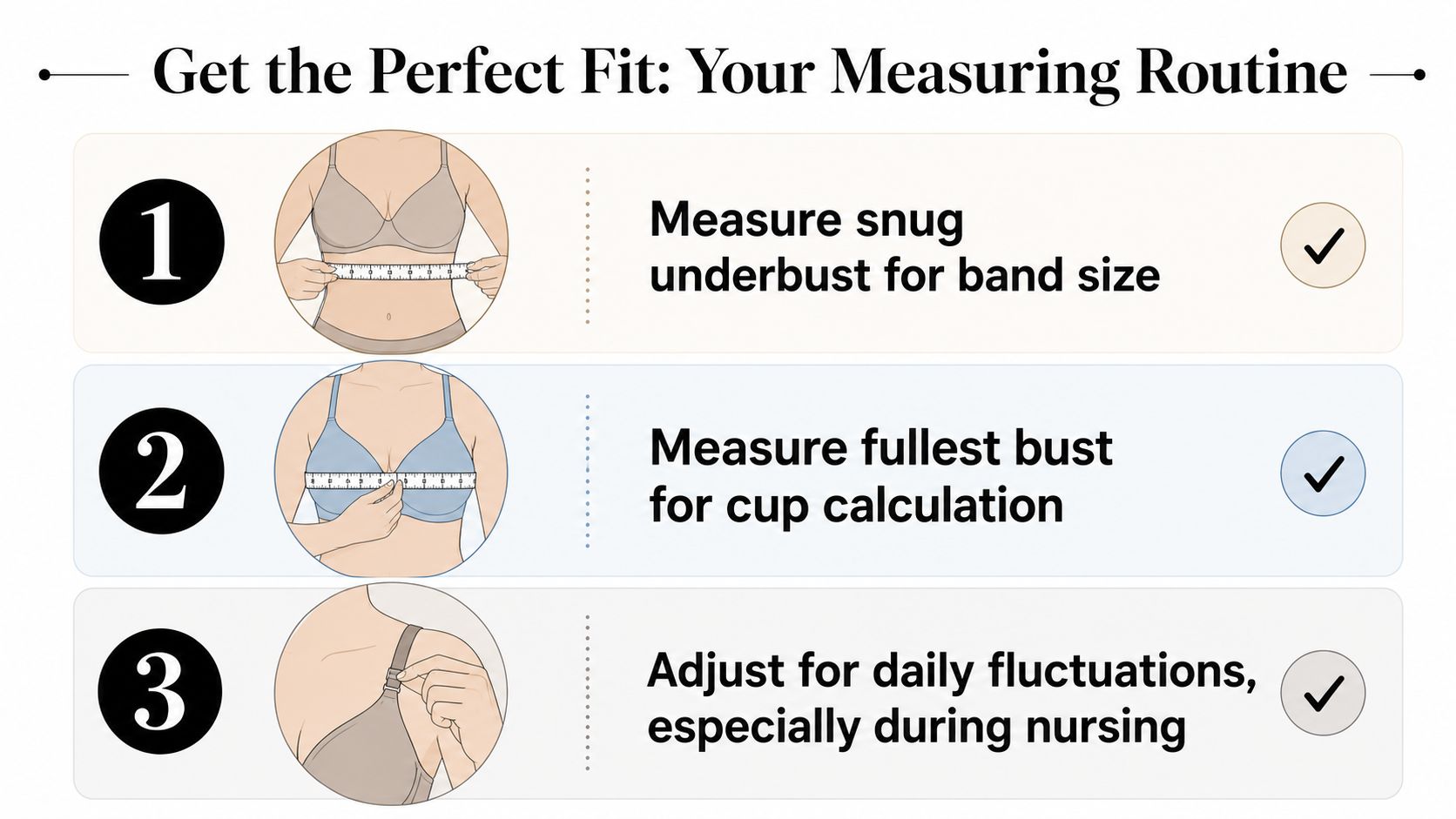
Start with a soft measuring tape and measure when your breasts feel reasonably typical, rather than immediately after a feed or at the fullest point of the day. Wrap the tape snugly around your underbust, keeping it level across your back. Then measure around the fullest part of your bust without pulling the tape tight.
Your measurements provide a starting point, not an inflexible answer. Nursing breasts can fluctuate, and different brands use different grading and cup shapes. Leave room for daily changes by judging the actual fit of the bra, not just the number on its label.
Use this mirror check
- Check the band: It should sit level from front to back. A loose band may feel comfortable at first but can shift as you move.
- Check the cups: Scoop and settle the breast into the cup. Look for overflow across the horizontal neckline, wrinkling, or empty space.
- Check the gore and wires: The centre should lie comfortably against the chest, while each wire should surround the breast root rather than rest on tissue.
- Check the straps: They should stay in place without digging. Wide-set balconette straps can slip more readily on narrow shoulders, so adjust them carefully.
- Move before deciding: Raise your arms, bend forward, sit down, and reach across your body. The band should remain anchored and the cup should stay smooth.
A common mistake is choosing a looser band to create room for fuller breasts. That often trades cup comfort for instability. Another is tightening the straps to correct a slipping band, which can leave the shoulders sore without fixing the problem.
For more detailed nursing-specific guidance, use this guide to measuring for a nursing bra.
Watch the measuring routine here before you take your own measurements.
Practical rule: A bra that fits on a still body also needs to fit while you breathe, reach, feed, and carry.
Styling a Lace Balconette for Real Life
A lace balconette doesn't need to wait for a special occasion. Its broad neckline can sit neatly beneath many everyday shapes, provided you consider the fabric above it and the amount of texture you want to reveal.
For a return-to-work meeting, try a silk camisole beneath a structured blazer, then add straight-leg trousers and low pumps. The blazer lapels can conceal the bra's upper edge while the balconette shape gives the camisole a clean foundation. Under a fitted tee, the same bra may create a visible outline, so choose a fabric that skims rather than clings if you want a smoother finish.
Two outfits, two different moods
A weekend brunch allows more room for the lace to participate. Wear a square-neck knit top with high-waist jeans and let a small amount of lace appear above the neckline. Because the balconette edge runs horizontally, it can look intentional with square, scoop, and softly open necklines rather than seeming like an accidental glimpse.
For a busier day, choose a woven blouse or a relaxed shirt over a smooth camisole. Avoid a bulky sweater that presses down on the cup edge and changes the shape. Raised lace texture can also show through thin clothing, a concern noted in this lace bra guide, so run your hand over the fabric combination before leaving the house.
The best outfit is the one that still works when you're lifting a stroller, leaning over a changing table, or sitting through a long meeting. If the lace needs constant repositioning, the styling has missed the point.
You can use this bra style guide to compare neckline and construction choices before pairing a balconette with your wardrobe.
How GAIA and PETRA Meet These Needs
A postpartum lace balconette should be judged by the same practical questions as any nursing bra. Does the band stay steady? Does the cup adapt without collapsing? Does the underwire rest on the ribcage? Can you open the nursing clasp with one hand? Does the lace remain comfortable against sensitive skin?
GAIA is described as a soft nursing bra with stretch lace, flexible support, and effortless breastfeeding access. Its softer, wire-free approach may suit moments when your breast size feels especially changeable or when you want less rigid structure during rest and early nursing routines.
PETRA takes a more defined route. Its catalog description identifies ultra-soft stretch lace, gentle underwire, and one-hand nursing access. That combination may suit a return to more structured clothing, particularly when you want the shape of an underwired balconette with nursing functionality.
| Criterion | GAIA | PETRA |
|---|---|---|
| Overall feel | Soft and flexible | More sculpted through gentle underwire |
| Support approach | Wire-free flexibility | Underwire-supported shape |
| Lace role | Stretch lace for adaptable comfort | Stretch lace paired with a more defined frame |
| Nursing access | Effortless breastfeeding access | One-hand nursing access |
| Useful moment | Rest, early nursing, and fluctuating comfort needs | Workwear, fitted outfits, and a more structured silhouette |
Neither choice is automatically right for every day. A wire-free design can feel easier when your breasts are tender or changing quickly, while an underwired style can offer a more composed shape beneath structured clothing. Your preferred option may also change as feeding patterns, breast fullness, and your tolerance for structure change.
The wider lingerie market reflects this tension. Lace is commercially significant, with one bra lace fabric market study projecting growth from USD 130 million in 2024 to USD 206 million by 2032, at a projected 6.9% CAGR. A separate estimate places the related market at about USD 2.0 billion in 2025, with a projection of USD 3.5 billion by 2035 and a 5.9% CAGR, also reported by the same market source. Those estimates differ considerably in scope, but both point to lace as more than a decorative afterthought.
The useful question is situational: which bra gives you the right combination of access, stability, softness, and visual confidence today?
Caring for Lace So It Lasts
A care routine has to survive real postpartum life. Set aside the idea that lingerie care requires a complicated ritual. The essentials are gentle washing, low heat, careful reshaping, and enough rotation to let elastic recover.
Start by placing the bra in a mesh laundry bag. Wash it every two to three wears on a delicate or hand-wash cycle with cool water and a mild lingerie detergent, following the garment label if it gives different instructions. Skip fabric softener, which can coat fibers and affect the feel of elastic over time.

Reshape before drying
After washing, don't twist the cups or pull the lace to remove water. Roll the bra in a clean towel and press gently, then smooth the cups while they're still damp. Run your thumb along the underwire channel to remove kinks and pat the seams back into place.
Air-dry the bra flat on a towel away from direct sunlight, radiators, and other heat sources. Heat can affect both lace elasticity and the shape of the underwire. Never hang a wet bra by one strap, since the weight of the water can stretch the strap and distort the band.
Store cups nested inside one another, with tissue paper between delicate layers if the lace catches easily. Keep the hooks closed so they don't snag neighboring garments.
Care habit: Rotate two or three bras instead of wearing the same one every day. Rest gives the elastic time to recover and reduces avoidable strain on every piece.
Bringing Confidence Back Into the Everyday
The right postpartum bra handles small problems before they become the focus of your day. You can reach the side clasp while holding a restless baby. The cup drops without a struggle during a night feed. A blouse falls over a neckline that looks considered, not apologetic.
A lace balconette earns its place when it combines those practical details with a feeling you may have missed. The band and reinforced channels create steadiness when your body still feels unfamiliar. The lace adds softness and personality, so the bra feels like lingerie rather than a temporary medical garment.
Fit, fabric, and nursing access need to work together. A beautiful lace overlay can't compensate for a riding band, a wire sitting on breast tissue, or a clasp you can't operate with one hand. Likewise, a highly practical bra may not meet the emotional need to feel attractive, composed, and recognizably yourself.
That balance is especially valuable during the later postpartum months, when you may be feeding while returning to work, changing your wardrobe, or wanting to dress for your own pleasure again. The right design doesn't ask you to choose between elegance and function. It makes both part of the same morning decision.
Start with your current comfort needs, check the band and cup in motion, and consider whether you want flexible wire-free support or a more sculpted underwired shape. Then care for the bra gently so it can keep meeting you through the changes ahead.
Milk&Lace offers GAIA and PETRA nursing bras, combining lace-focused design with breastfeeding access and different approaches to structure. Visit Milk&Lace to explore the options and choose the style that fits the way you're nursing, dressing, and moving now.