

You open a dozen tabs, add two nursing bras to your cart, remove them, add four more, then wonder if you are about to underbuy, overbuy, or buy the wrong kind entirely.
That spiral is so normal.
Most mothers are not really asking only, “how many nursing bras will i need?” They are also asking quieter questions underneath it. Will my size change again? What if I leak constantly? What if I pump? What if I want comfort now, but something prettier later? What if I do not even know who I will be in three months?
A good answer has to make room for all of that.
Answering the Question Every Expectant Mother Asks
One mother buys three soft bras while pregnant because that is what everyone tells her to do. Another buys six because she hates running out of clean laundry. A third waits until after birth because her breasts change so much in the first weeks that shopping in advance feels impossible.
All three choices can make sense.
That is why the most honest answer is not a single number. It is a range shaped by your body, your feeding routine, your laundry habits, and the season of postpartum you are in.
In the beginning, you are usually solving for comfort and survival. You want something soft, easy to open, forgiving when your breasts feel full, and washable when milk leaks or baby spit-up happen before breakfast.
Later, the question changes. You may still need function, but you also want shape, confidence, and something that feels more like you.
Key takeaway: The right number is not the number another mother needed. It is the number that lets you stay clean, comfortable, supported, and calm without feeling trapped by laundry.
A simple example helps.
If you mostly nurse at home, do laundry often, and like a small wardrobe, you may need only a compact rotation. If you return to work early, pump multiple times a day, and do laundry less often, the number rises quickly because your bras are doing more jobs.
The goal is not to build the biggest drawer. The goal is to build the right one.
The Three-Bra Rule Is Just a Starting Point
The most common advice mothers hear is the 3-Bra Rule. It means one to wear, one to wash, and one as a backup, a guideline recommended across major maternity resources to help manage milk leaks, spit-ups, and laundry delays during breastfeeding, as noted by Aeroflow Breastpumps.
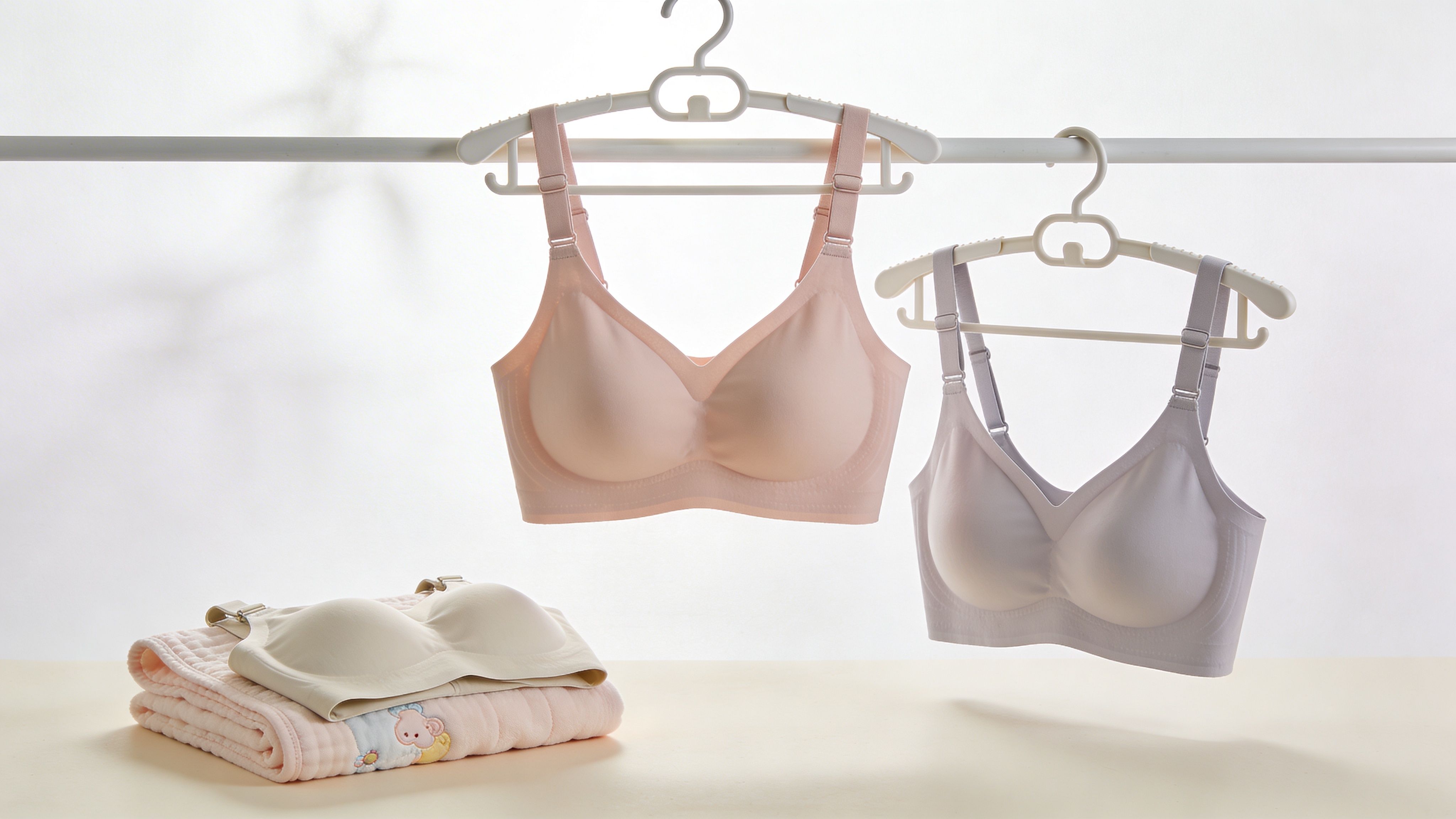
Why this rule works
It is practical.
In the earliest days, your bra gets exposed to a lot. Milk leaks. Nursing pads shift. Babies spit up. You sweat. You may change bras faster than you expect, especially when your body is still figuring out milk production.
Three bras create a basic rhythm:
- One on your body while you go through the day
- One in the wash after leaks, sweat, or spit-up
- One ready when you need a quick change
That setup prevents the awful moment of realizing every bra you own is damp, stretched out, or sitting in a laundry basket.
Why three is not always enough
Three bras are a baseline, not a complete strategy.
If you do laundry every day and have light leakage, that trio may carry you well for a while. But if laundry gets pushed back, if you leak heavily, if you prefer one style for sleep and another for daytime, or if pumping enters the picture, the bare minimum starts to feel very bare. Many mothers get confused at this point. They hear “just buy three” and assume the decision is finished. It rarely is.
Think of three as your first layer, not your final answer. It gets you started without overspending, then you adjust once your routine becomes real instead of hypothetical.
The better question is not “Is three enough?” It is “Enough for what kind of days?”
The Six Factors That Determine Your Real Number
Your real number comes from the rhythm of your days. A mother nursing on the sofa with a newborn all afternoon needs a different bra wardrobe from a mother pumping between meetings or craving a bra that helps her feel polished again. The number changes because your life changes.
Here are the six factors that shape it.
Feeding method changes the baseline
Start with how your baby is fed most of the time.
If you mainly nurse directly, easy access and softness matter most. If you combo feed, you may need fewer nursing-specific bras in the rotation. If pumping is part of your routine, your bras do more work, and that pushes your total up.
This is why one flat rule can feel so unhelpful. Two mothers can both be breastfeeding and still need very different drawers.
Pumping frequency creates its own category
Pumping is not just a variation of nursing. It adds another job for your bra.
Leonisa’s guide to how many nursing bras you need suggests 1 to 2 pumping bras if you pump more than a few times a day, along with 2 to 3 everyday nursing bras and 1 to 2 sleep bras. That breakdown is useful because it treats pumping bras as their own lane, not as an afterthought.
If you are building a pumping routine, a bra with true hands-free function can make daily sessions far easier. A good hands-free pumping bra setup saves you from trying to make one soft nursing bra handle every task.
Laundry cadence sets the minimum
Laundry is your floor.
If you wash bras daily, you can keep a tighter rotation. If laundry happens every few days, you need more breathing room. If it slips to once a week, a small bra wardrobe starts to feel stressful fast.
Milk leaks, spit-up, sweat, and shifting nursing pads can turn one bra into two in a single day. The less frequently you wash, the more backup you need.
| Laundry rhythm | What it means for your drawer |
|---|---|
| Daily washing | A smaller rotation can work |
| Every few days | Extra backup keeps you comfortable |
| Weekly laundry | A deeper rotation prevents last-minute scrambling |
Your work life changes the math
Home life and work life ask different things from a bra.
At home, many mothers are happy rotating a few soft styles. At work, you may want cleaner lines under clothes, faster access for pumping, and enough bras to avoid wearing the same overworked favorite on repeat. If your day includes commuting, office wear, or long stretches away from home, support and structure matter more too.
A practical question helps here: do you need bras only to feed your baby, or also to carry you through a full day while feeling put together?
Your size will shift before it settles
Early postpartum sizing can feel like aiming at a moving target. Fullness can change from morning to night. Tenderness can come and go. A bra that fits beautifully this week may feel tight or unsupportive next week.
That does not mean you need to buy a perfect final wardrobe right away.
It means your first bras should have some flexibility. Stretchy cups, multiple hook settings, and forgiving bands buy you time while your body finds its new normal.
Your style preferences matter too
Comfort is not the only goal. Feeling like yourself matters.
Some mothers want one soft bra type for day and night. Others feel better with separate roles: a sleep bra, an easy daytime bra, and a prettier, more supportive option for leaving the house. That is not extra. It is the difference between survival dressing and getting reacquainted with your reflection.
Your total rises when one bra is expected to do every job. It gets simpler when each bra has a clear purpose.
And that is the deeper point. The right number is not just about managing leaks and laundry. It is about supporting the transition from those raw early weeks into the stage where you want comfort, support, and a little beauty too.
Your Nursing Bra Wardrobe By Postpartum Stage
At 2 a.m., a bra that is soft and easy to unclip can feel like a lifesaver. A few months later, the question changes. You may still need access for feeding, but you also want support under a sweater, a smoother shape under a dress, or something that helps you feel more like yourself when you catch your reflection.
That is why planning by postpartum stage works better than chasing one magic number.
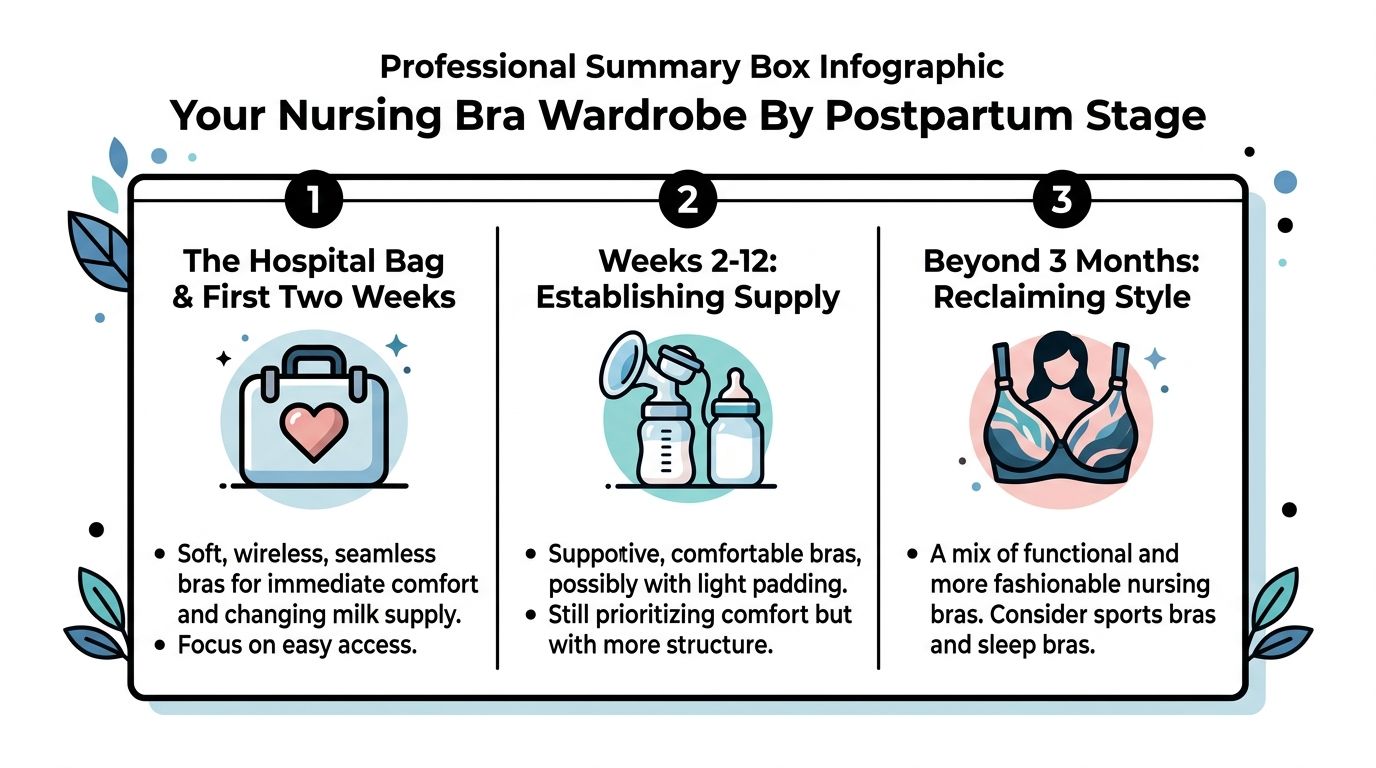
The hospital bag and first two weeks
These early days call for gentleness.
Your breasts can feel swollen, tender, and hard to predict from one feeding to the next. Your bra’s job is simple here. It should feel soft, open easily, and stay out of the way while your body heals and feeding begins.
A small starter wardrobe is usually enough:
- Minimalist setup: A few soft bras you can rotate through
- Average setup: Enough for daytime changes, plus one for sleep
- Heavy-use setup: Extra soft bras if you expect frequent leaks, pumping sessions, or limited time for laundry
Softness matters more than shape in this window. Stretch matters more than polish too.
The first three months
This stage still belongs to flexibility. Milk supply is settling. Your size may shift through the day. Some mothers want light support around the clock, while others prefer separate bras for sleep, daytime wear, and pumping.
A practical drawer during this period usually includes:
- Everyday bras for regular daytime wear
- Sleep bras if light overnight support feels better
- Pumping bras if expressing milk becomes part of your routine
If pumping is part of your week, hands-free pumping support can help you decide whether one dedicated pumping bra will make life easier or whether a more flexible setup suits you better.
The key here is not building a perfect collection. It is giving yourself enough clean, wearable options that one leak, one spit-up, or one skipped laundry day does not leave you stranded.
Beyond three months and the transition to confidence
Later postpartum deserves its own conversation.
By this point, many mothers are no longer dressing only for recovery. They are dressing for errands, visits, work, longer days out, and the very human desire to feel attractive and put together again. Feeding access still matters, but it is no longer the only standard.
Your wardrobe may start to split into roles:
- soft bras for home and sleep
- a supportive bra for outings
- a polished bra for work or fitted clothing
- a pumping-friendly option if you are still expressing milk regularly
This stage works like rebuilding a wardrobe after a major life season. In the beginning, you need survival basics. Later, you start choosing pieces that suit the life you are living now.
As noted earlier, guidance around the first few months does not always address this shift well. A mother feeding at home all day may be happy with a simple rotation. A mother returning to work or spending longer stretches away from home may want more structure, more support, and at least one bra that feels beautiful rather than purely practical.
A simple planning table
| Scenario | Early Postpartum (0-3 Months) | Established Nursing (3+ Months) | Total Recommended |
|---|---|---|---|
| Minimalist | Start with a basic rotation of soft everyday bras and add more only if laundry or leaks make that hard | Keep a compact mix of everyday and sleep bras | A small, flexible wardrobe |
| Average | Build a balanced set with everyday bras, sleep bras, and possibly one pumping bra | Add support and a cleaner silhouette for real daily routines | A moderate rotation |
| Heavy-use or twins | Plan for more frequent changes and more role-specific bras | Keep a larger rotation for pumping, work, or higher daily wear | A fuller wardrobe with backup |
The quiet truth about this stage
Many mothers shop for the first foggy weeks and forget the months that follow.
Later postpartum has different needs. You may need fewer emergency changes than you did at the start. You may also want stronger support, smoother lines under clothes, or bras that feel feminine, not clinical.
That desire matters. Caring for your baby and caring about how you feel in your body can belong together.
Finding Your Perfect Fit as Your Body Changes
Fit matters more than count. A drawer full of bras that dig, gap, or compress is not helpful.
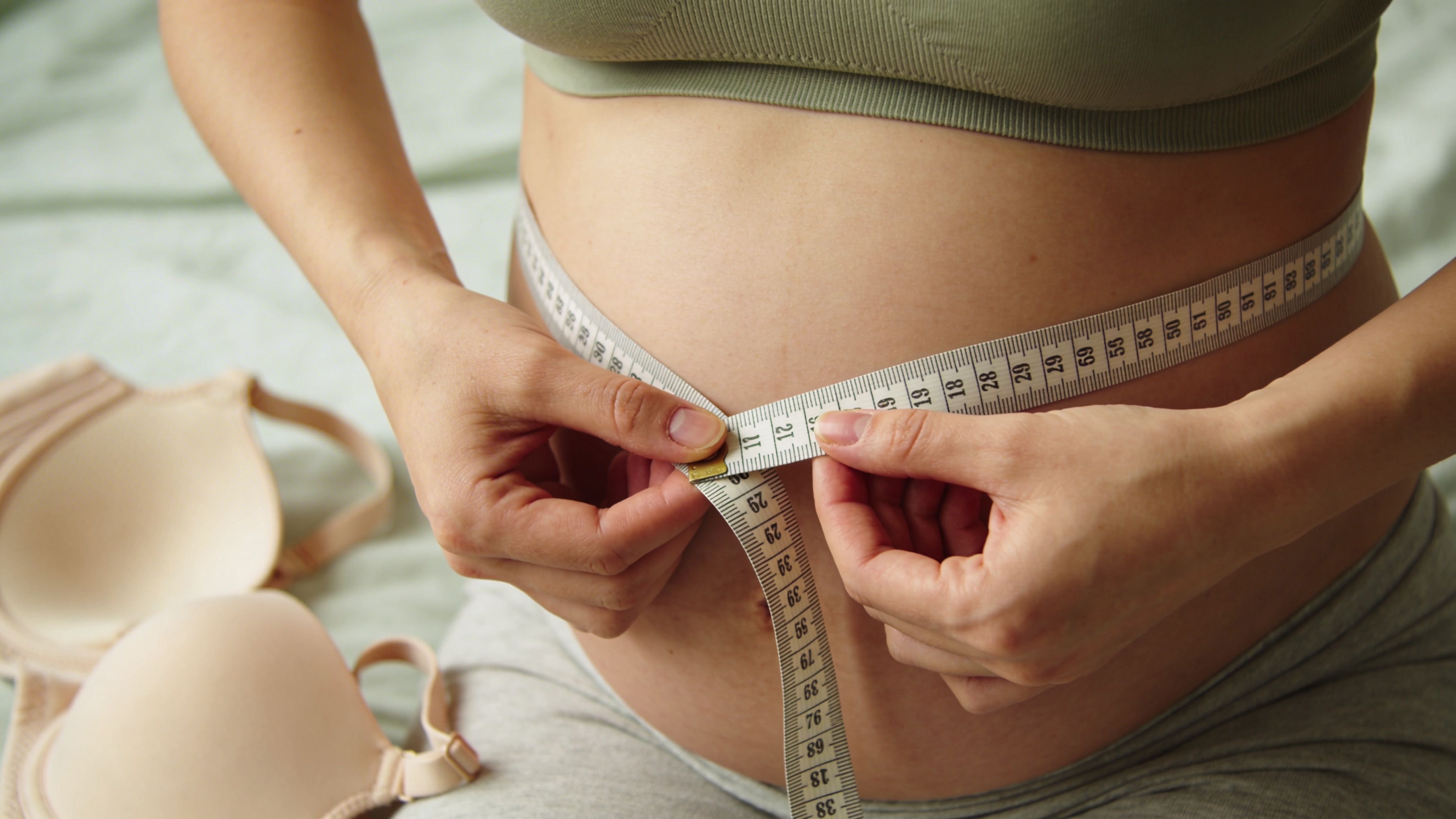
When to measure
Measure in late pregnancy if you want a few bras before birth. Then measure again after postpartum swelling and early feeding patterns begin to settle.
You do not need perfect precision on day one. You need a fit that gives your body room to change.
What a good fit feels like
Look for these signs:
- The band feels snug, not punishing. It should anchor the bra without making you want to rip it off by lunch.
- The cups hold your breast tissue fully. No cutting in, no major gaping.
- The straps support without digging. If straps are doing all the work, the band may be off.
- The clips open easily. Feeding access should feel simple, even one-handed.
- The fabric has some forgiveness. Postpartum bodies rarely stay still.
A bra extender can be useful if your rib cage still feels expanded after pregnancy. Multi-row hook closures also help you adjust gradually instead of needing a brand-new size immediately.
If you want a more detailed measuring walkthrough, this guide on how to measure for a nursing bra can help you check your numbers at home.
A quick fit check in motion
Try your bra on and move around.
Lift your arms. Sit down. Lean forward. Open and close the nursing clips. If the band rolls, the cups shift badly, or the clips feel fiddly, that bra may not serve you well during a long real day.
A visual fitting guide can also make the process easier:
Fit tip: Buy a few bras first. Live in them. Then let your body tell you what the next purchase should be.
When Comfort Is No Longer Enough Reclaim Your Style
There is a moment, often sometime in the mid-postpartum season, when pure function stops feeling sufficient.
Your feeding routine may be steadier. You may be leaving the house more. You may be returning to work, seeing friends, or wanting your clothes to fall better on your body again. And suddenly the soft survival bra that got you through the early weeks does not feel like the whole answer.
This shift is real
There is a documented gap in nursing bra advice around the 3 to 6 month period. Many guides cover the early 3 to 5 bra rule, but offer little support for the stage when milk supply stabilizes and mothers begin wanting bras that balance function, aesthetic appeal, and confidence-building design, as discussed by Momanda’s article on nursing bras through the first year.
That matters because identity matters.
You are not shallow for wanting a better silhouette under a dress. You are not frivolous for wanting lace, shape, or a bra that feels grown-up instead of purely practical. You are allowed to want support and beauty at the same time.
What to look for in this phase
Once your body feels more predictable, many mothers start adding bras with more polish.
That may mean:
- More structure for workwear or going out
- A smoother shape under knits and fitted tops
- Details you enjoy rather than details you merely tolerate
- A smaller but better-edited wardrobe that reflects your routine now, not your early survival phase
If this resonates, exploring ideas around stylish nursing wear can help you think beyond utility and toward a wardrobe that feels more personal.
You do not have to choose between being a feeding mother and feeling like yourself. A well-chosen bra can support both.
The shift from “I need something clean” to “I want something lovely” is not a minor detail. It is often one of the first visible ways a mother reconnects with herself.
Frequently Asked Questions About Nursing Bras
Is it safe to wear an underwire nursing bra
For many mothers, an underwire nursing bra can work well once their body is less tender and their size is more stable. The key is fit.
If the wire presses into breast tissue, feels restrictive, or leaves sore spots, it is not the right bra for this stage. Comfort and clear space around breast tissue matter more than the label.
How do I care for nursing bras so they last
Treat them gently.
- Wash carefully: Hand-washing or a delicate cycle is kinder than rough washing.
- Use a lingerie bag: It helps protect clips and fabric.
- Air-dry when possible: Heat is harder on stretch fabrics.
- Rotate your bras: Repeating the same bra every day wears it out faster.
When can I switch back to regular bras
You can switch when regular bras feel comfortable, fit your current body, and do not make feeding awkward.
Some mothers switch back fairly early for certain outfits. Others stay in nursing bras much longer because the convenience is worth it. There is no deadline.
Can I sleep in a nursing bra
Yes, if it feels good to you.
Some mothers love a soft sleep bra for light support and nursing pad placement. Others sleep better without one. Your nighttime choice can be different from your daytime one.
Should I buy all my nursing bras before birth
Usually, no.
Buying a small starter set before birth is wise. Buying your full wardrobe before you know your postpartum size and feeding rhythm can lead to wasted money and frustration.
A better approach is to start with a few flexible essentials, then add with intention once your daily life becomes clearer.
Milk&Lace creates premium nursing lingerie for the stage when you want more than basic function. If you are ready for bras that support breastfeeding while also honoring shape, softness, and femininity, explore Milk&Lace.