

You're standing in front of the mirror, tugging at the waistband of a pair that used to be perfectly reliable. It isn't technically too small, but it digs into your lower belly, rolls when you sit, and leaves a red line that takes hours to fade. By lunchtime, you're wondering whether comfortable underwear for pregnancy is a real category or just another excuse to buy more maternity clothes.
I've been through two pregnancies, and my strongest advice is simple: stop trying to make one style work for every stage. Your body changes in texture, temperature, shape, and sensitivity from the first-trimester bloat through the final weeks and into postpartum recovery. The right brief at one point can become the most irritating thing in your drawer later.
The global maternity bras market reached $3.8 billion in 2025 and is projected to reach $6.4 billion by 2034, according to Dataintelo's maternity bras market report. That commercial growth reflects a practical truth. Women need garments designed around changing bodies, not ordinary underwear with a little extra stretch.
What Your Underwear Is Really Up Against Right Now
The first sign is often small. You put on your usual briefs, walk around the kitchen, and notice the waistband. Then you notice it again while driving, again when you sit down, and again when you get ready for bed. The underwear hasn't changed, but your abdomen has started fluctuating between comfortable, bloated, tender, and suddenly much less tolerant of pressure.
That pattern continues as your pregnancy progresses. A waistband that sits neatly under your clothes in the morning may feel restrictive after a meal. A stitched seam that never bothered you before can start rubbing against reactive skin. If the fabric holds heat and moisture, the irritation gets worse, especially during long days, warm weather, or periods when you're already sweating more than usual.
The practical shift: Don't ask, “Which maternity underwear is best?” Ask, “What pressure, airflow, or coverage problem am I trying to solve today?”
This is also why buying one oversized pair and hoping for the best rarely works. A larger brief can still have a harsh elastic edge, an awkward gusset, or fabric that feels damp against skin. The cut matters as much as the size, and the material matters as much as both.
Your body needs different answers
Early pregnancy often brings bloat without a consistent bump. The problem is waistband pressure, not necessarily a need for full belly coverage. Later, your abdomen needs room to expand, your back may want more coverage, and your skin may object to rough stitching or tight elastic.
Postpartum brings another set of demands. Full coverage may feel better than a narrow cut, while seams near a healing incision or sensitive skin can become unbearable. Nursing also changes your bra needs, but your briefs deserve the same level of thought.
The wear trial of maternity support garments found that fibre content and breathability were major drivers of thermophysiological comfort, while movement comfort varied by garment type and style. The best-rated garment was a soft, well-fitting cotton and elastane brief. That's the lens I'd use for every purchase: fit the garment to the specific discomfort, rather than chasing a generic maternity label.
Fabric and Construction Choices That Actually Feel Good
Start with the gusset. If you can't find the fibre content on the label, I'd skip the pair. Your underwear sits against the most sensitive skin on your body, so “soft-looking” lace or a smooth finish tells you very little about how it will feel after hours of wear.
Cotton is my first choice for everyday pregnancy underwear, especially when it's blended with a little elastane for recovery and stretch. Modal and bamboo can also feel smooth and breathable, while a carefully chosen merino blend may work well for temperature regulation. The maternity underwear guidance from Women's Health similarly prioritizes soft, breathable, stretchy materials and warns that some synthetic fabrics can trap heat and moisture.
Build your short material checklist
- Look for airflow: Choose cotton, modal, bamboo, or another fabric that feels dry and light against your skin.
- Check the gusset: A cotton gusset is essential for regular wear.
- Inspect the seams: Flat, bonded, or carefully finished seams are kinder than bulky stitching across the pubic bone.
- Avoid scratch points: Skip tags, stiff lace trims, rough mesh, and decorative elastic that presses into your crease.
- Test the recovery: Stretch the waistband gently. It should give without feeling flimsy, then return without snapping against your skin.
A larger polyester brief is still a hot, damp brief. Sizing up can create room, but it can't fix a fabric that doesn't breathe or an elastic edge that curls into your skin. Marketing language gets unhelpful. “Cooling,” “second skin,” and “no seams” aren't guarantees. Read the fibre content and run your fingers over every seam.
For a more detailed look at construction, the guide to seamless maternity underwear is useful when you're comparing smooth edges and low-friction designs. That style can be excellent, but only if the garment stays in place. A pair that rolls under the bump is not comfortable just because it has fewer stitched seams.
My rule: If the gusset fibre content is unclear, or the elastic leaves a mark within minutes, the pair doesn't belong in your everyday rotation.
Wash your new underwear before judging it, then wear it at home for a few hours. You're looking for heat, dampness, rubbing, rolling, and the urge to adjust it. Those are more honest reviews than the product description.
Matching the Style to the Stage You're In
The cut should change when the problem changes. Low-rise styles solve early waistband pressure, panel briefs make room for a growing abdomen, over-the-belly briefs add coverage later, and smooth-seam options become especially useful when your skin is tender.
| Style | Best Stage | What It Solves |
|---|---|---|
| Low-rise bikini | First trimester and early bump | Keeps fabric below a bloated or sensitive lower abdomen |
| Seamless stretch brief | First trimester, pregnancy, and postpartum | Reduces bulky seams and adapts to changing shape |
| Maternity panel brief | Second trimester and early third trimester | Offers stretch and coverage without a hard waistband |
| High-rise over-the-belly brief | Later third trimester | Covers the full bump and avoids pressure across the lower abdomen |
| Boyshort | Any stage when wearing dresses | Helps prevent thigh chafing without squeezing the abdomen |
Use the style that solves today's complaint
If your first-trimester issue is bloat, start with a low-rise bikini or soft smooth brief. You don't need a giant panel just because a label says maternity. A narrow, flexible edge under the belly can feel much better than fabric reaching toward your ribs before you want that coverage.
By the second trimester, a maternity panel brief usually earns its place. The best versions sit smoothly beneath the bump or rise gently over it, depending on the design, without digging into the lower abdomen. The key is stretch that follows your shape rather than elastic that fights it.
Late in pregnancy, I prefer a high-rise over-the-belly style when full coverage feels calming. It can reduce the sensation of a waistband cutting across the lower abdomen and provide a smoother base under clothes. Don't confuse coverage with compression, though. If you feel squeezed, hot, or short of breath, the garment is too restrictive.
A boyshort is brilliant under a dress when inner-thigh friction becomes the problem. Thongs and shapewear are different. A thong can add unnecessary friction when your skin is already reactive, while firm shapewear can create pressure, heat, and constant awareness of the garment. Keep shapewear for a specific outfit if you choose to wear it, not as your daily pregnancy uniform.
A soft nursing bra can also become part of the stage-based wardrobe. GAIA is described as a soft nursing bra with stretch lace, flexible support, and breastfeeding access, which makes it more relevant to the later transition than to solving an early-pregnancy brief problem.
Sizing Smartly Through Each Trimester and Beyond
Stop treating your pre-pregnancy size as a rule you have to obey. Your body is the fitting room. A label can be inconsistent between brands, and pregnancy can change the way a familiar cut sits even before your bump looks visibly different.
Begin with the pairs you already own. Put one on while standing, then sit, walk, bend, and climb a few stairs. If the waistband leaves a lasting mark, the leg opening cuts in, the fabric pulls across the pubic bone, or you keep reaching down to adjust it, the fit has already failed.
Use signals instead of guesswork
In the first trimester, bloat may make your regular briefs uncomfortable even when your hips and waist measurement haven't changed much. Move first to softer elastic or a lower rise. Don't immediately buy a drawer full of large maternity underwear, because your preferred cut may change again once your abdomen becomes more prominent.
During the middle of pregnancy, try the same style in the next available size or a more adaptable cut. You should be able to slide a finger comfortably beneath the waistband without creating a gap that lets the brief shift. The leg openings should lie flat, not pinch, roll, or leave deep marks.
Later, you may need a different silhouette rather than just a larger version of the same one. A high-rise or panel brief can distribute coverage more comfortably than a low-rise pair pulled beyond its intended stretch. After birth, your hips, abdomen, incision area, and pelvic floor comfort may make a full-coverage or smooth brief feel better than the maternity cut you wore before delivery.
| Stage | Typical Size Adjustment | What to Look For | When to Move On |
|---|---|---|---|
| First trimester | Prioritize softness or a more forgiving rise | No waistband bite during sitting | Move on when bloat makes the band consistently irritating |
| Second trimester | Test a more flexible cut or the next comfortable size | Smooth coverage without rolling | Move on when the panel feels stretched or restrictive |
| Third trimester | Choose coverage based on bump shape and sensitivity | No pressure across the lower abdomen | Move on when the garment rides up or leaves marks |
| Early postpartum | Reassess size, rise, and incision comfort | Full coverage with gentle, non-irritating support | Move on when bleeding, swelling, or healing changes the fit |
| Later postpartum | Refit for your current body, not your pregnancy body | Stable fit that feels like underwear, not equipment | Move on when you're ready for a more personal silhouette |
Keep receipts and buy gradually. One or two pairs can teach you more than a large haul, especially when your body is changing quickly. When a new pair works, buy another in the same cut only after you've worn it through a normal day, including sitting, walking, and resting.
Your underwear drawer should reflect the body you have this week, not the body you expect to have later.
The Postpartum and Nursing Shift Most Guides Skip
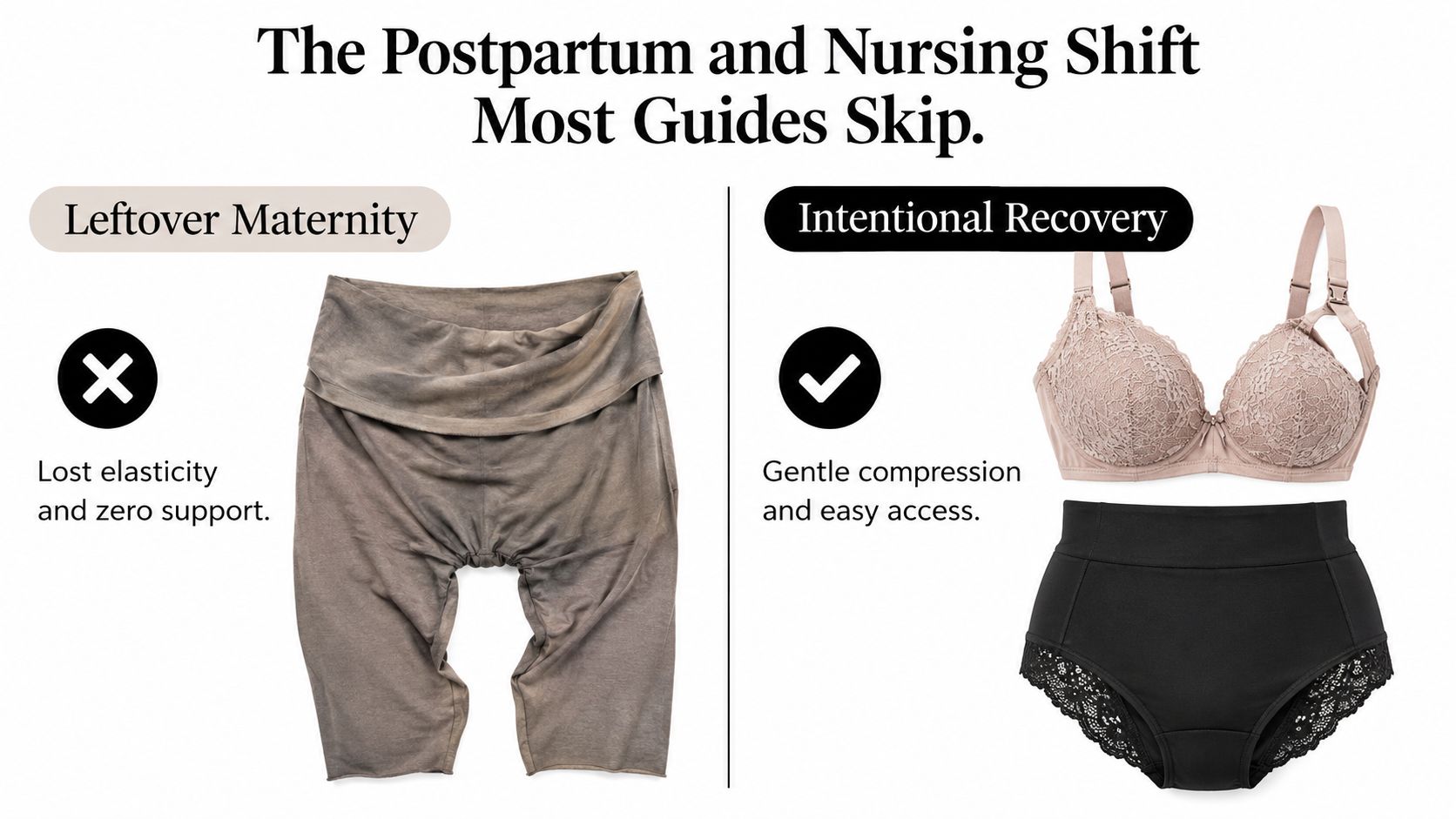
The first trip home with a newborn often comes with disposable underwear, a tender body, and maternity briefs that no longer feel right. Use those disposable pairs for the messy early days if they help, but build a postpartum drawer that supports the recovery ahead. For a fuller breakdown of those first weeks, read our guide to underwear to wear after birth.
Postpartum underwear must handle bleeding, swelling, sweating, changing abdominal sensitivity, and sometimes a C-section incision. Choose a soft, full-coverage brief when a narrow cut feels exposing or unstable. A style without seams can stop fabric from rubbing against healing skin. Gentle support has a place, but painful pressure, numbness, and restriction are clear signs to change the garment.
Choose function without erasing yourself
Start the early postpartum period with softness, coverage, and easy washing. Beautiful lingerie that presses on a tender area can wait. As bleeding slows and your skin settles, bring in pieces that offer practical support and help you feel more like yourself again.
For nursing bras, choose a wider band, soft lining, and simple access. Drop cups or clips that open with one hand make feeding easier while you hold a baby. A flexible band can feel more comfortable around your shoulders and ribs than rigid construction. Rough mesh and stiff lace belong elsewhere. Soft stretch lace works well when it is lined and fitted properly.
PETRA features ultra-soft stretch lace, gentle underwire, and one-hand nursing access. Consider it later in postpartum recovery, when you want nursing function and a more personal style rather than another purely practical layer.
Hands-free pumping bras make sense if pumping becomes part of your routine. Skip one if you are buying it only to prepare for every possible feeding plan. Choose according to how you feed, how much support you prefer, and whether the bra remains comfortable through long periods of sitting.
A beautiful piece isn't frivolous if it helps you recognize yourself in the mirror.
Buy two pieces you enjoy wearing before filling the drawer. The right postpartum brief and nursing bra cannot remove every difficulty of recovery, but they can ease a daily irritation and help you feel familiar to yourself again. As your body settles, function and beauty can share the same garment.
Care, Hygiene, and Knowing When to Let a Pair Go
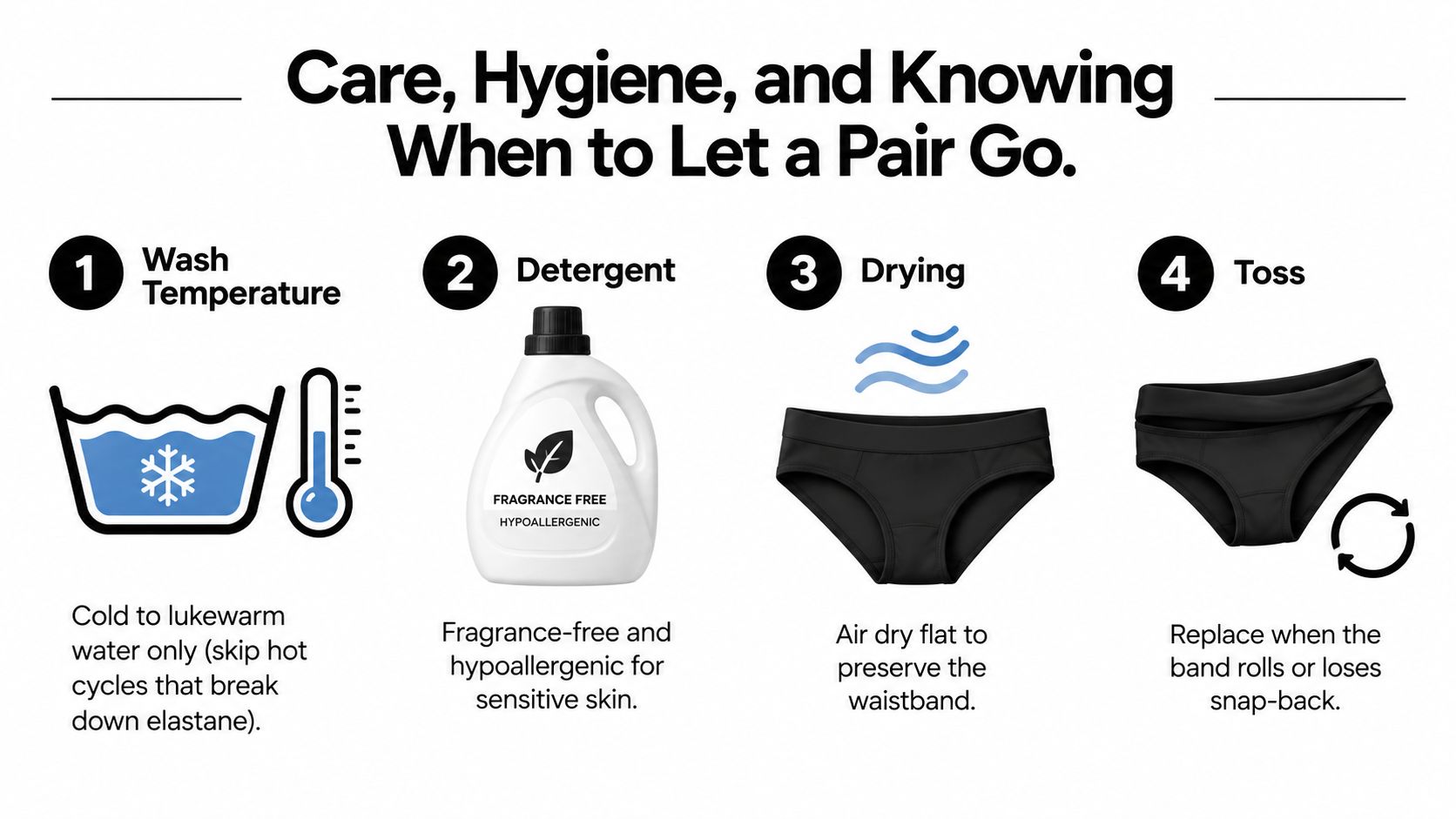
Pregnancy and nursing underwear needs a gentler laundry routine than the hot, aggressive cycle many people use for towels. Heat can weaken elastane, and fabric softener can leave a coating that affects absorbency and irritates sensitive skin.
Keep the routine simple
- Wash gently: Use cold to lukewarm water and avoid hot cycles that can break down stretch fibres.
- Choose fragrance-free detergent: A mild, hypoallergenic formula is the safest starting point when your skin is reactive.
- Skip fabric softener: It can coat fibres and leave residue against the vulva and inner thighs.
- Air dry: Lay delicate pairs flat or hang them carefully so the waistband keeps its shape.
- Rotate your drawer: Change out of damp underwear promptly and let each pair dry fully before wearing it again.
- Be extra attentive during medication changes: If you're taking antibiotics or dealing with irritation, breathable fabrics and prompt changes matter even more.
Don't keep a pair just because it technically still covers you. A thinning gusset, permanent waistband curl, pilling, stretched-out elastic, or discoloration that won't wash out are all reasonable retirement signals. Underwear is inexpensive compared with the misery of wearing something that rubs all day.
A good pair should disappear into your day. If you're adjusting it more than twice a day, it's already done its job and needs to leave the active rotation. If irritation, unusual discharge, pain, or persistent itching continues after you change fabrics and fit, speak with your healthcare professional rather than trying to solve the problem through more underwear purchases.
Your Comfort Plan From First Bump to First Day Out
Think of your drawer as a small, changing system rather than a permanent collection. Start with soft cotton briefs or forgiving low-rise styles when bloat makes your usual waistband annoying. Move into smooth or panel options as your abdomen grows, then choose high-rise coverage when a full, stable fit feels better late in pregnancy.
After birth, prioritize full coverage, softness, and easy washing. As your body settles, add nursing-friendly briefs and a supportive nursing bra that feels intentional rather than like leftover maternity gear. The point isn't to buy everything at once. It's to add one or two pieces when your current underwear starts giving you clear signals that it no longer works.
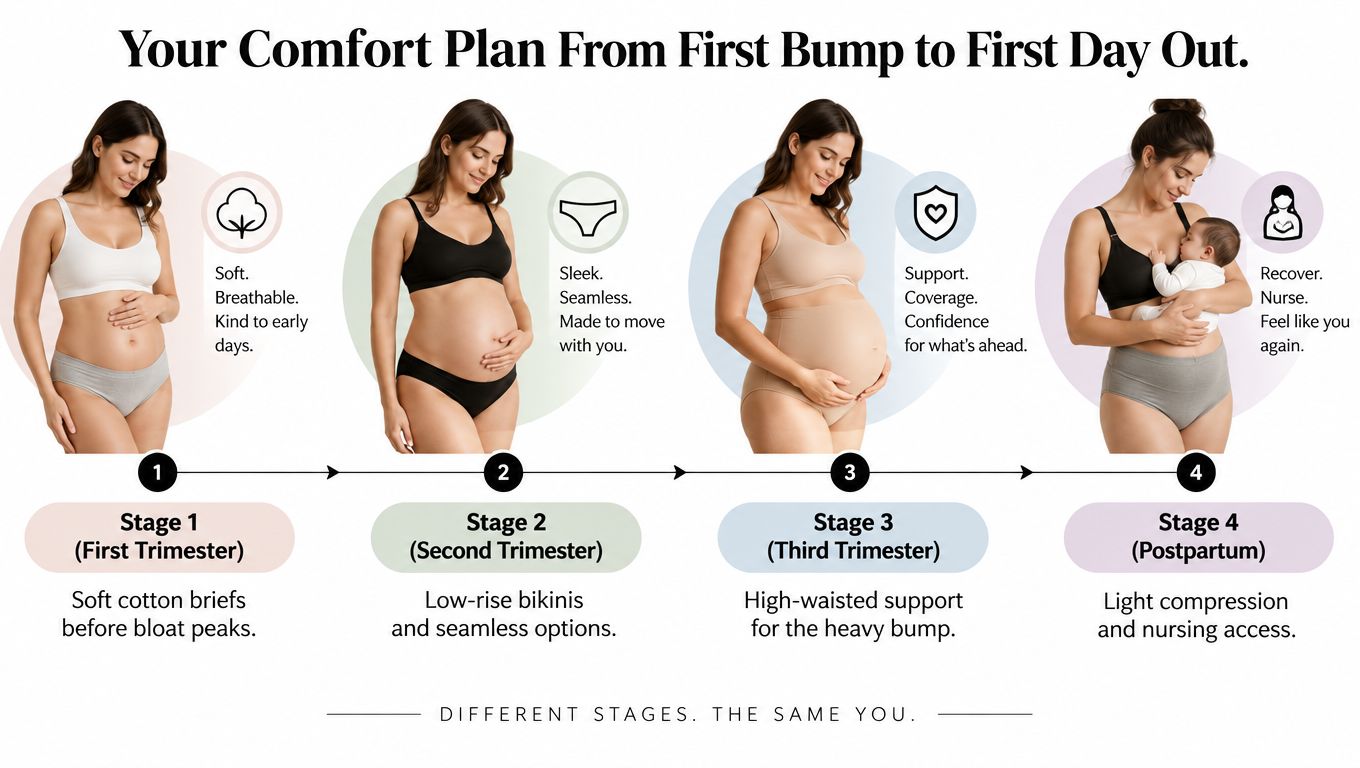
Keep the pairs that stay dry, lie flat, and let you forget you're wearing them. Set aside anything with tight elastic, rough seams across the pubic bone, or synthetic fabric that traps heat.
Tonight, pull everything from your underwear drawer and test it. Remove the pairs you keep adjusting, then choose one soft, breathable brief to wear tomorrow morning. That small decision is the beginning of a much more comfortable pregnancy and postpartum wardrobe.
Milk&Lace offers nursing lingerie that pairs breastfeeding access with soft lace and considered support, including the GAIA and PETRA styles for the stage when you want more than basic utility. Visit Milk&Lace to explore pieces designed to help you feel comfortable, supported, and like yourself again.