

Your favorite bra usually gives you fair warning.
First, the band feels tight by midday. Then the cups start cutting in. A week later, you take it off the second you walk through the door because wearing it feels like work. That moment catches a lot of women off guard. Your body is changing fast, and what used to feel invisible now feels restrictive.
This is not a minor wardrobe issue. It is one of the first physical reminders that pregnancy asks you to stop forcing your body into old expectations. A good pregnancy bra is not indulgent. It is practical self-care. It helps you move, sleep, work, and breathe without carrying extra discomfort all day.
Comfortable pregnancy bras also do something less obvious. They help you stay connected to yourself while your shape changes. The category keeps growing because women want more than basic function. The global nursing bras market, which includes comfortable pregnancy bras, was valued at USD 1.19 billion in 2024 and is projected to reach USD 1.66 billion by 2032 (global nursing bras market projection). That shift reflects what mothers already know. Comfort matters, and so does feeling like yourself.
The Journey to Finding Your Perfect Pregnancy Bra
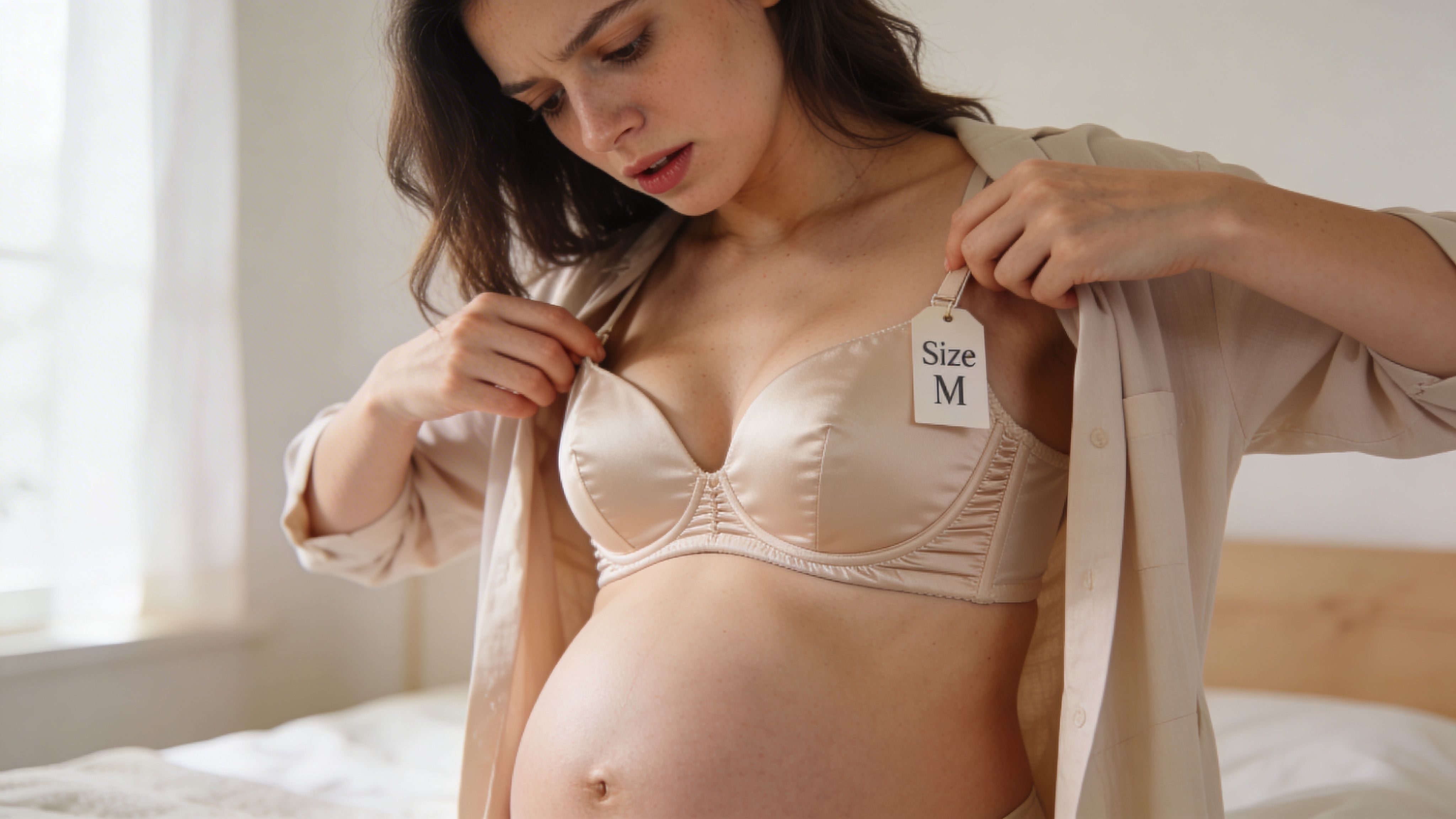
The first bra that stops fitting often has history attached to it. It may be the T-shirt bra you wore every day before pregnancy, the lace one that made you feel polished, or the soft wireless style you trusted without thinking. Then one morning it leaves red marks, the straps slip, or the cups suddenly feel too shallow.
That change can feel surprisingly emotional.
It is not only about size. It is about realizing your body has entered a new chapter, and your old rules no longer apply. I tell women this all the time as a fitter. Do not wait until discomfort becomes normal. The right bra should support you through change, not punish you for it.
Why this search matters more than you think
A comfortable bra affects posture, sleep, skin irritation, and how willing you are to leave the house in anything fitted. It also changes how clothes sit on your body. When the foundation is wrong, everything feels off.
Pregnancy adds tenderness, swelling, heat, and daily fluctuations. A bra that worked last month may be useless now. That is normal. Your needs will keep evolving.
Think in phases, not one perfect bra
Most women make one mistake. They try to buy a single bra to carry them from the first positive test to the late postpartum months.
That rarely works.
You need a small rotation that matches the stage you are in:
- Early pregnancy: softness, stretch, and relief from tenderness.
- Mid pregnancy: more stability, more adjustability, better lift.
- Late pregnancy and early nursing: access, flexibility, and room for fluctuation.
- Later postpartum: shape, confidence, and support that feels more like your old self.
A pregnancy bra should meet your body where it is today, while giving you room for tomorrow.
That mindset changes the whole experience. You stop shopping reactively after a painful day. You start choosing with intention. And that is usually when women find bras that feel not only comfortable, but reassuring.
What Makes a Pregnancy Bra Comfortable and Supportive
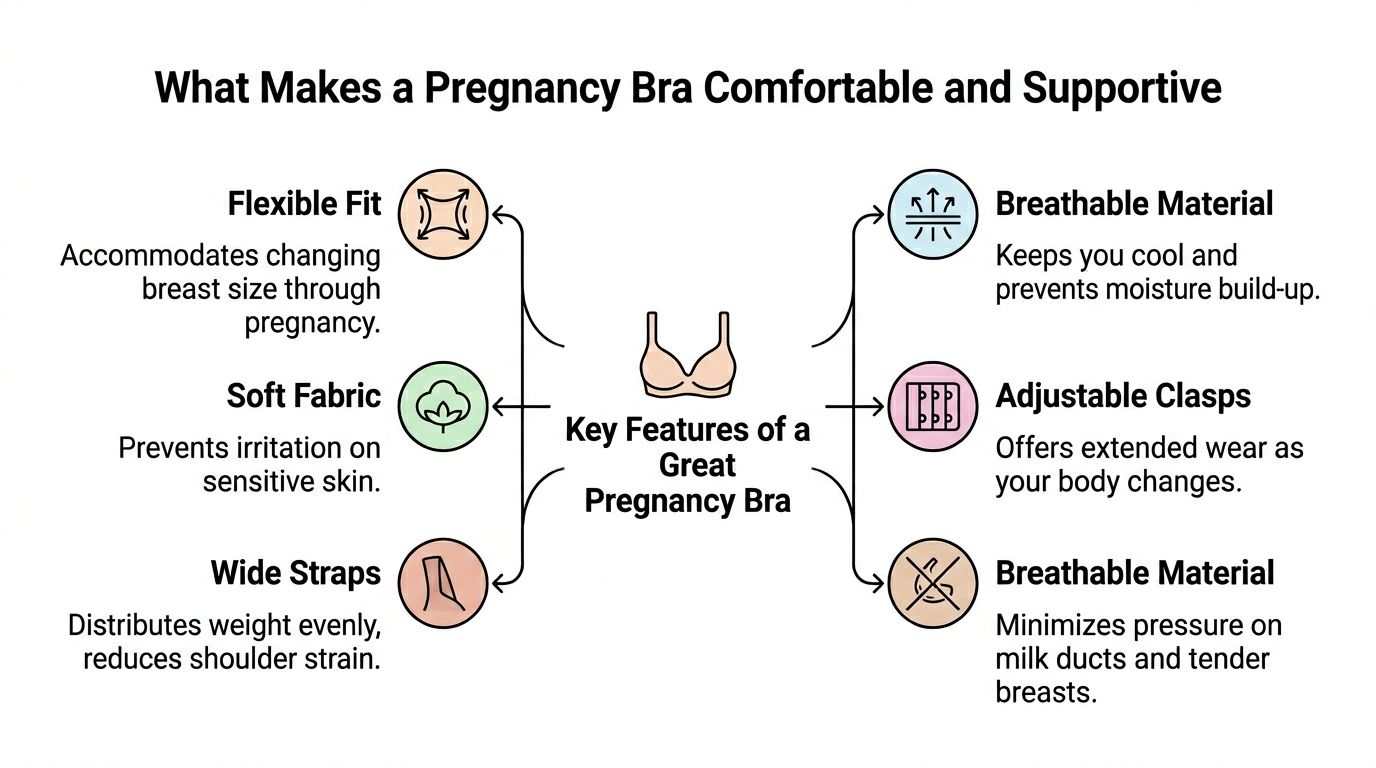
Comfort is not random. You can look at a bra and tell pretty quickly whether it will help you or annoy you.
I judge comfortable pregnancy bras by three things: fabric, support, and construction. If one of those fails, the bra fails with it.
Fabric that works with sensitive skin
Pregnancy often makes skin more reactive. Seams feel sharper. Heat feels stronger. Any rough edge gets noticed immediately.
Choose fabrics that feel smooth, breathable, and flexible against the skin. Stretch matters because breast size can shift quickly. Breathability matters because trapped moisture makes irritation worse.
Good fabric should do three things well:
- Move with you: Stretchy materials adapt when your breasts feel fuller from one day to the next.
- Stay gentle: A soft hand-feel reduces friction on tender tissue.
- Handle moisture: Breathable fabrics are especially important if you run warm, live in a hot climate, or plan to wear the bra for long days.
If you want a simple overview of how maternity bras differ from regular bras, this guide on what a maternity bra is is a useful starting point.
The band is the foundation
Most women blame the straps when a bra feels unsupportive. Usually, the straps are not the primary problem. The band is.
Think of the band like the foundation of a house. If the foundation is weak, everything above it shifts, strains, and starts compensating. In bra fitting, the band provides 90% of overall breast support, and ill-fitted bands contribute to 70% of reported back discomfort in breastfeeding mothers (nursing bra fit and support guidance).
That is why I care more about the band than any pretty detail on the cup.
A good band should:
- Sit level across your back, not ride up.
- Feel firm without digging painfully into your ribs.
- Anchor the bra so the straps do not have to do all the work.
If the band lifts in the back, the bra is not supporting you. It is hanging on you.
Construction details that separate good bras from disappointing ones
Two bras can look similar online and perform completely differently in real life.
Pay attention to these design choices:
| Feature | What to look for | Why it matters |
|---|---|---|
| Band | Wide and stable | Better weight distribution |
| Straps | Wider, adjustable straps | Less shoulder pressure |
| Hooks | Multiple rows of hooks | Room for ribcage changes |
| Cups | Flexible cups with enough depth | Better containment and comfort |
| Nursing access | Easy clip-down cups if postpartum use matters | Faster, less frustrating feeding access |
| Seams and edges | Smooth finishing | Less rubbing on sensitive skin |
Some women need wireless styles for a while. Others do better in lightly structured bras sooner than they expected. The right answer depends on tenderness, fullness, and daily routine. But the same rule holds every time: if the bra leaves you desperate to take it off, it is not supportive enough, not soft enough, or not fitted well enough.
What I recommend skipping
Not every popular bra deserves your money.
Avoid these if comfort is the goal:
- Thin, flimsy bands: They twist, ride up, and shift all day.
- Decorative straps with little strength: They may look delicate, but they usually feel awful with fuller breasts.
- Rigid cups too early: They cannot adapt to swelling and often create pressure points.
- Cheap scratchy lace: Beautiful lingerie should still feel kind on your skin.
The best comfortable pregnancy bras are not the ones with the most hype. They are the ones built thoughtfully enough that you forget about them once they are on.
Choosing the Right Bra for Every Stage of Pregnancy
Your bra wardrobe should change with your body. Not dramatically. Just intelligently.
During pregnancy, breasts typically increase by at least one band and cup size, and over 90% of nursing moms prioritize stretchy, adaptive materials to handle changes that can include a 20% to 30% volume increase per breast (pregnancy and nursing bra buying guidance). That is why the smartest approach is not buying one “do everything” bra. It is building a small rotation that solves the problem you have right now.
First trimester comfort
Early pregnancy often brings tenderness before you are visibly pregnant. This is when underclothes can suddenly feel hostile.
Soft bras work best here. Sleep bras, seamless bras, and gentle wireless styles usually make the most sense. You are not chasing dramatic lift. You are trying to avoid pressure.
Look for:
- Soft cups: Better for soreness and small daily changes
- Minimal seams: Less rubbing
- Light support: Enough hold without compression
If your usual bra feels fine for two hours and miserable by dinner, retire it. Do not wait.
Second trimester support
This is usually the point where “soft and stretchy” alone stops being enough. Breast growth may continue, your ribcage can start expanding, and you need a bra with more structure.
This does not mean stiff. It means smarter support.
A good second-trimester bra should give you:
- a firmer band
- more hook positions
- straps that hold weight
- cups with flexibility at the top
You still want comfort. You just need comfort with better engineering.
Third trimester and transition planning
By late pregnancy, support matters more because fullness, heaviness, and sensitivity can all show up at once. This is also the time to start choosing bras that can carry into the early postpartum period.
Prioritize nursing-friendly features if you plan to breastfeed. Easy access, soft inner cups, and enough flexibility for fluctuation will save you frustration later.
Here is the simplest way to shop by stage:
| Trimester | Primary Need | Key Bra Features to Look For |
|---|---|---|
| First | Relief from tenderness | Soft fabric, wireless design, seamless finish, light support |
| Second | Support for growth | Stretch cups, wider band, adjustable hooks, stronger straps |
| Third | Stability and nursing readiness | Supportive band, nursing clips, flexible fit, fuller coverage |
Build a small rotation, not a giant drawer
You do not need endless options. You need useful ones.
I usually suggest choosing bras by role:
- One comfort bra: For home, sleep, or low-key days
- One daily bra: For work, errands, and getting dressed properly
- One higher-support option: For longer days or when your breasts feel heavier
The best maternity bra wardrobe is boring in the right way. Every bra earns its place.
That approach prevents panic buying. It also keeps you from overinvesting in bras that only fit for a short window.
How to Measure Your Bra Size During Pregnancy
A lot of women avoid measuring because they are afraid the number will feel discouraging. Ignore that. A new size is not bad news. It is useful information.
Pregnancy sizing changes quickly, so guessing rarely works for long. Measuring at home gives you a much better shot at buying comfortable pregnancy bras that fit.
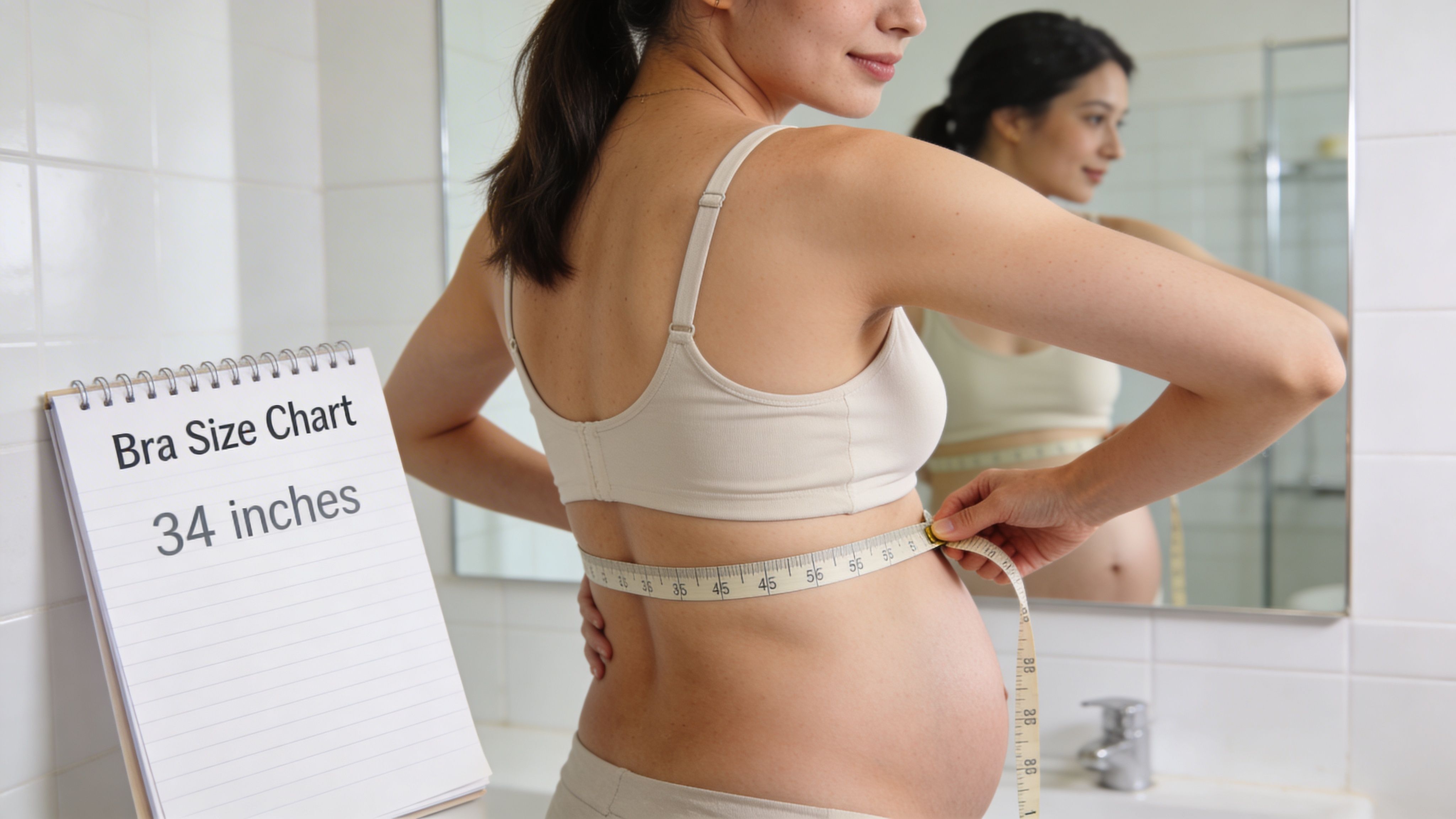
Step one, measure your band
Wear a non-padded bra or measure braless if that feels easier.
Wrap a soft measuring tape snugly around your ribcage, directly under your bust. Keep the tape level all the way around. It should feel firm, not loose.
That number gives you your starting band size.
The band matters because it holds the bra in place. If it is too loose, the whole bra starts sliding, lifting, and shifting. If it is too tight, you will feel it in your ribs fast.
Step two, measure your bust
Now measure around the fullest part of your bust. Keep the tape level and relaxed. Do not compress your breasts.
Compare that number to the band measurement. The difference helps determine cup volume.
If you want a more detailed walkthrough, how to measure for a nursing bra breaks the process down clearly.
Fit checks that matter more than the label
The tag is only a starting point. The fit on your body tells the truth.
Use this quick checklist when you try a bra on:
- Check the band first: It should sit straight across your back.
- Look at the cups: No spilling, cutting in, or empty space.
- Adjust the straps: They should support, not carry all the weight.
- Move around: Raise your arms, sit down, bend slightly. The bra should stay put.
- Notice pressure points: Sharp digging at the underarm or sternum means the fit is off.
A bra can be your “correct size” on paper and still be wrong for your pregnant body.
One more practical tip. Buy a bra that fits securely now with room to adjust as your body changes. Extra hook options help. Stretch in the cup helps. Blind optimism does not.
A visual fitting guide can help if you are more confident seeing the process in action.
Signs you picked the wrong size
Women often keep the wrong bra because they think discomfort is normal in pregnancy. It is common. It is not something you should settle for.
Watch for these signs:
- Band riding up: Usually too loose
- Cup spillage: Cups are too small or too shallow
- Cup gaping: Cups are too large or the shape is wrong
- Straps digging in: The band is likely not doing enough
- Center not sitting well: The cup shape or size may be off
If you are shopping online, choose brands that make exchanges straightforward. Pregnancy is one season of life when flexibility matters more than pride. If the fit is not right, exchange it and move on.
From Early Nursing to Reclaiming Your Style Postpartum
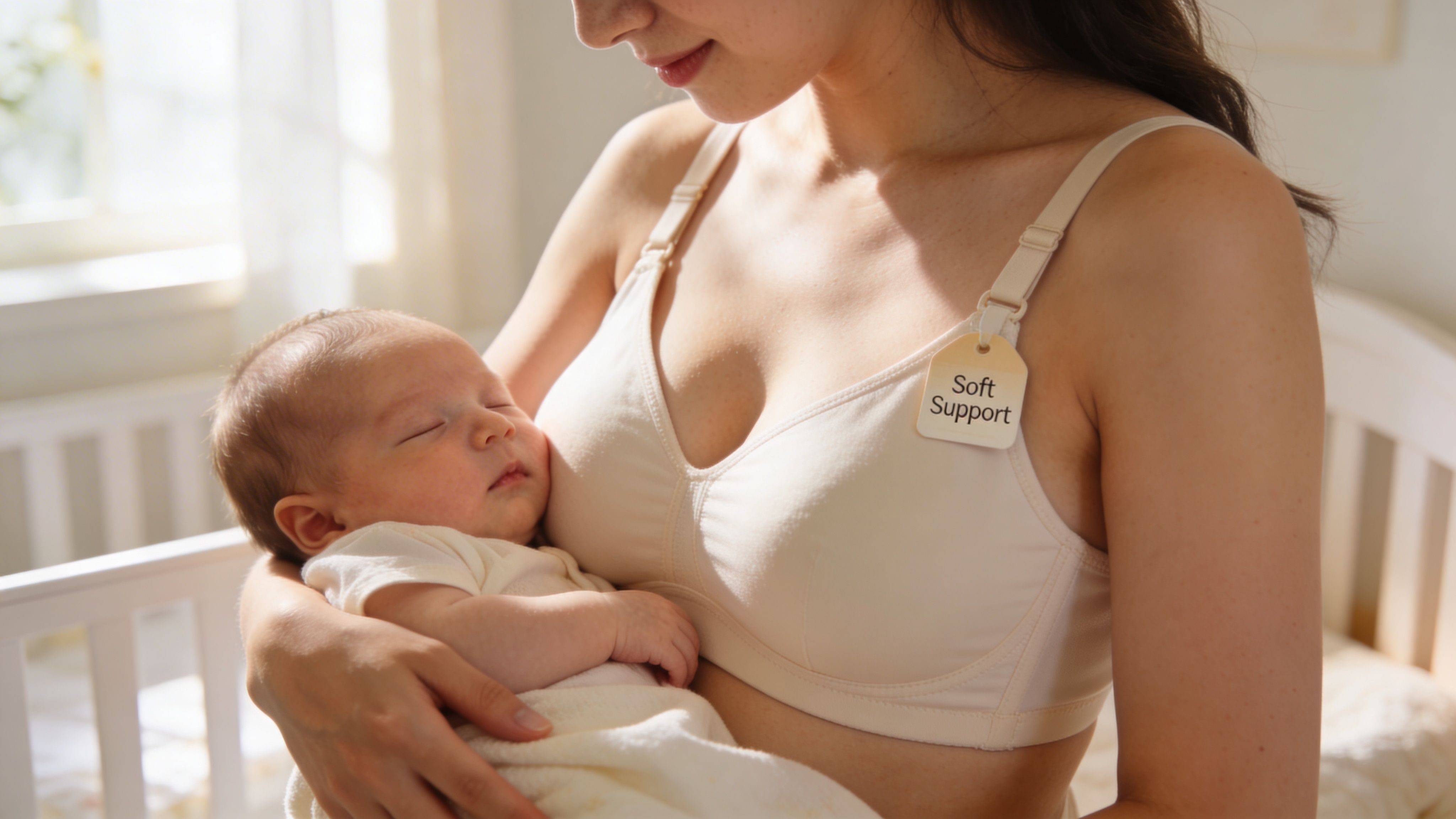
The early postpartum phase is not glamorous. Your breasts can feel heavy, unpredictable, and tender. You may be feeding around the clock, changing bra pads constantly, and reaching for whatever feels easiest.
At that stage, simple wireless nursing bras often make the most sense. You want softness, quick access, and room for fluctuation. Function comes first, and that is fine.
Early postpartum needs are different
Right after birth, your body is still settling. A bra that feels perfect one day may feel too tight the next morning. This is why soft, forgiving bras matter so much early on.
What helps most in this phase:
- Easy one-hand nursing access
- Flexible cups that tolerate fullness changes
- Soft inner fabric
- A stable but non-restrictive band
This is not the season for forcing yourself into a polished shape. It is the season for reducing friction in your day.
Then your needs shift again
At some point, usually not immediately, many women stop asking only, “Is this comfortable?” and start asking, “Do I feel like myself in this?”
That question matters.
You may be going out more, returning to parts of your routine, or wanting underwear that feels more finished under real clothes. Many bra guides fail women here. They act as if you should stay in soft utility bras forever.
You do not have to.
Research indicates underwire bras are generally safe after 6 to 12 weeks postpartum once milk supply stabilizes, yet only 15% of maternity bra content guides women on how to transition back to structured bras for support and shape (postpartum transition to structured bras).
When structure starts making sense
A structured nursing bra can be the right move once your breasts feel less volatile and your daily size changes are less dramatic. The point is not to rush. The point is to recognize that later postpartum support can look different from early postpartum support.
Structured bras can offer:
| Need | Soft early nursing bra | Structured later nursing bra |
|---|---|---|
| Fluctuation tolerance | High | Moderate |
| Shape under clothing | Minimal | Better definition |
| Lift | Gentle | Stronger |
| Style factor | Functional | More refined |
You are allowed to want support and beauty at the same time.
That is not vanity. It is part of feeling at home in your body again.
Choosing a beautiful nursing bra without sacrificing function
If you are ready for a more elevated option, focus on practical details first and aesthetics second. A pretty bra that pinches, pokes, or makes feeding awkward is not progress.
Check for:
- Discreet nursing clips: They should open smoothly with one hand.
- Supportive underwire or structure: It should lift without sitting on breast tissue.
- Soft lining: Lace should never feel scratchy against sensitive skin.
- Cup shape that suits daily clothing: Especially if you are back in fitted tops or dresses.
One later-postpartum option in this category is stylish nursing wear, including structured underwire designs such as the GAIA and PETRA nursing bras, which combine discreet nursing access with lace and a softer hand-feel for women who want more shape once they are ready.
The emotional part matters too. A bra can remind you that motherhood expanded your identity. It did not erase it. When your body is ready, a structured nursing bra can feel less like a luxury and more like a quiet return to yourself.
Extending the Life of Your Maternity and Nursing Bras
A good bra works hard. If you want it to keep supporting you, treat it like a technical garment, not a basic throw-in-the-wash item.
That matters even more now. Demand for moisture-wicking maternity bras has seen a 40% spike, especially in warmer climates, and advanced fabrics need proper care to keep their breathability and sweat management working well (moisture-wicking maternity bra care and fabric demand).
Wash for longevity, not convenience
Hand-washing is the safest option. Use cool water and a gentle detergent, then press out excess water without twisting the cups or band.
If real life means machine washing, be smart about it:
- Use a lingerie bag: It protects hooks, straps, and delicate fabric.
- Choose a gentle cycle: Rough washing breaks down stretch faster.
- Fasten the hooks first: This prevents snagging.
Drying and storage matter too
Never put maternity or nursing bras in the dryer if you can avoid it. Heat is hard on elastic, and elastic is what makes the bra supportive in the first place.
A few simple habits help:
- Air dry flat or hang carefully: Keep the shape intact.
- Rotate your bras: Elastic recovers better when it gets rest.
- Store cups neatly: Do not crush structured cups into a drawer.
If a bra starts feeling unsupportive after only a short time, poor care is often the reason.
The goal is simple. Protect the stretch, protect the band, and your bra will stay comfortable much longer.
Our Fit Philosophy and Exchange Promise
Motherhood changes your body, but it should not strip away your standards. You still deserve clothing that fits well, feels good, and reflects who you are.
That belief shapes everything about fit. Comfort comes first when your body is changing quickly. Confidence matters too, especially when you are ready for more than the purely functional basics that carry you through the earliest weeks.
A good fit is never about squeezing yourself back into an old size. It is about meeting your body as it is and choosing support that works for the life you are living now.
What a fit promise should mean
A flexible exchange policy is not a bonus in this category. It is part of responsible bra fitting.
Bodies shift. Ribcages expand. Breast fullness changes. Sometimes a bra that looked perfect on paper is wrong once it is on your body. That should be easy to fix.
The right brand approach is straightforward:
- Clear sizing guidance: So you can order with more confidence
- Flexible exchanges: So changing bodies do not trap you in the wrong fit
- Transparent policies: So you know exactly what to expect
That is how trust is built. Not with pressure, but with room to adjust.
Your Pregnancy Bra Questions Answered
How many pregnancy or nursing bras do I really need
You need enough to avoid wearing the same bra every day without a break. For most women, a small rotation is more useful than a large collection. Think in terms of purpose. One for comfort, one for daily wear, and one backup or higher-support option.
Is it okay to wear underwire during pregnancy
It can be, but only if it fits exceptionally well and does not press into tender tissue. Many women prefer wireless bras during pregnancy because size changes are frequent and sensitivity is higher. If an underwire leaves marks, shifts, or feels restrictive, stop wearing it.
What is the difference between a maternity bra and a nursing bra
A maternity bra is built for pregnancy comfort and changing breast size. A nursing bra adds feeding access, usually through clip-down cups or similar openings. Some bras do both, but not all maternity bras are designed for nursing.
When should I buy new bras during pregnancy
Buy a new bra as soon as your current one becomes uncomfortable. Waiting usually means spending weeks in a poor fit. Many women need to reassess more than once during pregnancy.
Should I size up to “grow into” a bra
Not aggressively. Buy for your current body, but choose features that allow some flexibility, such as stretch in the cups and multiple hook settings. A bra that is too loose now will not support you properly.
Why do my straps keep digging in
Usually because the band is not doing enough. Women often tighten straps to compensate for a loose or weak band. Fix the band first, then adjust the straps.
Can a nursing bra still feel pretty
Yes. It should. Functional does not need to mean plain, bulky, or forgettable. Once your body is ready for more structure, you can choose a nursing bra that offers access, support, and a more polished silhouette.
If you are ready for lingerie that supports both comfort and confidence, explore Milk&Lace. It was created for the stage when you want nursing functionality, a flattering fit, and a way to feel like yourself again.