

You're standing in front of the mirror with a black lace bra in one hand and your most-worn T-shirt in the other. It looks beautiful, but you're asking the practical questions that matter more: Will it stay comfortable through a long day? Will it support a fuller or changing bust? Can you nurse in it without wrestling with tiny hooks?
Those questions deserve better answers than “lace is flattering.” The right black lace bra can offer softness, structure, airflow, and a silhouette that makes ordinary clothes feel more considered. The wrong one can curl at the edges, dig under the arms, lose its shape, or turn a five-minute dressing routine into a daily negotiation.
This guide focuses on what happens after the try-on moment. You'll learn how to match a silhouette to your body and wardrobe, read a fabric label, assess support, choose a postpartum-friendly construction, and care for lace without treating laundry like a second job.
Why Black Lace Bras Deserve a Place in Your Drawer
A black lace bra earns drawer space when it does more than look pretty on a hanger. It should hold the bust securely, sit comfortably against the skin, and work with the clothes you wear. For one woman, that might mean a plunge under a low neckline. For another, it's a full-cup style beneath a work blouse or a nursing bra that makes feeding access less frustrating.
Modern lace bras aren't built from decoration alone. The lace may form the visible surface, while the band, frame, cups, straps, and lining carry the support. Nylon, polyester, rayon, and elastane blends allow designers to create an open, textured face without asking the lace itself to do all the lifting. The result can feel delicate while functioning like a properly engineered everyday bra, as guidance on lace bra construction explains.
Practical rule: Judge the hidden structure before you judge the pattern.
Black also has a useful place in a real wardrobe. It works as a staple under dark clothing, feels intentional beneath sheer layers, and offers a polished alternative to beige or white. One 2025 industry report cited by FlexLara's overview of black bras found that black bras accounted for 42% of bra purchases in its dataset, so black isn't a niche lingerie choice. It's a mainstream one.
Where lace works best
Choose a smooth, lightly lined lace bra when you're wearing thin knits and want minimal texture. Choose a more visibly patterned style under evening pieces, open shirts, or clothing where the lingerie is part of the look.
The best reason to wear black lace isn't that it makes you look a certain way. It's that the right bra can help you feel supported, composed, and like yourself, whether you're heading to work, taking a class, or feeding a baby.
The Quiet History Behind Lace in Everyday Bras
Lace began as a luxury craft, but its place in foundation garments changed as materials and manufacturing changed. Historical records describe bra-like garments as early as the 1400s, and a 2008 archaeological discovery in Austria uncovered linen undergarments from the late 14th to the second half of the 15th century, including pieces with shoulder straps, cups, and lace embellishment. The Google Arts & Culture historical record also identifies Mary Phelps Jacob's 1914 bra patent as a major milestone in the modern brassiere's development.
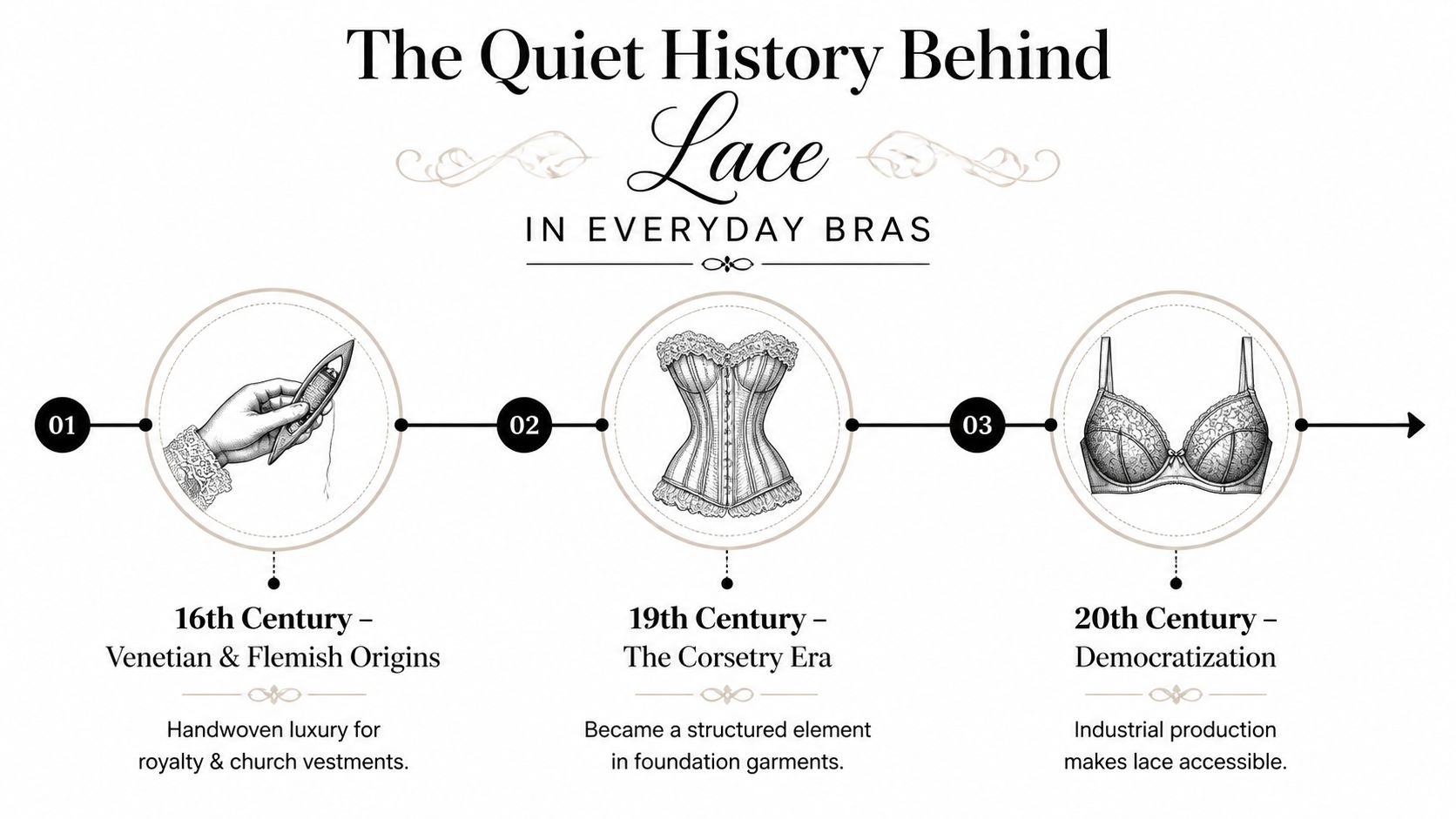
Lace mattered because lingerie has always balanced two jobs. It shapes and supports the body, but it also communicates style. By the late 19th and early 20th centuries, bras increasingly served as practical alternatives to corsetry. Wartime metal rationing in 1917 made bras especially appealing because they required less metal than corsets, reinforcing the shift from rigid body shaping toward lighter, more adaptable construction.
Why black became such a dependable choice
Black lace became useful beyond its visual drama. Dark fabric reads as versatile, works naturally with evening clothing, and makes intricate patterning feel deliberate rather than fussy. As synthetic fibers and elastic blends became easier to produce, lace moved into more accessible everyday lingerie instead of remaining an occasional luxury.
Today's black lace bra carries that whole history in a single garment. It combines decoration, structure, stretch, and body shaping. That's why the category feels both timeless and practical. Lace isn't an extra pasted onto a basic bra. In a well-made design, it's part of the garment's identity, while the frame and elastic make it wearable.
Choosing the Right Silhouette for Your Body
A size tag won't tell you how a bra will behave. A plunge, balconette, full-cup, bralette, and nursing style can all fit the same person differently because they distribute breast tissue and tension in different ways.
Use this table as a starting point, not a verdict. Your breast shape, tissue softness, neckline preferences, and support expectations matter as much as your usual size.
| Silhouette | Best For | Ideal Neckline | Coverage | Support |
|---|---|---|---|---|
| Plunge | Softer tissue and close-set breasts | V-necks and low-cut tops | Low to medium | Medium to strong |
| Balconette | Rounded shapes and upper fullness | Square and scoop necklines | Medium | Medium to strong |
| Full cup | Fuller busts and maximum containment | High necklines and blouses | High | Strong |
| Bralette | Comfort-first wear and lighter support needs | Relaxed tops and layering | Low to medium | Light to medium |
| Nursing | Changing busts and feeding access | Flexible everyday necklines | Medium to high | Light to strong |
Match the cut to your clothes
A plunge is the obvious choice when the center gore of a balconette would show beneath a V-neck. It can also suit softer breast tissue because the angled cups create room at the center without forcing a high, rigid line.
A balconette gives a more open upper shape. It's a strong pairing for square necklines and rounded breasts, but it may feel less secure if you need a lot of upper-bust containment. Full-cup styles are less subtle under low necklines, yet they're often the better choice for long workdays, fuller cups, or anyone who dislikes spillover.
Bralettes prioritize ease over sculpted lift. They're excellent for lounging, sleeping, and lower-impact days, but don't expect a light lace triangle to perform like a reinforced full-cup bra. Nursing silhouettes add practical details such as drop cups, soft linings, and flexible bands. PETRA combines stretch lace, gentle underwire, and one-hand nursing access in a design made for motherhood.
Choose your starting silhouette before you obsess over size. A technically correct size in the wrong cut can still gape, compress, or fail to support you.
How to Get the Fit Right on the First Try
Start with the band. Fasten the bra on the loosest hook, then check that it sits level across your back. You should be able to slide two fingers underneath, but the band shouldn't feel loose, ride upward, or shift when you lift your arms.
The band provides most of the support, so don't try to fix a loose one by tightening the shoulder straps. Over-tightened straps create pressure on your shoulders while leaving the bust under-supported.
Check the cups and lace edge
Scoop your breast tissue into the cups, then inspect the top edge. Lace often has more give than a rigid T-shirt cup, so it should lie flat without cutting across the breast or leaving a hollow gap. Scalloped edges should follow your body instead of curling outward.
Check the underwire next. Its outer tip should sit behind the breast tissue, and the center should rest against your chest without pressing painfully. If the wire lands on breast tissue, the cup shape or size is wrong, even if the bra looks attractive from the front.
Use this quick test before you remove the tags:
- Straps: Adjust them so they stay put without digging.
- Gore: Confirm the center panel lies flat when the style is designed to tack.
- Arm movement: Raise both arms and twist gently. The band should remain stable.
- Cup line: Look for both spillage and empty space.
- Lace finish: Check that the edge stays flat rather than rolling.
For a reliable measuring method, follow this guide to measuring for your bra size. A professional fitting is worthwhile if your cup size has recently changed, one breast differs noticeably from the other, or you keep adjusting the same bra throughout the day.
A fit check should happen in motion, not just while you stand still in front of a mirror.
What Lace Is Actually Made Of
The lace pattern tells you almost nothing about how a bra will feel after several hours. Fiber content and construction decide whether the garment stretches comfortably, recovers its shape, traps heat, or irritates sensitive skin.
A common lace structure uses synthetic fibers with elastane. The retrieved industry guidance describes higher-quality lace constructions as commonly using roughly 85–95% nylon or polyester with 5–15% spandex, and notes that premium lace can retain over 92% stretch recovery after repeated extension, while lower-quality versions may fall below 65% recovery. Those figures come from industry guidance on lace stretch recovery, and they explain why two bras with similar-looking lace can age very differently.
| Fiber Blend | Stretch | Breathability | Best For |
|---|---|---|---|
| Nylon or polyester with elastane | Reliable stretch and recovery | Moderate, depending on lining | Everyday support and close fit |
| Cotton blend with elastane | Softer, often less springy | Stronger against skin | Sensitive skin and relaxed wear |
| Rayon or modal blend | Fluid drape with gentle stretch | Comfortable in moderate conditions | Soft, elegant everyday pieces |
| Lace over power mesh | Controlled stretch with added stability | Depends on mesh and lining | Fuller busts and structured support |
Translate the label into real wear
A nylon-rich blend usually dries quickly and keeps a smooth, resilient fit. The open lace can improve airflow, but a dense lining or non-breathable base may cancel out that advantage. Cotton blends can feel gentler, though they may take longer to dry and may not recover as sharply after repeated wear.
Knit lace generally stretches more than rigid decorative styles such as Chantilly or eyelash lace. Reinforced cups and power mesh add containment beneath the pattern, which is often what a fuller or changing bust needs.
For a deeper look at how fabric affects comfort, use this bra fabric and material guide. Read a tag as a forecast: a high-elastane blend will feel flexible and close to the body, while a structured mesh layer will feel firmer and more secure across an eight-hour day.
Black Lace Bras for the Postpartum and Nursing Stage
Postpartum lingerie shouldn't be limited to clinical beige. Your body may be changing, tender, tired, and unfamiliar, but you still deserve a bra that feels feminine and considered.
The practical challenge is fluctuation. Breast fullness can change across the day, and rigid cups may become uncomfortable quickly. During this stage, elastic adjustment matters more than a dramatic shape. A flexible band, forgiving cup, and easy nursing access will serve you better than a beautiful bra that only works at one moment of the week.
Features that earn their place
Wireless stretch-lace bralettes are useful for sleep, rest days, and early nursing when tenderness makes underwire unappealing. They offer less shaping, but their softness and adaptability can make frequent feeding easier.
Drop-cup nursing bras are the more versatile middle ground. Look for clip-down access that can be operated with one hand, a soft inner sling that keeps the cup positioned, and enough stretch to accommodate a fuller feed. Lace overlays let the bra feel like lingerie while the lining and frame handle the functional work.
Front closures can help if reaching behind your back is uncomfortable. Wide, soft bands stabilize the bra without concentrating pressure in one narrow strip, while convertible or racerback straps can reduce shoulder slippage. If you use nursing pads, check for a lining or sling that can hold them without bunching.
Independent feedback on lace nursing bras is notably mixed, with some customers describing a style as true to size and roomy while others find the band too tall or the bra difficult to use, as shown in customer feedback for a lace nursing bra. That disagreement isn't surprising. Nursing fit depends on breast shape, tissue changes, torso length, and how much support you expect from wireless construction.
Use this guide to beautiful nursing bras when comparing details. In the early postpartum months, prioritize adjustable, elastic silhouettes. As your body settles, you can decide whether a structured underwire lace bra now feels supportive or restrictive.
Caring for Lace So It Lasts
Lace doesn't need complicated treatment. It needs less heat, less friction, and fewer opportunities to snag.
Hand-washing is the safest routine. Fill a basin with cool water, add a small amount of lingerie-safe detergent, and let the bra soak briefly. Gently press water through the fabric, rinse thoroughly, and never wring or twist the cups.
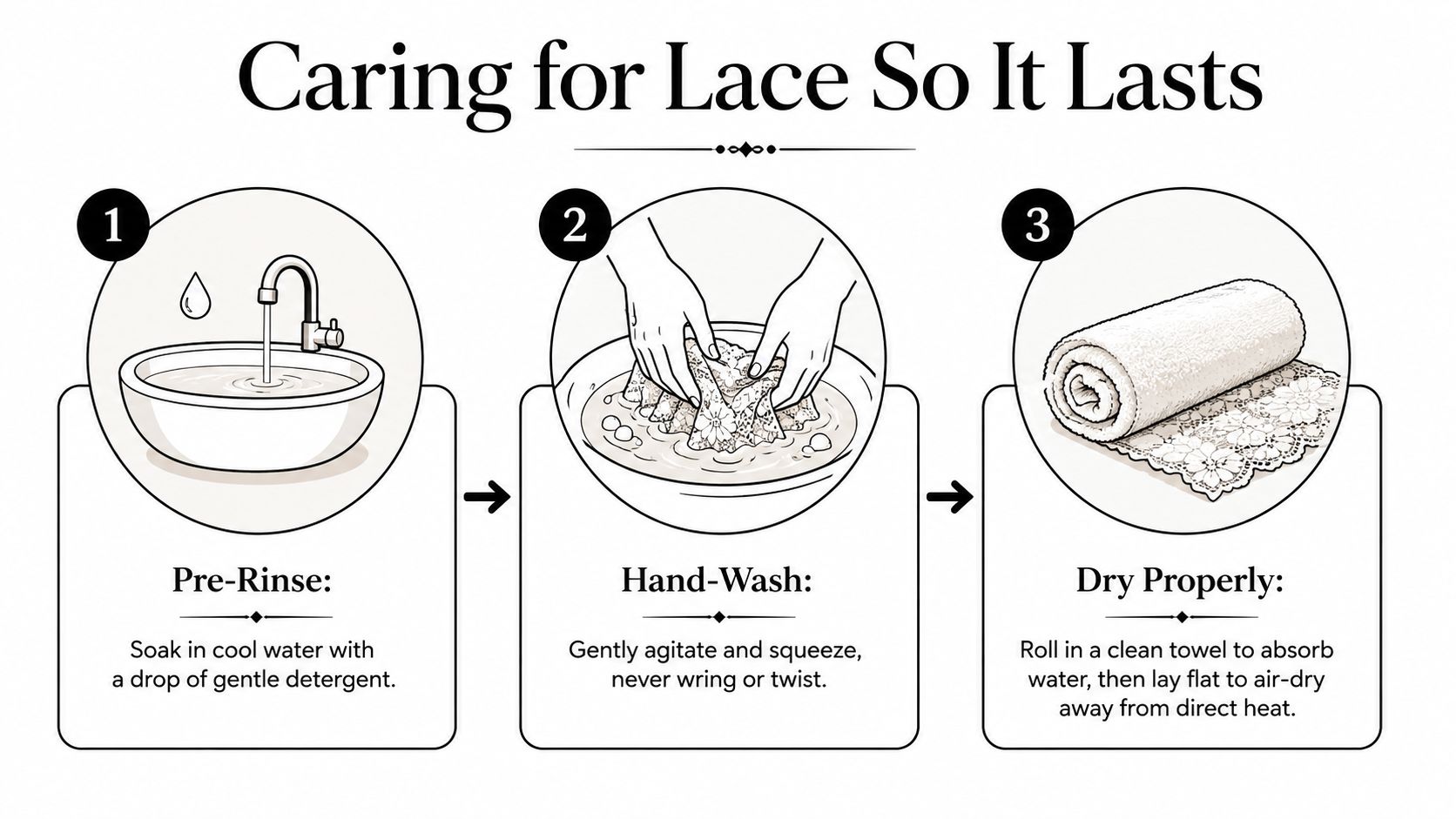
A routine you'll actually keep
Machine washing can work when the care label allows it. Close the hooks, place the bra in a mesh lingerie bag, and use a cold, delicate cycle. Don't wash it with Velcro, rough towels, or garments with exposed zippers.
After washing, roll the bra in a clean towel to absorb excess water, then lay it flat or line-dry it away from direct sunlight. Radiators and dryers expose elastane to damaging heat, which can weaken stretch and distort the bra's shape.
Store black lace bras with the cups supported. Stack them rather than folding one cup into the other, and keep tissue between delicate pieces if the lace creases easily. A dark bra should also stay separate from rough fabrics that can pull the pattern.
Troubleshoot before replacing
- Pilling: Reduce friction, wash inside a mesh bag, and avoid abrasive laundry.
- Loose band: The elastic may be fatigued. Loosening straps won't restore it.
- Yellowing: Product buildup, heat, and storage conditions may be responsible. Follow the care label instead of using harsh bleach.
- Snags: Don't pull the thread. Trim only a loose end if the construction allows it, and keep the garment away from rough closures.
A gentle routine protects both the lace face and the elastane underneath it.
Buying With Confidence and Common Questions Answered
Before you add a black lace bra to your cart, decide what job it has to do. A bra for nursing, desk work, evening wear, and sleep may need four different constructions.
Your buying checklist
- Purpose: Decide whether you want lift, comfort, nursing access, layering, or a special-occasion piece.
- Silhouette: Choose the neckline and breast-shape match before choosing the pattern.
- Fabric blend: Look for stretch recovery, a comfortable lining, and enough structure for your bust.
- Closure: Pick back, front, or drop-cup access based on mobility and daily use.
- Care commitment: If you won't hand-wash it, confirm that the bra can tolerate a lingerie bag and delicate cycle.
Think in tiers rather than chasing the lowest price. An everyday piece should be easy to wash and comfortable for repeated wear. An investment piece can justify more intricate lace or structure if the fit is excellent and you'll reach for it often.
Common questions
How can I tell if lace is high quality?
Look for an edge that lies flat, elastic that springs back after gentle stretching, and a supportive base beneath the lace. A pretty pattern can't compensate for weak recovery, scratchy seams, or a band that shifts.
Will black dye bleed onto my skin or clothes?
Dye transfer can happen, especially with a new dark garment. Wash the bra according to its care label before wearing it under pale clothing, and avoid pairing it with light fabrics until you know how the dye behaves.
Which necklines work with plunge and balconette bras?
Plunge styles suit V-necks because their center depth stays out of sight. Balconettes pair naturally with square and scoop necklines, where their wider, more open top edge supports the clothing's shape.
How often should I replace a lace bra?
Replace it when the band no longer supports you, the elastic stays stretched, the cups distort, or the underwire shifts. The calendar matters less than the garment's condition and your changing fit.
Can wireless lace bras support a larger cup size?
Some can, especially when they use wide bands, reinforced side panels, multiple layers, and well-designed straps. Wireless construction usually gives a softer, less separated shape, so choose it for comfort and containment rather than the firm lift of a structured underwire.
What matters more, the size tag or the fit?
The fit matters more. Sister sizing, different cup shapes, and brand-specific patterns mean the same printed size can feel very different across styles.
Choose the bra that stays comfortable when you sit, bend, reach, and move. One piece that feels special and fits your current body is more useful than several attractive bras you avoid wearing.
Milk&Lace offers elegant nursing lingerie with lace, structured support, and discreet breastfeeding access for women who want more than a purely clinical bra. Visit Milk&Lace to explore pieces designed for the changing postpartum body and find a black lace style that feels practical, personal, and beautiful.