

The best underwear for after c section is high-waisted, breathable, and cut to sit above the incision, not across it. In the early weeks, the right pair should reduce rubbing, pressure, moisture, and bunching while your body is still healing.
You may be standing in your hospital room, moving slowly, and trying to figure out how something as ordinary as underwear suddenly feels complicated. It matters because your incision is tender, your abdomen is changing shape from day to day, and every waistband has the potential to help or irritate.
Finding Comfort in the First Weeks
The first time you pull on underwear after a C-section can feel strangely high stakes. One new mother may hold the waistband away from her stomach, breathe through the movement, and realize that a pair she used to ignore now needs to work around a healing incision.
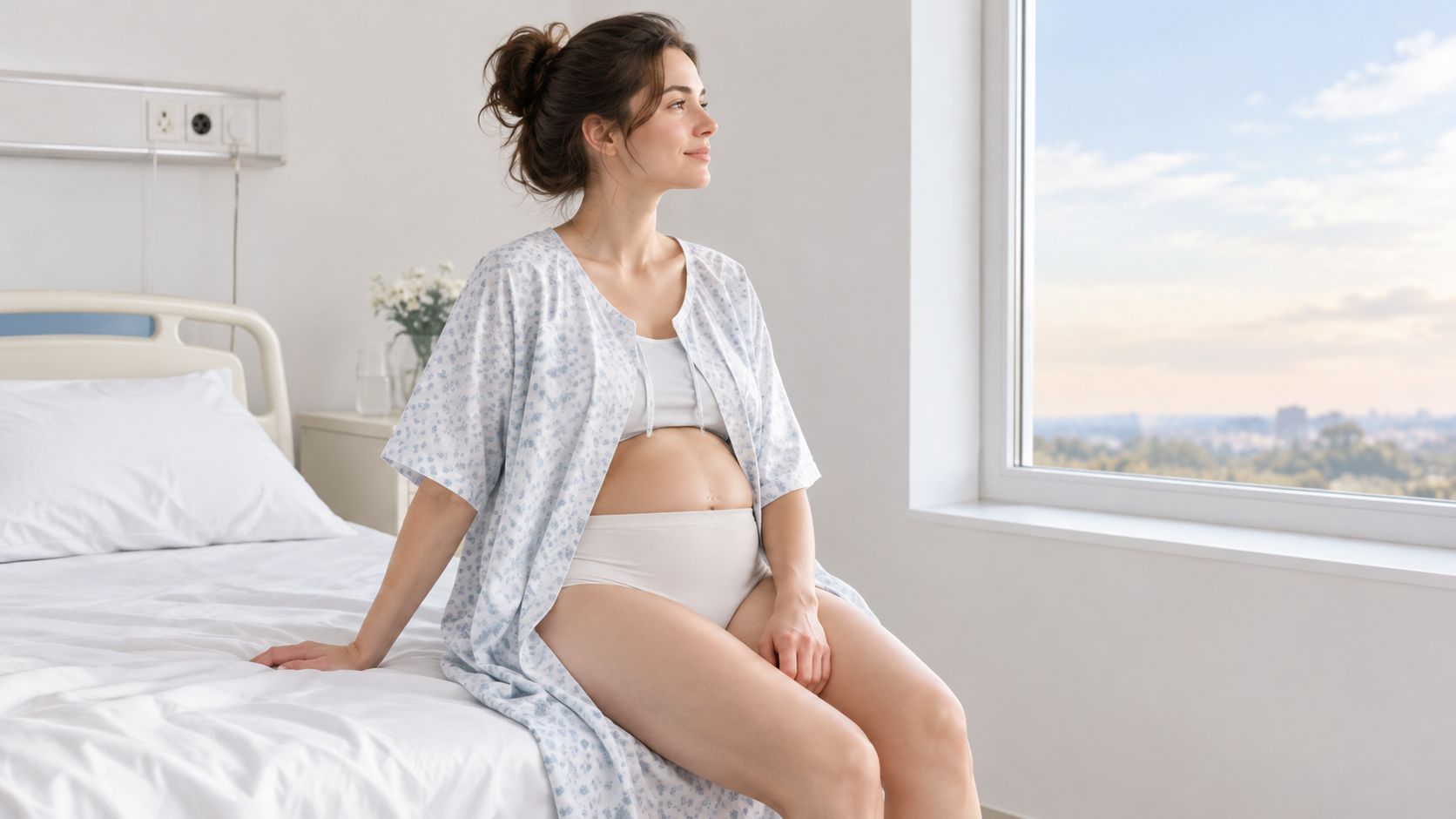
The goal in those first days is simple. The fabric should stay out of the wound area, feel soft against swollen skin, and let you change pads or underwear without tugging hard over your abdomen. That's why a careful choice can change how manageable the day feels, even when sleep is broken and every movement asks for patience. For a broader wardrobe approach, see underwear to wear after birth.
Why small choices feel big
After surgery, comfort isn't cosmetic. It affects how often you wince, how much you fidget, and whether you keep adjusting the waistband all afternoon because it keeps folding into the incision line.
Practical rule: if you notice yourself thinking about your underwear all day, it's probably not doing its job.
That's why loose, stable, easy-to-change underwear belongs in the recovery drawer. It should support the body you have right now, not the one you had before pregnancy.
Understanding Your Recovery Timeline
C-section recovery usually unfolds over about six weeks, even though each body heals at its own pace, and the incision itself may need several weeks to settle (Cleveland Clinic). That timeline matters because underwear is doing a different job at each stage. Early on, it is a wound-protection tool first, and a comfort or shaping choice only later.
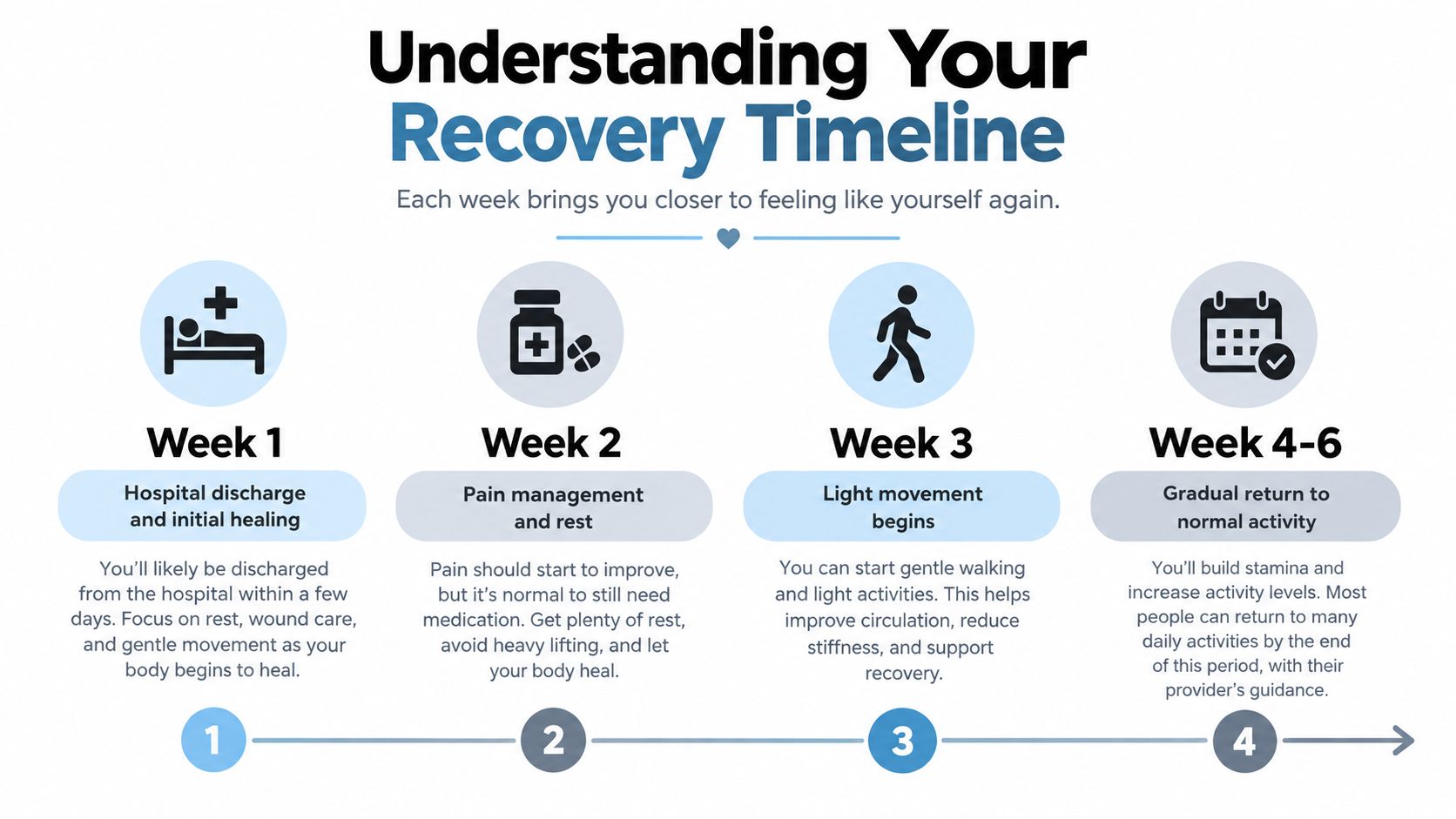
What happens across the first weeks
During the first few weeks, clinicians often check that the incision is healing as expected and tell patients to watch for increasing pain, signs of infection, unusual discharge, fever, or other warning signs. That is why underwear choice has to stay practical rather than decorative.
A waistband that sits above or below the incision can lower direct contact, depending on your comfort and medical advice. Soft, breathable fabric helps because heat and trapped moisture make it harder to keep a healing area clean and dry. Underwear also needs to go on and off without hard pulling across tender skin, like clothing that opens wide instead of forcing your body through a narrow opening.
Why the timeline changes your shopping logic
The same pair can feel fine one day and irritating the next, especially as swelling changes. That is why the early phase calls for flexibility, not a fixed idea of “support.”
Choose the garment that protects the incision first, then think about shape or smoothing later.
If redness worsens, pain increases, or drainage changes, underwear will not fix it. Medical evaluation comes first.
High-Rise versus Low-Rise Tradeoffs
There isn't one universally correct rise after a C-section. The right choice depends on where your incision sits, how swollen your abdomen feels, and whether the waistband creates friction when you sit down or walk.
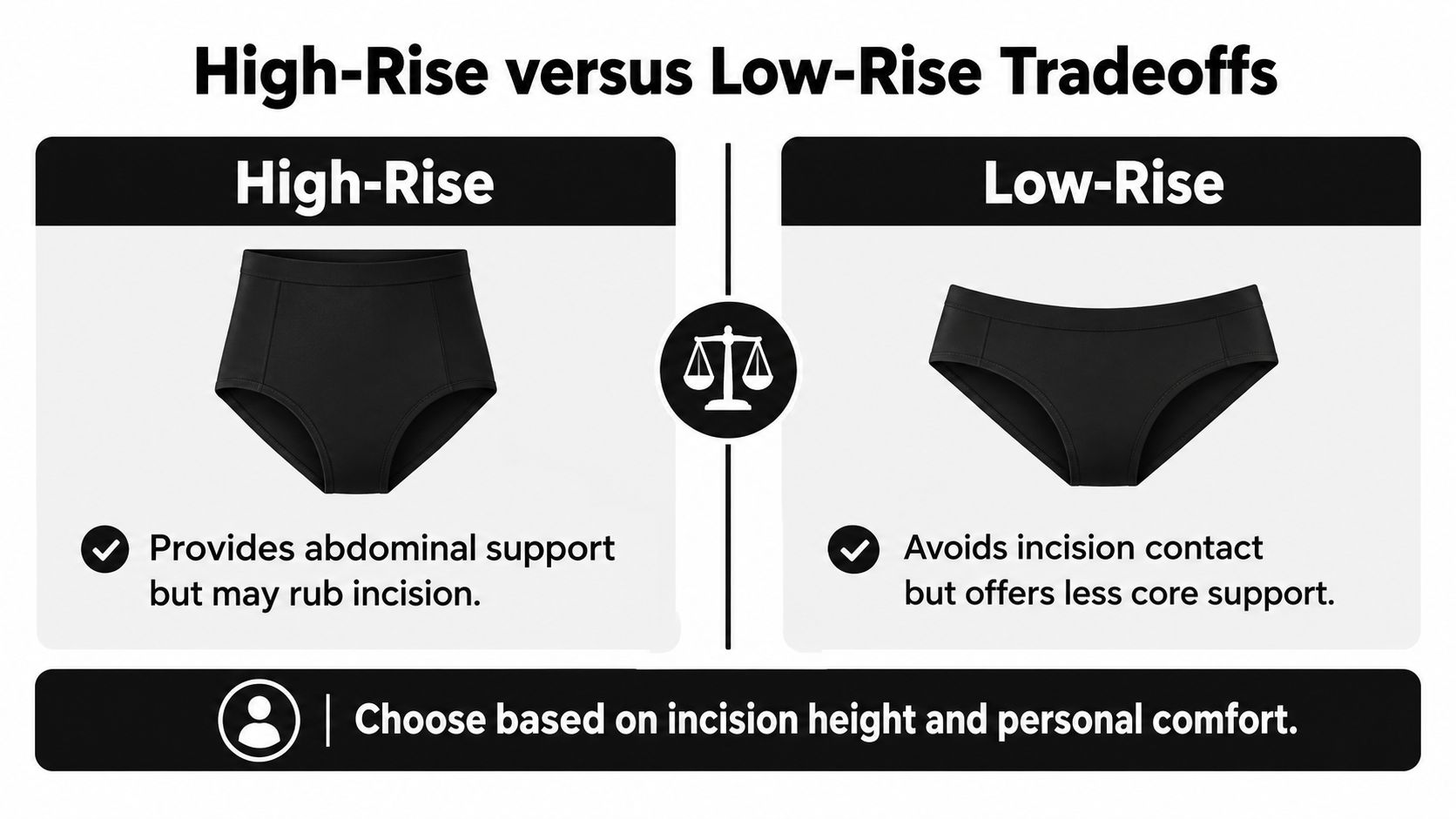
High-rise can help, but only if it stays gentle
A high-rise brief can clear a low transverse incision and keep the edge away from healing skin. That's useful when the lower abdomen still feels tender and the thought of fabric crossing the wound makes you tense up.
The drawback is pressure. If the band is tight, even a high waist can create a concentrated squeeze that leaves marks, rubs during movement, or feels worse when swelling changes through the day.
Low-rise can work for some bodies
A lower-rise style can sit entirely below the incision for some women, which can feel liberating if your scar is placed lower than expected. It also avoids the feeling of fabric climbing too high on a sensitive abdomen.
The tradeoff is that low-rise cuts can bunch, roll, or force the pad and gusset to work harder. If the band keeps shifting, the underwear is distracting you more than it's helping.
How to decide without guessing
The easiest test is practical, not aesthetic. Put the garment on, sit, stand, and walk. If it indents your lower abdomen, rubs the wound area, or makes pad changes awkward, it's not the right choice yet.
Pick the rise that leaves the incision alone. That decision can change later, and that's normal.
Fabric and Fit Selection Criteria
The fabric matters because the incision doesn't just need coverage, it needs a calm environment. A CDC-published surveillance study found an overall postpartum infection rate of 6.0% among 2,826 postpartum women, with 7.4% after cesarean delivery and 5.5% after vaginal delivery; among cesarean births, the study reported 3.4% surgical-site infection, 0.8% endometritis, 1.7% mastitis, and 1.1% urinary-tract infection (CDC-published surveillance study). Those numbers don't prove underwear prevents infection, but they do show why irritation near the incision deserves respect.
What to look for before you buy
Soft, breathable fabric is the starting point. Cotton is a common choice because it allows air flow, and smoother blends can work if they don't trap heat or stay damp.
The fit should be stable without squeezing. Look for flat seams, a gusset that can handle postpartum pads, and enough ease that the underwear doesn't cut into the lower abdomen when you sit. A waistband that rolls, pinches, or requires a hard tug over sore skin is too much for early recovery.
Good fit feels almost boring. You shouldn't have to keep fixing it.
A quick shopper's checklist
- Fabric first: Choose a soft, breathable material that won't hold heat or moisture against the wound.
- Seams second: Flat stitching is kinder than raised seams or decorative edging.
- Stretch last: You want give, not squeeze. The brief should move with swelling, not fight it.
- Removal: It should come off easily when you need to change pads or check the incision.
For people comparing smooth, gentle options, seamless maternity underwear can be useful to read about because seam placement often matters as much as the fabric itself.
When Compression Helps and When It Hurts
Compression is often sold as if more pressure automatically means better recovery. For a healing incision, that is too simple. The main benchmark is wound compatibility, not shaping, and not the idea that tighter is always better (PMC).
Why tight doesn't equal safe
Early after surgery, the body needs support without extra stress. A waistband that digs in can add pressure and rubbing, which is exactly what the incision does not need while the skin is still settling. If you notice swelling around the incision, see our guide to c-section incision swelling for what is normal and what is not.
Hospitals and wound-care instructions usually steer people toward loose, breathable clothing rather than routine compression. In this stage, comfort and healing come first. Confidence and contouring can wait.
The same logic applies if you are choosing a nursing bra at the same time. A soft option like GAIA has stretch lace, flexible support, and easy breastfeeding access, so it can fit later postpartum dressing needs better than something tight and restrictive.
When compression may feel useful
Some women prefer more structure once the incision is closed, comfortable, and no longer tender. At that point, a firmer waistband can feel reassuring under clothes or help the body feel more held.
That is a later-stage preference, once wound care is no longer the priority. If the garment leaves red marks, increases tenderness, or makes you aware of the incision with every step, it is too soon.
The warning signs that override style
Redness, swelling, warmth, discharge, fever, or worsening pain mean you need medical advice. A different pair of underwear will not fix those symptoms.
Building Your Recovery Underwear Strategy
A useful plan starts before discharge and changes with your healing, instead of treating every week the same way. The early period asks for the most protection, while later weeks can gradually make room for more comfort preferences and body confidence.
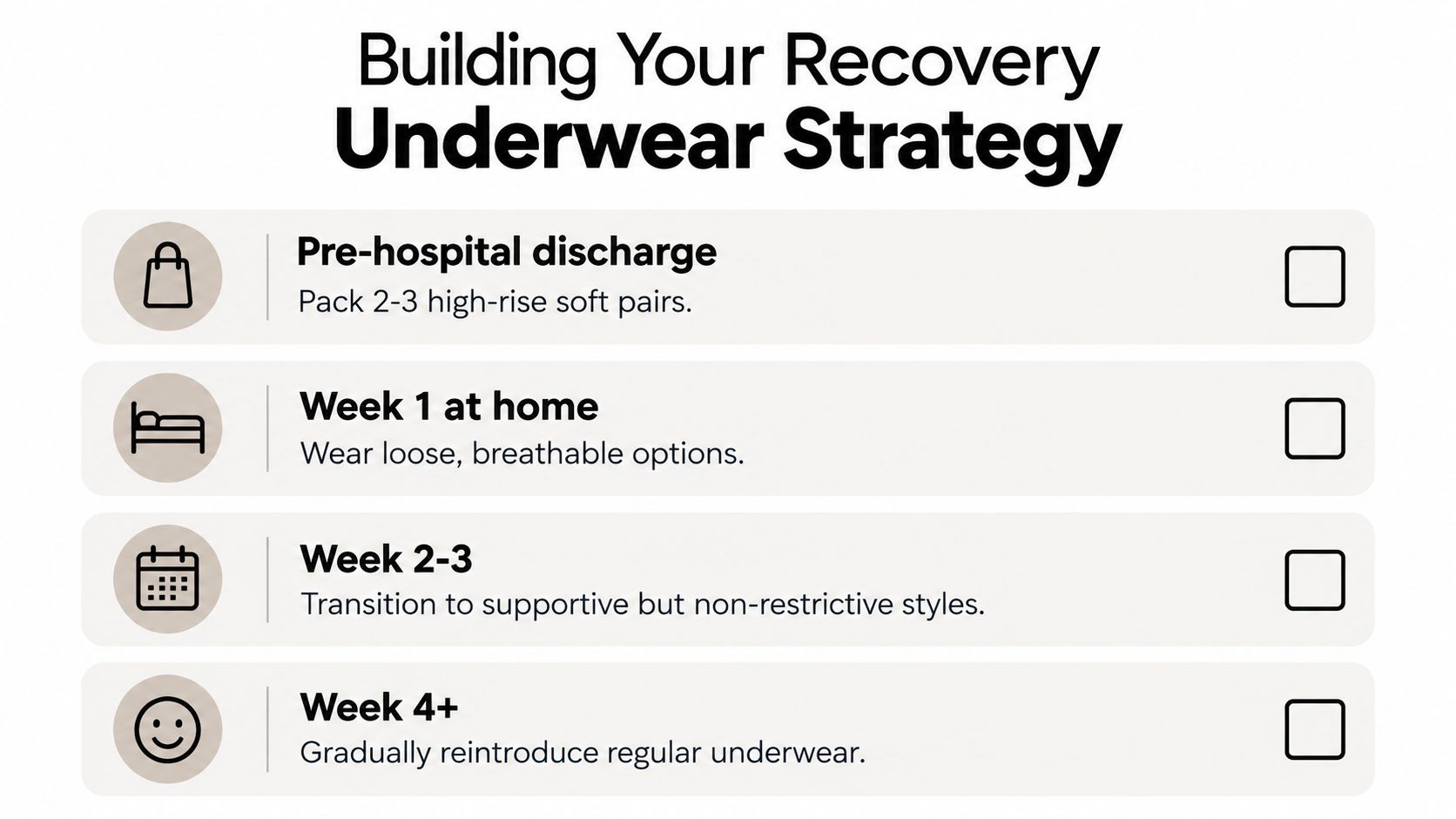
A stage-based way to shop
- Pre-discharge: Pack a few high-rise, soft pairs so you're not forced into whatever happens to be at hand.
- Week 1 at home: Keep the waistband loose, breathable, and easy to remove without pulling over the wound.
- Weeks 2 to 3: Stay with non-restrictive support, especially if swelling is still shifting.
- Week 4 and beyond: Reassess comfort, then decide whether you want something a little more fitted.
That stage-by-stage approach matters because the body changes quickly in recovery. What feels acceptable one week can feel irritating the next, and that doesn't mean you chose badly. It means your healing has moved forward.
How to shop with fewer regrets
Use four filters every time, waistband height, pressure, breathability, and ease of changing pads. If a pair fails two of those filters, skip it.
A practical choice should feel smooth, stay put, and keep the incision zone quiet. That's the standard worth aiming for.
If you're also thinking about later postpartum lingerie, PETRA is a nursing bra with ultra-soft stretch lace, gentle underwire, and one-hand nursing access, which makes more sense once comfort and confidence start sharing the same priority.
Care and Longevity Guidelines
Recovery underwear lasts longer when it's treated gently and washed often enough to stay clean against a healing body. Daily washing, gentle drying by patting instead of rubbing, and loose clothing all help keep the incision area drier and less irritated (CUH NHS wound-care guidance).
Simple care that protects both fabric and skin
Wash underwear regularly, especially if it's exposed to lochia or sweat. Use a routine that removes residue without roughing up the fabric, because stretched elastic and scratched seams lose their comfort fast.
Let the garment dry fully before wearing it again. Damp fabric can add unnecessary moisture near the incision, which is the opposite of what healing skin needs.
When to retire a pair
If the waistband has gone slack, the seams feel rough, or the brief starts rolling into the wound area, it's time to replace it. A pair that once felt perfect can become a problem as elastic ages.
Comfort changes are normal, but persistent tenderness, redness, drainage, warmth, or fever need medical advice, not a different pair of underwear.
Milk&Lace offers postpartum lingerie that fits the later part of this journey, when comfort and confidence both matter. If you're ready to look at pieces designed for that stage, visit Milk&Lace.