

Somewhere between the newborn haze and the first time you get dressed for something other than survival, a quiet thought shows up.
You put on a soft nursing bra that got you through the early weeks. It still works. It still clips down. It still feels familiar. But under your shirt, everything feels flattened, heavy, or less supported than you want. You catch your reflection and realize the issue is not vanity. You miss feeling like yourself.
That moment matters.
Early postpartum has its own dress code. Soft. Stretchy. Forgiving. You are healing, feeding around the clock, and doing laundry with one hand. Comfort is the priority. But later, many moms want more than “good enough.” They want shape under clothes, steadier support through long days, and lingerie that feels like it belongs to the woman they still are.
The best supportive nursing bras meet you where you are in that shift. They are not just about feeding access. They are about how your body changes, how your needs change, and how support can help you move through the day with less strain and more confidence.
The Moment You Want More Than Just Comfort
A few months postpartum often feels different from the beginning.
You may still be nursing often. Your body may still be changing. But the panic-buy phase is over, and you have enough distance to notice what is and is not working. Maybe your sleep bra rides up by noon. Maybe your seamless bra feels fine at home but not under a work top. Maybe you want lift, separation, and clothes that sit the way they used to.
That does not make you shallow. It makes you human.
I hear this from mothers all the time. In the beginning, they want the softest thing possible. Later, they want support they can trust when they leave the house, return to work, go out to dinner, or wear a fitted T-shirt without thinking about their chest all day.
Postpartum identity is not only about baby care. It is also about reconnecting with your own body in a new form.
For some women, that means staying in wireless bras for their entire nursing journey. For others, it means moving into more structured pieces once swelling settles and feeding feels more predictable. Both choices are valid. The important part is knowing your bra needs can evolve.
You do not have to choose between being comfortable and feeling polished. At a certain stage, many moms want both.
Supportive nursing bras matter because they can reduce physical strain, help clothing fit better, and make nursing feel more manageable in real life. They can also change how you carry yourself. That is not a small thing during a season when so much already feels unfamiliar.
What Supportive Means for a Nursing Bra
A supportive bra works like the foundation of a house. It does not rely on one dramatic feature. It depends on several parts working together so the whole structure carries weight well.
That matters in nursing because your breasts are not static. During pregnancy and postpartum, they change in size, fullness, and sensitivity. Breast volume can increase significantly from pre-pregnancy levels, and mastitis affects 10-20% of breastfeeding women globally, which is one reason support and fit matter so much in this stage, as noted by Mommy Labor Nurse’s nursing bra guide.
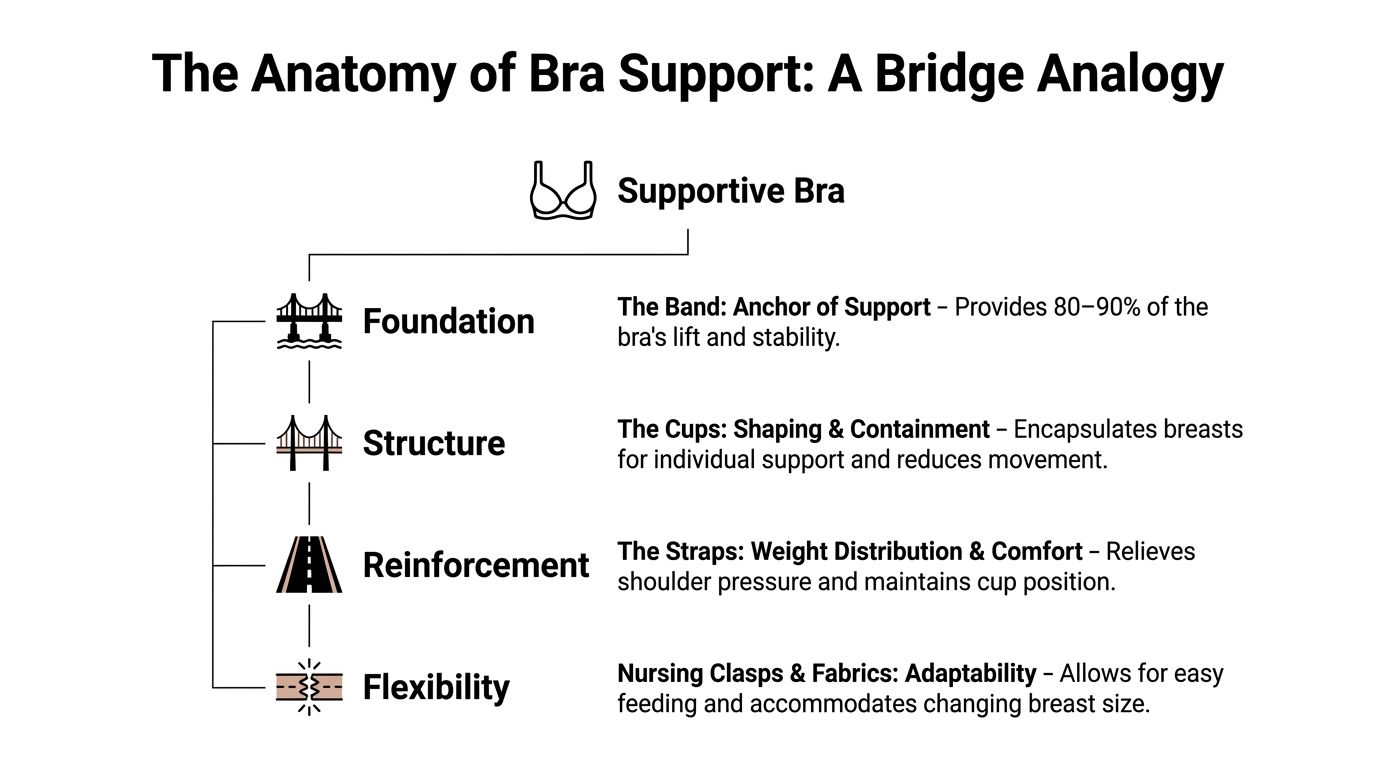
Support is weight management
When a bra supports well, it does three jobs at once.
- It anchors the weight: The band keeps the bra stable against your ribcage.
- It contains breast tissue: The cups hold the breast rather than letting it spill, shift, or collapse inward.
- It spreads pressure: Straps and closures help distribute load so your shoulders do not do all the work.
Think of a bridge. The base holds everything in place. The upper parts guide force where it should go. A nursing bra does the same thing for a body that is carrying more weight in the chest and dealing with daily fluctuation.
Support is not the same as tightness
Many moms get confused by this distinction. A bra can feel tight and still be unsupportive. If the band digs, the cups press into tissue, or the straps leave marks while the breasts still feel heavy, that bra is not doing its job well. Good support feels secure, not restrictive.
A well-designed nursing bra should help you feel held without making feeding harder. If a bra compresses breast tissue in the wrong place, it can become uncomfortable fast, especially during periods of fullness.
Support changes with your stage
The best supportive nursing bras for the first weeks are often very different from the best ones for later postpartum.
In the early stage, many women need stretch, softness, and room for swelling. Later, once things feel more predictable, they may want:
- More shaping under clothes
- Better lift for longer days
- A more defined silhouette
- A design that feels less medical and more like lingerie
That shift is normal. It does not mean your earlier bras were wrong. It means your life and body moved into a new phase.
If you are evaluating a bra, ask one simple question. Does this bra carry weight well across my whole torso, or does it dump the work onto my shoulders?
What real support feels like
A supportive nursing bra usually feels like this:
- The band stays level instead of creeping upward.
- The cups contain your breast tissue without cutting in.
- The straps stay put without digging.
- Feeding access is easy enough that you do not dread unclipping it.
- You forget about the bra for long stretches of the day.
That last point matters more than people think. A bra should not become another thing your body has to fight.
Decoding the Anatomy of a Supportive Bra
A supportive nursing bra is a lot like a well-made backpack. If the weight is distributed across the right places, your body feels steadier and less tired. If the design is off, you feel every ounce by midday.
That is why the details matter more than the marketing words.
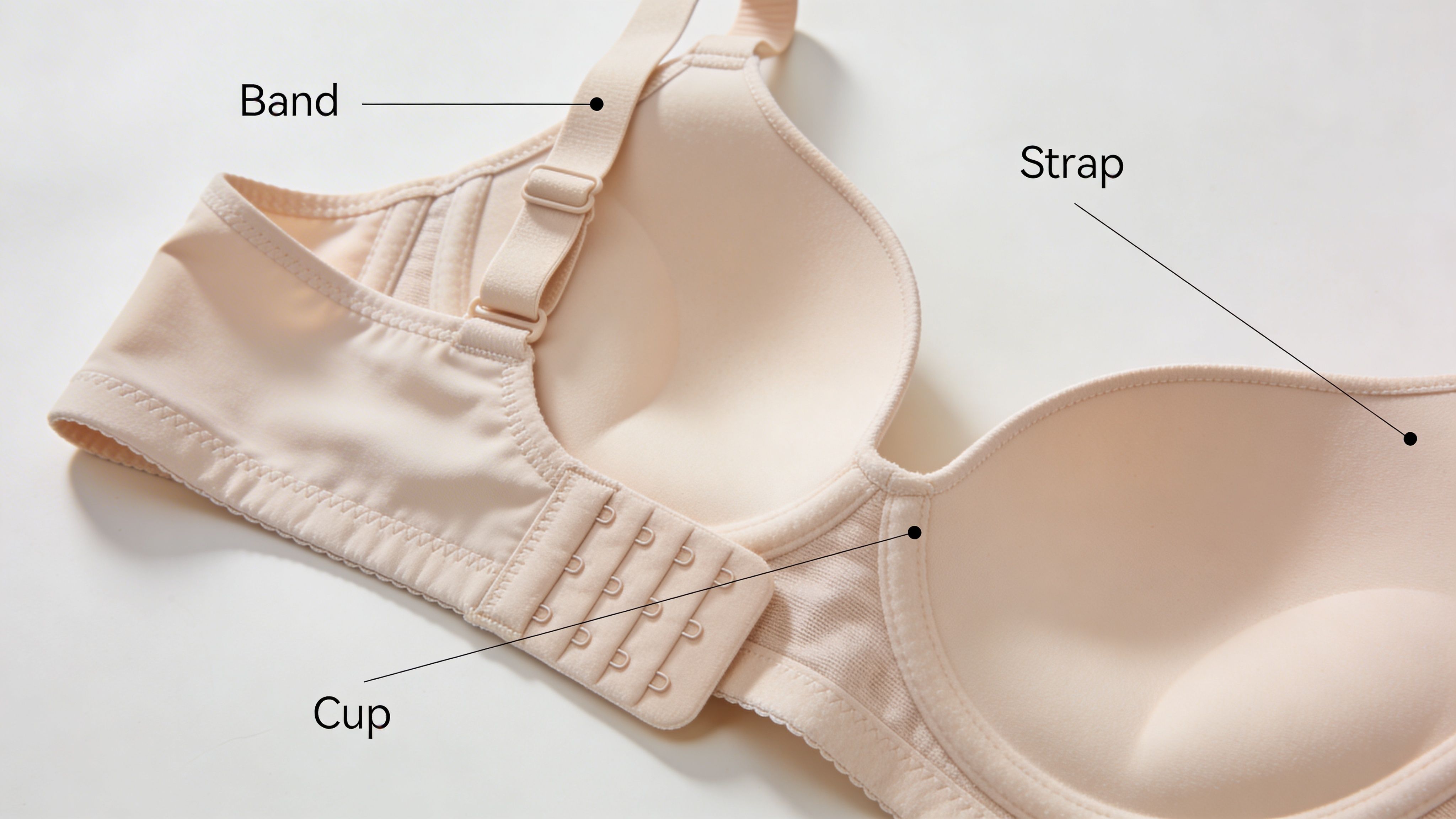
The band is the foundation
The band does the heavy lifting. It should sit level around your ribcage and stay there when you move, feed, reach, or bend over to pick up your baby.
If the back climbs upward, the front drops, or you keep tightening the straps to feel secure, the band is usually the first thing to check. Many postpartum moms blame their shoulders because that is where the discomfort shows up, but the primary problem often starts lower down.
A good nursing band needs balance. Too loose, and it cannot anchor the bra. Too stiff, and it can feel unforgiving on a body that still changes through the day.
Look for:
- A firm underbust area that stays in place
- Stretch that adjusts to fullness without losing support
- A band that lies flat against the torso
Straps should fine-tune the fit
Straps help position the cups and add comfort. They should not feel like two ropes carrying your whole chest.
This is one of the easiest ways to spot a bra that worked in the early survival stage but no longer meets your needs. Soft bras often rely more on stretch and less on structure. Later postpartum, many women want a bra that shares the workload more evenly across the band, cups, and closure, so their shoulders are not doing all the labor by afternoon.
A few clues that the straps are overworking:
- Red grooves after prolonged wear
- Straps that slide off, then dig in when tightened
- A pulling, hanging feeling through the neck and shoulders
Cups should hold shape gently
Coverage alone does not create support. A cup can cover a lot of breast tissue and still leave you feeling flattened, compressed, or unsupported.
What you want is containment with room for your natural shape. For some moms, that means molded cups. For others, it means seamed cups or inner slings that guide the breast upward and inward instead of pressing it down. The best option depends on your breast shape, your milk supply patterns, and how much structure feels good on your body right now.
Separation matters too. When each breast is held clearly within the cup, many women feel cooler, less bulky, and more like themselves in everyday clothes.
The cup edge and wire line need to follow your breast, not cut across it
This part confuses a lot of people, especially after size changes. Breast tissue often extends farther under the arm or higher on the chest than expected, and postpartum fullness can make that harder to judge.
Run your fingers along the edge of the cup and, if there is one, the wire line. The bra should frame the breast tissue, not rest on soft tissue. If the top edge cuts in, the side panel presses on fullness, or the wire sits on breast tissue instead of around it, the bra will never feel fully supportive for long.
Comfort and structure can coexist. The fit just has to follow your body accurately.
Closures give you room to evolve
Hooks are not a minor detail. They are part of how a bra grows with you.
Multiple rows of hooks can make a big difference during postpartum because your ribcage, breast fullness, and tolerance for compression may shift over weeks and months. A bra that fits beautifully on one setting gives you more useful life than one that only works for a narrow moment.
This matters during the transition many moms are not warned about. You may be done with the ultra-soft bras that got you through the first stage, but not quite ready for your pre-pregnancy preferences either. Adjustable closures help bridge that middle ground.
Fabric controls how support feels
Soft fabric can still be unsupportive. Firm fabric can still feel comfortable.
What matters is controlled stretch. The fabric should give when your body changes, then recover instead of sagging out after a few wears. Breathability helps too, especially if you are dealing with leaking, heat, or skin sensitivity.
To assess a bra, focus less on how buttery the fabric feels in your hand and more on how well it keeps its shape on your body. A supportive nursing bra should flex with postpartum life while still giving you lift, containment, and a silhouette that feels intentional.
Underwire vs Wireless The Postpartum Evolution
You are six weeks, or maybe six months, postpartum. The soft bra that got you through cluster feeds and couch naps still feels kind, but under a fitted shirt everything looks lower, flatter, or less defined than you want. That moment can feel surprisingly emotional. You are not asking for vanity. You are asking for support that matches the stage you are in now.
Underwire and wireless bras are often discussed like fixed identities. Postpartum life usually feels more fluid than that. Your support needs can change as feeding patterns settle, tenderness eases, and you start wanting your clothes, and your reflection, to feel more familiar again.
Early postpartum usually favors flexibility
In the early weeks, breasts can change size over the course of a single day. Fullness comes and goes. Tender spots show up without warning. Sleep bras, leak pads, skin sensitivity, and frequent feeds all shape what feels wearable.
A soft wireless bra often works well in that season because it behaves more like a gentle buffer than a firm frame. It gives you coverage and light support without asking sore tissue to hold still.
That is why many women start with what I think of as survival bras. They are not glamorous. They are practical, forgiving, and often exactly right for a healing body.
Later postpartum often brings a different goal
Then the job of the bra changes.
You may still be nursing, but the day no longer revolves around nonstop feeds. You may be back at work, dressing for outings, or tired of feeling held together only in the loosest sense. Comfort still matters, but shape, lift, and separation start to matter too.
This is the stage many guides skip. They tell you what to wear in the newborn fog, then go quiet when you want more polish without giving up nursing access. A helpful nursing bra wardrobe often evolves in phases. Early on, you may want softness above all else. Later, you may want a bra that helps you feel more like yourself in structured tops, dresses, or long days out.
What underwire can do well
A well-fitted underwire bra supports from below and around the breast instead of asking the straps to do all the work. That can mean better lift, clearer separation, and less strain on the shoulders, especially for fuller busts.
The wire should sit on your ribcage and fully encircle breast tissue. If it rests on breast tissue, feels sharp, or shifts during the day, the issue is the fit, not just the presence of a wire.
For some nursing mothers, underwire becomes more appealing once breast size feels more predictable. If you want a more defined silhouette under clothing, a structured bra may feel like a relief.
What wireless can still do beautifully
Wireless does not mean unsupportive. Many wireless nursing bras do an excellent job, especially when they have a firm band, well-shaped cups, and fabric with enough recovery to hold you up instead of letting everything settle downward.
Some women stay happiest in wireless styles for their entire nursing year. That can be the right choice if your breasts are still fluctuating a lot, your tissue is sensitive, or you prefer a softer feel against your body.
A wireless bra often feels more forgiving. An underwire bra often feels more precise.
Both can belong in the same drawer.
Signs you may be ready for more structure
You do not need to wait for a specific month on the calendar. Read your body and your routine instead.
A more structured nursing bra may be worth trying if:
- your breast size feels steadier from day to day
- swelling and intense tenderness have eased
- your current bras work at home but feel unsupportive outside the house
- you want more shape under workwear or fitted tops
- your shoulders are carrying too much of the load
- you miss the look of a traditional bra
If you are unsure whether your size has settled enough, a quick at-home nursing bra measurement guide can help you check before you invest in a more structured style.
The key question is timing and fit
Wire versus no wire is only part of the decision. Stage matters. Fit matters. Your emotional comfort matters too.
A bra that suited your survival phase may not suit your rebuilding phase. That is normal. Postpartum support is not one choice made once. It is more like updating shoes after a season changes. The pair that got you through rain and swollen feet may not be the pair you want for walking into work, dinner, or a day when you want to feel a little more pulled together.
Many mothers feel best with both options. A soft bra for rest, sleep, and high-sensitivity days. A more structured bra for confidence, lift, and clothes that ask for a clearer shape.
Finding Your Perfect Fit and When to Buy
Fit is where most nursing bra frustration starts.
A bra can have beautiful lace, soft fabric, and easy clips. If the fit is off, none of that will matter by lunchtime.

How to measure at home
You do not need perfect precision to get started. You just need a soft measuring tape, a non-padded bra or no bra, and a few quiet minutes.
Step one measure your band
Wrap the tape snugly around your ribcage, right under your bust.
Keep it level all the way around. It should feel secure, not squeezing. Write that number down.
Step two measure your bust
Measure around the fullest part of your breasts.
Stand naturally. Keep the tape level, but do not pull tightly across the fullest part. Write that number down too.
Step three compare and assess
Use those two measurements to estimate your starting size, then compare it with the size chart for the specific brand. Nursing bras vary a lot in fit, especially between wireless multi-size styles and structured band-and-cup designs.
If you want a fuller walkthrough, Milk&Lace offers a practical guide on how to measure for a nursing bra.
What a good fit should look and feel like
A nursing bra fits well when the whole bra works together.
Look for these signs:
- The band sits level: It does not climb up your back.
- The cups contain tissue cleanly: No cutting in, no folding, no empty space that collapses.
- The center and underbust area feel stable: You feel held, not pinched.
- The straps feel light: They help, but they are not carrying the whole load.
- The clips are practical: You can open and close them without a struggle.
If you are trying underwire, pay close attention to where the wire sits. It should frame the breast tissue rather than pressing on it.
When to buy which kind
Most moms benefit from buying in phases instead of trying to solve the whole year at once.
| Feature | Early Postpartum (0-3 Months) | Later Postpartum (3+ Months) |
|---|---|---|
| Support feel | Softer, more forgiving | More structured and defined |
| Best daily priority | Comfort and easy access | Lift, shape, and all-day wear |
| Cup flexibility | High stretch for fluctuation | More containment and separation |
| Band preference | Flexible with room to adjust | Stable and anchoring |
| Ideal use | Hospital, home, sleep, cluster feeds | Work, errands, outings, routines |
| Style direction | Functional basics | More polished lingerie-inspired options |
That table is a guide, not a rulebook. Some women are ready for structure earlier. Others prefer soft bras for much longer.
A useful time to reassess
If your bras suddenly feel wrong, do not assume your body is the problem.
Reassess when:
- You have gone back to work
- Your leaking has changed
- You are tightening straps more and more
- You keep choosing one bra because the others feel off
- Your clothes fit differently through the chest
A fresh measurement can solve a lot of frustration.
This quick video can help if you want a visual fitting reference before you buy.
One example of a later postpartum option
For the stage when soft survival bras no longer feel like enough, one option in this category is Milk&Lace’s GAIA and PETRA nursing bras. They are designed with structured underwire, stretch lace, a soft second-skin feel, and discreet nursing access for women who want more shape and support in later postpartum.
That type of bra can make sense when your body is asking for more lift and your wardrobe is asking for a smoother, more defined silhouette.
If your size is still shifting, prioritize brands that offer a clear exchange process. Flexibility lowers the pressure to “get it perfect” on the first try.
Styling and Caring for Your Supportive Bras
A supportive nursing bra should work in real life, not just in the fitting room.
That means it needs to disappear under a T-shirt when you want simplicity, support you through work hours, and still make sense on days when your baby spits up on your shoulder before breakfast.
How to style for everyday clothes
Different outfits ask for different things from a bra.
Under fitted tops, many moms prefer a bra with smoother cups and a defined shape. Under looser knits or button-downs, lace or texture may matter less than lift and comfortable access. If you are dressing for an event, separation and structure often make clothing hang more the way you expect.
A few practical pairings:
- For T-shirts: Look for smoother cup edges and a band that lies flat.
- For work tops: Choose a style with stable support that still unclamps easily for pumping or feeding.
- For wrap dresses or lower necklines: Pay attention to neckline shape so the bra stays discreet.
- For lounge days: Keep a soft bra nearby for when structure feels like too much.
For more outfit ideas that blend function with style, this guide to stylish nursing wear can help you think beyond the bra itself.
What active moms need
Returning to movement is its own category.
For active moms, high-support nursing sports bras can minimize breast displacement by 40-60% during exercise, which matters for reducing ligament strain, according to Laura Jawad’s review of nursing sports bras. The most useful features include molded cups, moisture-wicking fabrics, and one-handed clips.
That does not only apply to formal workouts.
It also matters for long walks, stairs, carrying a car seat, playing on the floor, and chasing a toddler while also feeding a baby.
How to care for supportive bras
A bra loses support faster when the elastic and structure get cooked by heat or twisted in the wash.
Try this routine:
- Wash gently: Use a mesh bag if machine washing.
- Skip high heat: Heat can wear down elastic and affect shape.
- Lay flat or hang to dry: Especially for lace and structured styles.
- Rotate bras: Giving each bra a rest helps preserve recovery.
- Reshape cups by hand: This keeps contour and symmetry more consistent.
If you have an underwire bra, check it after washing. Make sure the wire channel still lies smooth and the cups have not twisted.
A nursing bra is not high maintenance. It just lasts longer when you treat it more like lingerie than gym socks.
Build a practical bra drawer
Most moms do well with a mix rather than one magical bra.
A simple rotation might include:
- A soft sleep or lounge bra
- An everyday supportive bra for errands and home
- A more structured option for work or getting dressed up
- A sport-focused bra if you are active or pumping on the go
That mix gives your body options. And options matter during postpartum, when comfort can change from one day to the next.
Your Postpartum and Hospital Bag Essentials
Packing for birth and the early days after is easier when you think in layers of comfort.
You do not need a massive checklist. You need items that make feeding, healing, and resting a little simpler.
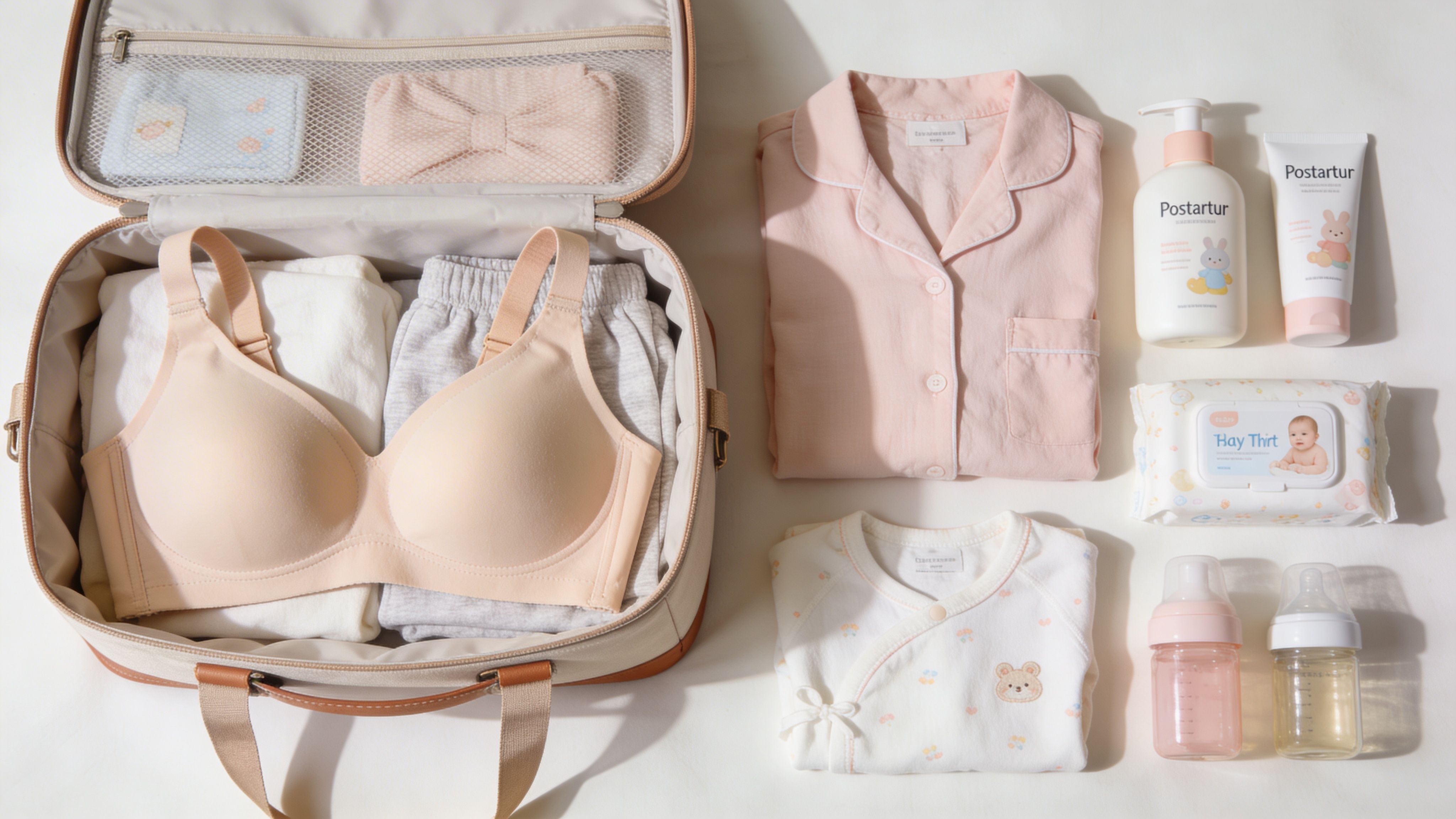
A simple go-to list
- Soft wireless nursing bras: Pack a few that feel stretchy and easy to open.
- Postpartum underwear: High-rise and comfortable is usually the safest bet.
- Nursing pads: Helpful for leaking in the first days. If you need options, this guide to the best nursing pads is a useful starting point.
- Nipple cream or balm: Nice to have within reach during frequent feeds.
- Comfortable robe or cardigan: Easy for skin-to-skin and visitors.
- Loose pajamas or button-front sleepwear: Practical for checks and feeding.
- Toiletries in travel sizes: Keep the basics simple.
- Phone charger and lip balm: The small things end up feeling big.
Keep your expectations gentle
Hospital-bag bras are not the same as later-postpartum bras.
For birth and the early fourth trimester, softness matters most. You want bras that stretch, hold pads, and stay comfortable when your body is doing a lot at once. The more structured, confidence-focused options can come later.
That is not settling. It is choosing what your body needs first.
Common Questions About Supportive Nursing Bras
Can I sleep in a supportive nursing bra
Yes, if it feels comfortable and non-restrictive.
For sleep, most women prefer soft wireless or crossover styles because they are easier on sensitive tissue and simpler for night feeds. If a bra feels too structured, leaves marks, or makes you want to rip it off halfway through the night, it is not your sleep bra.
Underwire is usually better saved for daytime wear, especially if you are still tender or dealing with overnight fullness.
How can I tell if my bra is causing clogged ducts or irritation
Pay attention to patterns, not just one uncomfortable moment.
A concerning bra often leaves pressure in the same spot over and over. You may notice tenderness where the edge of the cup, wire, or band sits. If a lump, sore area, or repeated discomfort seems to line up with the bra, stop wearing it and reassess the fit.
The issue may be the size, the structure, or that the bra no longer matches your current stage.
How many nursing bras do I really need
You do not need a huge collection.
Most women feel more settled with a small rotation that covers different uses. One soft bra for sleep, one or two everyday bras, and one more structured option is enough for many moms. If you leak a lot, pump often, or wash infrequently, you may want more.
The goal is not quantity. The goal is having the right bra for the moment you are in.
What if my size is still changing but I need a bra for work
Focus on adjustability and breathable fabric.
This matters especially for pumping days. A common unanswered question for working moms is what to wear during office pumping sessions. Healthline’s nursing bra guide notes that breathable fabrics like Merino wool can reduce nipple irritation by 40% compared with synthetics during long 8+ hour days. Even if you do not choose Merino specifically, the takeaway is useful. Breathability matters when you are wearing a bra for long hours, sitting at a desk, and switching between work and pumping.
Look for:
- Multiple hook settings
- Easy nursing or pumping access
- Fabric that stays comfortable over long wear
- Enough structure for clothing without harsh pressure points
Is it okay to want a nursing bra that looks pretty
Absolutely.
That desire often shows up later, once the earliest survival stage has passed. Wanting lace, shape, or a more polished silhouette does not mean you are less practical. It means you are still a whole person inside motherhood.
A supportive bra can be functional and beautiful at the same time. Many moms do better when they stop treating those goals as opposites.
If you are ready for a nursing bra that supports feeding while also honoring shape, softness, and personal style, explore Milk&Lace. It was created for the later-postpartum moment when comfort still matters, but confidence starts to matter again too.