

You’re standing in front of a drawer full of bras that suddenly make no sense.
The soft bralette that felt fine last month now rides up by lunchtime. The old T-shirt bra from before pregnancy looks smooth for an hour, then gaps at the top when your breasts feel lighter after a feed. The nursing bra you bought in a rush is comfortable enough, but under clothes it flattens everything into one shape you don’t recognize. You’re feeding a baby, healing, adjusting, and trying to leave the house feeling at least a little like yourself. A bra shouldn’t add to the confusion, yet for many mothers with smaller breasts, it does.
That frustration is real. Small-busted nursing mothers often get advice written for fuller cups, or they get pushed toward the same few ultra-soft wire-free options no matter what stage they’re in. Early on, that comfort-first advice can help. Later, it often stops being enough.
The best nursing bras for small breasts do more than open for feeding. They adapt to a changing body, stay close to a petite frame without gaping, and support the version of motherhood where you want ease and shape at the same time. That might mean a smooth everyday bra. It might mean a sleep bra. And for many women in later postpartum, it may also mean a beautifully structured nursing bra that gives lift, separation, and confidence back.
Your Guide to Nursing Bras for Small Breasts
A mother I once fitted described it perfectly. She said, “I know I’m not looking for a miracle. I just want a nursing bra that doesn’t make me feel unfinished.”
That word, unfinished, stays with me. Many women with small breasts aren’t asking for dramatic volume or heavy-duty engineering. They want a bra that follows their body instead of overwhelming it. They want cups that don’t collapse or wrinkle. They want a band that feels secure without squeezing. They want feeding access that’s simple, not fussy. And once the earliest weeks pass, many also want shape.
For a smaller bust, the wrong nursing bra creates very specific problems. Too much fabric can pool at the neckline. Wide, shallow cups can erase definition. Bands that aren’t adjustable enough can feel acceptable in the morning and restrictive by evening. A style praised by fuller-busted reviewers can still feel bulky or awkward on an A or B cup frame.
Practical rule: A good nursing bra should support your body as it is today, not the body a generic size chart assumes you have.
That’s why a thoughtful approach matters more than a long product list. You’re not just choosing between “comfy” and “pretty.” You’re choosing how you want to feel during long feeding days, short sleep nights, work calls, school pickup, dinner out, or that first moment you put on a blouse and want your silhouette back.
The best nursing bras for small breasts fit into real life. Some are soft and minimal. Some are practical workhorses. Some are structured enough to restore lift under clothing. All of them should make your day easier, not more irritating.
Understanding Your Postpartum Body's New Rhythm
You fasten a bra after the first morning feed, and it feels right. By midafternoon, the cups feel emptier. By evening, one side sits a little differently from the other. That kind of change is common after birth, and for a small bust, even subtle shifts can change how a bra feels.
Your body is not being inconsistent. It is working on a rhythm.
For many women with smaller breasts, that rhythm is easier to notice because there is less room to hide a mismatch. A cup that is slightly too tall can wrinkle after a feed. A band with very little adjustment can feel fine at breakfast and too firm by dinner. Pregnancy bras and pre-baby bras often struggle here because they were made for a body that changed more slowly.

Why your size feels inconsistent
Lactating breast tissue works a bit like a soft water balloon rather than a fixed shape. Fullness rises, drops, and settles across the day. If you have a smaller cup size, those changes can show up quickly in fit.
You may notice a few patterns:
- More fullness before a feed: Breasts can feel firmer and project more under clothing.
- Less volume after a feed: A cup that fit an hour ago may suddenly feel loose at the neckline.
- One side sitting differently: This is common if your baby feeds longer on one breast.
- Changing sensitivity: Some days you want barely-there softness. Other days you want your bra to hold you more securely.
That is why measuring once and expecting a perfect fit for months rarely works in this stage. A more helpful approach is learning how to measure for a nursing bra as your body changes, then choosing styles with enough adjustment to follow those shifts.
Why regular bras stop working
A regular bra is usually built for a steadier pattern. Nursing changes that pattern.
On a small bust, the fit problems are often very specific:
| Bra issue | What it feels like |
|---|---|
| Cup is too rigid | The edge presses in when you are fuller |
| Cup is too tall or too open | Fabric wrinkles after feeding |
| Shape is too broad | Your natural definition disappears under clothes |
Standard nursing bras can miss in a different way. Many are designed around early-postpartum comfort and fuller cup proportions, so they can feel oversized, flat, or bulky on an A or B cup frame. You end up with softness, but not much shape.
A good nursing bra does not need to predict every change. It needs enough flexibility and structure to stay useful through those changes.
What changes later on
The first postpartum weeks often call for softness and simplicity. Later, the rhythm usually becomes more familiar. Feeding may feel less chaotic. Your schedule gets fuller. You start reaching for real outfits again, not just the easiest top to nurse in.
That later stage is easy for bra guides to overlook, especially for smaller busts. Yet it is often the moment when women want more than comfort. They want clearer shape under a T-shirt, better lift in a blouse, and support that feels polished rather than purely practical.
For a small bust, that can be a turning point. Once supply is more settled and your breasts are less dramatically changing hour to hour, structured nursing bras, including well-designed underwire styles, can make sense again. They can help restore outline and balance under clothing without adding bulk.
Understanding this rhythm changes the whole shopping process. You stop reading every fit issue as a flaw in your body. You start seeing it as a design question: soft when you need flexibility, structured when you are ready for shape, and adjustable enough to handle both.
Essential Features for Support and Comfort
A good nursing bra for a small bust works like careful tailoring. Tiny details change everything. If the proportions are right, the bra feels supportive, looks cleaner under clothing, and still gives you feeding access that’s straightforward, not fussy.
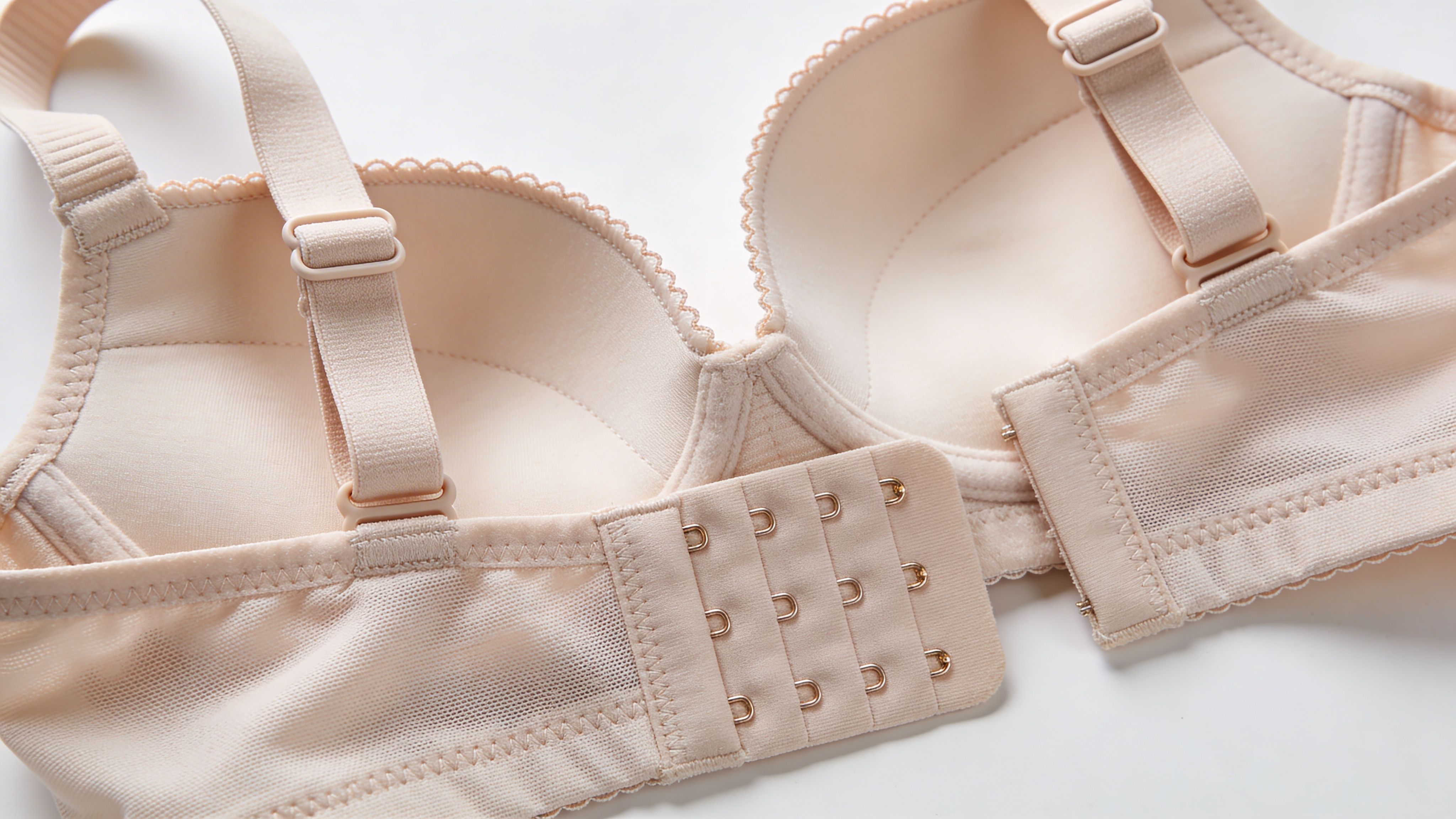
Start with the band
The band is the foundation. Cups and straps can only do their job if the band sits firmly and evenly around your ribcage.
This matters even more for AA to B cups, because smaller busts often rely less on cup depth and more on band precision for shape and hold. A band with several rows of hooks gives you room to adjust as your body changes through the day or over the course of your nursing months. That flexibility helps the bra stay useful longer, especially once you move beyond the earliest postpartum stage and begin wanting a more polished outline under clothes.
A well-designed band helps by:
- Adapting to change as your ribcage and breast fullness shift
- Spreading tension more evenly so one small area does not dig in
- Keeping the front of the bra stable so the cups stay where they should
If you are not sure whether your fit issue starts at the band or the cup, this guide to measuring for a nursing bra can make that much easier to spot.
Straps shape more than support
Many women with smaller breasts assume straps are a minor detail. In nursing bras, they often affect the whole fit.
Straps help determine where the cups sit on your chest, how the neckline lies, and whether the bra stays centered when you drop a cup to feed. On a narrow frame, slippery or widely placed straps can drift outward and pull the bra off balance. That can make a bra feel unsupportive even when the band size is correct.
Convertible racerback styles can be useful here. They often hold straps closer to the body and create a more secure feel on sloped or narrow shoulders.
Fabric should stretch, then recover
Softness matters, but softness alone is not enough.
The fabric needs to flex when your breasts are fuller, then return to shape after feeding. That recovery is what keeps a cup from looking tired by late afternoon. For smaller busts, this makes a visible difference. A fabric with poor recovery can leave extra space at the neckline or create that flat, collapsed look many women mistake for a sizing problem.
Look for signs the fabric is doing its job:
- The cup sits close to the skin without wrinkling
- The neckline returns neatly after you unclip and refasten
- The band feels supportive without turning rigid
- The cup keeps its outline instead of sagging after a few hours of wear
This quick fitting video can help you spot details that are hard to evaluate from product photos alone.
Feeding access should be simple and tidy
A nursing clip seems like a small feature until you use it several times a day, often one-handed and in a hurry.
For a small bust, the best drop-down cups open easily and return to position without twisting or puffing out. That matters for comfort, but it also matters for shape. If the cup refastens crooked, your bra can look uneven under clothes for the rest of the day.
Fit check: Unclip the cup with one hand, lower it fully, then fasten it again. The cup should settle back into place without folding strangely, shifting off center, or needing a lot of smoothing.
Structure should feel precise, not bulky
Small-bust nursing bras often go wrong in one of two ways. They are so soft that they flatten and blur your shape, or so heavily built that they overwhelm a petite frame.
The better option is controlled structure. That can mean a supportive band, a cleaner cup edge, a stable strap placement, or later on, a well-made underwire nursing bra once your size has become more predictable. For many women, that later-stage structure is what brings back a sense of proportion under a T-shirt, blouse, or dress. It is not about adding bulk. It is about restoring outline.
Common feature mistakes include:
- Overly tall cups that gape after nursing
- Very limited back adjustment that cannot keep up with body changes
- Thin slippery straps that slide off narrow shoulders
- Stretch-only support that feels pleasant at first but looks flattening under clothing
A strong nursing bra for a smaller chest does not need thick padding or exaggerated shaping. It needs accuracy. When the design is precise, you get comfort, feeding function, and the kind of support that helps you feel like yourself again.
A Style for Every Moment of Motherhood
One bra rarely handles every part of nursing life well. Most mothers do better with a small rotation, not a single “perfect” option.
That’s especially true if you have a smaller bust. The bra that feels lovely for sleeping may feel too relaxed for daytime errands. A smooth-cup style that works under a T-shirt may not hold pump parts well. The structured bra that looks polished at lunch may not be what you want on the sofa at midnight.
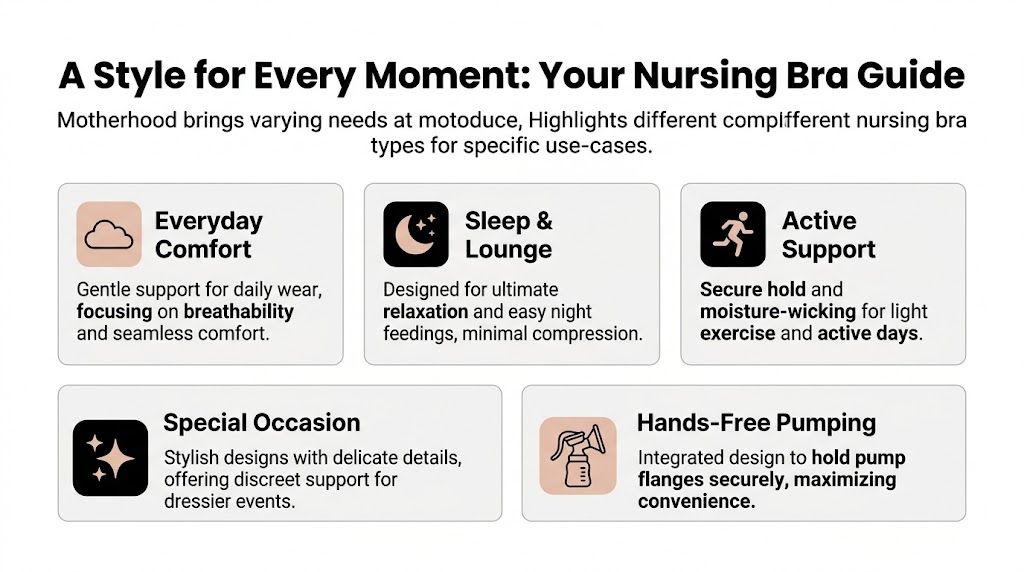
Sleep and lounge bras
These are the gentle ones. They usually have soft pull-aside or simple crossover access, light support, and minimal hardware.
They work best when:
- You’re resting at home
- Your breasts feel tender
- You want something easy for night feeds
For small breasts, a sleep bra should still sit close to the body. If it’s too loose, it can shift while you sleep and bunch under the bust.
Everyday bras
This is the category most women end up wearing the most. Think school runs, grocery stops, desk time, visitors, and the ordinary rhythm of being dressed.
The strongest everyday styles for a petite frame often include:
- Smooth cups for clean lines under clothing
- Adjustable bands and straps so the fit stays useful through body changes
- Nursing clips that refasten neatly without warping the cup
Some mothers also want everyday bras to feel a little more stylish. If that matters to you, this roundup of stylish nursing wear ideas can help you think about bras as part of your wardrobe rather than a separate practical category.
Hands-free pumping bras
These are built for function first. They hold pump flanges in place so you can sit, work, or fold laundry without using both hands.
They’re worth considering if:
- You pump daily
- You’re returning to work
- You need consistency and speed
For smaller breasts, the challenge is often bulk. Some pumping bras add layers and compression that can feel excessive. If a combo nursing-and-pumping bra feels heavy, many women keep one dedicated pumping bra and separate everyday bras instead.
Active support bras
If you’re walking more, taking a gentle exercise class, or spending long days in motion, an active-friendly nursing bra can help. You’re looking for secure hold, breathable fabric, and a neckline that stays put when you bend.
A racerback can be useful here, particularly for women whose straps tend to slip on narrower shoulders.
Special occasion bras
This category gets overlooked, and it shouldn’t.
There are days when you want your bra to disappear under a dress. There are days when you want lace, shape, and a neckline that feels elegant again. A practical postpartum wardrobe still has room for beauty.
A nursing bra can support feeding and still belong under the clothes you love wearing.
The point isn’t to own every type immediately. It’s to choose a few styles that match your real life so each bra has a purpose.
Beyond Comfort Rediscovering Shape with Structured Bras
There comes a point in nursing when softness alone stops solving the problem.
You may still want comfort, of course. But later postpartum, many women with small breasts start wanting something else too. Lift. Separation. A natural outline under clothing. A bra that gives definition instead of flattening everything into a soft horizontal shape.
That desire is often dismissed too quickly. Many guides treat wire-free bras as the only acceptable answer for all stages of breastfeeding. Yet the later months can bring different needs. According to the context gathered around small-bust nursing bra searches, there is an underserved demand for structured underwire options designed for petite frames in later postpartum, when breasts can feel denser and women want reliable support, lift, and a more natural silhouette. That same discussion highlights how structured support can help avoid the “uni-boob” effect and restore confidence in personal style, as summarized in this small-bust nursing bra trend page from Old Navy search results.
Why structure matters for a small bust
On a petite chest, structure doesn’t have to mean heavy padding or rigid shaping. It means the bra creates a clear place for each breast to sit.
That can change how clothing looks and feels:
- Button-down shirts sit better
- T-shirts look smoother
- Lower necklines feel more intentional
- Your silhouette looks more like you
A soft cup can be wonderful at the beginning of nursing. Later, it can become the very thing that leaves you feeling underdressed.
Underwire is not the villain when the fit is right
The fear around underwire usually comes from poor fit, harsh materials, or wearing a style that no longer suits your current stage. A well-designed nursing bra with structured support should feel stable, not sharp. Supportive, not restrictive.
What matters most is precision:
- The wire should sit around breast tissue, not on it
- The cup should contain the breast cleanly
- The band should anchor the bra so the wire doesn’t shift
- The nursing access should still be easy and discreet
Confidence is a valid reason to care
New mothers are often told to lower the bar. Be comfortable. Be practical. Don’t worry about shape. Don’t worry about style.
But confidence is not vanity. It’s part of feeling present in your own life.
You’re allowed to want support that also makes you feel polished, feminine, and recognizable to yourself.
For many women, the best nursing bras for small breasts include at least one structured option for this exact reason. Not because soft bras are wrong. Because motherhood changes, and your lingerie needs often change with it.
The Milk&Lace Answer For Style and Confidence
Some nursing bras are built for the survival phase. Others are designed for the stage when you’re ready to feel composed again.
That distinction matters. Later postpartum, many women don’t need to choose between feeding access and a refined silhouette. They need a bra designed with both in mind.

When comfort is no longer enough
There’s a subtle turning point after the earliest nursing months. You’re still feeding. Your breasts may still feel sensitive. But your priorities widen.
You might want:
- A cleaner shape under everyday clothes
- Lace or refined detailing instead of basic utility fabric
- A bra that feels closer to real lingerie
- Support that helps you feel put together in public
Here, design-focused nursing bras stand apart. They don’t replace your soft sleep bra or your most forgiving early postpartum style. They serve a different emotional and practical role.
What thoughtful structured design solves
Structured nursing bras like the GAIA and PETRA are appealing because they answer several small-bust frustrations at once.
They combine:
- Underwire support for lift and separation
- Soft, gentle materials for comfort during extended wear
- Discreet nursing access so function stays easy
- Elegant visual design that feels intentional rather than clinical
For women with smaller breasts, this combination can be especially meaningful. A delicate frame often gets lost inside generic nursing designs. Structured cups and more refined proportions can restore balance, helping the bra feel made for the body rather than merely tolerated by it.
Why elegance changes the experience
The emotional impact of a bra is easy to underestimate. Yet many postpartum women notice it immediately when they put on a style that looks and feels different from their “getting through the day” bras.
A beautiful nursing bra can change:
- How you stand
- What tops you reach for
- Whether you feel hidden or seen
- How connected you feel to your pre-baby sense of style
That shift doesn’t come from decoration alone. It comes from being supported in a way that aligns with who you are now.
If you want to see an example of this more refined approach, the PETRA nursing bra from Milk&Lace shows how structured support, nursing practicality, and elegant lace can live in the same piece.
A better category, not just a prettier bra
A key insight here is that later-postpartum nursing lingerie deserves its own category. Not early-stage softness. Not regular lingerie awkwardly adapted for feeding. Something in between.
Something that says: you are still nursing, and you are also allowed to want shape, beauty, and confidence.
Your Questions on Nursing Bras Answered
Choosing a nursing bra isn’t a small detail. It affects comfort, feeding ease, posture, wardrobe choices, and how you feel when you get dressed. For mothers with smaller breasts, that choice can feel extra personal because poor fit shows up quickly.
Here are the questions I hear most often.
Can I wear underwire while breastfeeding
Yes, many women can, especially later postpartum, if the bra fits properly and doesn’t press on breast tissue.
The key is fit, not fear. A structured nursing bra should feel secure and smooth. It shouldn’t poke, shift, or leave you counting the minutes until you can take it off.
How many nursing bras do I actually need
Most women do well with a small rotation that covers different situations.
A practical setup often looks like this:
- One or two everyday bras for regular daytime wear
- One sleep or lounge bra for nights and tender days
- One pumping bra if pumping is part of your routine
- One structured or dressier bra for later postpartum, work, outings, or when you want more shape
You don’t need a huge drawer. You need the right jobs covered.
Why do my cups fit differently throughout the day
Because your breasts are active, not static. Feeding, milk fullness, and natural daily changes all affect cup fit.
If a bra only fits in one moment of the day, it probably lacks the adjustability or fabric recovery you need.
Should I buy nursing bras during pregnancy or after birth
Buy a small number before birth so you’re not scrambling. Then reassess after your body has had time to settle into its feeding pattern.
Stretchy, adjustable styles are usually the safest early choice because they allow some room for change without demanding a perfect prediction.
What’s the biggest fit mistake small-busted moms make
Choosing cups that are too large in scale for their frame.
A bra can be technically your size and still feel wrong if the cup height, strap placement, or overall coverage is built with a fuller bust in mind. On a smaller chest, proportion matters just as much as the label.
If a bra feels bulky, empty, or flattening, don’t assume your body is the issue. The design may simply be mismatched to your frame.
How do I know if a bra is supportive enough
Ask yourself three simple questions:
- Does the band stay level?
- Do the cups sit close to the body without collapsing?
- Do I feel more comfortable after a few hours, not less?
If the answer is no, keep looking.
How should I wash nursing bras
Gentle care helps them last longer and keeps elastic and clips in better shape.
A good routine is:
- Fasten the hooks before washing
- Use a lingerie bag if machine washing
- Choose a gentle cycle
- Skip very harsh heat if possible
- Lay flat or handle carefully when drying
Even a beautiful bra is still a working garment. A little care protects the structure that makes it fit well.
Will I need different bras for different stages
Usually, yes.
The bra that gets you through the first tender weeks may not be the one that makes you feel best at four or six months postpartum. That isn’t wasteful. It’s realistic. Your body changes, your routine changes, and your expectations change too.
If you’re ready for a nursing bra that supports more than feeding, explore Milk&Lace. Their pieces are designed for the later postpartum chapter, when comfort still matters, but shape, style, and confidence matter again too.