

The softest nursing bra isn't automatically the best nursing bra. Softness matters, especially when your breasts feel tender and your size is changing, but a bra can feel pleasant for an hour and still ride up, spill at the cup, strain your shoulders, or leave you feeling shapeless under clothing.
A better standard is more demanding. The right nursing bra should provide reliable support, adaptable fit, simple access, and confidence. It should work with your postpartum body as it changes, not force you to choose between breast health and feeling feminine.
| Nursing bra type | Best stage | Main strengths | Main trade-off |
|---|---|---|---|
| Soft wireless utility bra | Early postpartum | Flexibility, gentle feel, easy access | Less shaping and structure |
| Sleep nursing bra | Rest and overnight feeds | Minimal pressure, simple nursing access | Limited lift and separation |
| Structured nursing bra | Later postpartum | Defined silhouette, stronger support, polished appearance | Requires more precise fitting |
| Nursing sports or pumping bra | Activity or pumping | Stability and specialized access | Can feel too engineered for everyday wear |
Why the Best Nursing Bra Is About More Than Softness
The popular advice is simple: choose something stretchy, wireless, and soft. That recommendation has a place, particularly when breast volume is unpredictable. It fails when treated as a complete definition of quality.
Breastfeeding bras belong to a long progression of functional intimate apparel. Between 1863 and 1940, women and men filed patents for breast supporters intended to improve posture, general health, sport, and exercise. Advertising appeared nationally as early as 1881, physicians began recommending breast supporters over corsets in 1890, and cup-style brassieres had evolved by the end of the 1920s to address medical criticism and postnatal and prenatal breast care, as documented in The Bump's history of maternity bras. Today's nursing bra continues that design story. It isn't merely a regular bra with clips attached.
Comfort has more than one meaning
A bra can feel soft against the skin while failing to support the breast. It can also provide firm support while creating pressure points that become unbearable over a long day. Immediate softness and sustained comfort aren't the same thing.
The most useful criteria are support, comfort, access, adjustability, durability, value, and sizing range. In a 2024 study of maternity and nursing sports bras, support was rated very important or essential by 94% of participants, while comfort received that rating from 98%. Yet only 15% of purchasers found exactly what they wanted, according to the Nottingham Trent University study.
That gap matters. It tells you to assess how the bra behaves after movement, feeding, and hours of wear, not just how it feels when you first put it on.
Confidence is part of performance
Postpartum clothing can influence how you see your changing body. A bra that creates a smooth line under a shirt, supports a fuller bust, and looks intentional can help you re-enter work, social life, or your own wardrobe with less self-consciousness.
Research has examined psycho-aesthetic comfort alongside ergonomic comfort, and one anatomical bra model performed significantly better than another for both dimensions, with p < 0.0001, as reported in the PubMed-indexed study. That finding supports a practical conclusion: feeling attractive isn't frivolous. It belongs in a serious nursing-bra evaluation.
The Technical Criteria That Define a High-Performing Nursing Bra
Marketing often reduces nursing-bra performance to two details, soft fabric and a drop-down cup. Those features help, but they don't tell you whether the bra will remain supportive, accessible, and wearable through a full day.
The 2024 maternity and nursing sports-bra research identifies a more useful group of requirements: support, comfort, easy nursing access, adjustability, longevity, value, and inclusive sizing. Treat those as a checklist rather than a collection of optional extras.
Start with the band
The band should carry most of the breast weight. It needs to sit level around your torso, feel firm without cutting into you, and remain stable when you lift your arms or bend forward.
If the band rides up, your straps will start doing work they weren't designed to do. That often creates shoulder pressure and inconsistent lift. A wider band, thoughtful side support, and multiple adjustment positions can improve stability as your ribcage and breast volume change.
Treat nursing access as a usability test
A nursing clip should release with one hand while you hold your baby with the other. The cup should fold down enough to expose the breast without the rest of the bra shifting, twisting, or losing its position.
Check the hardware before buying. A fiddly clasp, narrow strap attachment, or cup that falls awkwardly can turn every feed into a small physical task. Access also needs to work beneath the clothing you wear, not only in front of a mirror at home.
For a more detailed look at the trade-offs involved in wired construction, read this guide to nursing bras with underwire.
Match structure to your stage
Wireless designs usually provide the flexibility many mothers need when breast volume is changing quickly. Later, a shaped cup and carefully placed flexible support can offer a clearer silhouette and better separation.
The PETRA nursing bra combines ultra-soft stretch lace, gentle underwire, and one-hand nursing access. Those features make it relevant to the later-stage shopper who wants nursing function without defaulting to a purely utility appearance.
Use this video as a visual supplement when assessing nursing-bra access and construction:
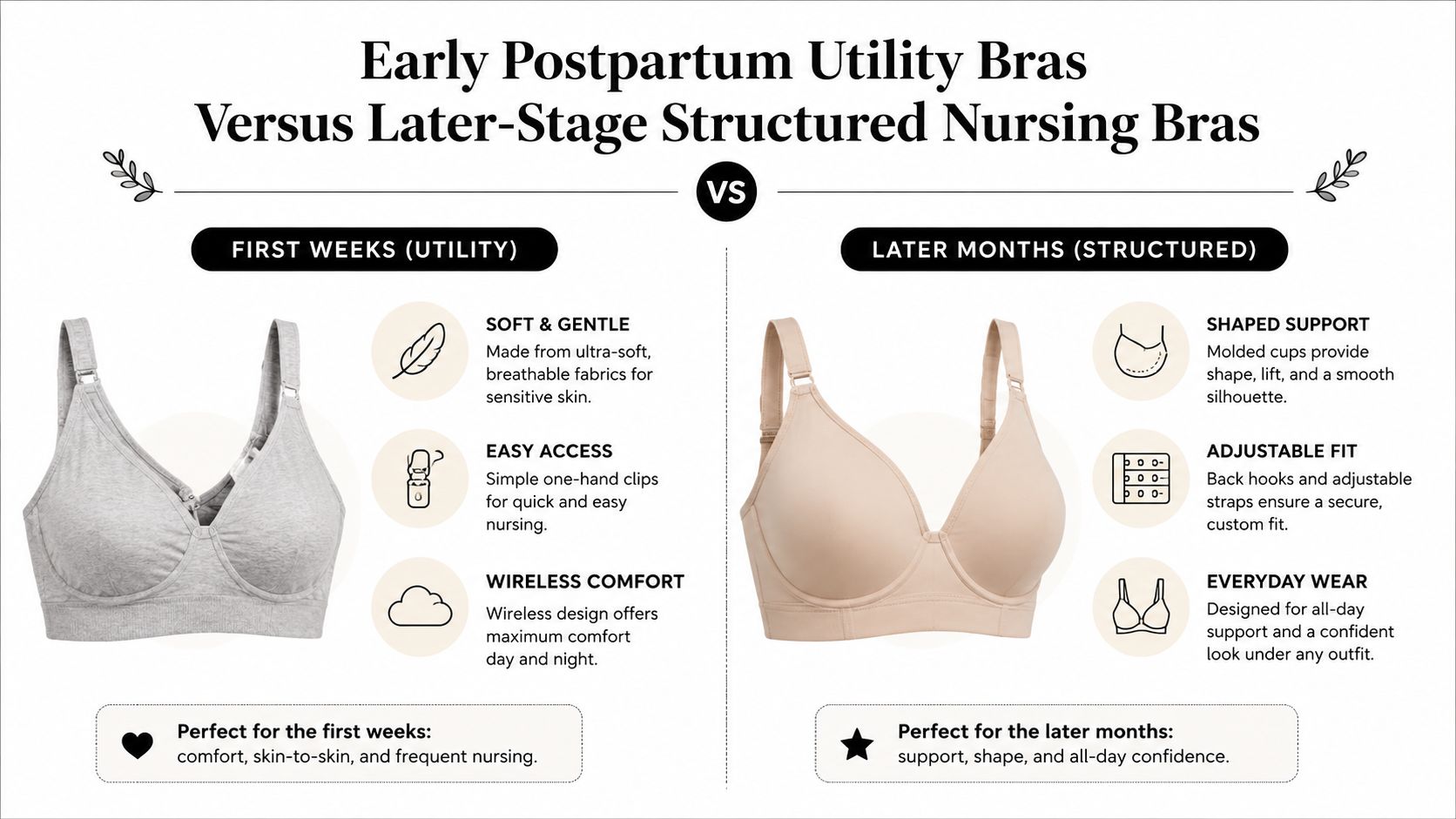
Early Postpartum Utility Bras Versus Later-Stage Structured Nursing Bras
The best nursing bra changes with your postpartum stage. A first bra should absorb uncertainty, while a later bra should restore shape, support, and confidence. Forcing one design to handle every phase usually creates compromises. Early on, flexibility matters most. Later, a more deliberate silhouette can help your clothes fit and help you recognize yourself again.
The market includes both approaches. One estimate projects the global nursing and breastfeeding bra market from USD 1.57555 billion in 2026 to USD 2.58648 billion by 2035, with a projected 5.6% CAGR, according to Research Reports World. Its product mix places wireless bras at about 62.4% of units and underwire styles at 37.6%, reflecting strong demand for flexible construction alongside structured options.
| Stage | Primary priorities | Typical construction | Best use cases |
|---|---|---|---|
| Early postpartum | Flexibility, gentle pressure, fast access | Wireless, stretchy fabric, soft cups | Engorgement, frequent feeds, rest, home wear |
| Later postpartum | Stable support, shaping, confidence | Structured cups, firm band, flexible or gentle underwire | Work, outings, fitted clothing, everyday dressing |
First weeks and utility
Early postpartum utility bras earn their place by accommodating change. Milk volume, breast fullness, and sensitivity can shift quickly, so rigid construction may feel restrictive or fit differently from one feed to the next.
Choose a soft wireless style with a secure but forgiving band, straightforward nursing access, and enough adjustability for fluctuating volume. Frequent washing also matters. At this stage, a bra that works under relaxed clothing and remains comfortable through repeated feeds may serve you better than one designed to create a sculpted neckline.
Later months and structure
A structured nursing bra becomes useful when containment no longer feels like enough. A shaped cup can create a smoother profile, and a stable band can distribute weight more evenly than a highly elastic design.
This transition is a wardrobe decision, not a test of endurance. If a soft bra leaves you unsupported, creates a uniboob shape, or makes you avoid fitted clothing, choose a better-constructed style. Underwire must never press into breast tissue. Introduce it only after achieving a precise fit.
Keep the utility bra for sleep, relaxed days, and periods of fluctuation. Add structure for work, outings, or any moment when you want your clothing and your body to look intentional. That shift can support a later-postpartum identity that feels polished, capable, and recognizably yours.
How to Evaluate Fit and Construction for Breast Health
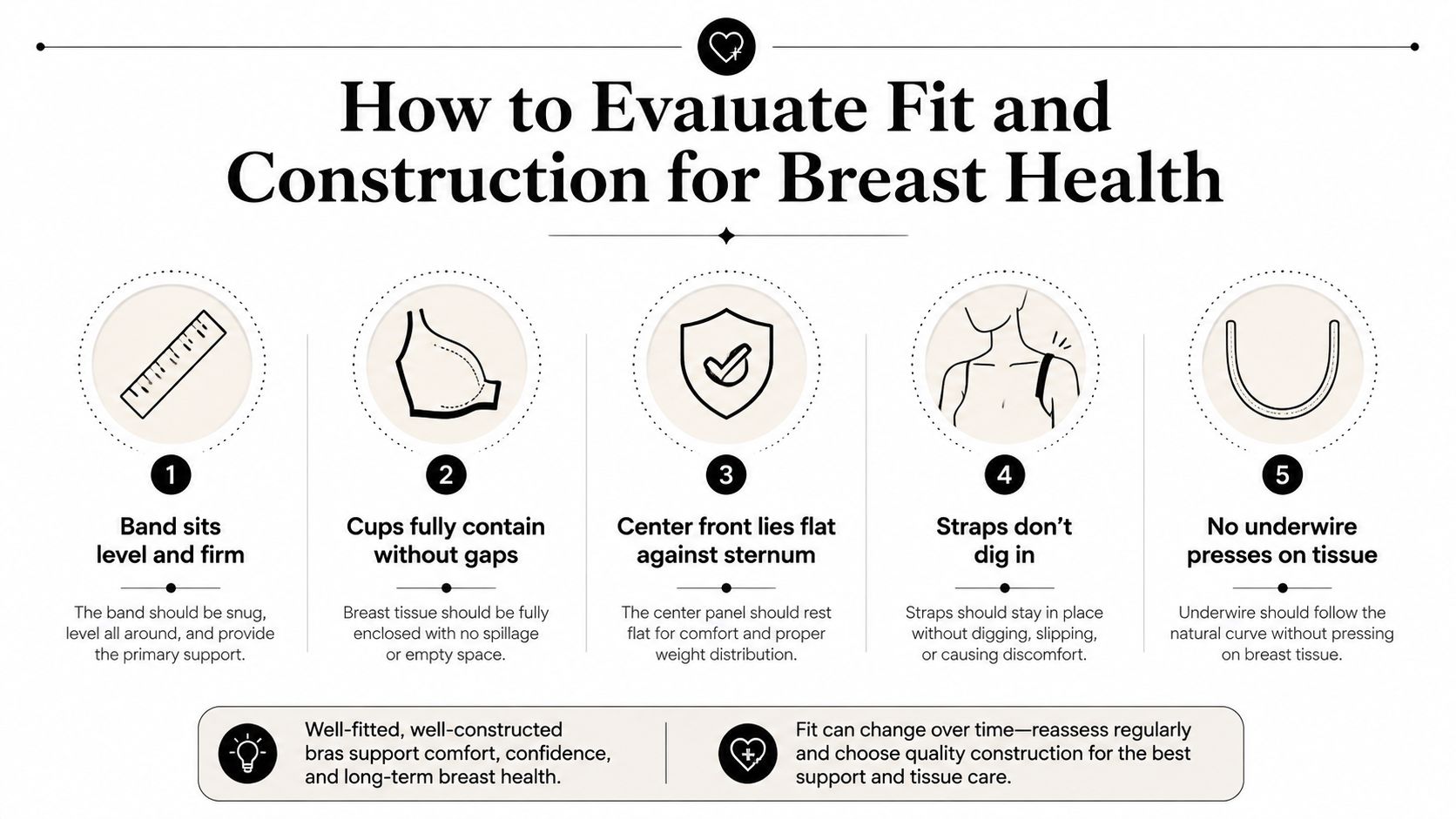
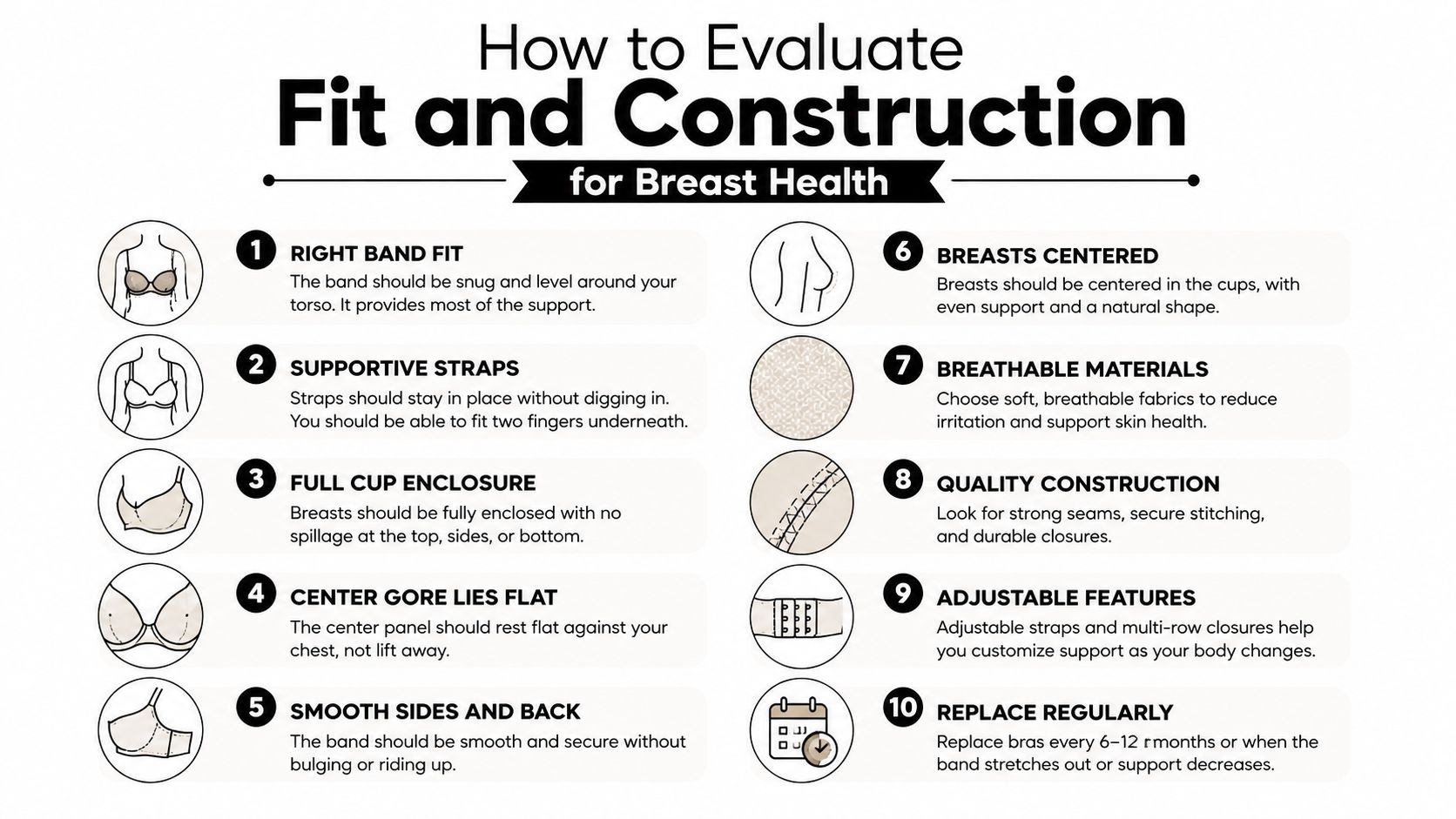
A nursing bra should protect comfort and breast health before it creates a flattering shape. Breastfeeding guidance warns that poor fit may contribute to plugged ducts and mastitis, while also noting that a nursing bra is not medically required if another bra fits properly. Use one clear standard: the bra must support without compressing breast tissue. Review this guide to measuring for a nursing bra before ordering, then assess the bra on your own body.
Five checkpoints in the fitting room
Begin with the band. It anchors the bra and should provide most of the support.
- Keep the band level. Check your side view in a mirror. The back should not ride upward while the front sits lower.
- Fill the cups fully. Breast tissue should remain inside the cup, without spilling at the top or sides, wrinkling, or leaving a hollow space.
- Check the center front. If the design includes a center panel intended to rest against the body, it should lie flat on the sternum.
- Relax the straps. Straps should position the cups, not carry the breast weight or dig into your shoulders.
- Inspect the underwire. It should sit flat against the chest wall, follow the breast root, and stay clear of breast tissue.
Construction matters as much as the label size. The full breast should remain contained, the band should carry most of the load, straps should not bear it alone, and an underwire should stay flat without digging in. These standards align with the National Childbirth Trust's maternity-bra guidance.
Test movement and feeding
Standing still proves very little. Raise your arms, sit, lean forward, and open the nursing clasp with one hand. The band should stay stable, access should feel controlled, and the cup should return to its position afterward.
Check the bra again later in the day when possible. Breast fullness can change, and a fit that seems fine in the morning may become restrictive after feeding. Persistent localized pressure, pain, or concerning symptoms call for stopping use and seeking qualified medical guidance.
Practical rule: A nursing bra should hold the breast securely without squeezing the tissue it supports.
Materials, Silhouette, and the Confidence Factor
A nursing bra can be comfortable and still make you feel unfinished. Material choice shapes breathability, stretch recovery, opacity, seam visibility, and how the bra sits under clothing. Judge softness alongside construction, because fabric that feels gentle but loses support quickly will not serve you through a full day.
Stretch lace earns its place when it feels smooth and recovers after movement. A soft lining can limit irritation, while deliberate seam placement can shape the bust without leaving ridges. Look for gentle contact with purposeful structure, rather than fabric that stretches in every direction and lets the cup collapse.

The silhouette changes the way clothes work
A relaxed wireless bra works well under a sweatshirt, yet it may leave uneven lines under a blouse or structured jacket. A shaped cup can help fabric fall more cleanly across the bust when you return to professional routines or dress for an event.
Molded cups and underwire are not requirements for every mother. Your wardrobe should offer different visual options. Utility bras handle sleep, fluctuation, and frequent feeding. A refined nursing bra serves the moments when you want a composed silhouette and a connection to the woman you were before pregnancy, or the woman you are becoming after it.
Aesthetic comfort is real comfort
Postpartum identity often feels divided. Your body has changed, your schedule partly belongs to someone else, and familiar clothes may no longer sit as they did. An elegant bra cannot resolve those changes, but it can restore a private sense of intention and make getting dressed feel like your choice again.
Psycho-aesthetic comfort names that practical experience. A bra can be ergonomically sound and still leave you feeling unattractive. Beautiful lace without stable support creates a different kind of frustration. Confidence belongs beside comfort, not beneath it.
Choose features that match your day: breathable fabric for long wear, smooth edges under fitted clothing, cups that contain fuller breasts, and nursing access that does not require undressing. Beauty should make the bra more wearable, while its construction continues to protect comfort and support.
Where GAIA and PETRA Fit Into a Modern Nursing Bra Wardrobe
A modern nursing-bra wardrobe needs more than one level of support. Early utility styles handle fluctuation, sleep, tenderness, and frequent feeding. Later, a structured lace bra can serve daily outfits, workwear, and occasions when you want a defined silhouette without losing nursing access.
Milk&Lace positions its GAIA and PETRA nursing bras for that later postpartum stage. Both are described as combining elegant lace with breastfeeding functionality, structured support, and discreet access. They belong beside early wireless essentials, not in place of every bra in your drawer.
Choose by the job you need done
GAIA fits the mother who wants stretch lace, flexible support, and straightforward breastfeeding access. Review GAIA's nursing-bra design against your own fit requirements, especially cup containment, band stability, and how the support feels across a full day.
PETRA is the more clearly specified choice for someone seeking ultra-soft stretch lace, gentle underwire, and one-hand nursing access. Those features serve the later-stage combination of shape, access, and a lingerie-like finish.
A polished appearance cannot compensate for poor construction. Confirm that the band stays level, the cup contains the breast, and any underwire rests on the chest wall rather than breast tissue. If your size is changing rapidly or your breasts feel tender, keep a wireless bra available for days when flexibility matters more than shaping.
Build a rotation with distinct roles
Assign each bra a job instead of collecting similar styles. A utility bra can handle rest and unpredictable fullness. A structured style can support fitted clothing and social plans. If pumping is part of your routine, check whether the bra accommodates your equipment rather than assuming every nursing bra supports hands-free use.
The category continues to expand, but market size does not determine your wardrobe. Choose according to fit, postpartum timing, and daily use. A bra that looks refined yet presses, shifts, or leaves tissue unsupported will undermine both comfort and confidence.
GAIA and PETRA make the most sense when your wardrobe needs a more intentional silhouette. Keep a softer option for recovery days, sensitivity, and changing fullness, then use structured nursing bras when construction, appearance, and access must work together.
A Practical Decision Framework for Choosing Your Best Nursing Bra
Choose for the body and routine you have now. If your breasts remain sensitive or change throughout the day, start with a forgiving wireless utility style. If your size feels steadier and you want a defined silhouette, assess a structured nursing bra with the same standards as any supportive bra.
Use this filter:
- Set the primary job. Sleep, daily wear, work, exercise, and pumping place different demands on a bra. Assign each style one main role instead of expecting one bra to do everything.
- Order your priorities. Decide how support, comfort, access, adjustability, and confidence rank in your current routine. The 2024 research identifies these as meaningful product requirements, not decorative extras.
- Measure and test. Follow the brand's measuring method, then check the band, cups, and straps. Move, sit, reach, and bend before removing the tags.
- Test nursing access. Release the clasp with one hand. The cup should open far enough for feeding and return securely without twisting or leaving breast tissue exposed.
- Allow for change. Adjustable closures and adaptable cup fabric give you room as postpartum fullness shifts. Review the exchange policy before buying, because a flexible size exchange can matter as much as the first measurement.
- Buy by role. Add a structured bra for shape, clothing confidence, and later-postpartum identity. Keep a softer option for rest, tenderness, and unpredictable fullness.
Check the finished fit in a mirror and under clothing. A refined bra earns its place only when it supports your routine without pressing or shifting.
Do not choose softness alone, and do not dismiss a beautiful bra just because it suits a later stage. The best nursing bra supports your current body, protects comfort through daily movement, and helps you feel like yourself in your clothes again.
Milk&Lace offers GAIA and PETRA nursing bras with structured support, lace, and discreet breastfeeding access for later postpartum months. Visit Milk&Lace to explore the collection.