

You're standing in front of your wardrobe with a hungry baby nearby, one hand trying to fasten a bra and the other adjusting a strap that won't stay put. The band feels tight when you sit, the cups overflow when your breasts are full, and the soft bralette that felt soothing during the first days now leaves you wishing for more lift. You're not asking for a fashion fantasy. You need a bra that supports you through feeding, movement, changing breast volume, and the complicated process of feeling like yourself again.
The search for the best bra post pregnancy isn't solved by choosing the softest option or the most structured one. Your needs change after birth, so your bra should change with them. Early recovery calls for gentle materials and flexible support. Later postpartum dressing may call for firmer cups, a stable band, and an underwire that creates shape without interfering with nursing.
| Postpartum stage | Main priority | Best starting style |
|---|---|---|
| Early recovery | Softness, adjustability, easy access | Wire-free recovery or nursing bra |
| Milk production is stabilizing | Better lift and fit control | Supportive nursing bra with flexible structure |
| Later postpartum and return to routine | Shape, stability, confidence | Structured nursing bra, including suitable underwire styles |
Introduction to Finding Your Best Bra Post Pregnancy
A postpartum morning rarely follows a neat routine. You may wake with fuller breasts, feed the baby, change a breast pad, and discover that yesterday's comfortable bra now gaps at the top. By the time you leave the house, the straps have slipped, the band has ridden upward, and you've pulled your shoulders forward to compensate for the lack of support.
That frustration doesn't mean you're difficult to fit. Your body is changing while you're asking clothing to perform several jobs at once. A nursing bra must allow access without a struggle, hold changing breast volume securely, and stay comfortable when your skin feels tender or your day involves repeated lifting and bending.
The answer also isn't to remain in the loosest wireless bra forever. A soft recovery style can be exactly right at first, but later postpartum you may want smoother lines under clothing, a more defined silhouette, or enough structure for errands, work, and social plans. Comfort and confidence aren't opposing goals. They belong to different stages of the same fitting process.
The practical goal: choose a bra that fits your body today, then reassess before your body has moved into its next stage.
This guide gives you a clear route through that process. You'll learn when to stay with a wire-free design, when a structured nursing bra makes sense, how to shop around ongoing size changes, and how to judge support beyond a promising product description. The right bra won't erase the demands of postpartum life, but it can remove one persistent source of discomfort from your morning.
Why Choosing the Right Postpartum Bra Matters
Postpartum breast changes can be substantial, not minor variations that a standard bra can absorb. A major study of UK women found that self-reported size increased by an average of one underband size and two cup sizes from before pregnancy to the postpartum period. The mode shifted from 32B before pregnancy to 36C postpartum, while the proportion of participants with a cup size of D or larger changed from 53% to 70%, as reported in the postpartum bra-sizing study indexed by PubMed.
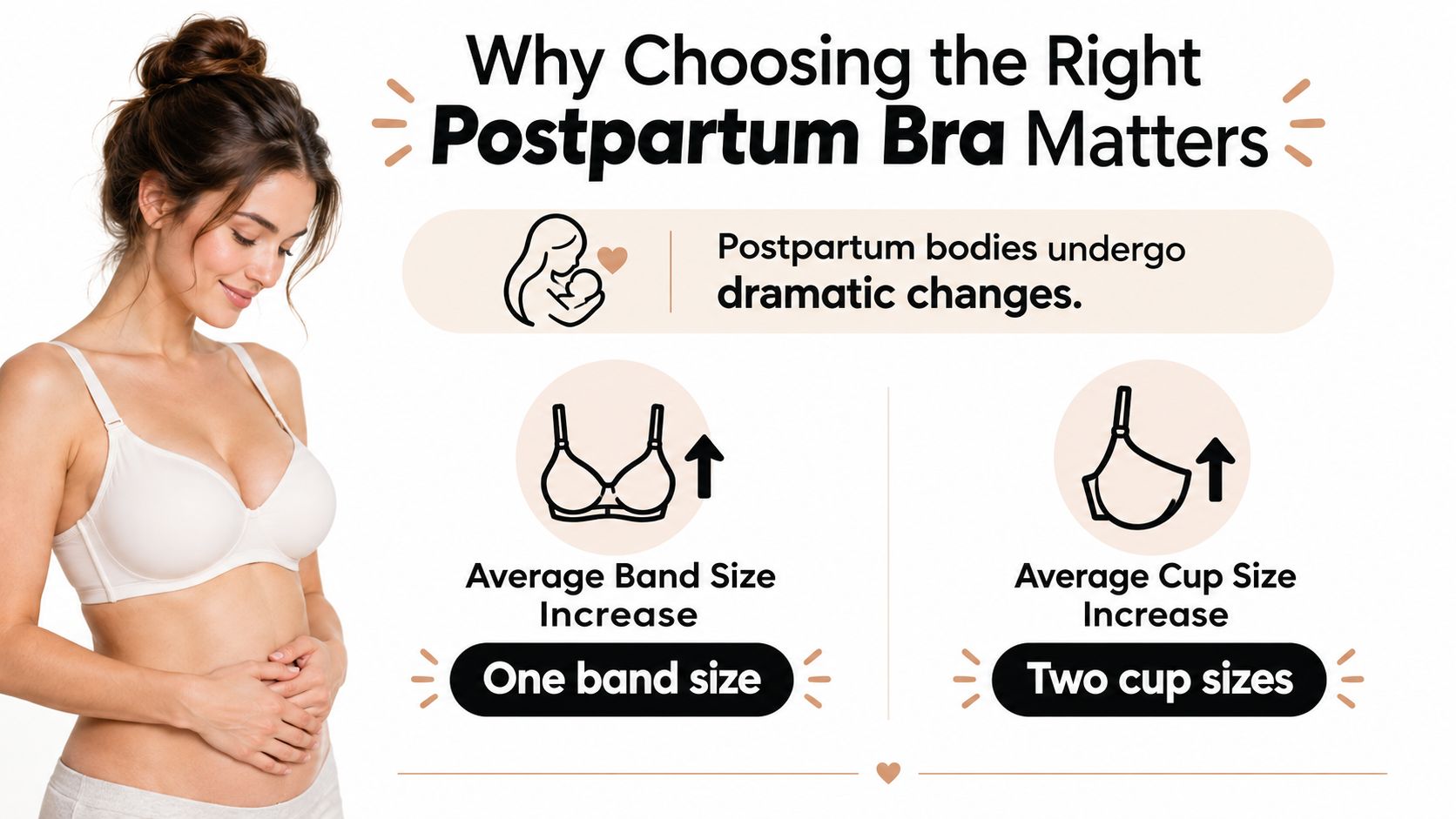
Those findings explain why a pre-pregnancy bra can feel wrong in several ways at once. The band may press across a broader ribcage, while the cups fail to contain fuller tissue. A stretchy bra can temporarily accommodate volume, but stretch alone won't always provide the stable base you need for daily movement.
Breastfeeding can also extend the period during which fit remains relevant. UNICEF reports that around 95% of babies worldwide receive breastmilk at some point, and WHO recommends exclusive breastfeeding for the first 6 months with continued breastfeeding to 2 years or beyond, according to UNICEF's breastfeeding data. That doesn't mean every woman breastfeeds for the same duration, but it does show why nursing access and adaptable support matter well beyond the first weeks after birth.
For practical guidance on choosing postpartum undergarments, see this postpartum undergarments guide. The central principle is simple: your bra should support changing tissue without compressing it aggressively. A postpartum trial found that support bras didn't reduce engorgement differently from breast binding during the first 10 days after birth, but binding caused more tenderness, leakage, additional pain, and pain-relief use. The authors recommended discontinuing binding and using support bras, as detailed in the PubMed trial on breast binding and support bras.
That distinction matters. Compression can make a bra feel secure at first, but excessive pressure can become painful and restrictive. A stable band, shaped cups, adjustable straps, and enough room for breast fluctuation are more useful than choosing the tightest design.
How to Choose the Right Postpartum Bra
Start with the stage you're in, not the bra style you wore before pregnancy. Early postpartum comfort should come first, but the most suitable long-term choice usually adds structure once your body has settled enough for reliable remeasurement.
Assess the support structure
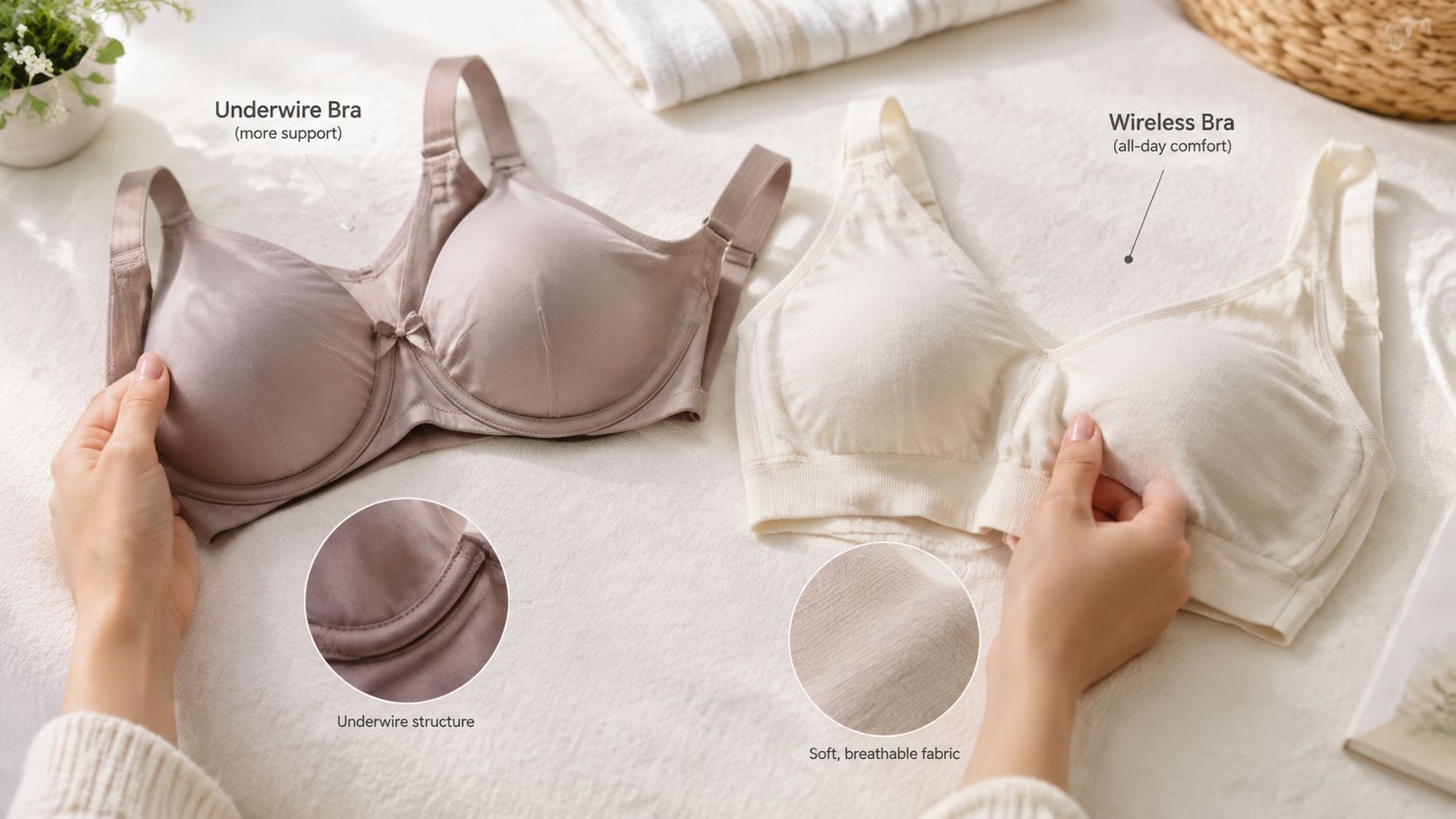
A wire-free bra is the safer starting point when your breasts are tender, your volume changes quickly, or you're still recovering from birth. Look for a broad, stable underband, shaped panels, supportive side sections, and straps that don't stretch excessively. Avoid designs that rely only on tight compression.
Once milk production and blood flow have stabilized, expert guidance says a supportive underwire or full-coverage foam-cup style may be appropriate, often at 4 to 6 weeks postpartum or later, after you've remeasured, according to this nursing-bra transition guidance. The timing isn't a command to wear underwire. It's a fitting checkpoint. If an underwire digs, presses on breast tissue, or creates a painful point, return to a wire-free option and reassess later.
Check fabric against your skin
Softness matters most when your skin is sensitive or you're dealing with leakage and frequent washing. Stretch lace can offer flexibility and a more refined appearance, while smooth fabric may be preferable under fitted clothing. Choose breathable materials and inspect seams, edges, and nursing clips for anything that rubs.
Make nursing access effortless
A drop-down cup should open with one hand while you're holding your baby with the other. Test whether the clip releases easily, whether the cup stays out of the way, and whether the exposed opening gives you enough room to position your baby. A clever closure isn't useful if it requires two hands or twists the bra out of alignment.
Prioritize adjustability
A changing body needs more than a single size label. Adjustable back hooks, straps with a broad range, stretch cups, and flexible cup construction let you fine-tune fit rather than replacing a bra after every change. Use this guide to measuring for a nursing bra before ordering, especially if your current bra is based on a late-pregnancy measurement.
Don't treat style as frivolous
A bra that disappears under clothing is useful, but a bra that makes you feel attractive can also improve how you dress and carry yourself. Choose lace, smooth cups, neutral shades, or a lifted silhouette according to your wardrobe. The best option is the one you'll reach for repeatedly.
Judge value by wearability
A low-cost bra that pinches, rides up, or loses support quickly isn't good value. A more carefully designed bra earns its place when you can adjust it, nurse easily, and wear it through the activities you do. Buy a small, flexible selection rather than committing to a complete wardrobe before your size settles.
Detailed Comparison of Top Postpartum Bras
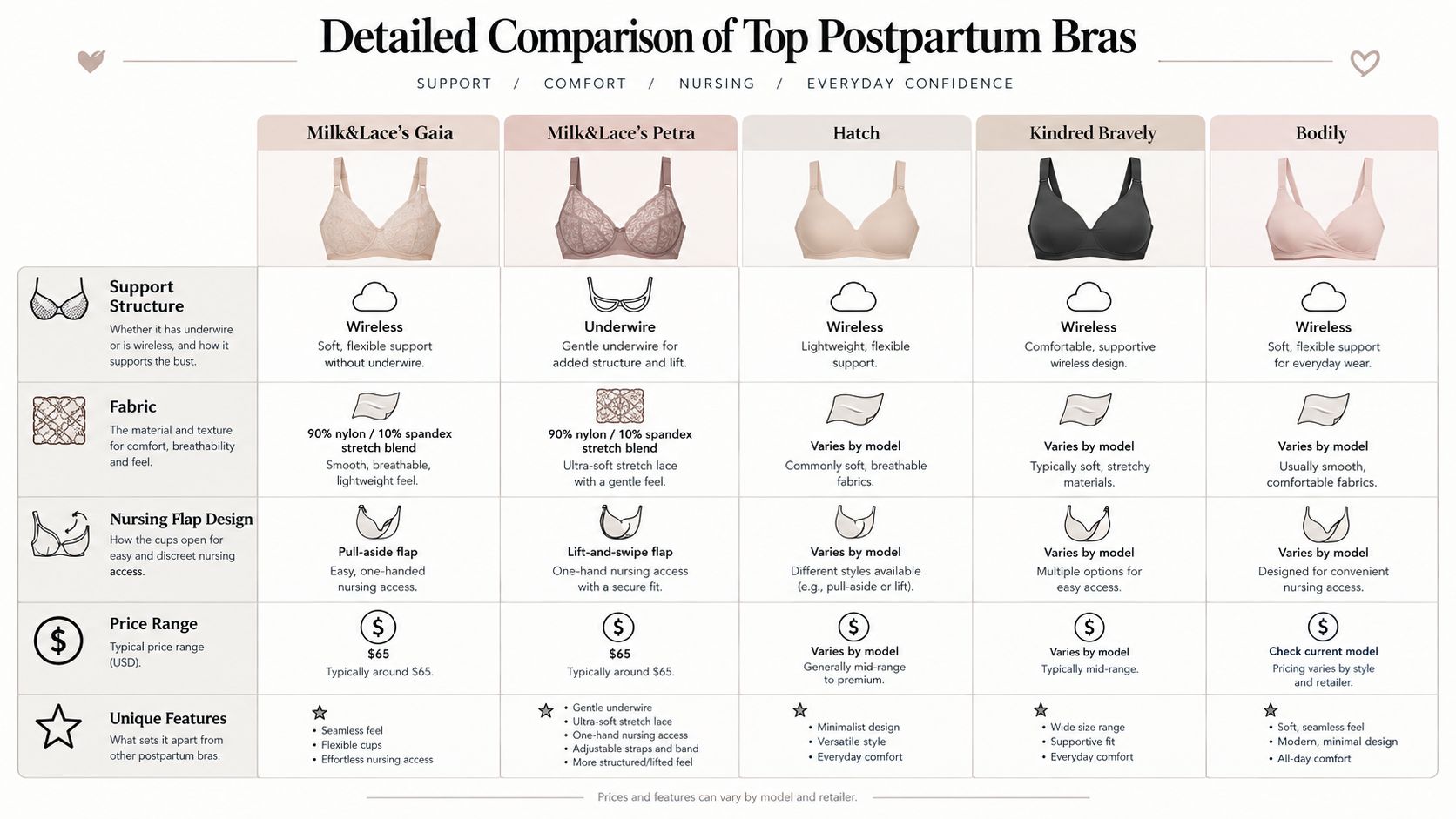
Postpartum bra needs change in stages. A soft recovery bra usually works best during tenderness, swelling, and frequent feeding. As fullness becomes more predictable, a structured nursing style can provide better lift and shape. The comparison below separates support, comfort, and access, so you can choose a bra that matches your current stage rather than buying one for an unchanging body.
| Model | Support | Comfort | Nursing access | Price range |
|---|---|---|---|---|
| Milk&Lace's Gaia | Flexible support with stretch lace | Soft, elegant feel | Effortless breastfeeding access | 65 |
| Milk&Lace's Petra | Gentle underwire | Ultra-soft stretch lace | One-hand access | 65 |
| Wire-free recovery bra | Light to moderate, depending on band and panels | Usually the gentlest option | Typically straightforward | Varies |
| Full-coverage nursing bra | Stable coverage and everyday containment | Depends on fabric and cup flexibility | Drop-down or lift-away access | Varies |
| Nursing sports bra | Activity-focused support | Varies with compression and fabric | May be less convenient than daily nursing designs | Varies |
Milk&Lace's Gaia
Gaia combines stretch lace, flexible support, and easy breastfeeding access. It suits the transition between a soft recovery bra and a more structured nursing style. Choose it when you want a gentler feel but still need a polished appearance and room for day-to-day fullness changes.
This design works well if ordinary recovery bras feel too plain or leave you wanting more support, while rigid molded cups still feel premature. Check the fit after feeding and later in the day. The lace should lie smoothly over the breast, and the underband should remain level as you move.
Milk&Lace's Petra
Petra uses ultra-soft stretch lace, gentle underwire, and one-hand nursing access. It suits a later postpartum stage, when you want more lift and definition without giving up practical feeding access.
Gentle underwire still requires precise placement. The wire should surround the breast root rather than rest on breast tissue, and pressure should not continue after you remove the bra. Recheck the size whenever fullness shifts, especially if your routine includes nursing, pumping, and longer periods away from feeding. Use the loosest comfortable hook setting first, then adjust the band and straps as your measurements settle.
Wire-free recovery bras
A wire-free recovery bra remains the practical choice for early tenderness, changing fullness, sleep, and low-activity days. Its flexible construction reduces pressure and accommodates breasts that do not yet hold one consistent shape.
Support can fall short when the band, panels, or cup fabric lack stability. The bra may flatten the bust instead of supporting it, and its outline may look less even under clothing. Avoid binding designs that create excessive pressure. The clinical evidence cited earlier favors support bras over binding because binding was associated with more tenderness, leakage, pain, and pain-relief use.
Full-coverage nursing bras
Full coverage suits fuller breasts, workdays, and clothing that needs a smooth, contained line. Look for cups that hold tissue without spilling at the neckline or sides, along with a band that stays level instead of creeping upward. Flexible cup fabric helps accommodate modest size changes, while stable construction provides more dependable support than a very soft recovery bra.
A full cup alone does not guarantee support. The band, cup shape, and side containment determine whether the bra stays comfortable and secure.
Nursing sports bras
A nursing sports bra should match the activity. Flexible support can suit walking or gentle movement, while higher-impact exercise calls for firmer containment and straps that stay anchored. Check the nursing opening before choosing it for daily wear. If you need to remove the entire bra to feed, it is better reserved for exercise.
Use a wire-free style while your size changes quickly, then test a structured nursing bra after your measurements become more stable. That progression gives you recovery comfort first, followed by lift, shape, and practical access when your body is ready.
Recommended Bras for Different Needs
Your daily routine should determine the bra, not the other way around. A mother recovering at home, a mother returning to work, and a mother resuming exercise can all need different support from the same postpartum body.
For sensitive-skin days, choose a soft wire-free style. Prioritize smooth seams, breathable fabric, a forgiving underband, and minimal hardware. This is the bra for feeding, resting, and days when even light pressure feels distracting. It should support without forcing your breasts into a compressed shape.
For later postpartum lift, choose a structured nursing bra. Once your milk flow has stabilized and you've remeasured, a gentle underwire or full-coverage foam-cup style can create a cleaner silhouette. Don't use the underwire as a substitute for correct sizing. If the wire rests on breast tissue, the band shifts, or the cup cuts in, the structure is working against you.
For exercise, choose activity-specific support. A daily nursing bra may not control movement adequately, while a highly compressive sports bra can be uncomfortable and awkward during feeding. Look for stable straps, side containment, and a nursing opening you can operate without a full wardrobe change.
For work and formalwear, choose smooth cups and stable edges. Smooth-finish or lightly molded cups can reduce visible texture under clothing. Wide, adjustable straps help prevent slippage, but don't tighten them excessively to compensate for a loose band. The band should provide most of the support.
For ongoing size fluctuations, choose adjustability over a perfect first impression. A bra with stretch cups and several closure settings can remain useful as your body shifts. Keep an eye on cup wrinkling, side spillage, band riding, and strap tension. Those signs tell you whether you need a different setting, a different size, or a different construction.
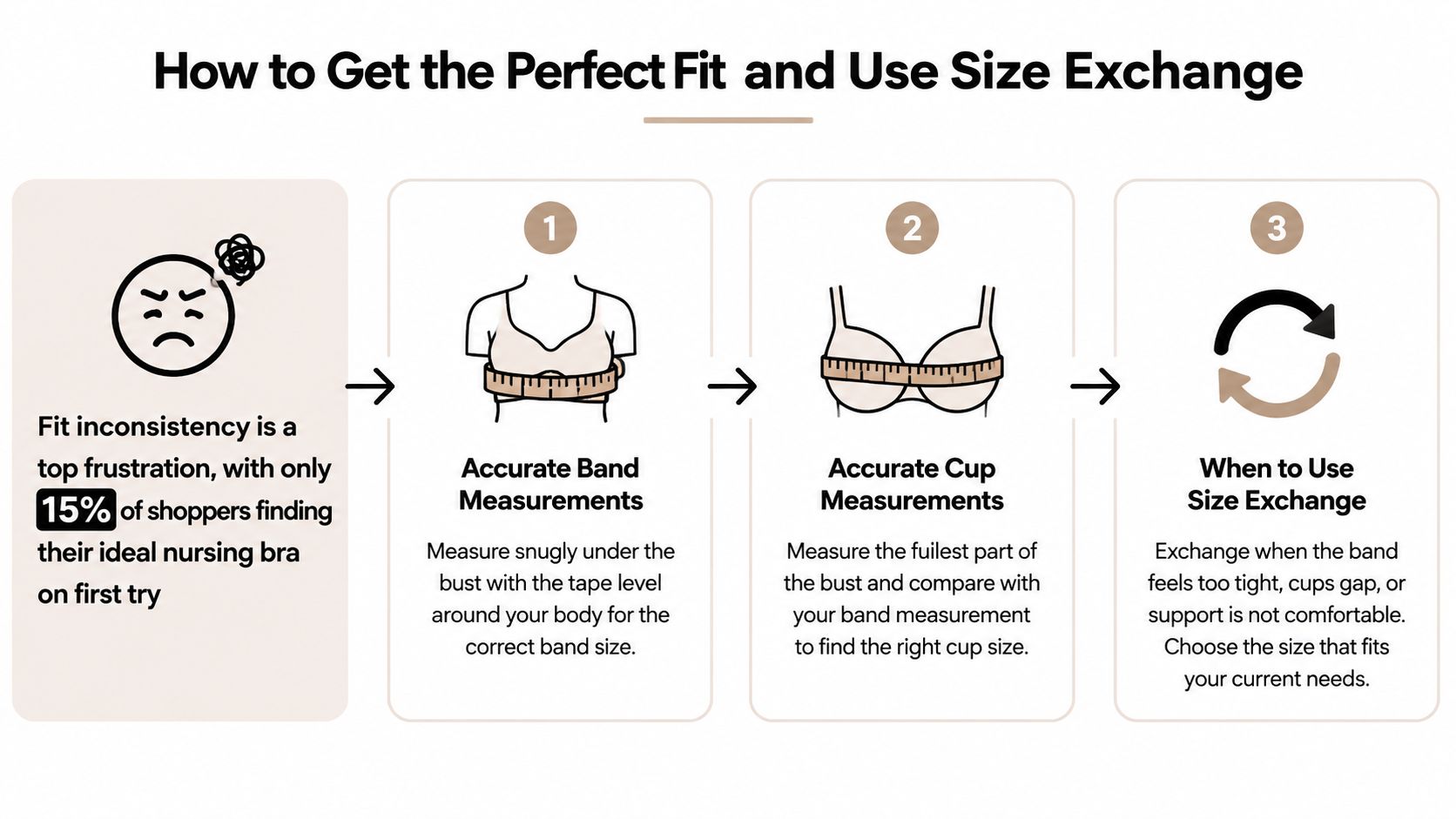
The ergonomic evaluation of maternity and nursing sports bras found that support was essential to 94% of respondents and comfort to 98%, yet only 15% of purchasers got exactly what they wanted, with poor adjustability identified as a central problem in the published evaluation. That's why the most reliable shortlist includes both a recovery option and a more structured option. One bra can't serve every stage, outfit, and activity equally well.
How to Get the Perfect Fit and Use Size Exchange
Fit is a process, not a one-time verdict. The ergonomic evaluation cited above shows why: support and comfort matter greatly, but many shoppers still fail to get the bra they wanted because the design doesn't adapt well enough.
Measure the band carefully
Measure around your ribcage with the tape level and comfortably firm. Don't pull it so tightly that you're compressing your body, and don't measure over a thick layer of clothing. Record the result, then use the brand's size chart rather than transferring your old pre-pregnancy size automatically.
The band should sit level across your back and feel secure on the loosest setting when the bra is new. That leaves room to tighten it as the fabric relaxes. If the band rides up, the bra is probably too loose or the straps are doing too much work.
Check the cup at your fullest practical point
Breast volume can vary throughout the day. Measure in a non-padded bra or without a bra, standing naturally, and avoid pulling the tape tightly across the fullest part. If you're nursing, compare how the bra fits before and after feeding. A cup that's comfortable at one point of the day shouldn't create painful compression when your breasts are fuller.
You're looking for complete containment without overflow, wrinkling, folding, or a gap that suggests the cup is too large or poorly shaped. The nursing flap must also close flat when you're not feeding.
Test the bra as you'll use it
Put it on, fasten the cups, raise your arms, sit, lean forward, and mimic feeding posture. Check the underband, straps, side coverage, and nursing clip. Wear it long enough to notice pressure points, but don't remove tags or wash it before you're confident it's the right size.
A size exchange is useful when the style suits your needs but the fit doesn't. Before exchanging, identify the exact problem:
- Band rides upward: Try a smaller band or a firmer setting.
- Band digs: Try a larger band or a different construction.
- Cup spills at the top or side: Move up in cup volume.
- Cup wrinkles: Try a smaller cup or a different cup shape.
- Underwire presses on tissue: Stop wearing it and reassess the size and placement.
Review the brand's size returns policy before ordering so you know how to preserve eligibility. Keep the bra unworn when possible, retain packaging, and make your exchange decision promptly.
For a visual walkthrough of the measurement process, use the following video.
Remeasure whenever your current bra develops new pressure points, cups begin to gap, or your breast fullness changes consistently. Don't keep forcing an old size because the label feels familiar. Your body deserves a fit based on its present shape.
Final Recommendations for Your Best Bra Post Pregnancy
Start with the bra that matches your recovery stage. In the early weeks, choose a wire-free nursing bra with soft fabric, a stable band, and enough stretch for changing fullness. It should feel secure without pressing sensitive tissue or making feeding difficult. Save rigid underwire styles for later, when your body feels less reactive and your size has become easier to assess.
Once fullness and circulation have settled, take fresh measurements instead of reusing your late-pregnancy size. If the new fit supports it, try a structured nursing bra with full coverage or a gentle underwire. The band should provide the lift, the wire should sit around the breast root, and the nursing opening should release with one hand. Any pressure, shifting, or restricted access means the style needs adjustment.
Size changes can continue, so build a small rotation rather than searching for one bra to handle every task. Keep a soft recovery bra for sensitive days, an adaptable everyday nursing bra, and a structured option for clothing that needs more shape. Flexible straps, adjustable closures, stretch panels, and room for breast fullness make the transition from soft support to underwire easier.
Breastfeeding may remain part of your routine beyond the newborn stage. Choose bras that suit how you feed, pump, work, sleep, or spend time outside the home. A nursing bra can also remain useful when feeding becomes occasional, provided its support and fit still feel comfortable.
Your final checkpoint: a good bra lets you breathe, move, feed, and dress with confidence. Constant adjusting signals a problem with the fit or construction.
Order from the stage you are in, keep tags and packaging intact, and use an exchange when the style works but the size does not. Recheck the fit as your body changes rather than forcing an old label. Your postpartum body deserves lingerie that supports recovery, function, and personal style.
Milk&Lace offers nursing bras that combine breastfeeding access with soft lace and structured support for later postpartum dressing, including flexible styles such as Gaia and Petra. Visit Milk&Lace to explore the collection and choose a bra that accommodates changing fit while preserving confidence.