

You're 34 weeks pregnant, you've walked from one room to another, and your lower back already feels heavy and tired. Perhaps it eases when you sit down, then returns when you stand, turn in bed, or climb the stairs. The question is immediate and understandable: is this ordinary pregnancy backache, or is it something you should call about?
At this stage, both possibilities deserve respect. Back pain is common in late pregnancy, but common doesn't mean every symptom is harmless or that you should endure pain that limits sleep, walking, work, or daily life. This guide helps you separate mechanical discomfort from patterns that need maternity advice, then choose practical comfort measures that are appropriate for an uncomplicated pregnancy. You may also find that broader support, such as compression pregnancy stockings, becomes useful as your body carries more weight.
What 34 Weeks Feels Like and Why Backache Shows Up Now
At 34 weeks, you might notice a dull ache across your lower back after standing at the kitchen counter. It may feel like muscle fatigue rather than a sharp injury. Another person may feel pressure through the pelvis, soreness around one side of the lower spine, or discomfort that travels into the buttocks.
A 2023 systematic review and meta-analysis covering 11 studies and 6,603 pregnant participants estimated back-pain prevalence at 47.8% in the third trimester, compared with 28.3% in the first trimester and 36.8% in the second trimester (systematic review and meta-analysis). Those figures describe groups, not your individual pregnancy. They show that backache affects a substantial proportion of people late in pregnancy, but they can't tell you whether your particular pain is routine.
The two questions that matter most
You have two jobs when backache appears. The first is to make your body more comfortable. The second is to recognize when the pattern has changed enough that waiting isn't sensible.
At 34 weeks, the pregnancy is still preterm, because 37 weeks is commonly used as the threshold for term pregnancy. That doesn't mean every ache signals early labour. It does mean that new, rhythmic, persistent, or rapidly worsening back pain deserves a deliberate check rather than automatic reassurance.
Practical rule: Comfort measures are reasonable for familiar, mild pain that improves with rest or a position change. New pain with contractions, pelvic pressure, bleeding, fluid leakage, fever, urinary pain, or neurological symptoms needs professional advice.
Backache can be part of the body's physical adaptation to a growing uterus, changing joints, and altered balance. It can also overlap with preterm labour, infection, or nerve compression. The safest approach is neither panic nor dismissal. Notice where the pain is, what brings it on, what relieves it, and whether anything else is happening at the same time.
The Four Main Causes of Backache at This Stage
Backache at 34 weeks rarely has just one explanation. Think of your body as a structure adapting to a new load, with several parts sharing the work.
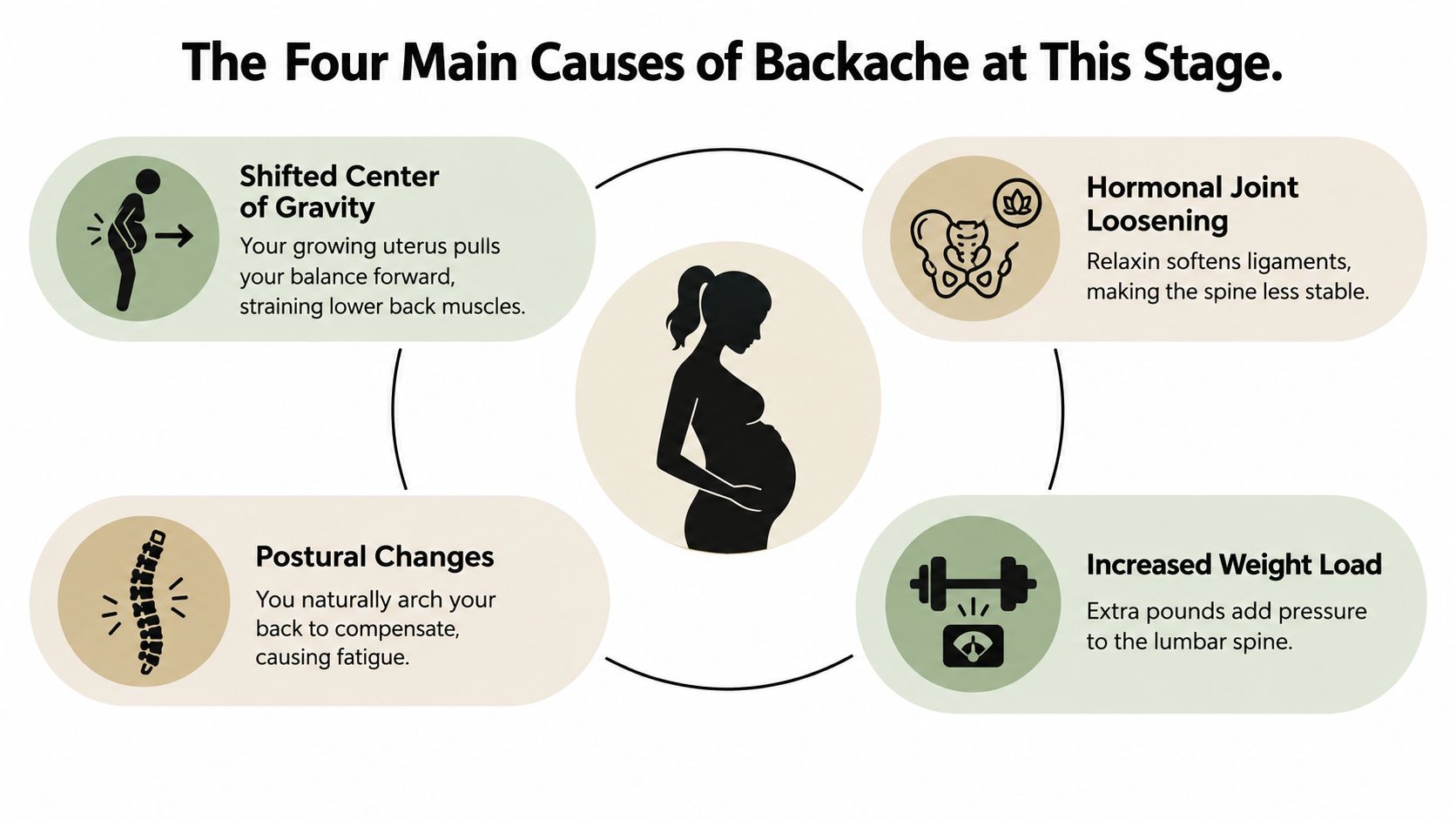
Your balance has moved forward
The growing uterus shifts your center of gravity toward the front of your body. To stay upright, you may unconsciously lean back and increase the curve in your lower spine. The muscles beside your spine then work for longer periods, much like ropes holding a load in a slightly different position.
You may notice this pattern after standing, walking, or doing household tasks. The ache is often across the lower back and may improve when you change position or lie on your side.
Your joints are working with less passive stability
Pregnancy-related hormonal changes, including the effects of relaxin, soften connective tissues and increase ligament laxity. This adaptation helps the pelvis prepare for birth, but it can also make the joints around the sacroiliac region feel less stable.
That instability doesn't necessarily feel dramatic. You may notice aching at the dimples of the lower back, one-sided pelvic discomfort, or soreness when you take a large step, roll in bed, or stand on one leg.
The extra load can irritate nearby nerves
As the uterus and surrounding tissues grow, the lower back and pelvis carry more weight. Some people also develop sciatica-type pain, which can travel from the lower back or buttock into the thigh or leg. A burning, electric, or tingling quality suggests nerve irritation more than simple muscle fatigue.
A radiating symptom should be discussed with your maternity provider, particularly if it comes with weakness, numbness, or difficulty walking. Supportive positioning may reduce irritation, but it shouldn't conceal a worsening neurological problem.
Pelvic girdle pain follows its own pattern
Pelvic girdle pain is often mistaken for ordinary backache because the discomfort can sit near the lower spine. Its clues are mechanical: pain may increase with stairs, getting dressed while standing, turning in bed, getting out of a car, or separating the legs.
You might feel it at the front of the pelvis, around one or both sacroiliac joints, in the buttocks, or through the groin. Keeping your movements symmetrical can help, and a women's health physiotherapist can assess whether the pelvis, hips, back, or surrounding muscles need targeted support.
Clothing can also affect your general comfort as your ribcage and breast tissue change. For example, PETRA features ultra-soft stretch lace, gentle underwire, and one-hand nursing access. It won't treat back pain, but well-fitted clothing may make prolonged sitting, standing, and daily movement more comfortable.
Red Flags at 34 Weeks You Should Never Ignore
A useful triage rule is to look at the pain pattern and its companions, not intensity alone. Mild pain can matter when it comes with fluid leakage or regular tightening. Strong muscle soreness that settles after rest may be less concerning than a persistent low pressure that keeps returning in a regular pattern.
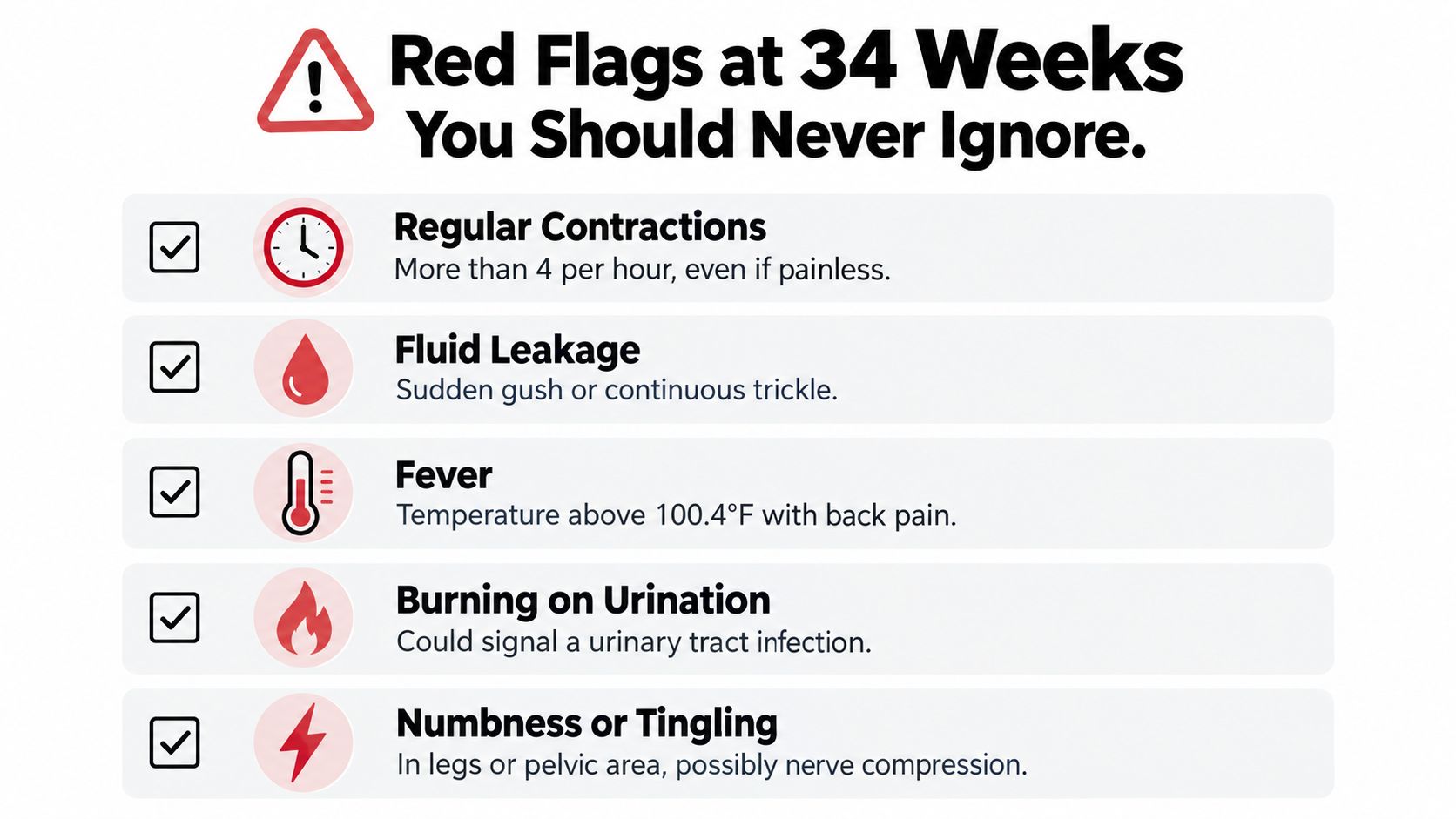
The preterm-labour pattern
A constant, low, dull backache can sometimes accompany preterm labour, especially when it appears with pelvic or lower-abdominal pressure, menstrual-like cramping, regular abdominal tightening, changed or increased vaginal discharge, bleeding, or fluid leakage. Some contractions may be uncomfortable, while others may feel mainly like the abdomen is becoming firm.
Don't wait for the pain to become severe before calling. At 34 weeks, contact your maternity unit, midwife, or obstetric provider promptly if back pain is new and rhythmic, keeps building, or occurs with these associated symptoms.
NHS guidance recommends urgent contact with a doctor or midwife when back pain occurs in the second or third trimester because it can sometimes accompany early labour. The guidance also advises emergency care if back pain occurs with loss of sensation in one or both legs, the buttocks, or the genitals (NHS week-34 guidance).
Infection symptoms need assessment
Back pain with fever, chills, pain or burning during urination, or pain beneath the ribs or along one side may indicate a urinary infection or another complication. These symptoms shouldn't be managed with heat, stretching, or a support garment while you wait to see whether they disappear.
Call your maternity provider urgently for guidance. If you feel seriously unwell, follow local emergency-care advice.
Neurological symptoms are different
Seek emergency assessment for new or worsening weakness, loss of sensation, or numbness involving the legs, buttocks, or genital area. Difficulty controlling your bladder or bowel is also an emergency symptom.
These signs don't fit ordinary postural fatigue. They may indicate significant nerve compression and require urgent evaluation. Don't drive yourself if you feel unsafe or weak.
At 2 a.m., use this decision rule: backache plus regular tightening, pelvic pressure, bleeding, fluid, fever, urinary pain, or new numbness means call now. You don't need to diagnose the cause before asking for help.
Safe Self-Care and Relief Strategies You Can Start Today
For familiar mechanical pain without warning symptoms, start with small changes rather than forcing a large exercise routine.
Set up side-sleeping. NHS week-34 guidance recommends side-sleeping in late pregnancy and notes that it helps blood flow to the placenta and can make backache less likely. Place a pillow between your knees, keep your hips reasonably aligned, and add support beneath your bump if that reduces pulling across the lower back. Turn your shoulders and pelvis together instead of twisting through the waist.
Move in short, comfortable intervals. Gentle walking or water-based movement may reduce strain for some people. Change position regularly if you work at a desk or stand for long periods. Avoid prolonged bed rest unless your clinician specifically instructs it, because too much stillness can leave muscles and joints stiffer.
Use warmth carefully. A comfortably warm pack may soothe tense muscles. Keep the temperature moderate, avoid falling asleep with it in place, and don't use heat as a substitute for assessment when pain is changing or accompanied by red flags. Cold may feel better after a brief activity flare, but stop if it makes the pain sharper or causes skin discomfort.
Make transitions symmetrical. To get out of bed, roll onto your side, bring your legs toward the edge, and use your arms to push up. Keep loads close to your body, avoid twisting while lifting, and choose supportive footwear that feels stable.
ACOG notes that walking and water-based exercise can reduce strain, but activity should stop if it causes pain, regular painful contractions, vaginal bleeding, fluid leakage, dizziness, chest pain, or significant weakness (ACOG guidance on back pain during pregnancy). If foot or lower-leg discomfort adds to the strain of standing, gentle self-massage may feel pleasant, but discuss any persistent swelling or unusual symptoms with your provider. A practical companion resource is this guide to massaging feet during pregnancy.
Supportive bras and clothing can be part of the comfort picture because your shoulders, upper back, and ribcage also carry changing loads. Choose garments that feel secure without digging into your ribs or restricting breathing. Comfort isn't a replacement for clinical care, but it can make ordinary movement easier.
| Strategy | Best for | Caution |
|---|---|---|
| Side-lying with pillows | Night-time pressure and position-related aching | Change position if you feel dizzy, breathless, or more painful |
| Gentle walking | Stiffness and reduced movement during the day | Stop for pain, contractions, bleeding, fluid leakage, dizziness, chest pain, or weakness |
| Water-based movement | Low-impact activity when land exercise feels heavy | Use a clinician-approved setting and stop if symptoms appear |
| Warm pack | Tight, tired muscles | Keep heat moderate and don't use it to mask worsening symptoms |
| Symmetrical transfers | Getting in and out of bed or a car | Ask for help with loads and avoid twisting |
These steps may reduce mechanical discomfort, but no self-care routine can determine whether backache is linked to labour or infection. If the symptom pattern changes, triage comes first.
When to Bring in a Professional and Who to Call
The right professional depends on what your backache is doing.
| Situation | Best next contact |
|---|---|
| New rhythmic pain, pelvic pressure, bleeding, fluid leakage, fever, or urinary pain | Maternity unit, midwife, or obstetric provider promptly |
| New numbness, weakness, genital or buttock sensation loss, or bladder or bowel changes | Emergency care |
| Persistent pain, pain lasting more than two weeks, or pain affecting sleep and daily activities | Obstetric provider or general practitioner |
| Mechanical pain with stairs, rolling in bed, walking, or single-leg tasks | Women's health or pelvic health physiotherapist |
Your midwife or obstetrician can assess labour-related symptoms, infection, blood pressure concerns, and other pregnancy complications. A general practitioner may be useful when the pain needs broader medical review or when your maternity team isn't immediately available.
A women's health physiotherapist does not hand you a list of stretches. They can ask how you walk, roll, lift, sleep, and manage stairs, then assess the movement pattern that provokes pain. Treatment may include individualized activity changes, gentle strengthening, pelvic support strategies, and advice about daily tasks. The aim is to improve function without aggravating symptoms.
Pain that disrupts sleep, limits walking, affects work, or continues despite position changes deserves attention even when it doesn't feel like an emergency. A review can also help distinguish lumbar pain, pelvic girdle pain, and nerve-related symptoms, which don't all respond to the same approach.
Don't begin unfamiliar intense stretching, self-prescribe medication, or rely on a support garment to cover progressive symptoms. Discuss analgesia with your obstetric provider, especially at this stage of pregnancy.
A Simple Daily Routine to Ease the Load
Keep the routine small enough that you can follow it on a tired day. The purpose is to reduce repeated strain, not to achieve a workout.

Morning
Before standing, roll onto your side and push up with your arms. Once upright, take a few comfortable breaths, notice whether the pain is familiar or different, and walk gently around the room. Keep your first tasks close to waist height so you aren't repeatedly bending and twisting.
Midday
If you're sitting, change position regularly and place both feet on the floor when possible. If you're standing, shift tasks rather than holding one posture. Take a brief, easy walk if it feels comfortable, and stop if symptoms sharpen.
Evening
Use a moderate warm pack for tired muscles if your provider has said it's appropriate. Set up side-sleeping with support between your knees and under your bump, then keep water, your phone, and any maternity contact details within reach.
For gentle movement guidance, this video may help you visualize pregnancy-adapted positioning. Don't copy an exercise that causes pain or feels unfamiliar without checking with your clinician.
Your weekly check-in
Ask yourself whether the pain is steady, improving, or worsening. Note whether it affects walking, sleep, work, stairs, or turning in bed. If the routine makes pain sharper, triggers contractions, or brings on bleeding, fluid leakage, dizziness, chest pain, or weakness, stop and contact your provider.
Your Next Six Weeks and a Decision Rule to Carry Forward
Backache is common at 34 weeks, but prevalence doesn't decide whether your pain is safe to ignore. A systematic review of 21,533 pregnant participants estimated lumbopelvic pain at 63% in the third trimester, while also finding wide variation between studies because researchers used different definitions and measurement methods (systematic review of lumbopelvic pain). Common does not mean harmless when pain is disabling.
Try positioning, gentle movement, and practical support for familiar mechanical discomfort. If the pain is new, severe, rhythmic, steadily worsening, or paired with bleeding, fluid leakage, fever, urinary pain, pelvic pressure, or numbness, call your maternity unit today rather than waiting until tomorrow.
You don't have to earn help by becoming unable to move. Keep your essentials organized with this guide to what to pack in a maternity hospital bag, and carry one clear rule with you: when backache changes pattern or arrives with another warning symptom, triage comes before comfort.
Milk&Lace offers maternity and nursing lingerie designed to combine elegant lace, everyday comfort, and practical nursing access as your body changes through motherhood. Visit Milk&Lace to explore supportive pieces that can complement your comfort routine without replacing professional assessment when backache needs medical attention.